October 23, 2019
Retracing Lena Huppler Bevers’ Travel Log
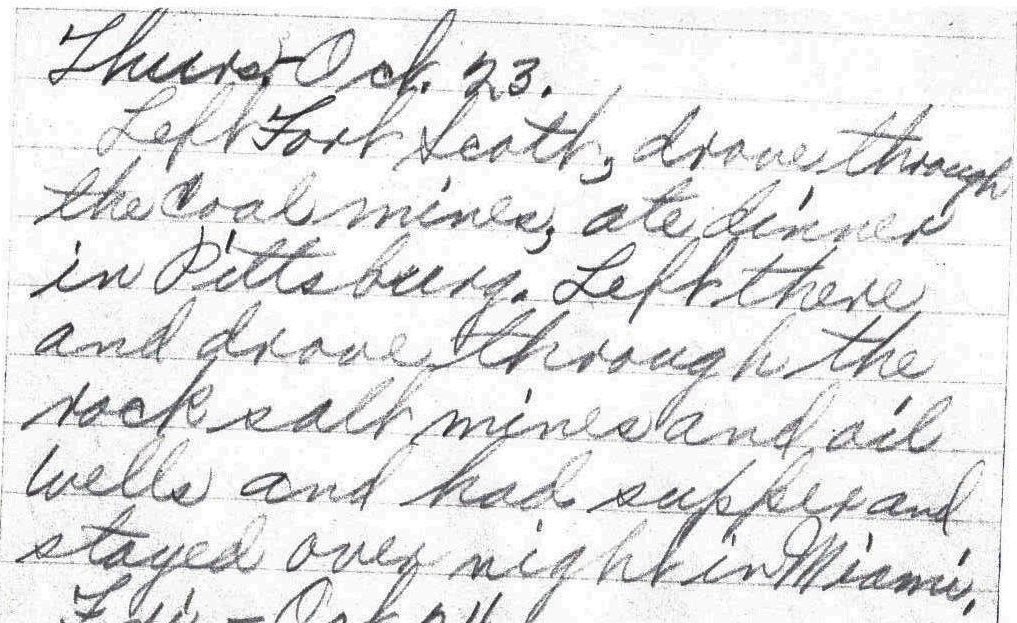
Thurs. – Oct. 23.
Left Fort Scott, drove through the coal mines, ate dinner in Pittsburg. Left there and drove through the rock salt mines and oil wells and had supper and stayed over night in Miami. – Lena Bevers
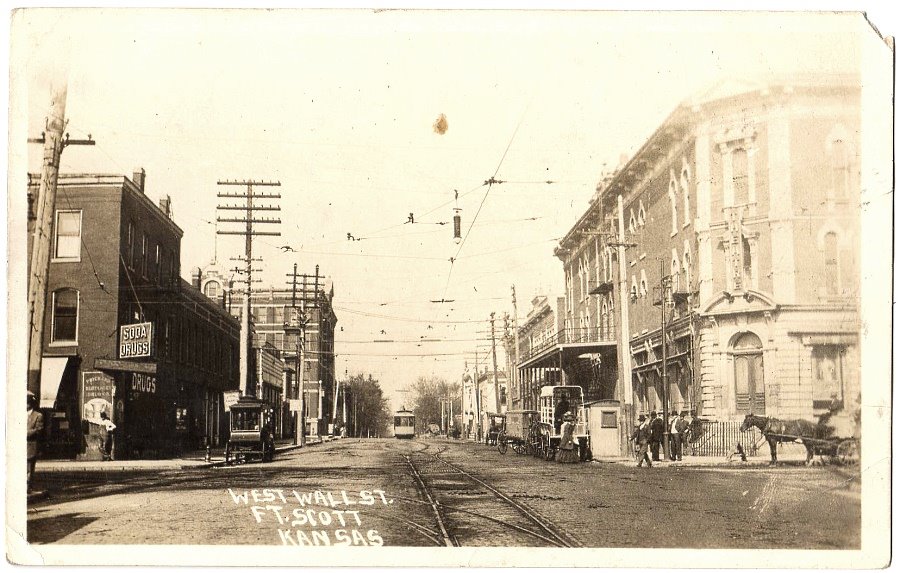
This morning when my mother and I were eating our breakfast at a fast food place in Fort Scott, Kansas, on the wall behind us there was a panoramic photograph of downtown Fort Scott in 1917. Here is a picture I took of that photograph:

The town of Fort Scott had its beginnings as a small settlement beside the frontier fort of the same name. The fort was established in 1842 and was “charged with keeping the peace between American Indians and white settlers.”1 The fort was abandoned in 1853, but the town continued to grow.
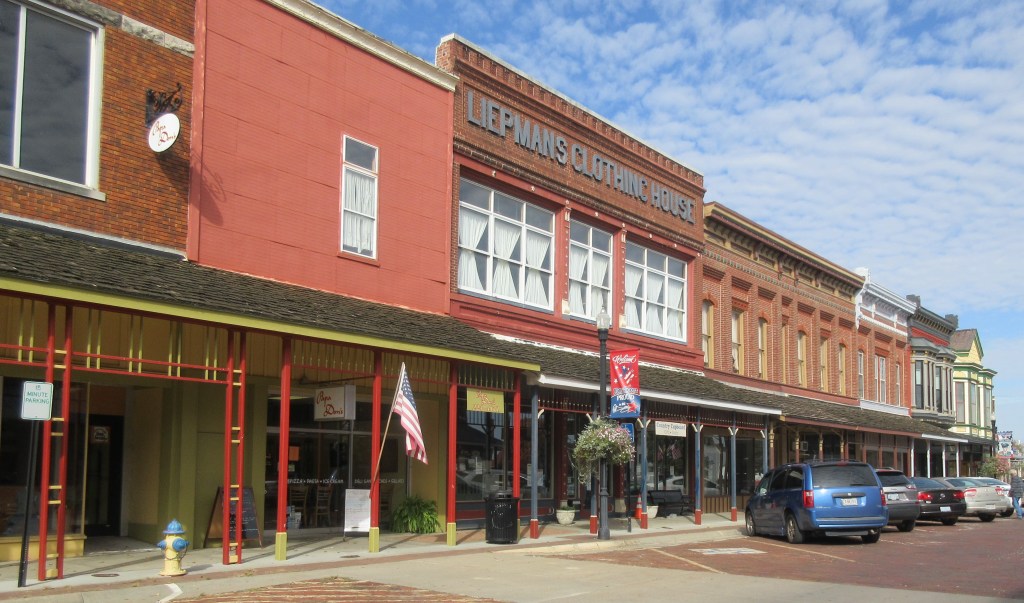
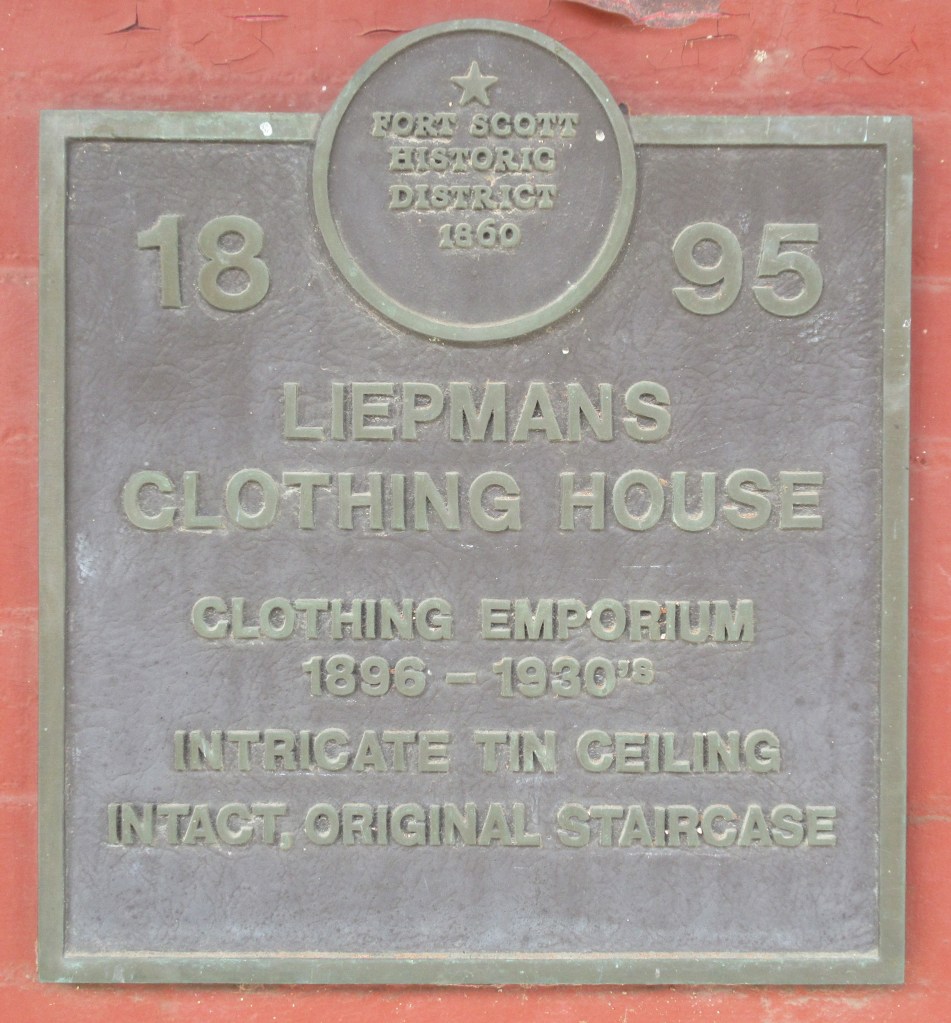
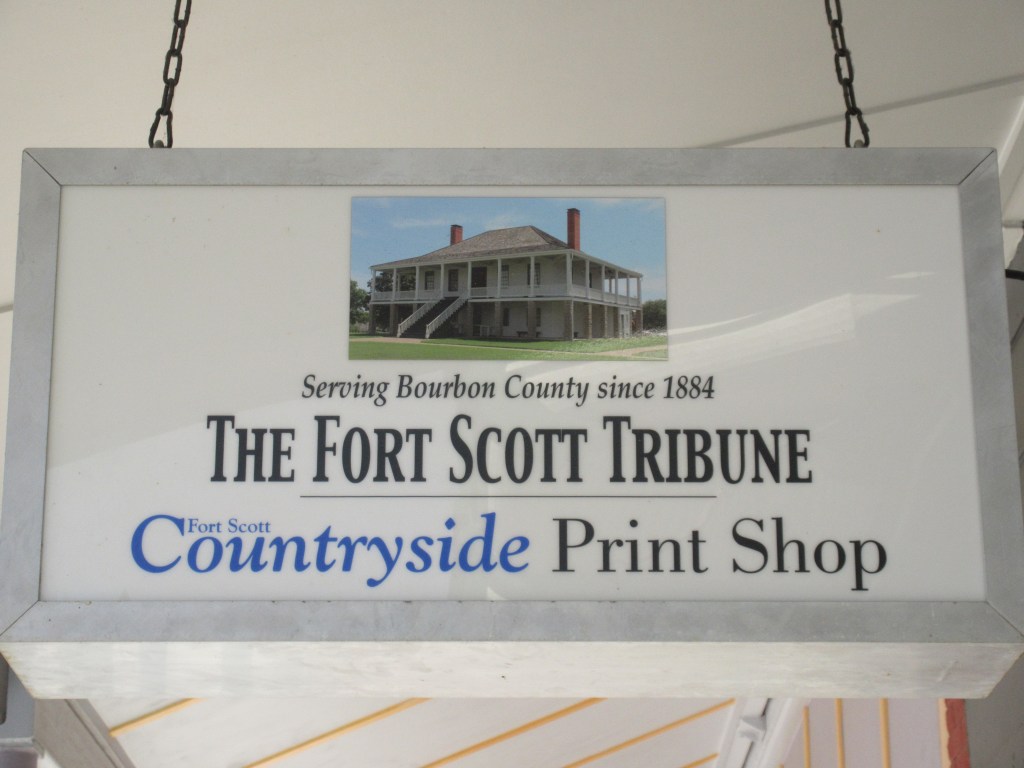
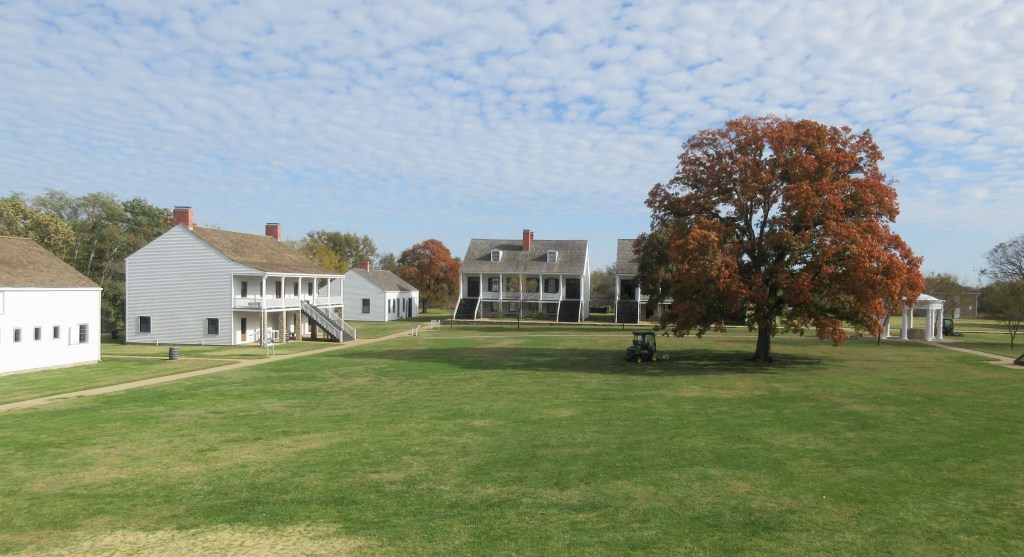
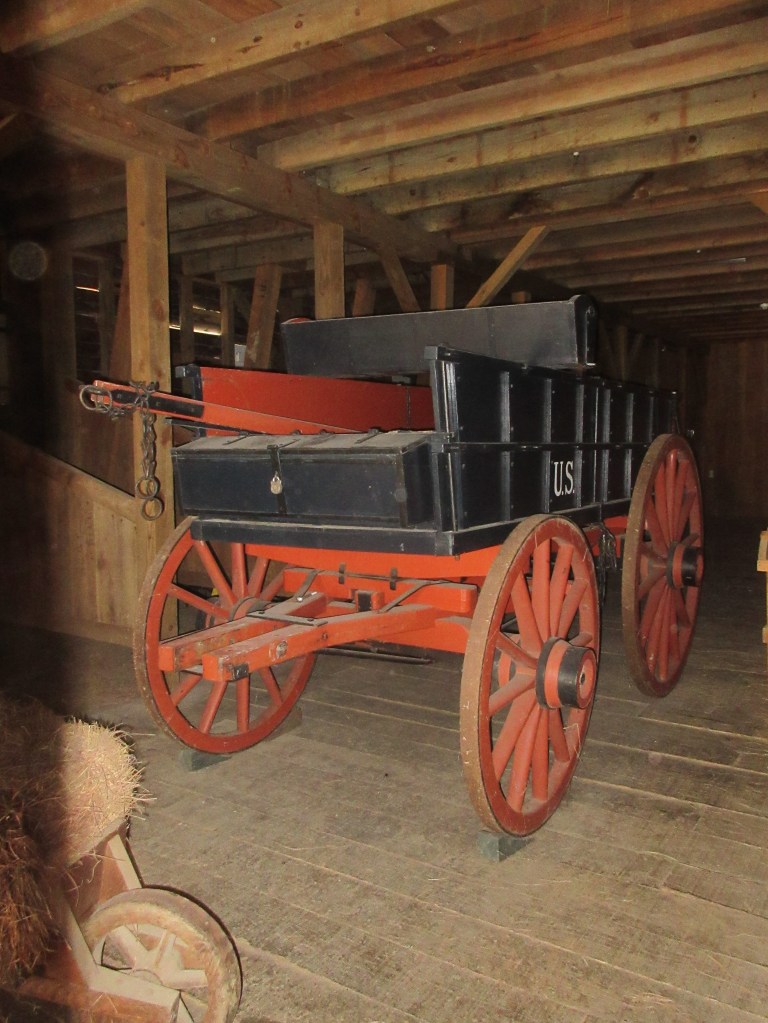
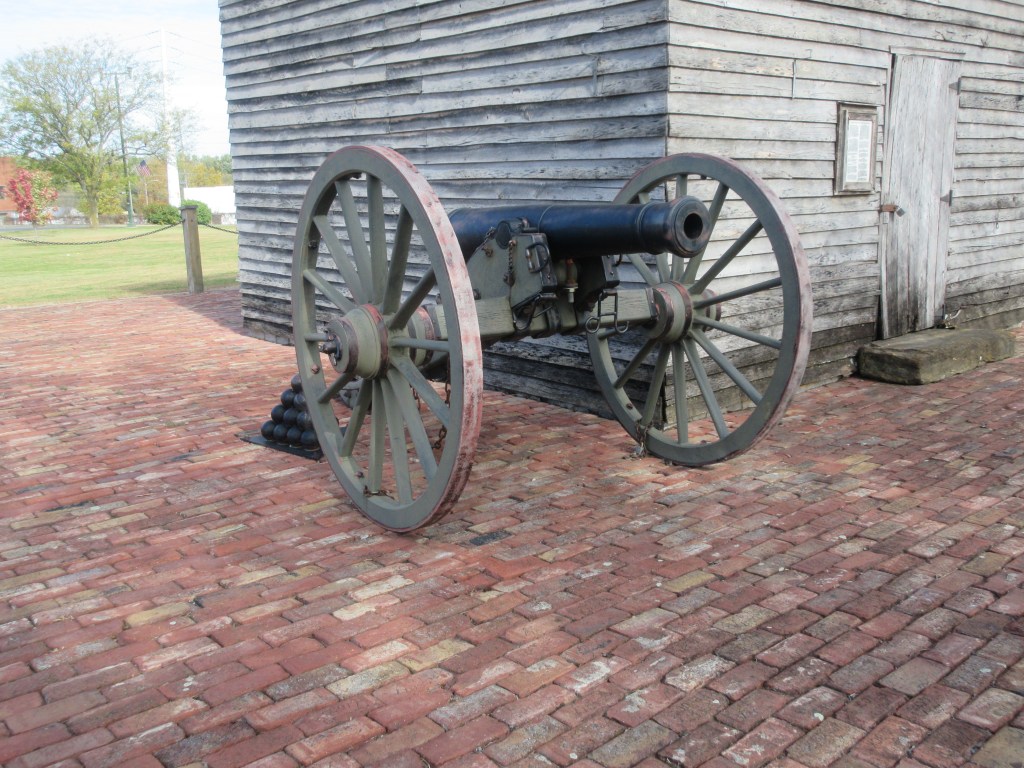
Before departing Fort Scott today, we spent a short time visiting one of the historic downtown streets and the site of the military fort. The grounds of the fort are maintained by the National Park Service. We briefly perused two of the exhibit halls.
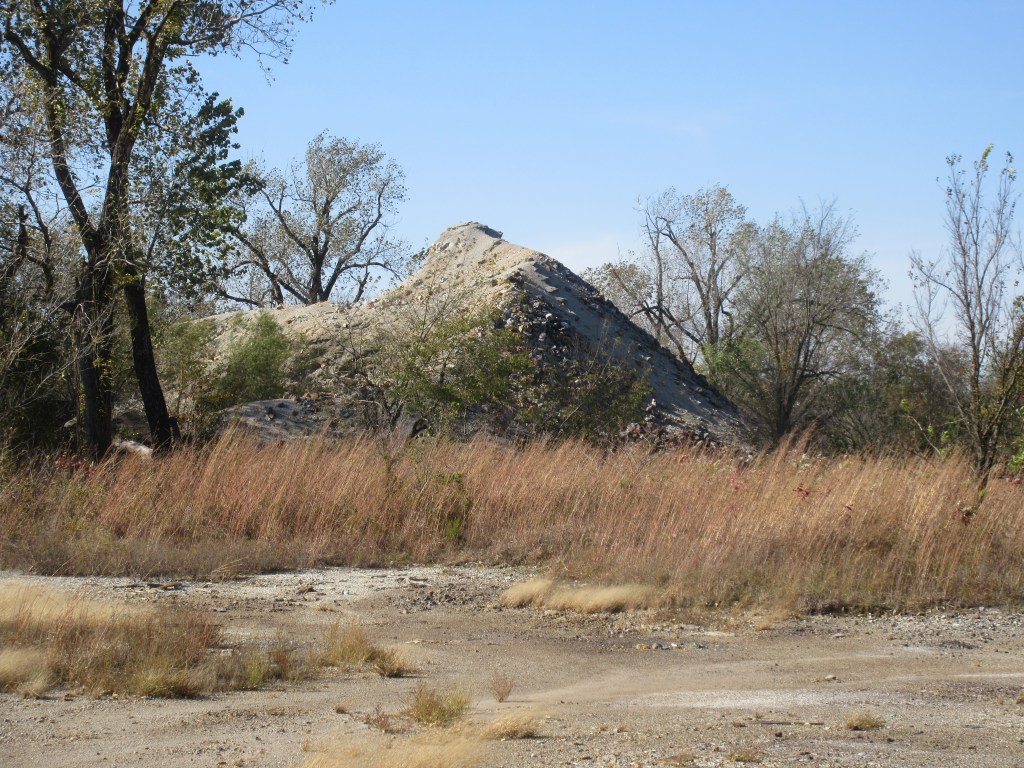
When Herbert and Lena headed south with their family on October 23, 1919, they continued driving on the Jefferson Highway. Lena recorded that they drove through coal mines. Southeastern Kansas was filled with mining camps at that time. Mining companies were mining for coal using underground mine shafts. This technique of coal mining declined during the 1920s and 1930s and the last mineshaft was closed in 1960.2 The region looks different now than it did when Lena and Herbert were here. As we traveled down U. S. Highway 69, there was an intermingling of woodlands, pastures and crop fields.
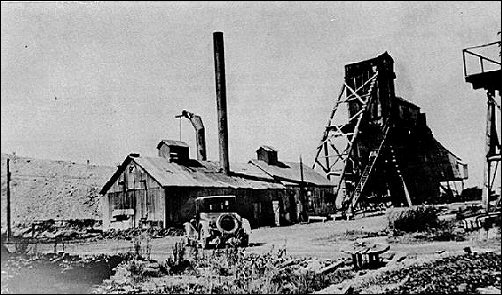
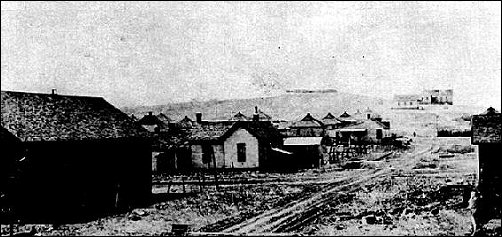
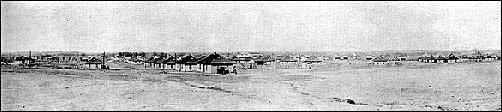
Lena wrote in her travel log that the Bevers family ate their dinner in Pittsburg, Kansas. As my mother and I were heading to Pittsburg to have lunch, we stopped in the town of Franklin and visited the Miners Hall Museum.
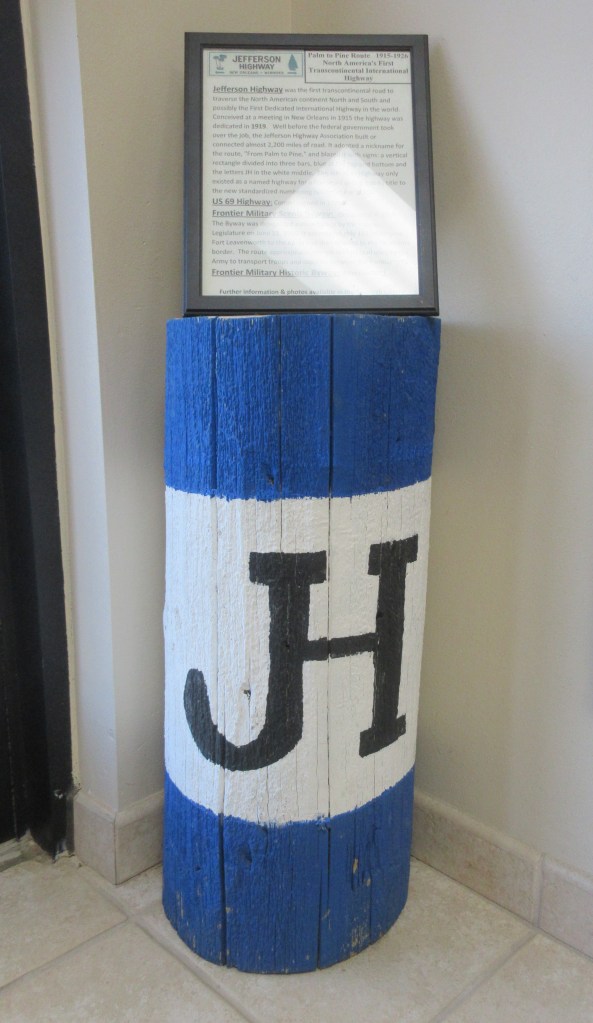
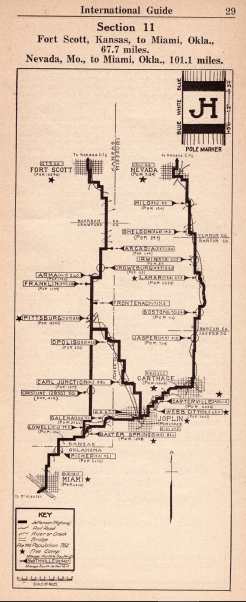
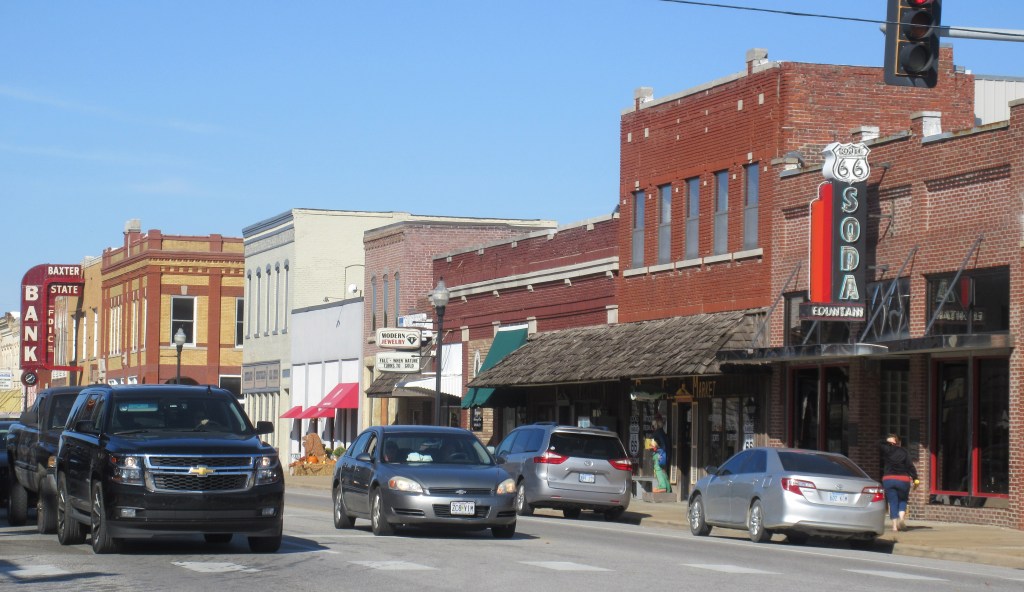
A map from the Jefferson Highway International Guide shows two branches of the highway.6 The Bevers family was traveling on the branch on the left. Lena’s daughter Florence recorded that they drove near Arma, Edward and Garland, had dinner in Pittsburg, then drove through Crestline, Riverton, Lowell, Baxter Springs, Picher, Cardin and Commerce.7
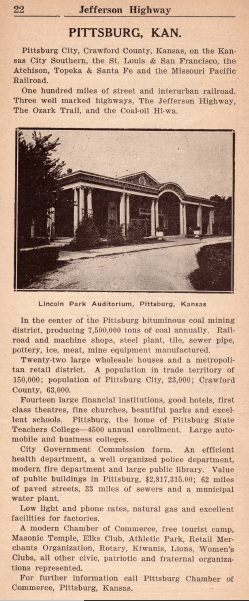
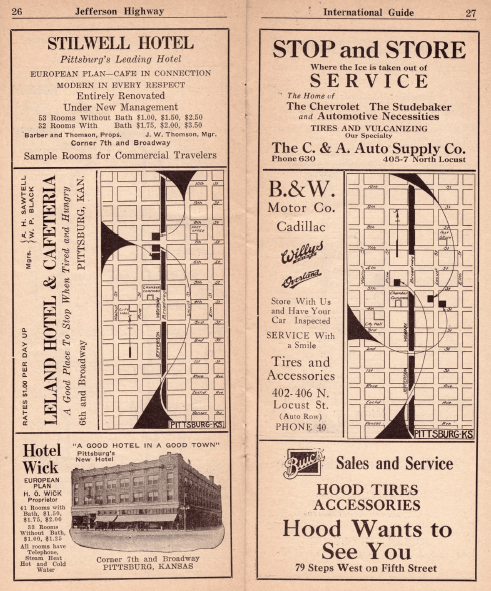
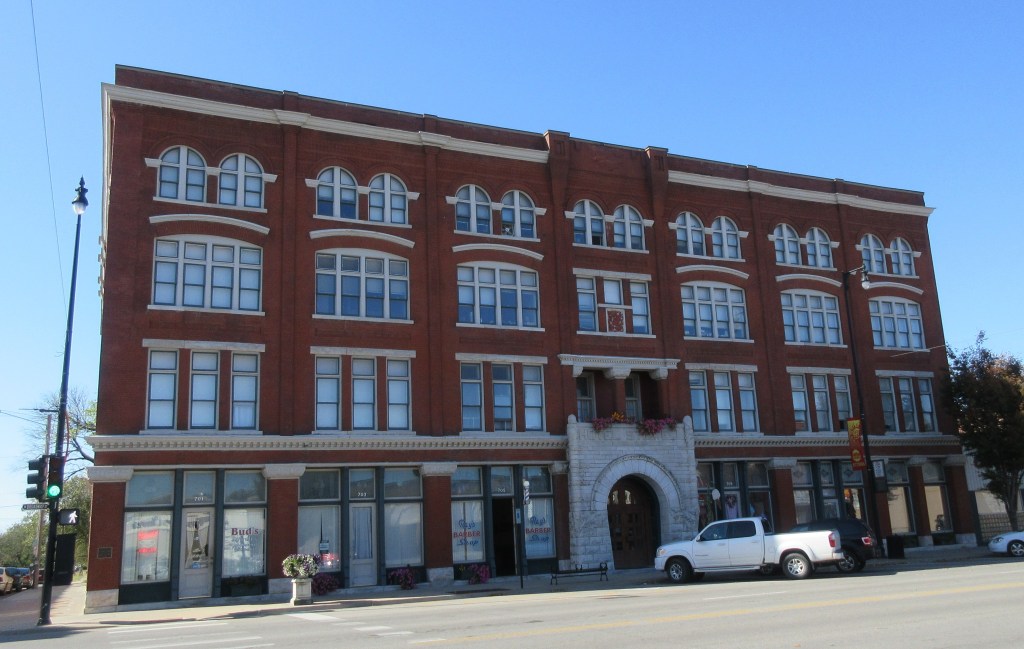
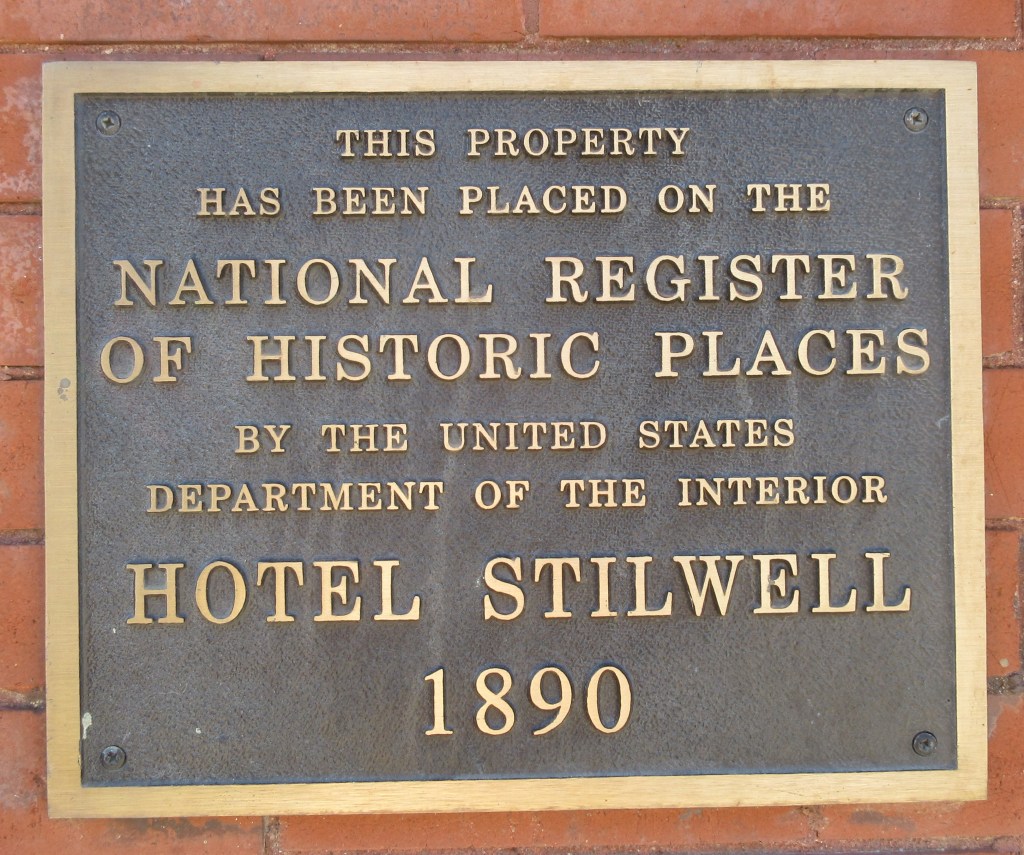
One of the buildings that Lena and Herbert probably drove past in Pittsburg was the Stilwell Hotel. The Jefferson Highway International Guide had an advertisement for the hotel.9 (See below in the upper left corner.) On the opposite page there are advertisements of services for tourists.
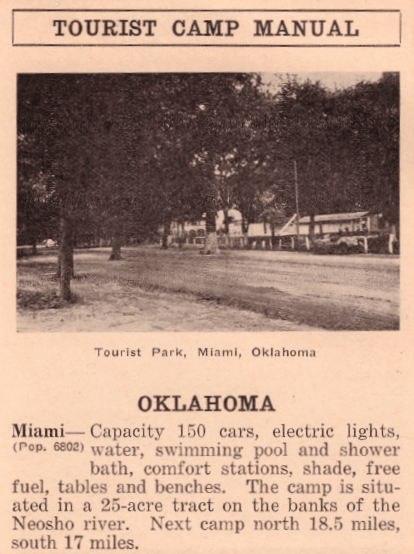
Lena only occasionally mentions the type of facility they stayed at each night. The Jefferson Highway Association published a Tourist Camp Manual in 1923 which gives us a clue of what they may have done. The manual identifies towns where tourists can camp along the highway. One of the places noted in the manual is in Miami, Oklahoma.10 We ended our day by checking into a motel in Miami at 4:00 PM.
Notes:
- Kansas Historical Society, Fort Scott (February 2013), https://www.kshs.org/kansapedia/fort-scott/17808.
- William E. Powell, Former Mining Communities of the Cherokee-Crawford Coal Field of Southeastern Kansas (Kansas Historical Quarterly, vol. 38, no. 2, Summer 1972): 187-99, https://www.kshs.org/p/former-mining-communities-of-the-cherokee-crawford-coal-field/13222.
- William E. Powell, Former Mining Communities of the Cherokee-Crawford Coal Field of Southeastern Kansas: 187-99.
- William E. Powell, Former Mining Communities of the Cherokee-Crawford Coal Field of Southeastern Kansas: 187-99.
- William E. Powell, Former Mining Communities of the Cherokee-Crawford Coal Field of Southeastern Kansas: 187-99.
- Jefferson Highway Association, International Tourist Guide, Jefferson Highway (Saint Joseph, Missouri: Combs Printing Co., 1923): 29.
- B. Winkelmann, Our Trip to Texas [Transcription of Our Trip to Texas by Florence Bevers, 1919] (unpublished, n. d.): 2.
- Jefferson Highway Association, International Tourist Guide, Jefferson Highway: 22.
- Jefferson Highway Association, International Tourist Guide, Jefferson Highway: 26-27.
- Jefferson Highway Association, Tourist Camp Manual, Jefferson Highway (Saint Joseph, Missouri: Combe Printing Co., 1923): 37.
 Sojourners, Settlers & Other Legacy Conveyors