November 3, 2019
Retracing Lena Huppler Bevers’ Travel Log
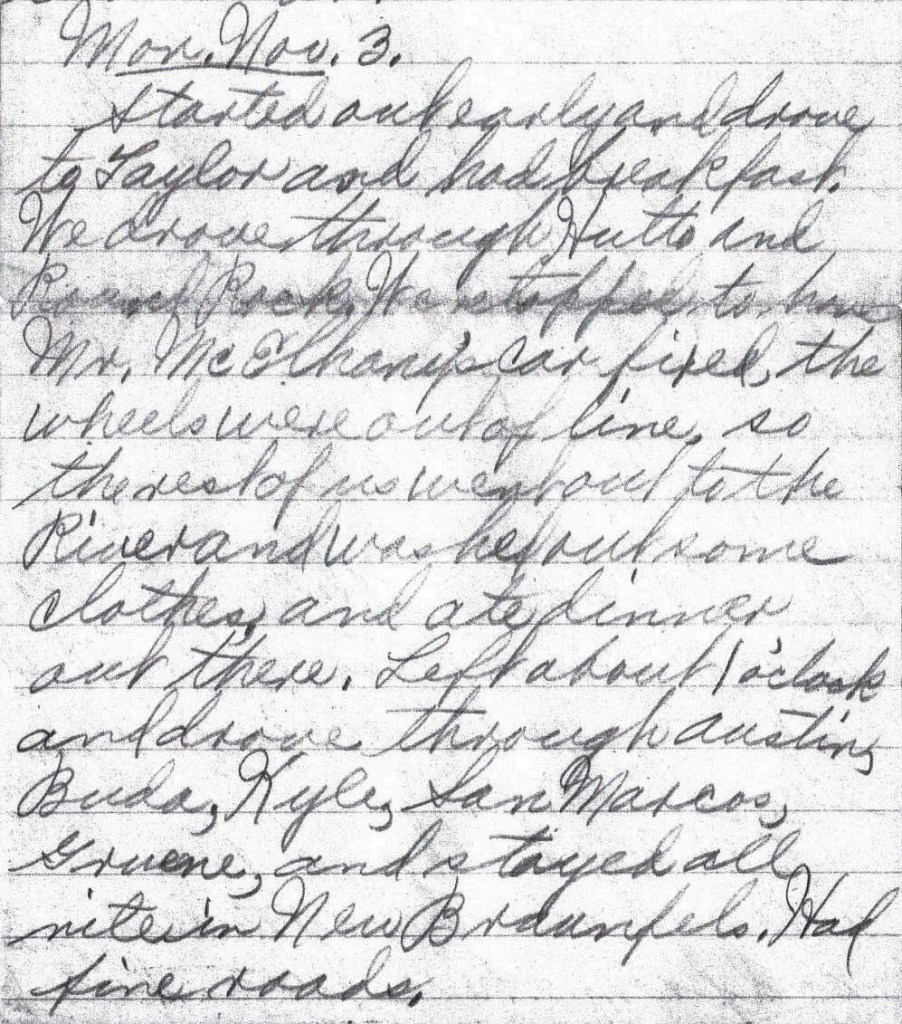
Mon. Nov. 3.
Started out early and drove to Taylor and had breakfast. We drove through Hutto and Round Rock. We stopped to have Mr. McElhany’s car fixed, the wheels were out of line, so the rest of us went out to the River and washed out some clothes, and ate dinner out there. Left about 1 o’clock and drove through Austin, Buda, Kyle, San Marcos, Gruene, and stayed all nite in New Braunfels. Had fine roads. – Lena Bevers
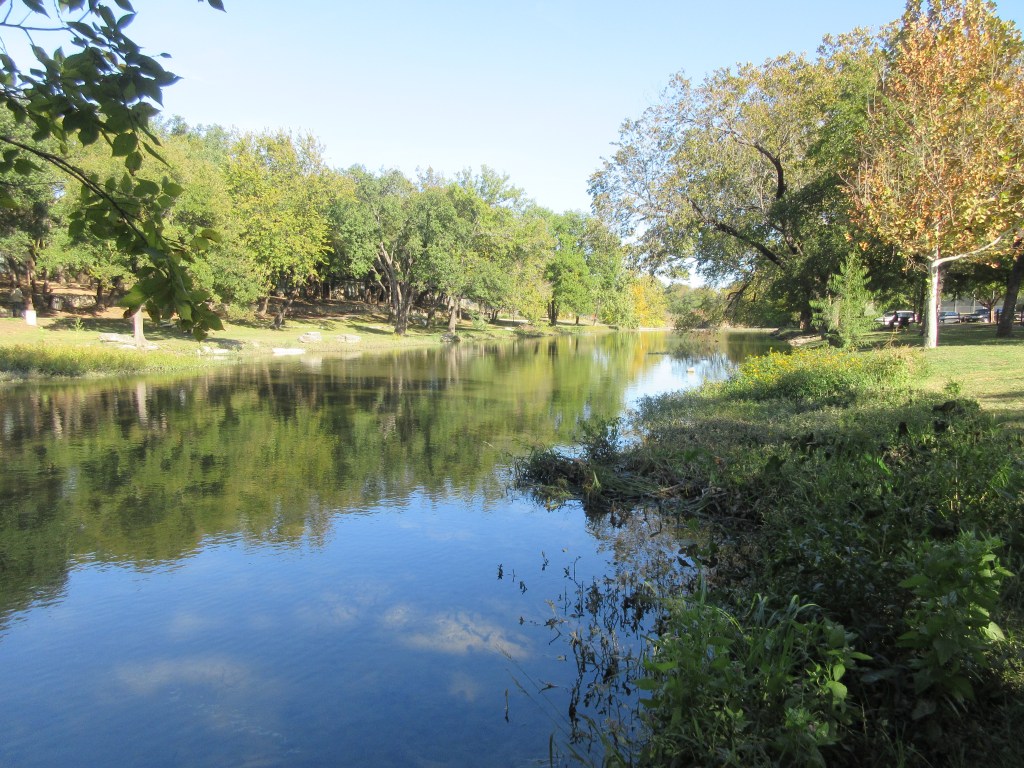
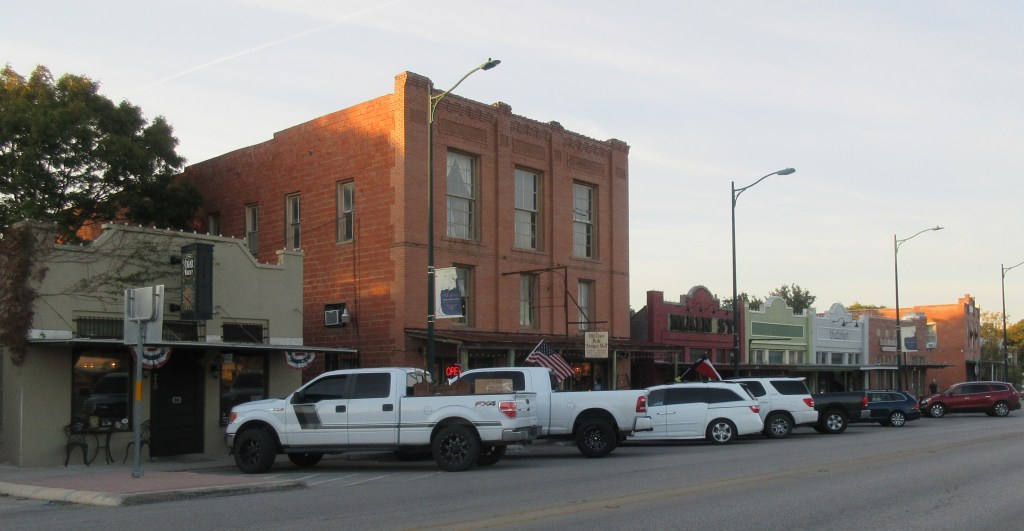
The traveling party had stayed the night in their cars, so on November 3, 1919 they departed early and had breakfast in Taylor, then headed to Hutto and Round Rock. Mr. McElhany’s wheels needed to be aligned. While that was being done, the rest of the party went to the river and washed their clothes, and they ate their dinner by the river. North of the town of Round Rock is a stream called Brushy Creek. Presently, there is a lovely park along Brushy Creek, named Round Rock Memorial Park. After seeing the two short blocks of historical buildings in Hutto, my mother and I had a late picnic lunch in the Round Rock park along with many families who were enjoying a warm (but not hot), clear and dry fall day.
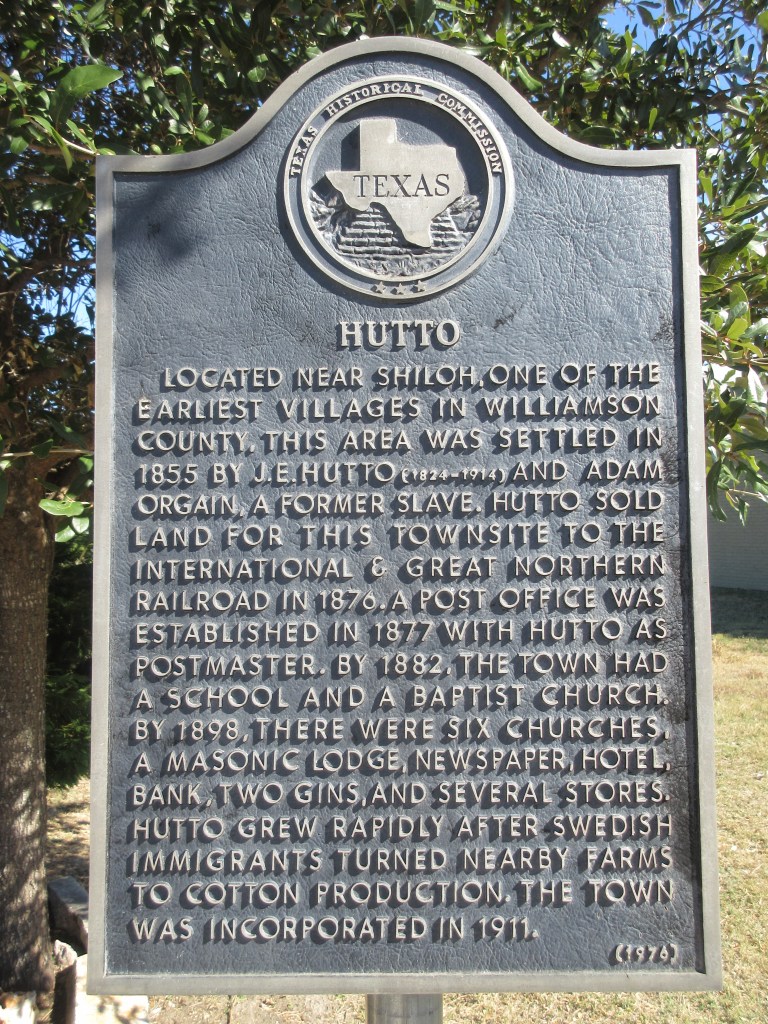
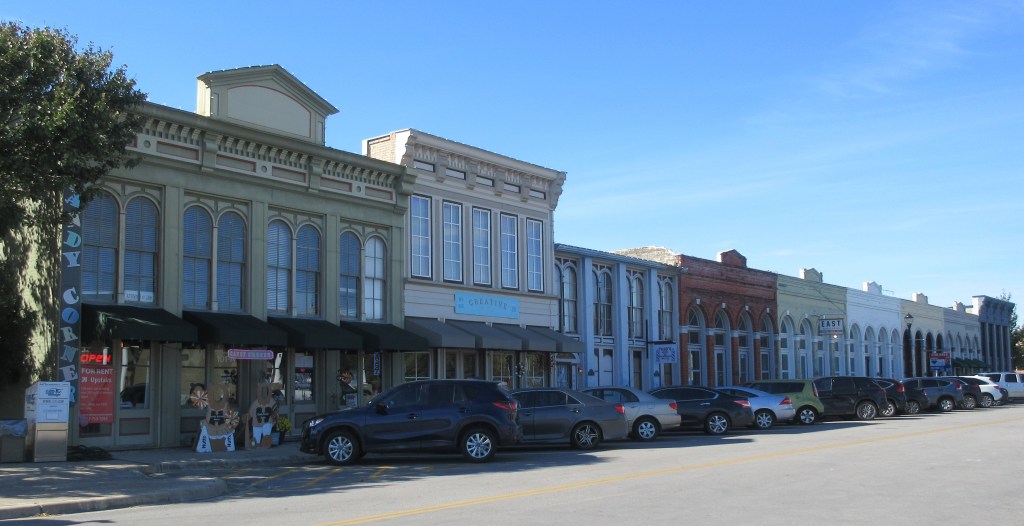
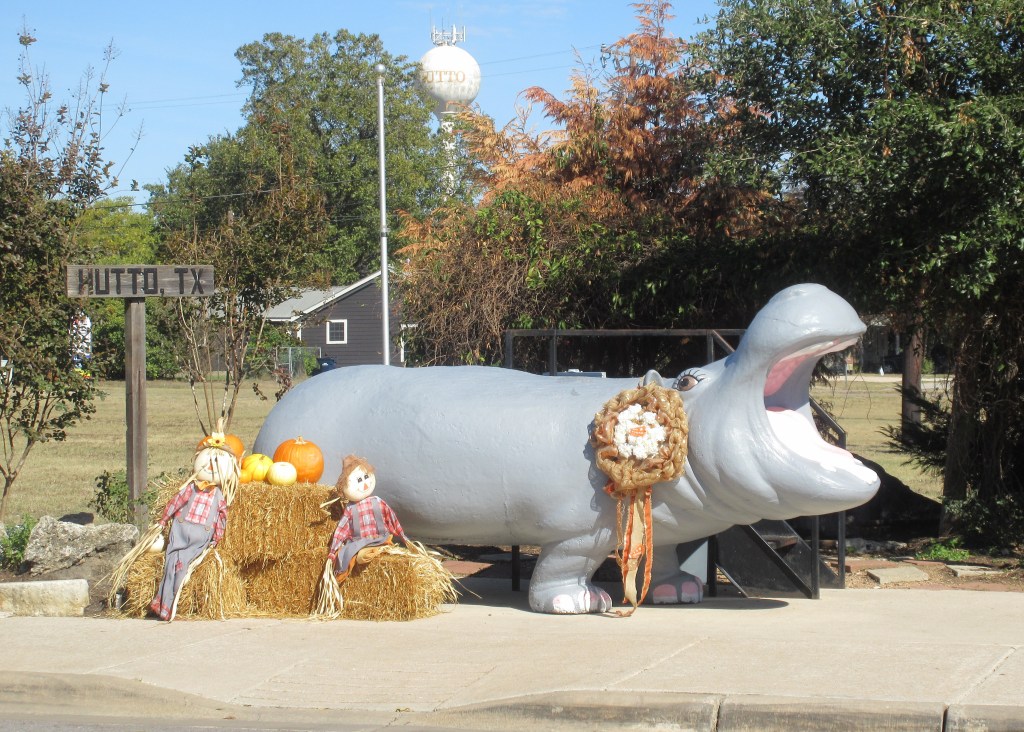
“The famous ‘Hutto hippo’ showed up later, in 1915. Local legend has it that a circus train stopped in Hutto to deliver mail, and take on water, as well as care for the animals. During the stop, a hippopotamus escaped its keeper and headed for the muddy waters of Cottonwood Creek. The train depot agent was forced to telegraph local communities to let them know to ‘STOP TRAINS. HIPPO LOOSE IN HUTTO’ ….”1
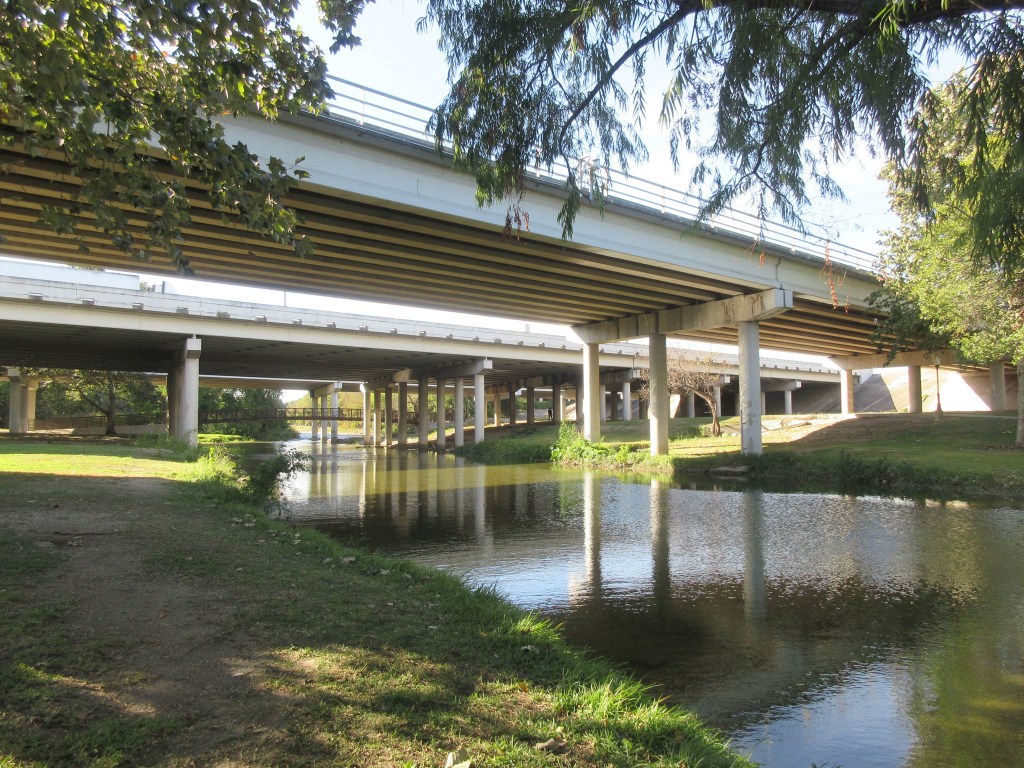
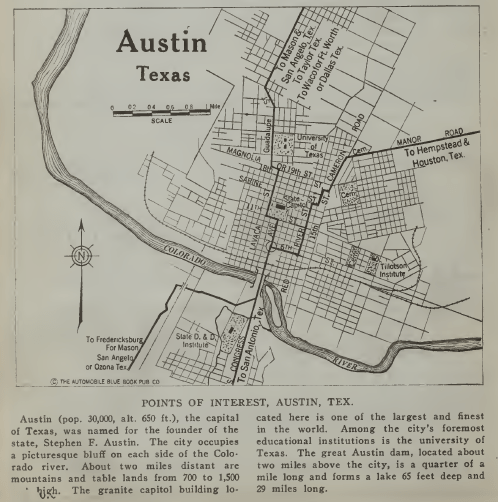
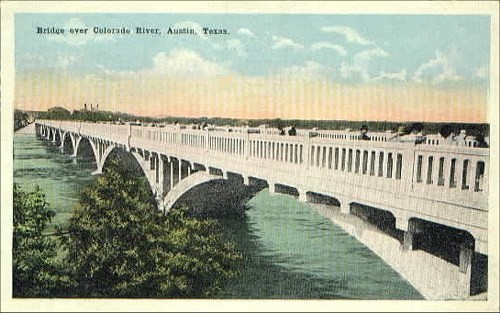
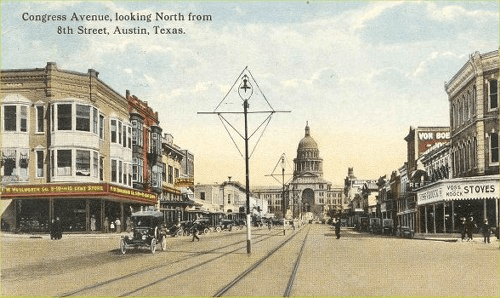
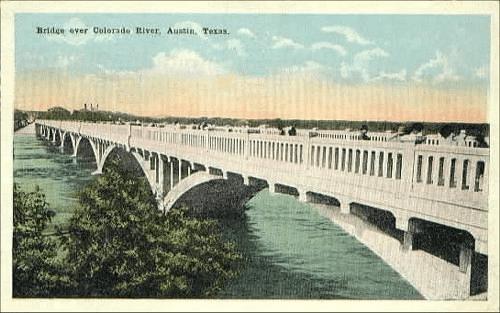
Based on the map of Austin above, which shows the route entering Austin from Taylor on Guadalupe Street, and the location of the bridge that crossed the Colorado River, it is very likely that Herbert Bevers and Mr. McElhany drove past the Texas State Capital. This is the route my mother and I took to pass through Austin. We crossed the Colorado River at the same point that is shown on the map above, but I haven’t researched enough to say whether the bridge is the same one that spanned the river one hundred years ago.
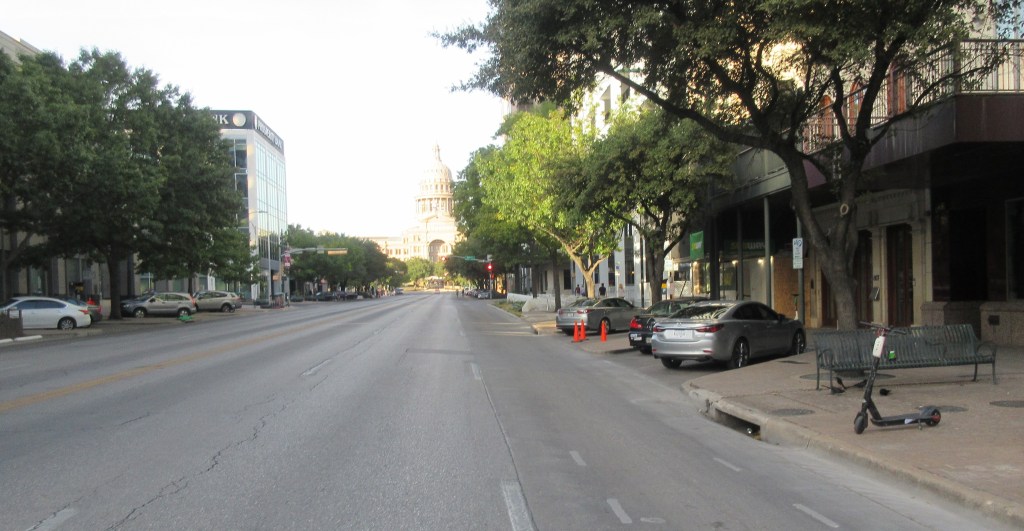
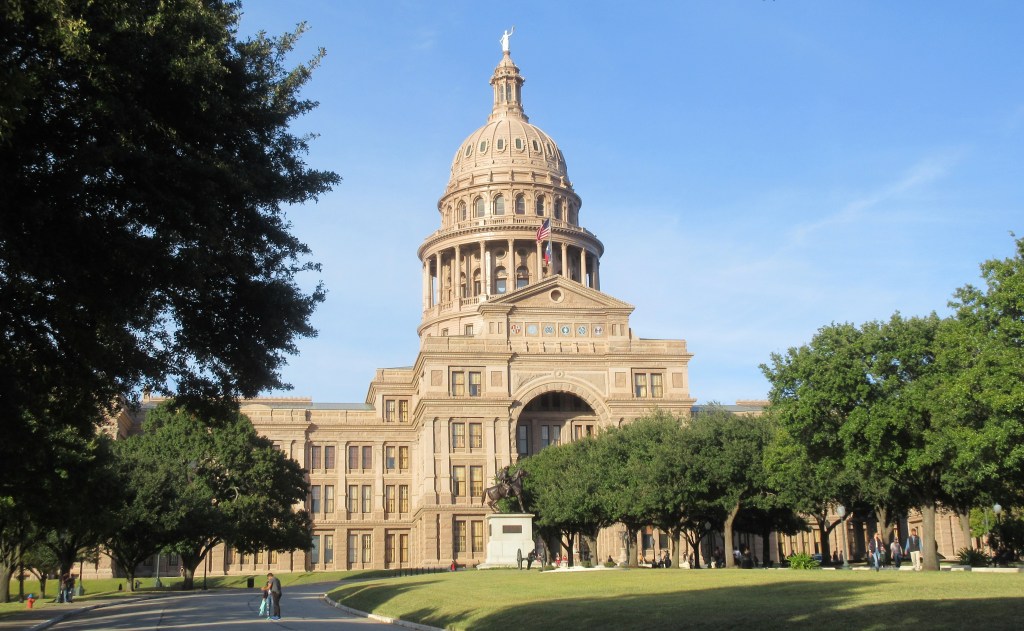
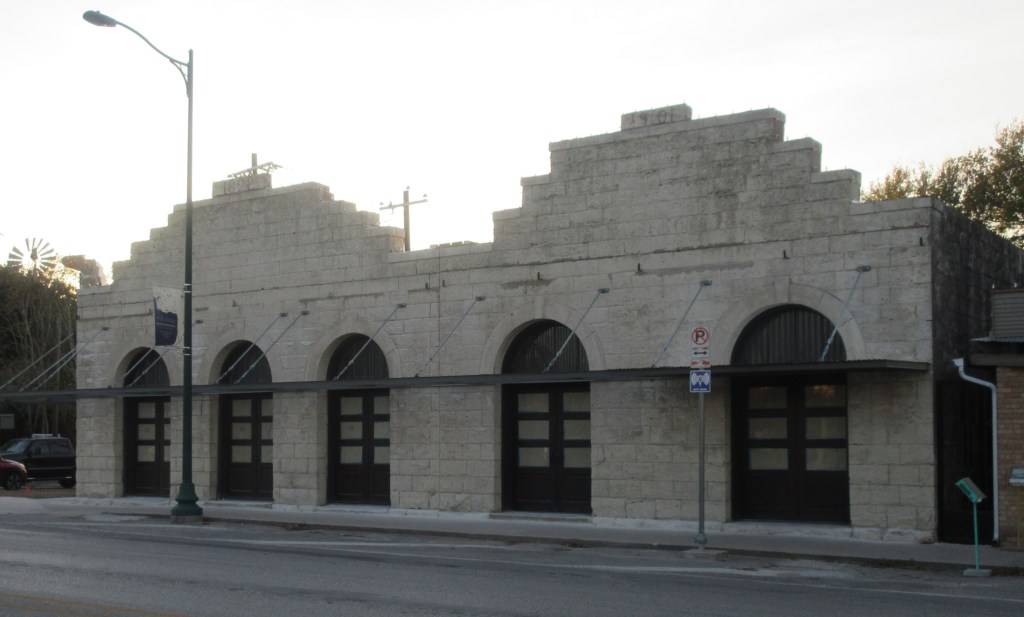
By the time we were out of the suburbs of Austin, the sun was low in the sky. Traveling on the city streets was slow. Also, daylight savings time had ended the night before, and we had not taken into account that it would get dark an hour earlier. We took a few pictures in Buda, south of Austin, and then decided that we needed to head to the motel, instead of going to the historical districts of Kyle, San Marcos and Gruene. For much of the way to New Braunfels we drove on the frontage road of Interstate 35. Some of the time it was faster driving on the frontage road, because there was too much traffic on Interstate 35 and the vehicles were driving slowly. When we arrived at our motel at 6:30 PM, it had been dark for at least half an hour.
Even though the caravan had a delay in Round Rock until 1:00 PM, they covered a lot of miles on this day. From Taylor to New Braunfels, it was about 75 miles. Lena notes that they “had fine roads.” The introduction to Route 779 in the 1920 Blue Book explains why the roads were so “fine” in this area. There was Tarvia on the roads from Austin to Buda (15 miles).5 The Merriam-Webster dictionary defines tarvia as “a viscid surfacing and binding material for roads that is made from coal tar – formerly a U.S. registered trademark.”6
Notes:
- Community Impact Newspaper, About Hutto, https://www.huttotx.gov/visitors/about_hutto/index.php.
- Automobile Blue Book Publishing Company, The Official Automobile Blue Book 1920, vol. 7 (New York: Automobile Blue Book Publishing Company, 1920): 654, https://ia601208.us.archive.org/26/items/case_gv1024_a92_1920_v_7/case_gv1024_a92_1920_v_7.pdf.
- Congress Avenue, looking north from 8th Street, Austin, Texas, http://sites.rootsweb.com/~txpstcrd/Towns/Austin/AustinCongressAve8.jpg.
- Bridge over Colorado River, Austin, Texas (1921), http://sites.rootsweb.com/~txpstcrd/Towns/Austin/AustinColoradoRiverBridge1921.jpg
- Automobile Blue Book Publishing Company, The Official Automobile Blue Book 1920, vol. 7: 655.
- Tarvia, Merriam-Webster Dictionary, https://www.merriam-webster.com/dictionary/Tarvia.
 Sojourners, Settlers & Other Legacy Conveyors