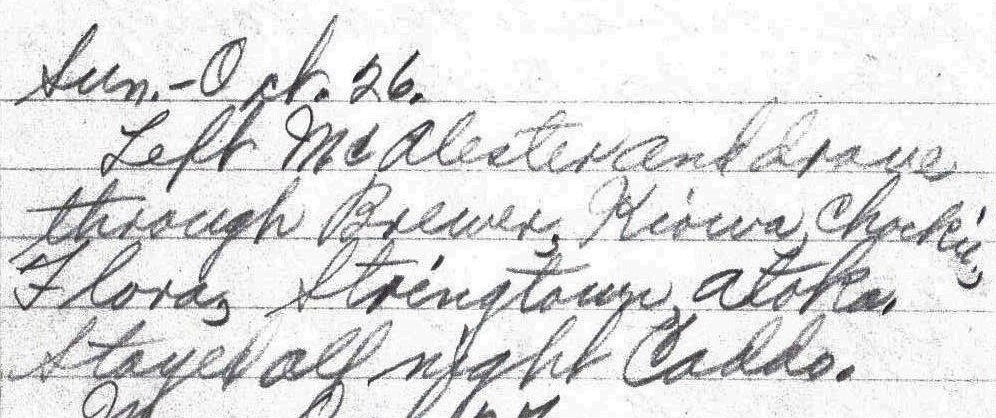
Left McAlester and drove through Brewer,
Kiowa, Chockie, Flora, Stringtown, Atoka.
Stayed all night Caddo. – Lena Bevers
The drive for the Bevers family on October
26, 1919 was one of the shorter drives that they made up to that point. Florence Bevers explains the reason: “Left
McAlester and had terrible roads. Broke
a spring and had 2 blowouts, 2 [punctures] within one and one-half miles. Got to town and put 2 new casings on and had
no more trouble all the way. Ate our
dinner on the road side and had rough and muddy roads all the way. McElhaney got stuck twice. Stayed all night in Caddo and Pa got a new
spring for the car and put it on.”1
Herbert Bevers and Mr. McElhany again used
the King of Trails/Jefferson Highway.
They started in McAlester and traveled through several small towns. Some of the towns are no longer in existence. My mother and I could not find Brewer nor
Chockie, and when we looked for Flora, we only saw a correctional
facility. At Kiowa and Stringtown we
didn’t find any historical buildings.
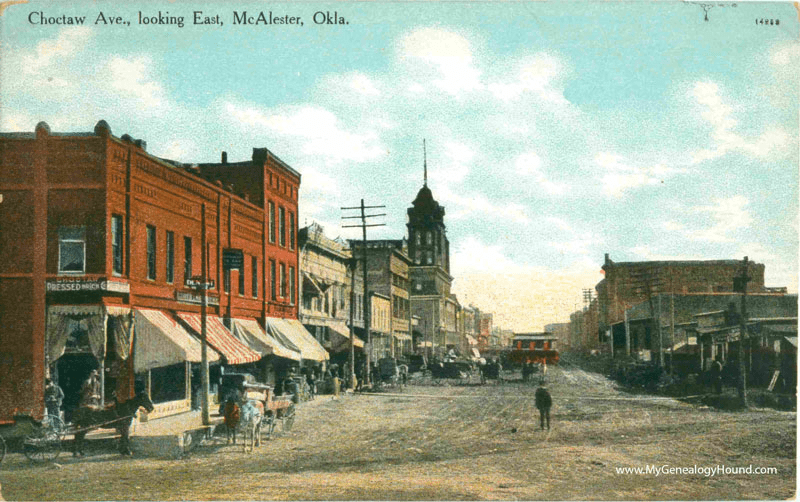
Postcard of Choctaw Avenue, looking East, McAlester, Oklahoma, postmarked 19092 (Courtesy of My Genealogy Hound)
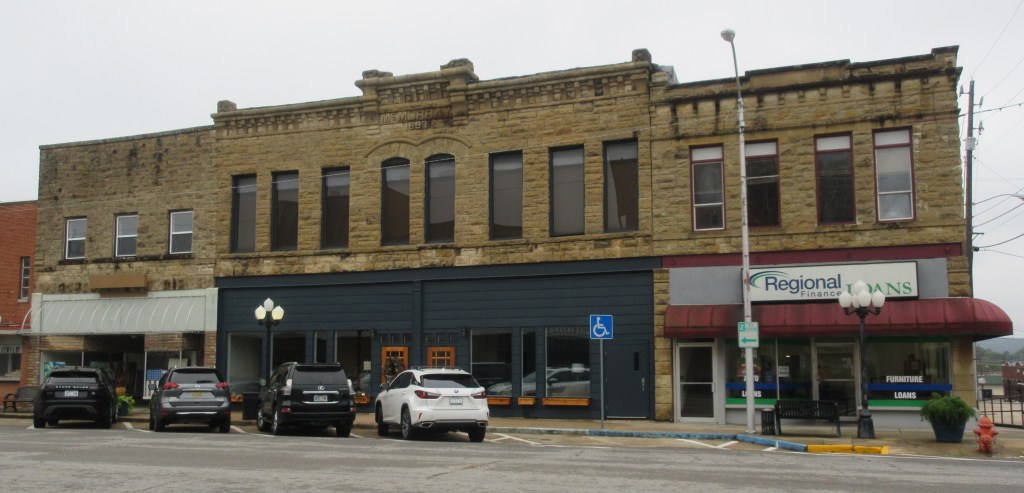
The McMurray Building in McAlester, Oklahoma is dated 1897. (Photograph by MRW October 26, 2019)
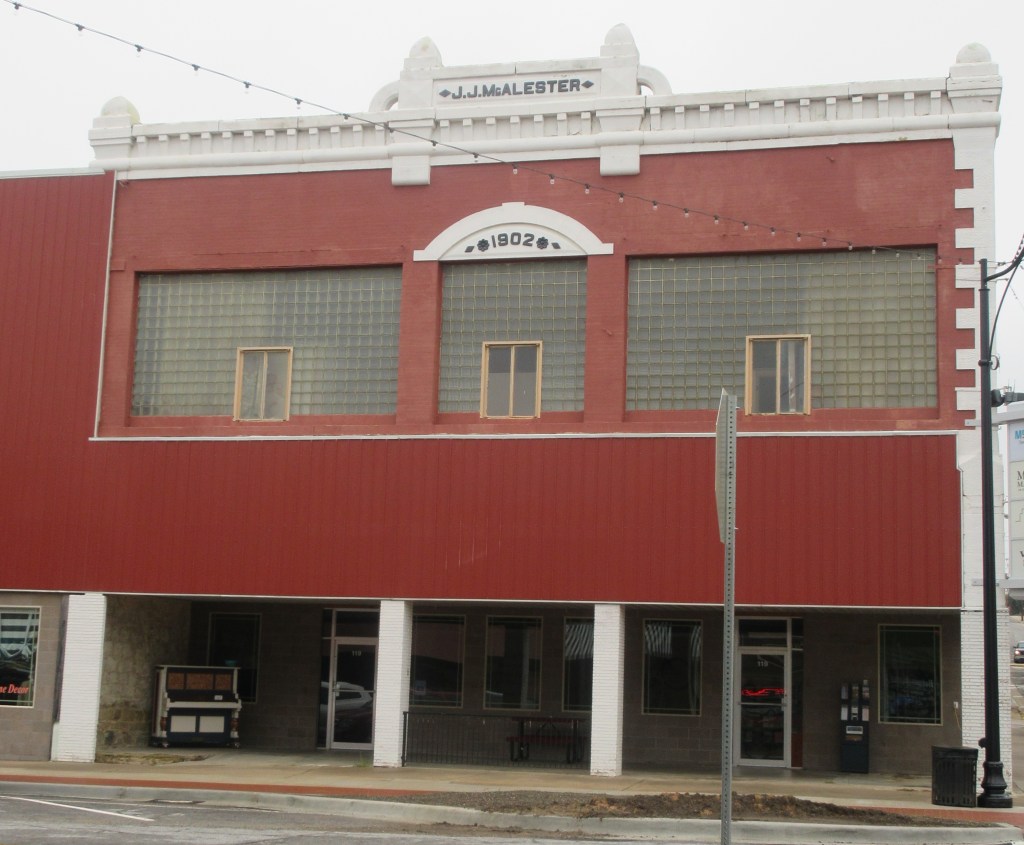
The McAlester Building is dated 1902. (Photograph by MRW October 26, 2019)
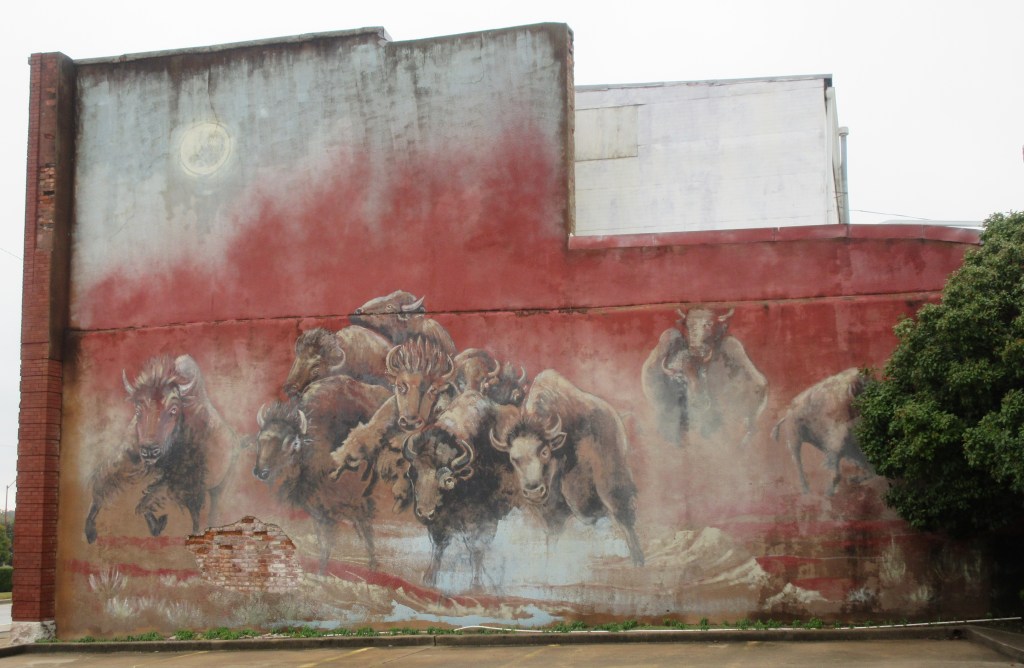
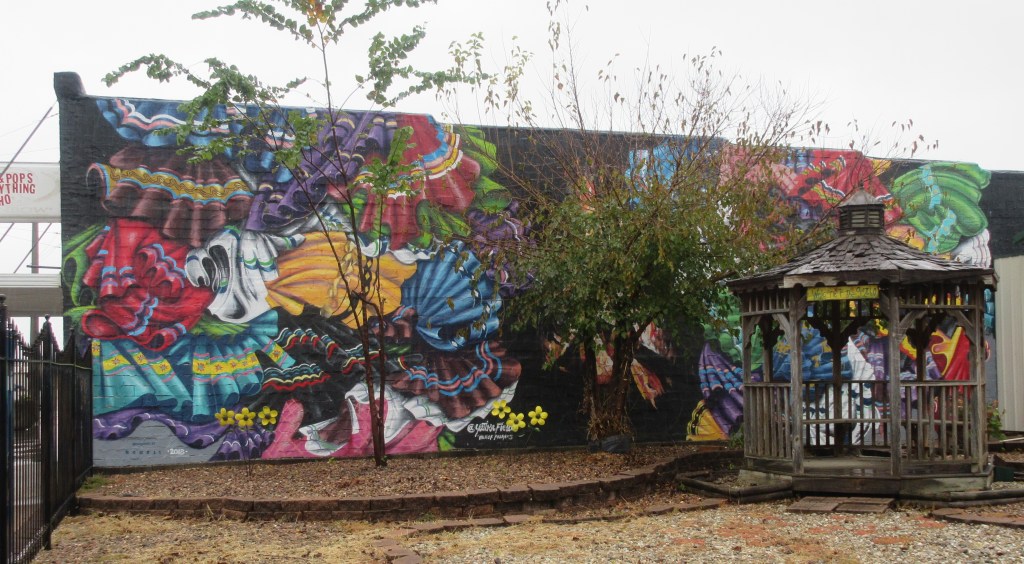
A mural in downtown McAlester (Photograph by MRW October 26, 2019)
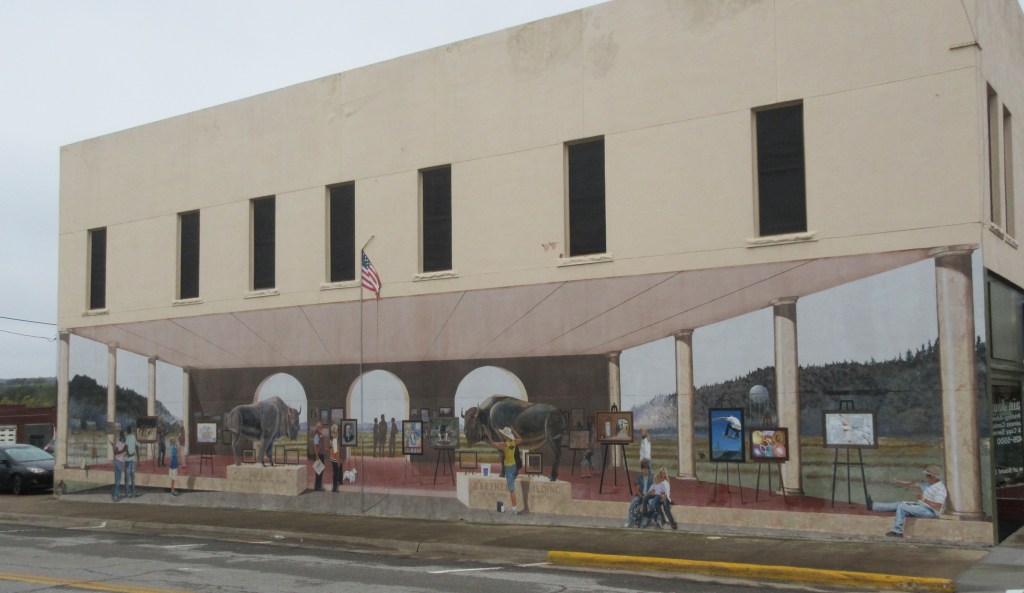
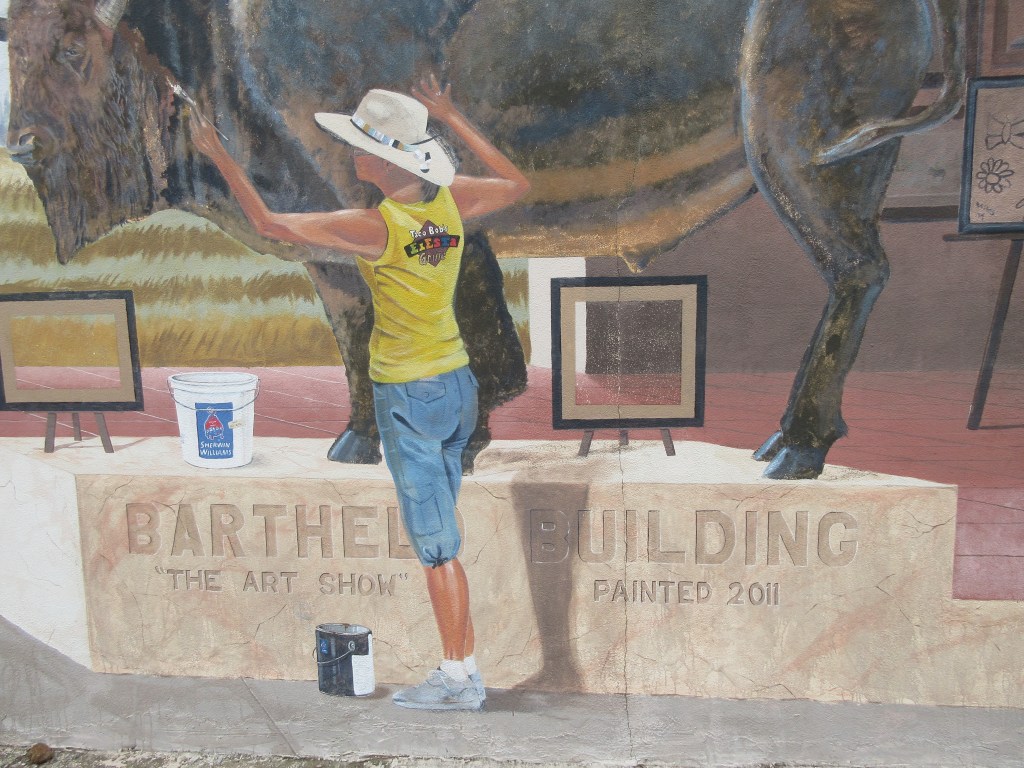
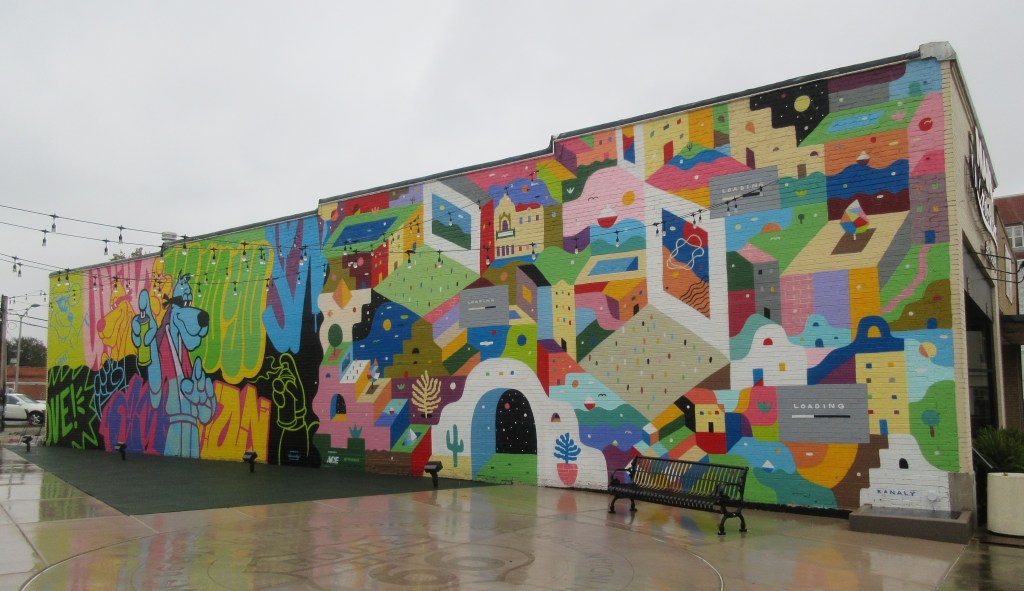
Another mural on a street-side wall of a building in downtown McAlester has a 3-dimensional effect (Photograph by MRW October 26, 2019)
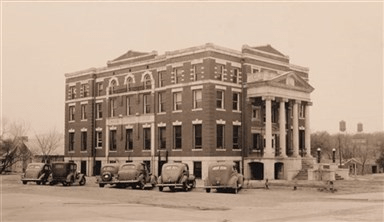
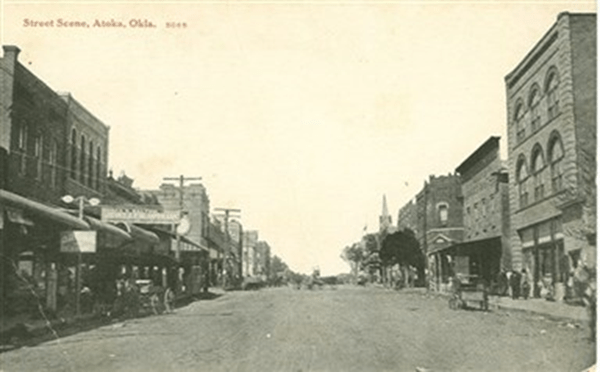
The running directions of Route 916 of The Official Automobile Blue Book 1920 mentions passing the court house in Atoka.3 Below is a picture of the Atoka County Court House, which was constructed in 1913.4 It was six years old when Lena and Herbert passed it. This court house was used until 1962, so we did not see it when we drove down Court Street.5
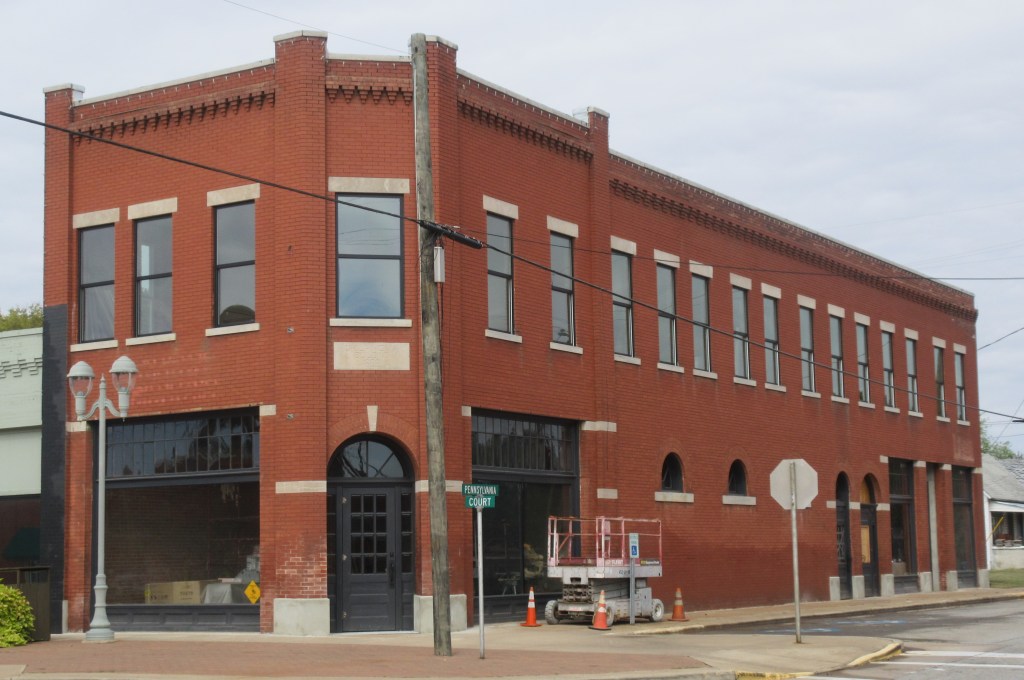
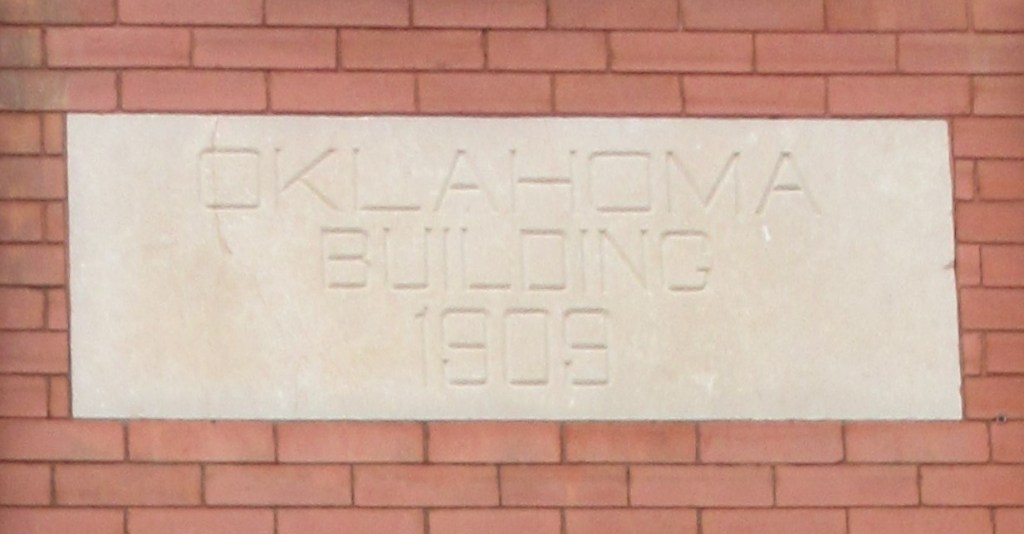
Atoka County Courthouse, constructed 1913 (Courtesy of Atoka County Historical Society)Court Street (Courtesy of Atoka County Historical Society)6The Oklahoma Building in Atoka is dated 1909. (Photograph by MRW October 26, 2019)
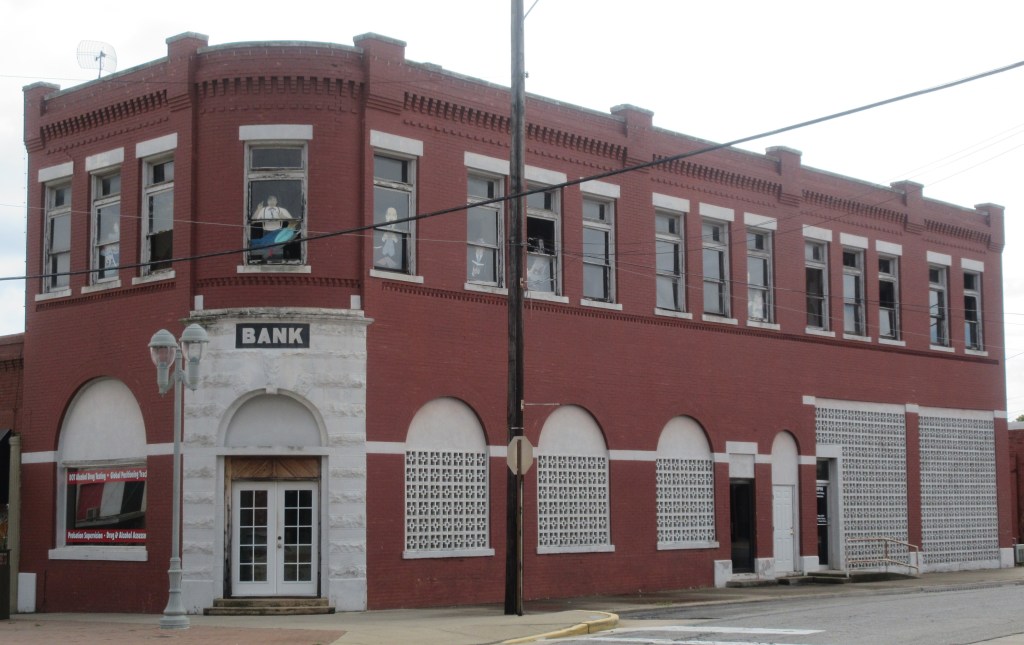
Diagonally across the street from the Oklahoma Building is the Bank in Atoka, Oklahoma. (Photograph by MRW October 26, 2019)
My mother and I could not locate a motel in
Caddo, Oklahoma when we were using an online travel website, so we made our
reservation in Atoka instead. We left
McAlester at 11:00 AM and arrived in Atoka at 1:00 PM, so we decided to take a
scenic drive on the Indian Nation Turnpike and returned to Atoka at 4:00 PM.
Notes:
B. Winkelmann, Our Trip to Texas [Transcription of Our Trip to Texas by Florence Bevers, 1919] (unpublished, n. d.): 3.
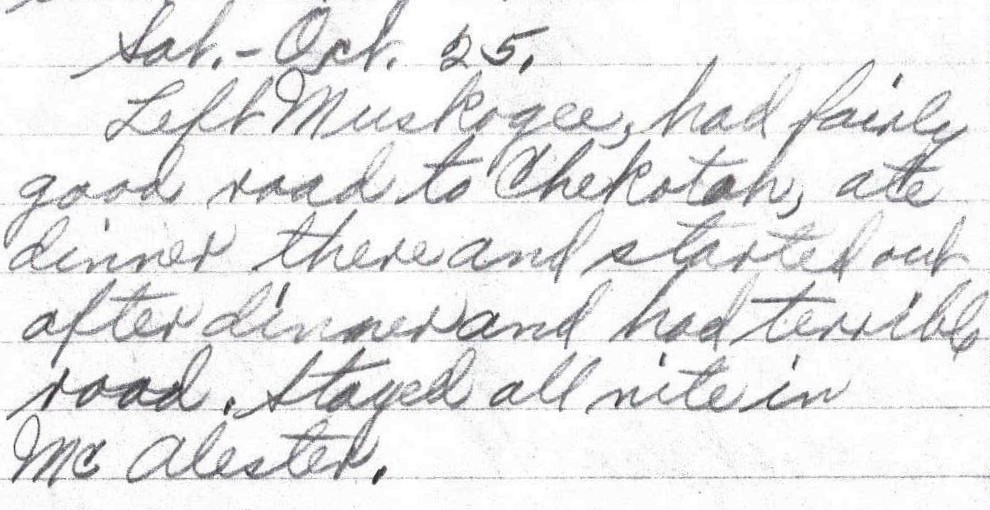
Left Muskogee, had fairly good road to
Chekotah, ate dinner there and started out after dinner and had terrible
road. Stayed all nite in McAlester. – Lena Bevers
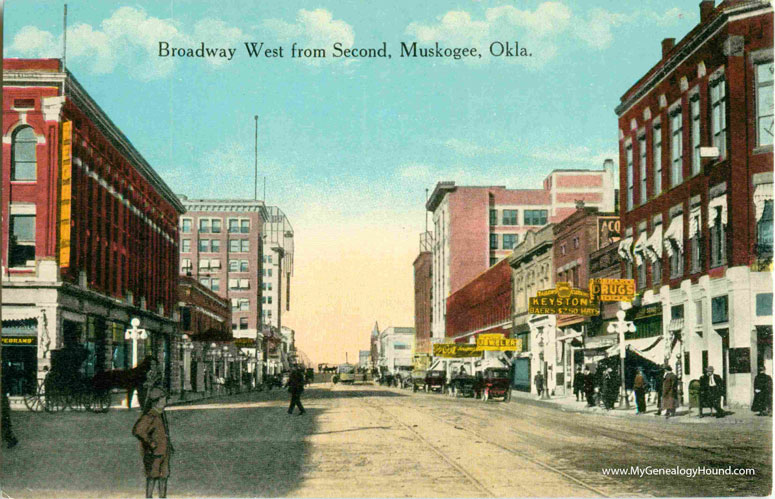
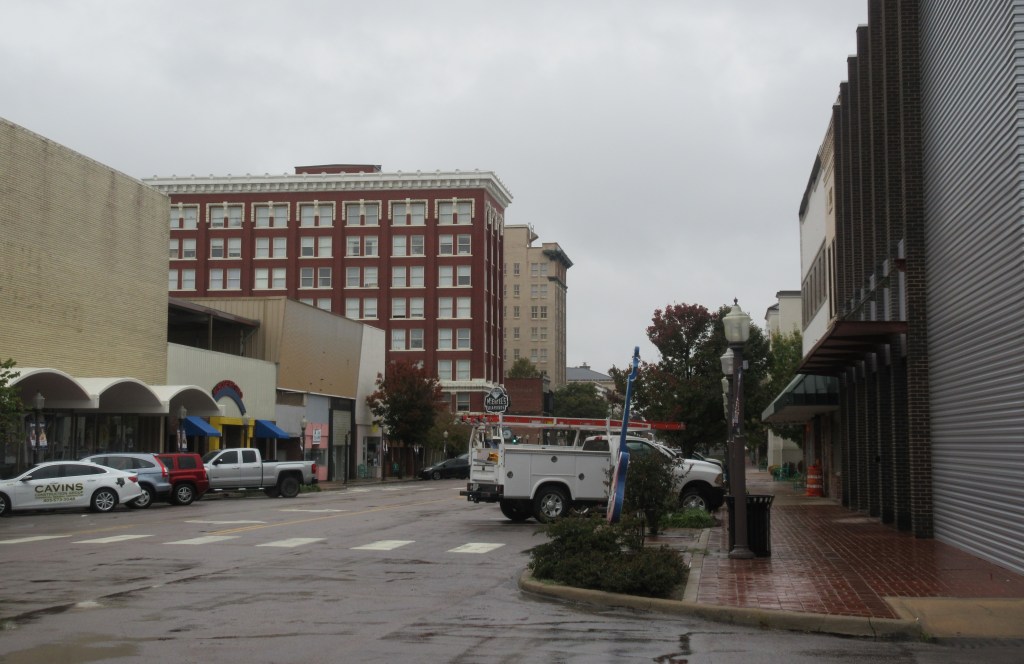
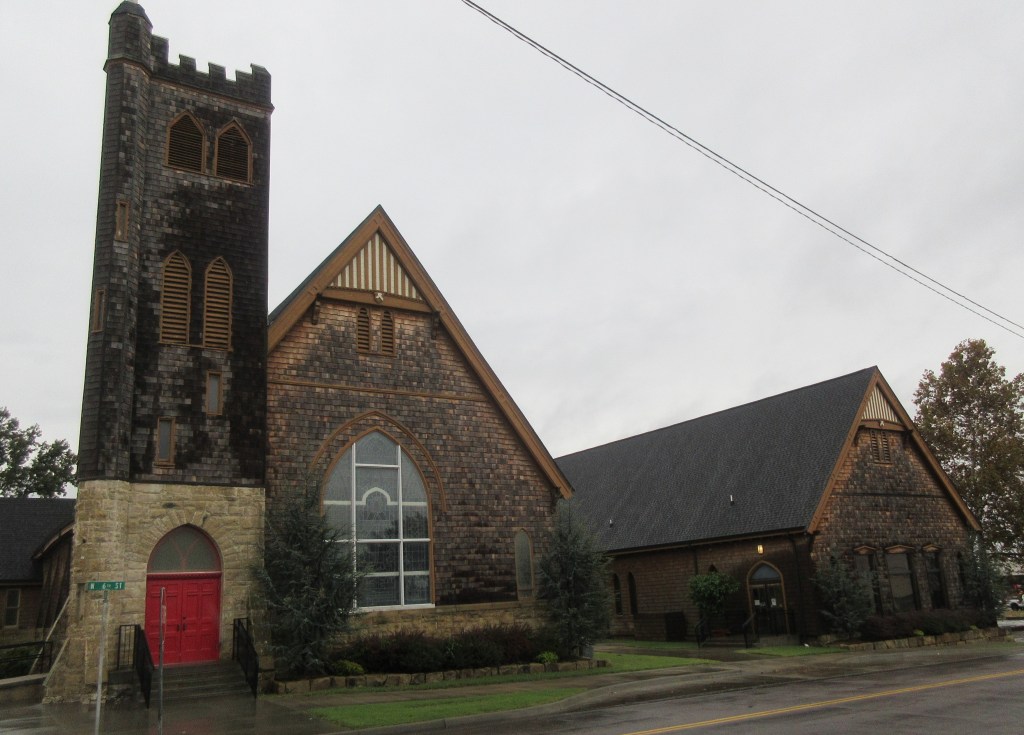
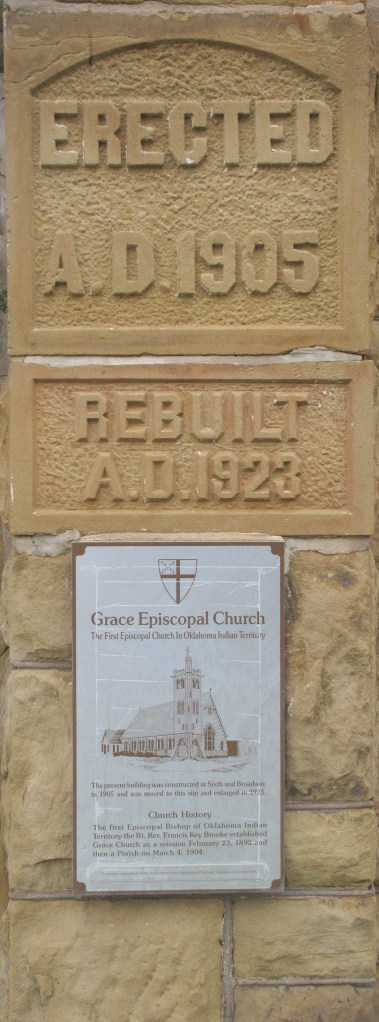
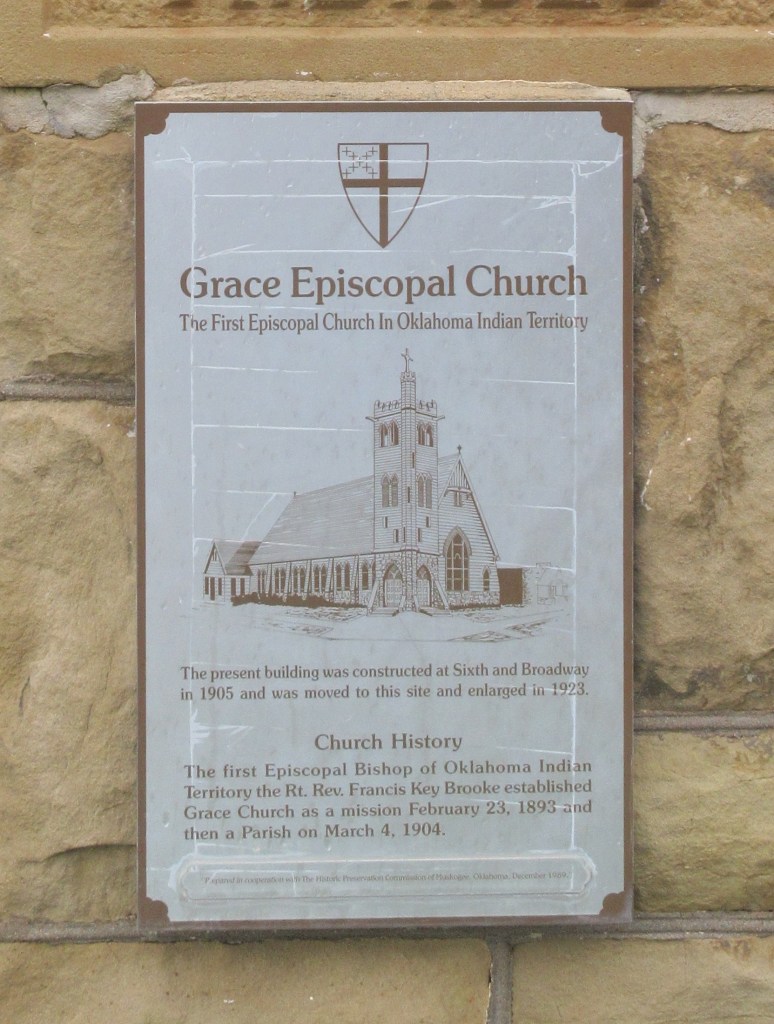
During the century since the Bevers family drove through Muskogee, Oklahoma, many of the buildings seen in the postcard below have been replaced. But in the background on the left side of Broadway, there are two buildings that are still standing and can be seen in the photograph that I took today. The most interesting building we saw was Grace Episcopal Church. It was built in 1905 at 6th and Broadway, then in 1923 it was moved and enlarged at a site a couple blocks away. The siding made of wood shingles was very attractive.
View of Broadway West from Second, Muskogee, Oklahoma, ca. 1915-1920 (Image provided courtesy of My Genealogy Hound at MyGenealogyHound.com)1
Broadway West from Second, Muskogee, Oklahoma (Photograph by MRW October 25, 2019)
Grace Episcopal Church, Muskogee, Oklahoma (Photograph by MRW October 25, 2019)
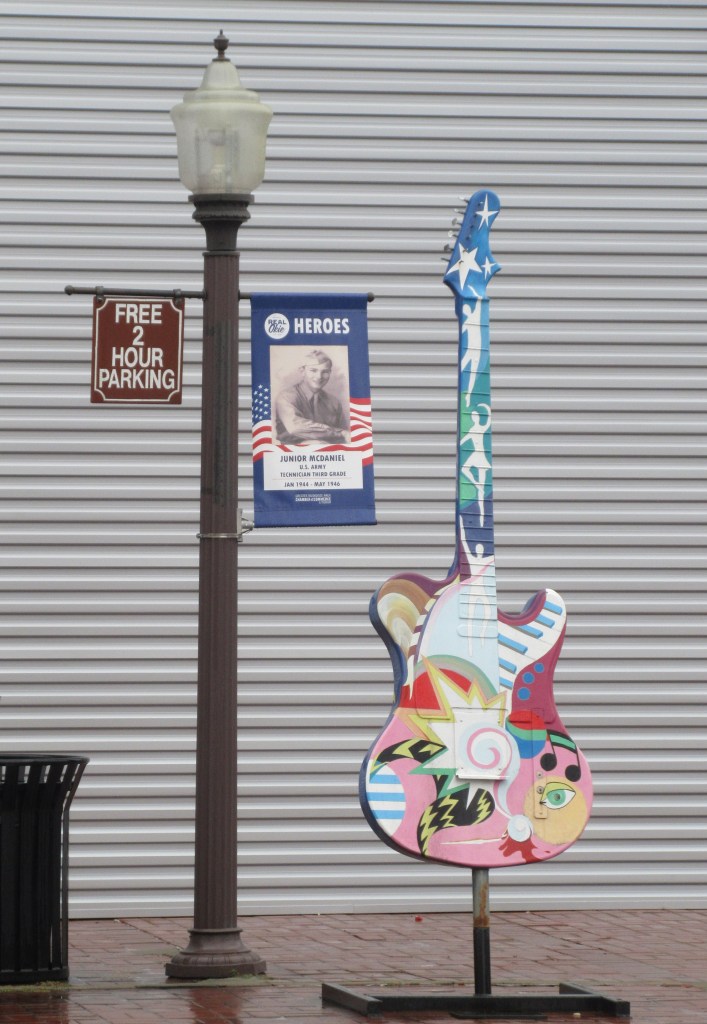
Throughout the city, there are painted guitars as reminders of the musical roots of Muskogee.(Photograph by MRW October 25, 2019)
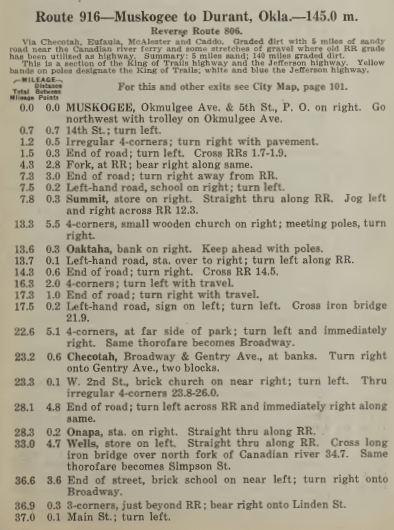
On October 25, 1919 the Bevers family started out following the King of Trails and Jefferson Highways. Referring to Route 916 in The Official Automobile Blue Book 1920, the road is described as mostly graded dirt, with a 5-mile stretch of sandy road near the Canadian River and “some stretches of gravel where old RR grade has been utilized as highway.”2 Lena states that they “had fairly good road to Chekotah, ate dinner there.” To follow Herbert and Lena’s route today, we again headed south on U. S. Highway 69, a divided four-lane highway. At Checotah, we stopped for lunch and filled the car with gas. If the original King of Trails/Jefferson Highway was still in existence today, the following photograph shows what a driver would encounter when he reached about eight miles south of Checotah.
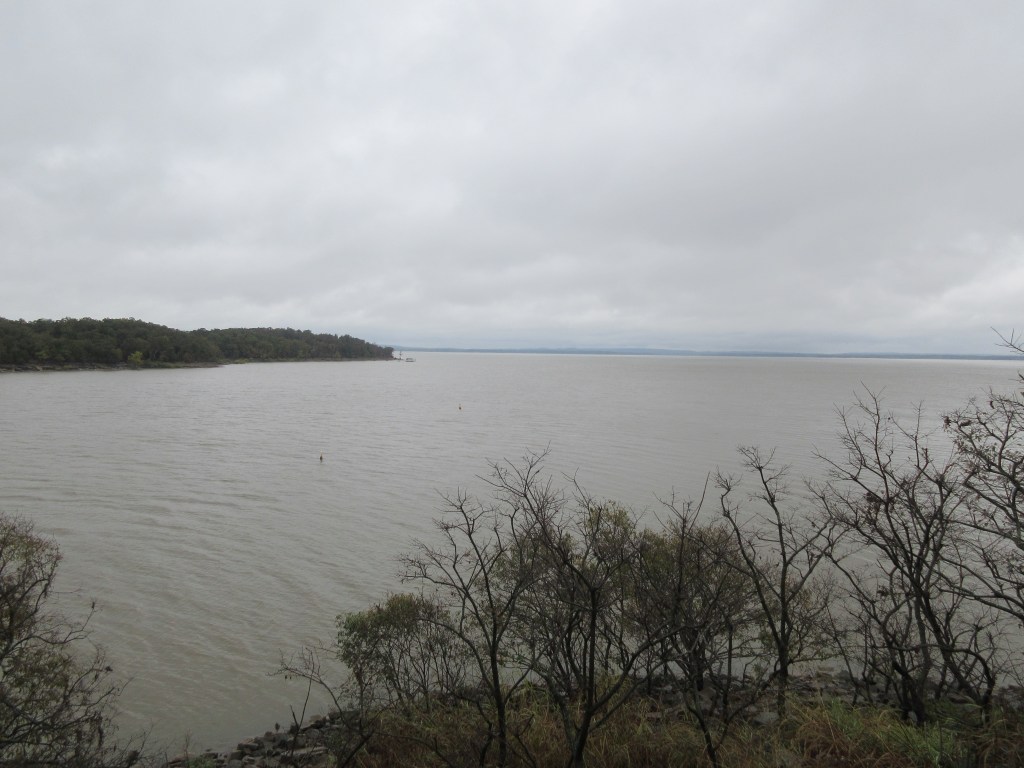
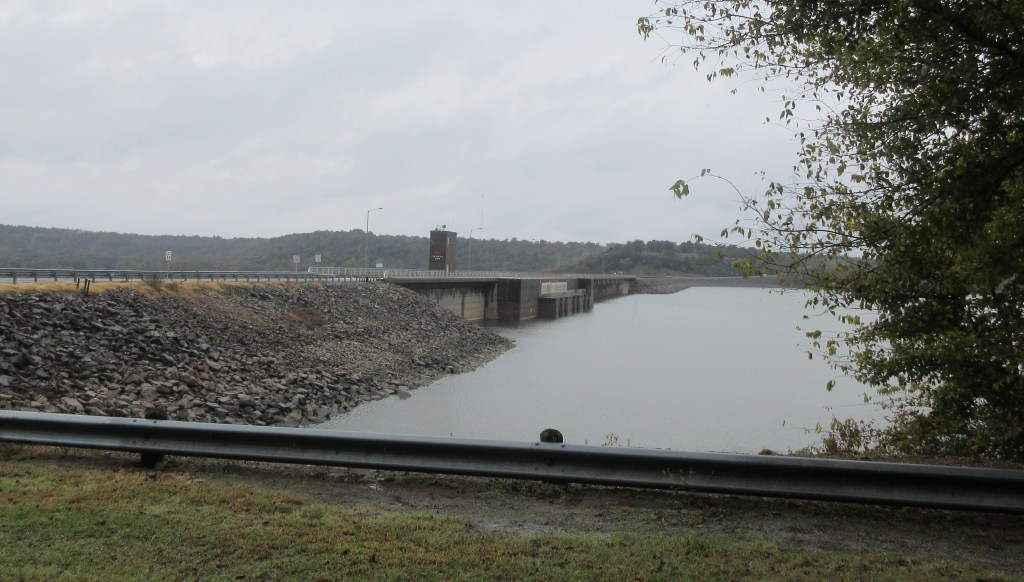
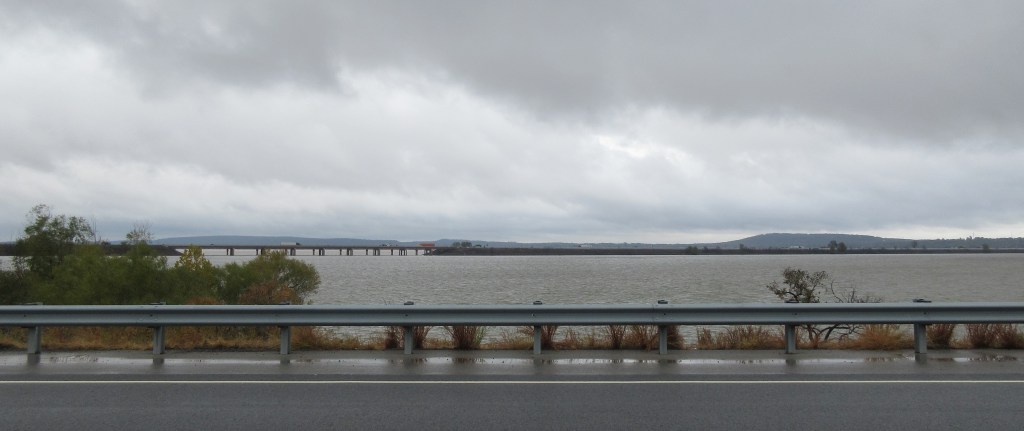
Between Onapa and Canadian, Oklahoma, some of the roads that the Bevers family traveled are now covered with the waters of Lake Eufaula (Photograph by MRW October 25, 2019)
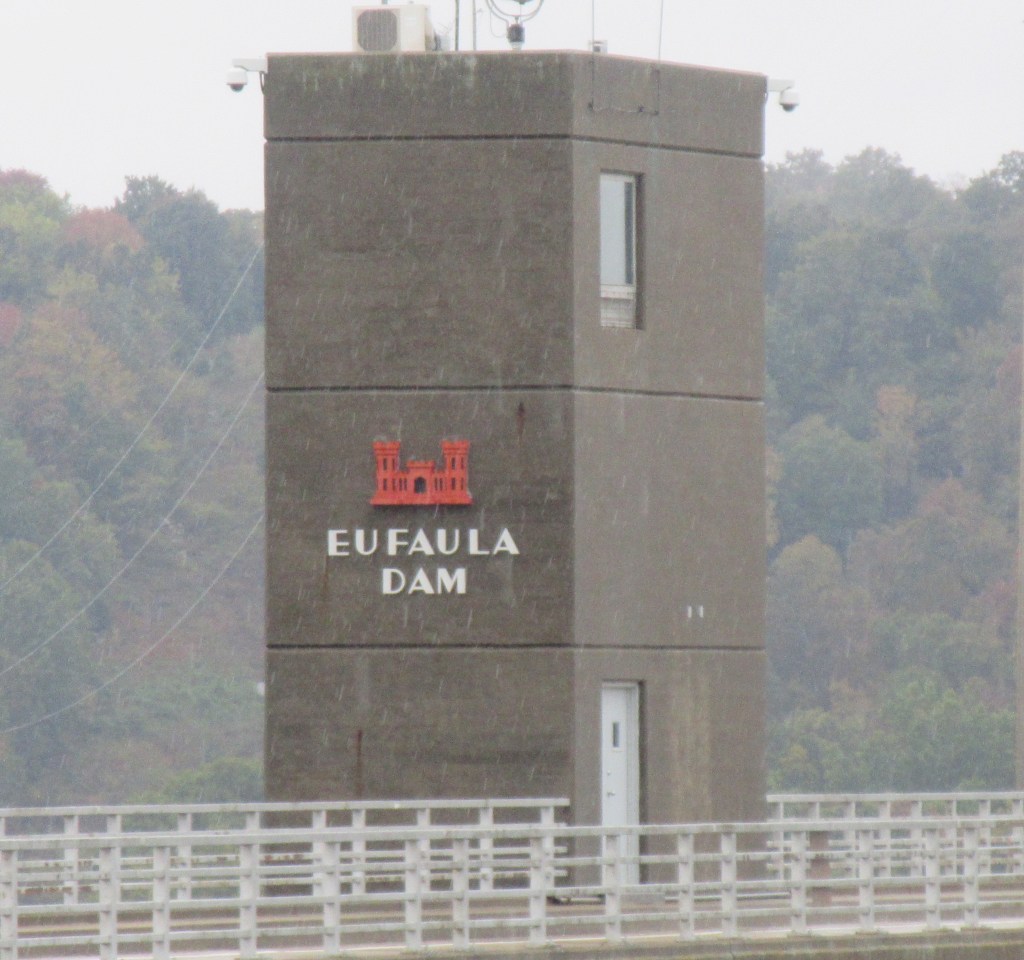
The Eufaula Dam was completed in 1964, creating a reservoir fed by the Canadian River and other rivers. “The [Eufaula Dam] project was authorized by the 1946 River and Harbor Act. It was designed by the Tulsa District, U.S. Army Corps of Engineers, and built under the Corps supervision at a cost of $121,735,000. Construction was started in December 1956 and was completed for flood control operation in February 1964. President Lyndon B. Johnson dedicated the project on September 25, 1964.”3
Eufaula Dam (Photograph by MRW October 25, 2019)
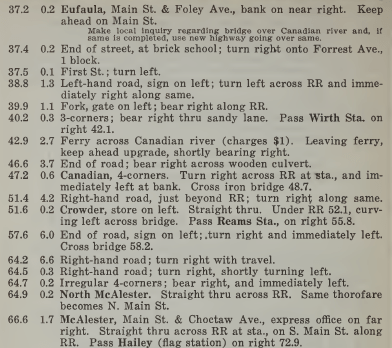
(Photograph by MRW October 25, 2019)
(From The Official AutomobileBlue Book 19204)
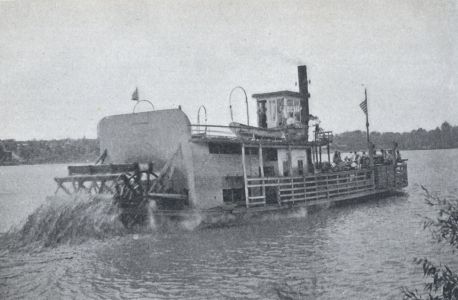
When arriving in Eufaula, a note in the running directions for Route 916 in the 1920 Blue Book tells the reader: “Make local inquiry regarding bridge over Canadian river and, if same is completed, use new highway going over same.”5 Lena and Herbert with their family arrived at this point only a few months before this guide book was published, so they may have had to make this inquiry to determine how to cross the Canadian River. If the bridge was not completed yet, a motorist following the 1920 Blue Book directions would find that about six miles further down the route he would need to cross the Canadian River on a ferry. In fact, this is what Herbert and Lena did, for at the end of Lena’s journal, she makes a final comment, stating that they were “ferried across the Canadian river.”6 The charge for using the ferry was $1.00.7 Below is a picture of a ferry at Boonville, Missouri, dated 1913. Although this isn’t the ferry they utilized, nor is it the location where they were ferried, this photograph gives us an idea of what type of ferry they would have used.
Ferry across Missouri River at Boonville, Missouri, 1913 (Public Domain; Courtesy of Federal Highway Administration)8
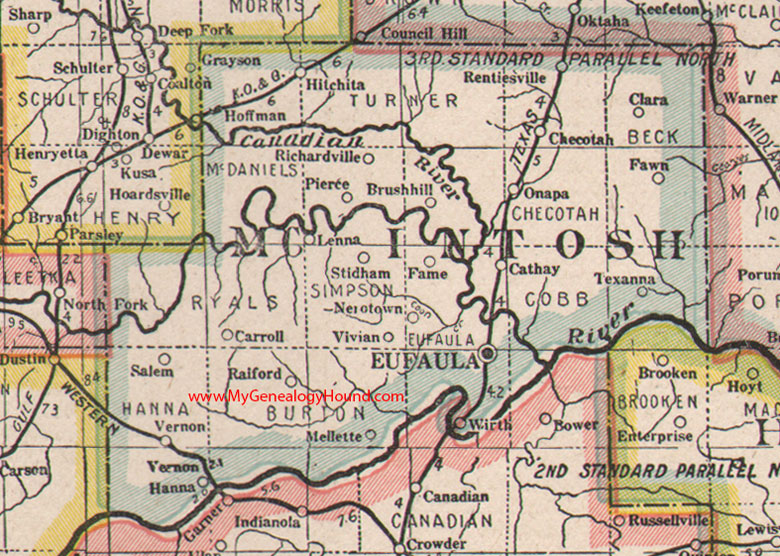
The location of the ferry was at Wirth between Eufaula and Canadian. (Image provided courtesy of My Genealogy Hound at MyGenealogyHound.com)9
“When the Jefferson Highway was first located through Eufaula the only way of crossing the South Canadian River, about four miles below the town, was by means of a rather uncertain ferry, and the citizens of Eufaula, feeling the great need of a good bridge across the river, incorporated The Jefferson Highway Bridge Company, and at a cost of almost a quarter of a million dollars, built the present splendid structure of steel and concrete, forty feet above low water, affording a 365 day crossing throughout the year. Already the traffic over this bridge, which was opened for use April 21, 1920, bids fair to justify the large expenditure upon it and it is rapidly becoming one of the notable landmarks of the neighborhood.”10
The approximate site of the ferry crossing where Herbert and Lena’s family crossed the Canadian River, about 5.5 miles south of Eufaula near U. S. Highway 69. (Photograph by MRW October 25, 2019)
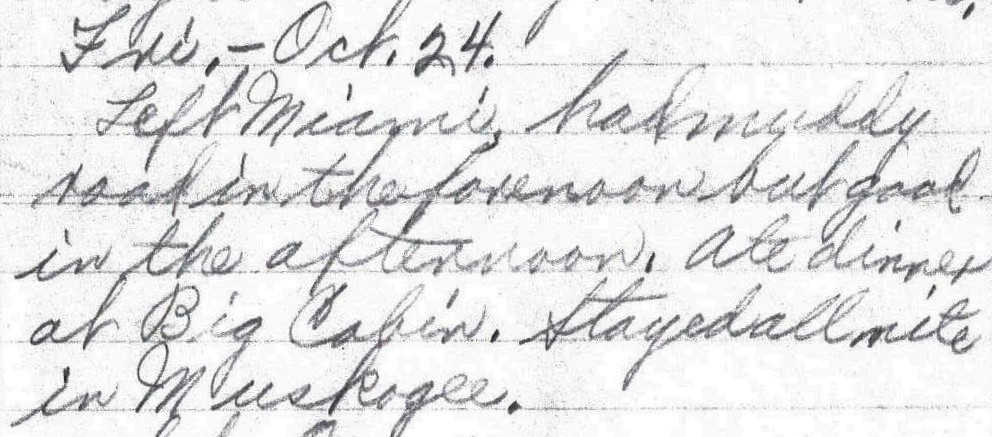
Left Miami, had muddy road in the forenoon
but good in the afternoon. Ate dinner at
Big Cabin. Stayed all nite in Muskogee. – Lena Bevers
The town of Miami, Oklahoma, which was named after the Miami Indians and is pronounced “My-Am-Uh,”1 is only about 10 miles south of the border between Kansas and Oklahoma. Presently, Miami’s Main Street is the longest main street on Historic Route 66.2 When the Bevers family arrived in Miami in 1919, Main Street was not yet designated as U. S. Highway 66. That designation would not occur until the summer of 1926, and this designation “acknowledged the route as one of the nation’s principal east-west arteries.”3
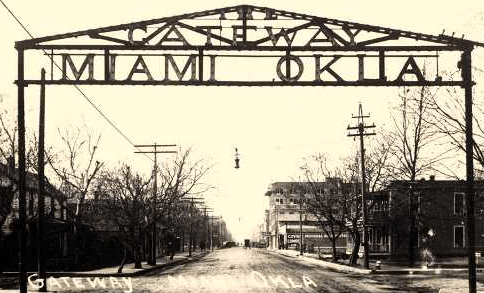
The Bevers family may have entered the town through the “Gateway.”
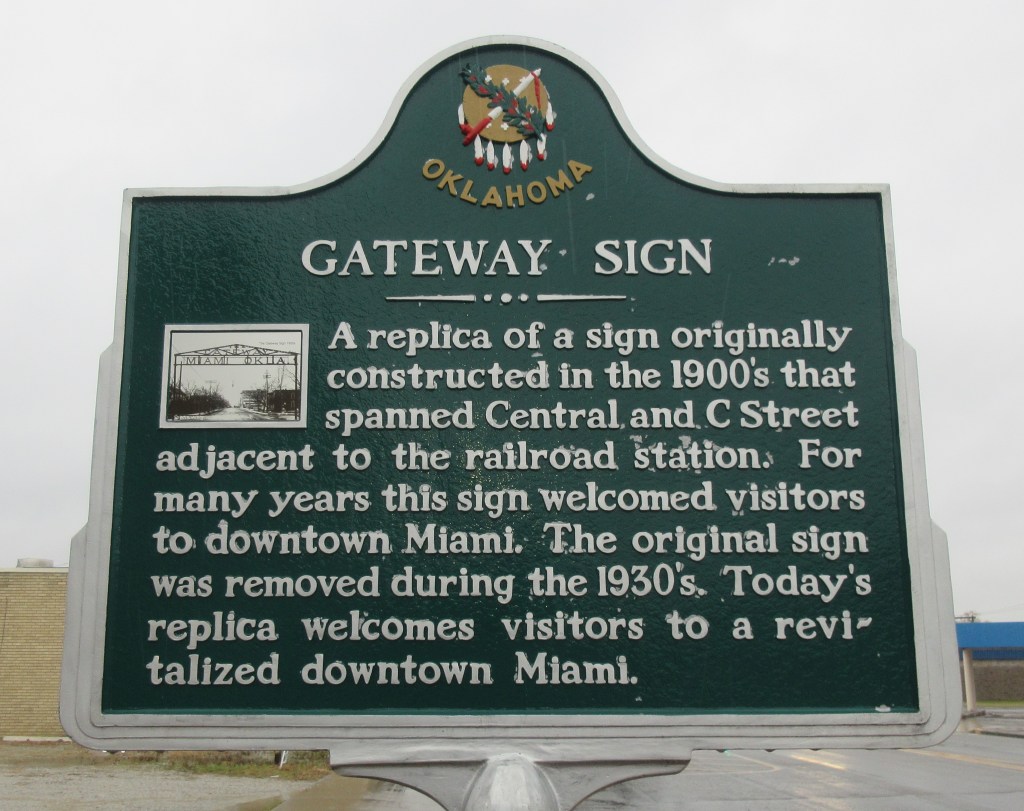
“In the early 1900s a steel arch greeted visitors entering Miami (by train), as it spanned East Central Avenue (between C and D Streets) next to the railway station. … The arch was removed in the 1930s.”4
“Gateway”, Miami, Oklahoma (Courtesy of John Scherer)5
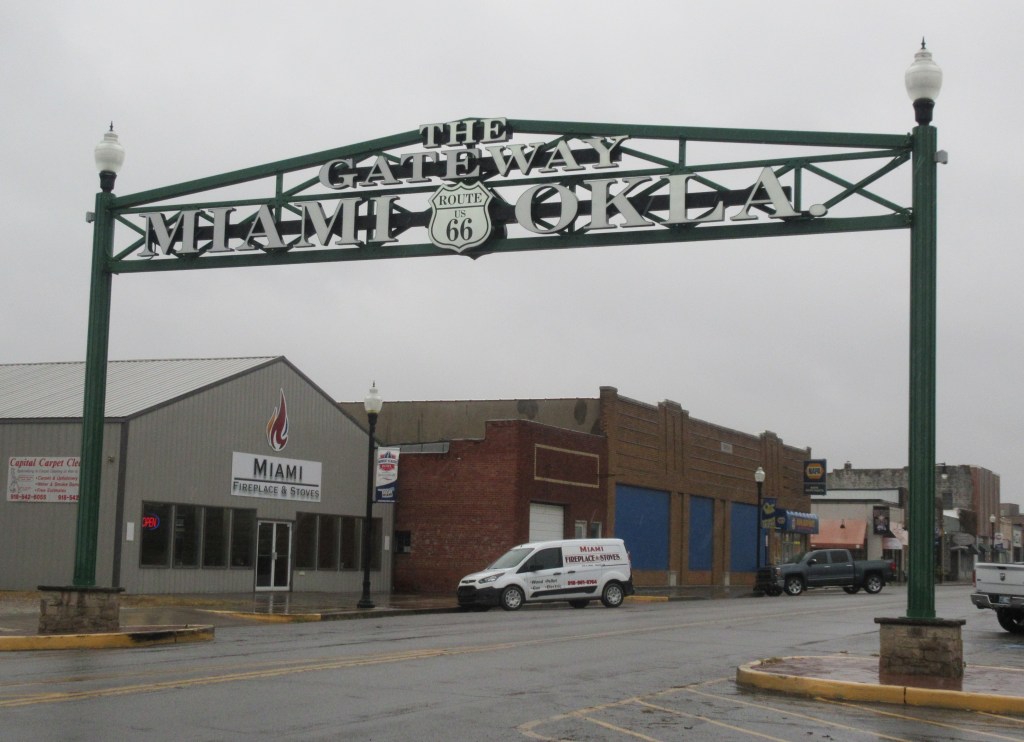
“As part of the city’s project to reinforce its Route
66 roots, a replica of the classic steel structure was planned in 2007. It was
built and finally erected by Heck and Wicker Inc. in July 2012, but now on Main
Street.
“The new steel structure with a triangular top, proclaims to all visitors ‘The Gateway, Miami, Okla.’”6
(Photograph by MRW October 24, 2019)
(Photograph by MRW October 24, 2019)
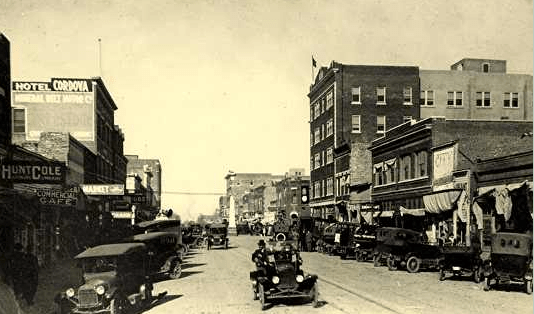
A view of Main Street in Miami, Oklahoma (Courtesy of John Scherer)6
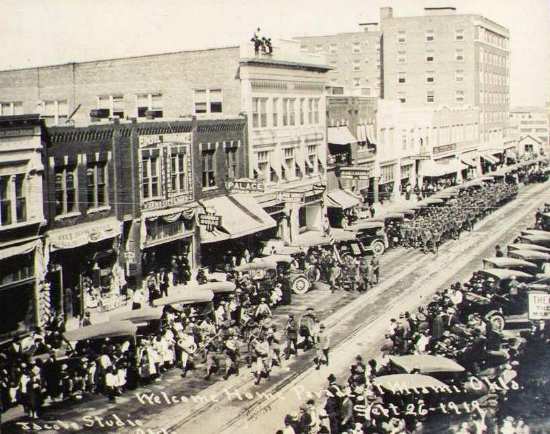
Welcome Home Parade, Miami, Oklahoma, September 26, 1919. This event occurred one month before the Bevers Family drove through Miami. (Courtesy of John Scherer)
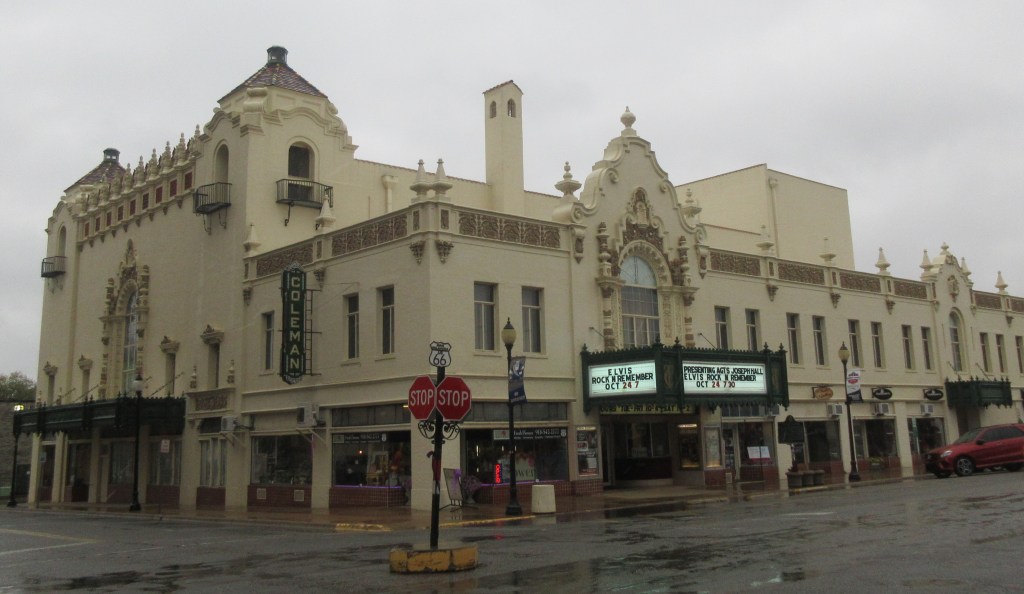
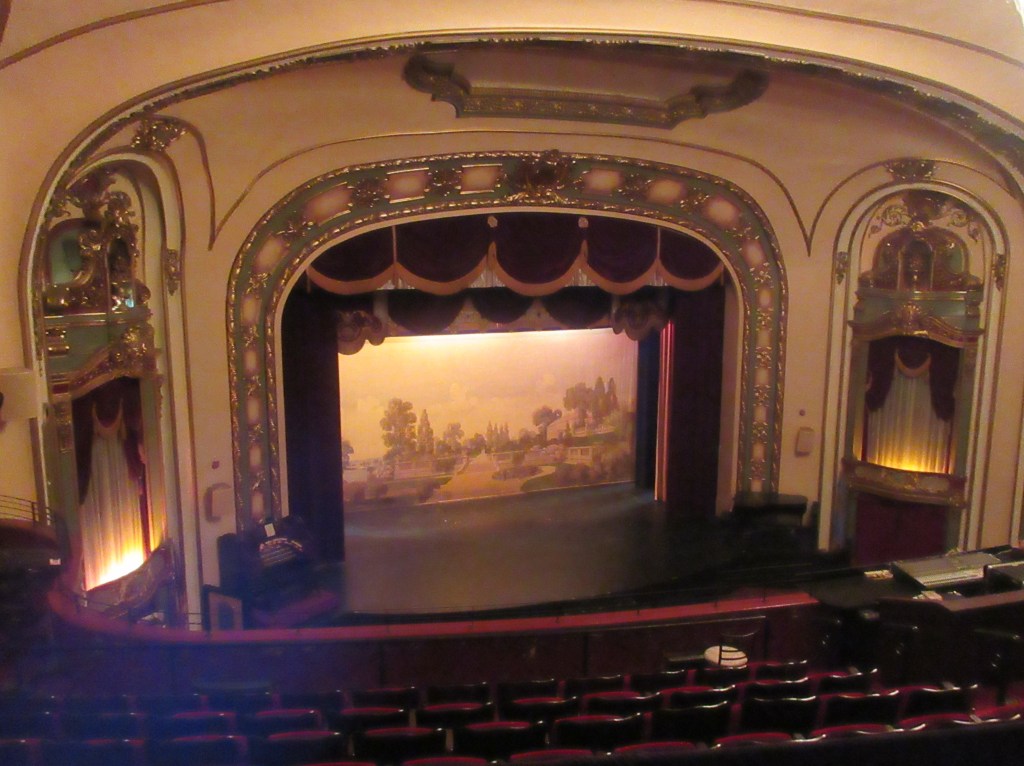
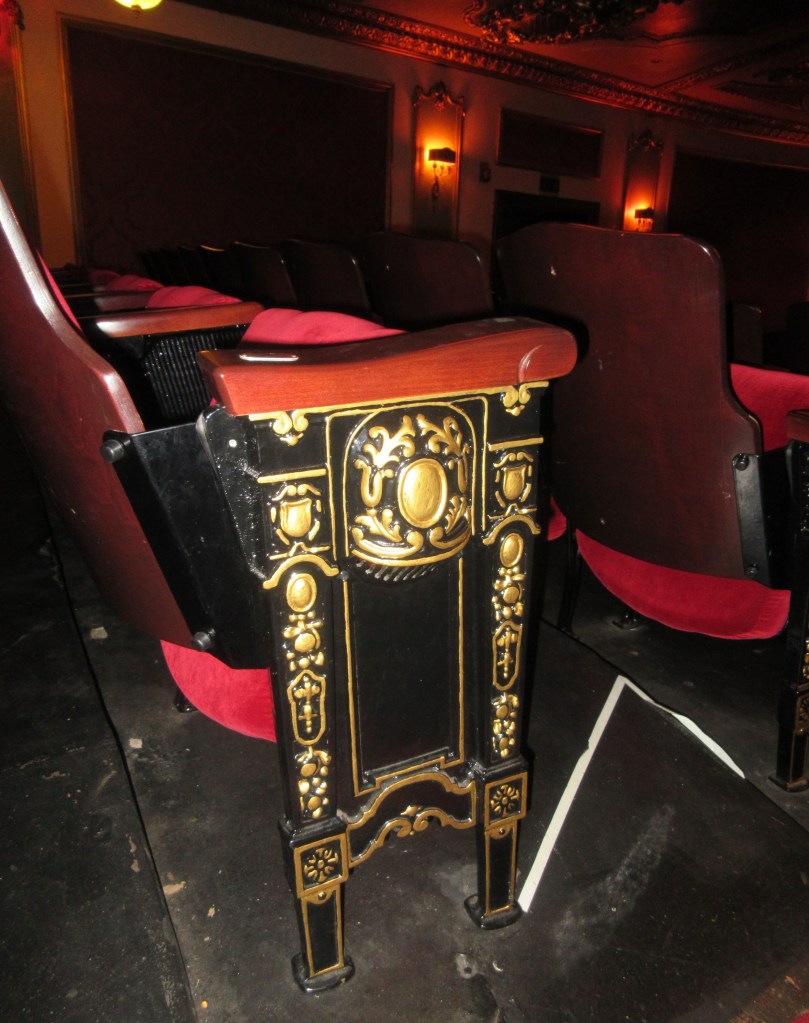
One of the architectural gems on Historic Route 66 is the Coleman Theater Beautiful, an historic vaudeville theatre with a Spanish Colonial Mission-style exterior and Louis XV interior, costing $600,000 to build.7 Tickets sold at $1.00 each when it opened April 18, 1929, ten years after Lena and Herbert had passed through the town. Current “programming ranges from ballets and operas to country and western acts to jazz and dance bands. Plus, … silent movies with the ‘Mighty Wurlitzer’ providing the music and sound effects.”8 During a tour of the theater given by a woman who had begun performing on the Coleman Theater stage when she was about five years old (which was probably in the late 1940s), my mother and I were very impressed with the interior design, the carvings and paintings, and the care that devoted volunteers have given to restore the theater to its former glamour.
Coleman Theater Beautiful (Photograph by MRW October 24, 2019)
The backdrop on the stage is 90 years old (Photograph by MRW October 24, 2019)
One of the tasks volunteers completed during restoration was applying gold leaf throughout the theater (Photograph by MRW October 24, 2019)
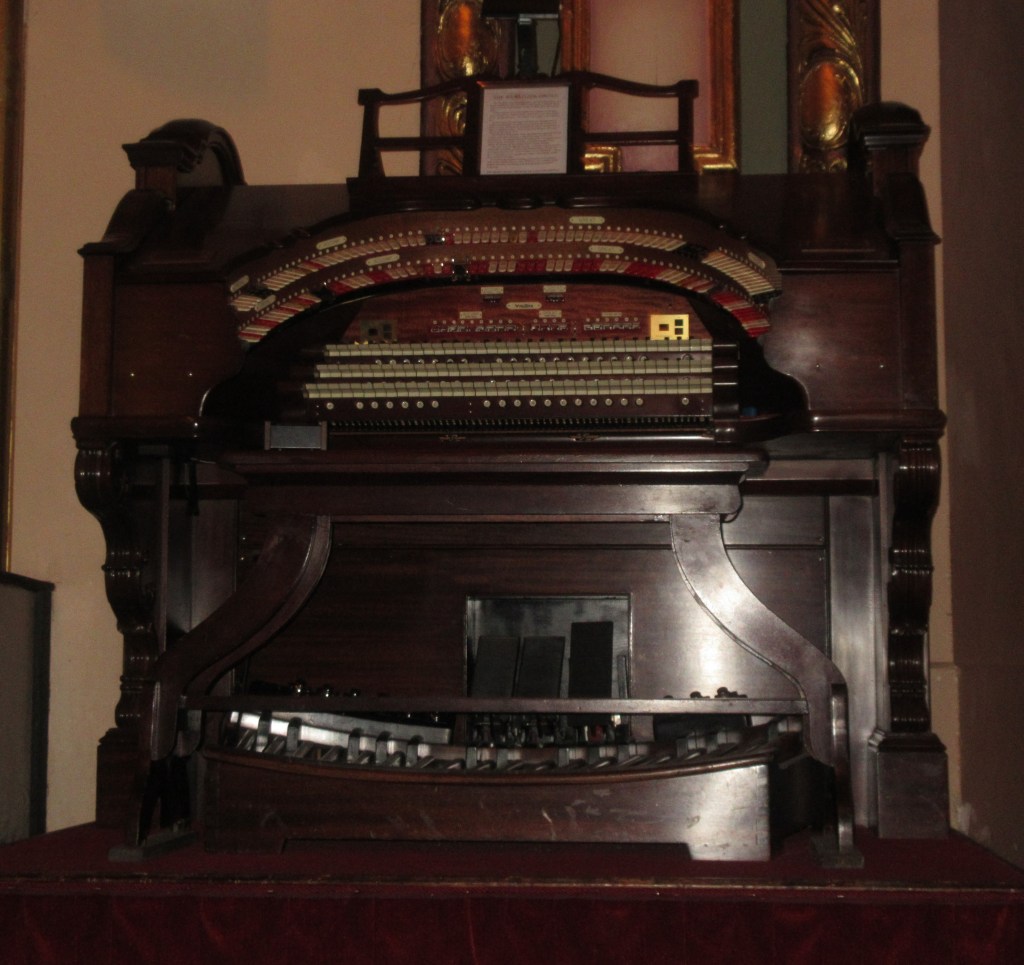
One of the highlights of our tour was hearing this Wurlitzer organ play, the pipes are on each side of the stage. (Photograph by MRW October 24, 2019)
Two other beautiful sights on Main Street in Miami are murals painted on the side walls of buildings.
Herbert and Mr. McElhany drove about 100
miles on October 24, 1919. Lena wrote
that they had a muddy road on their way to Big Cabin, which is 40 miles from
Miami. Due to the muddy road they probably
were driving about 10 miles per hour. Then
in the afternoon the road was good, so they accomplished the 60-mile drive to Muskogee
at about 15 miles per hour. According
to The Official Automobile Blue Book 1920, the speed laws in Oklahoma were regulated by the towns and cities.9
Before heading toward Big Cabin, we tried
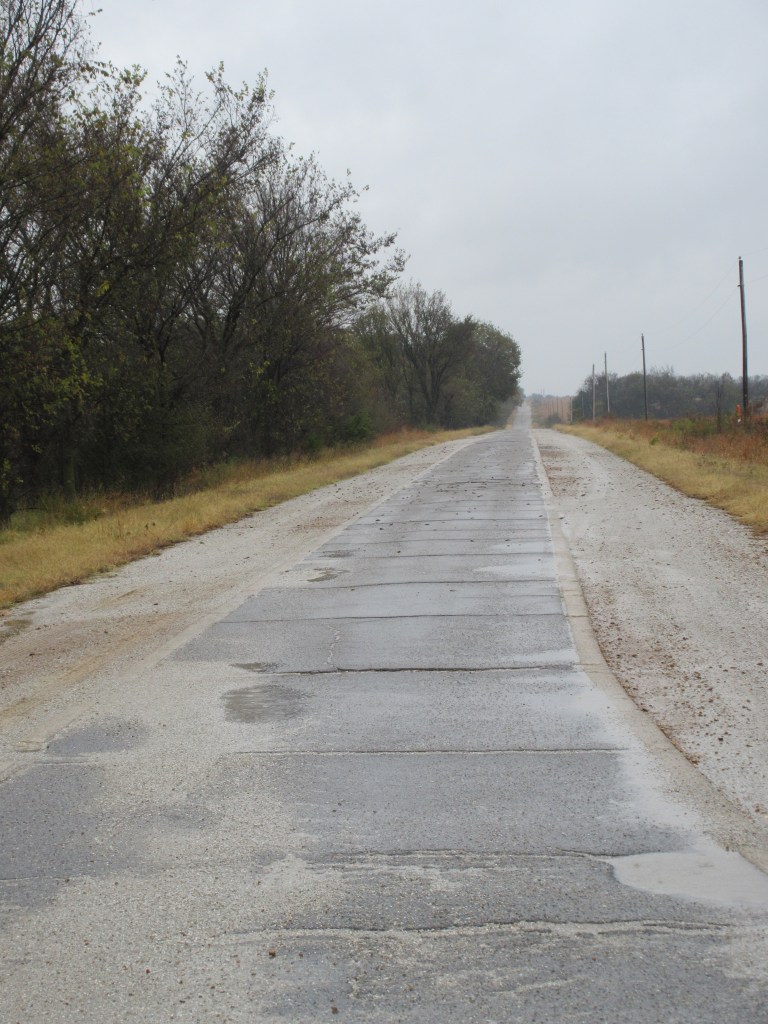
to locate a stretch of the original Historic Route 66. It took about 45 minutes to find it because
the directions I obtained from a website were not specific enough and there either
wasn’t a road marker or we missed seeing a road marker. When we felt we had gone too far, we asked my
mother’s phone to navigate us to the location of The Ribbon Road and after
passing it once, we finally located the road.
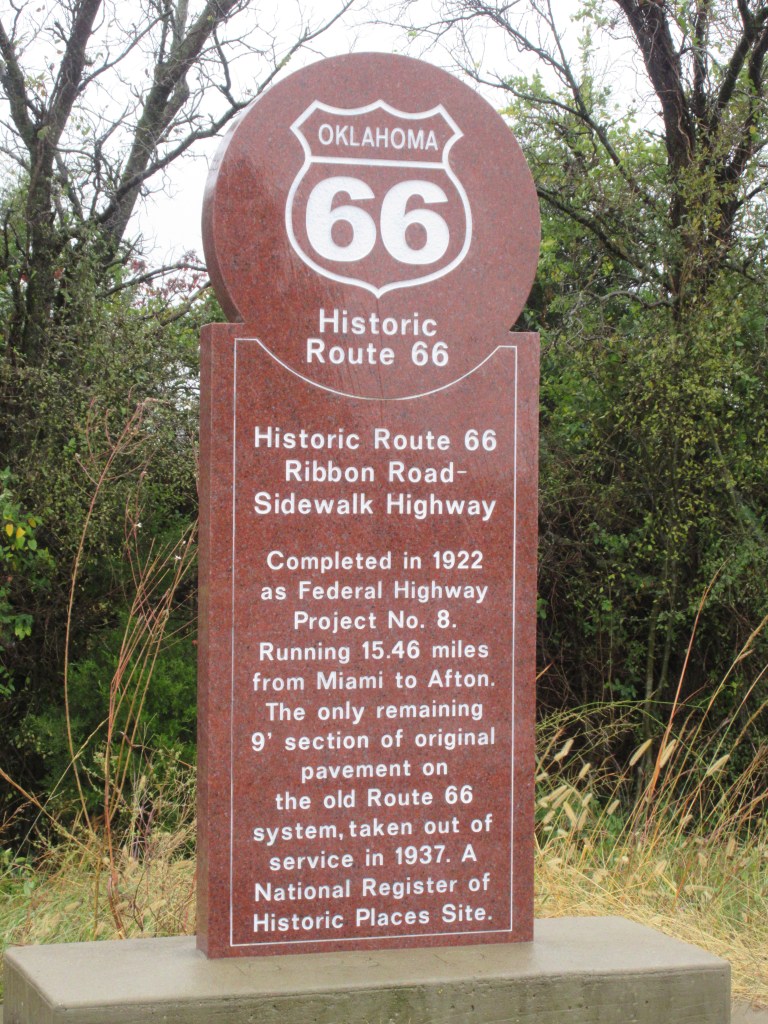
The Ribbon Road is only one lane. “Legend
has it that the funds were insufficient and that the engineers chose to build
only one lane, nine-feet wide and pave the whole length between Miami and Afton
rather than pave half the distance with a regular width road.”10
The Ribbon Road, a section of Historic Route 66 (Photograph by MRW October 24, 2019)
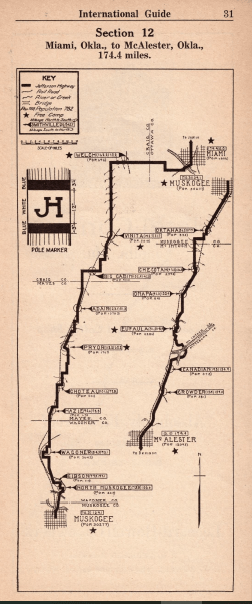
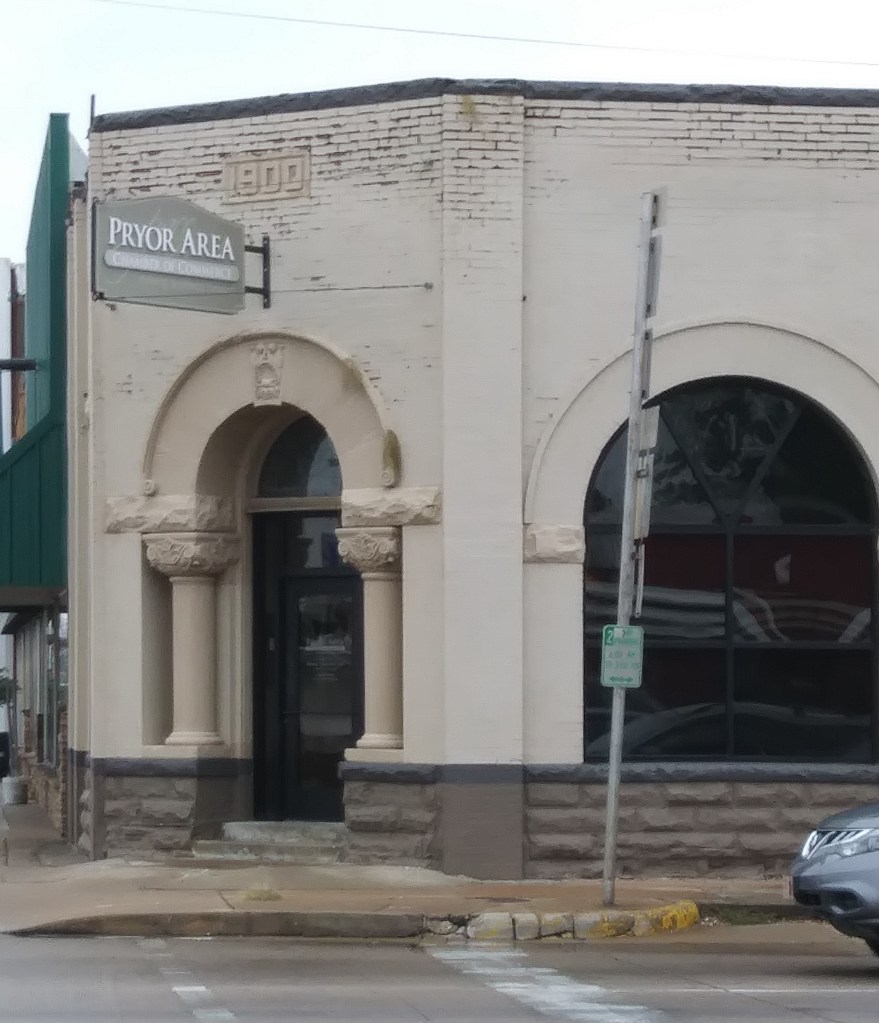
On the map below printed in the International Tourist Guide, the route on the left is the branch of the Jefferson Highway that the Bevers’ family traveled on this day.11 Route 36 in The Official Automobile Blue Book 1920 lists many of the towns that Lena and Florence record in their travel logs. In the introduction to this route, it states: “This is a section of the King of Trails, the Jefferson highway and the Ozark trail. Good supply stations and stopping places all along the route.”12 According to a 1924 Rand McNally map, the King of Trails Highway merged with the Jefferson Highway at Vinita.13 As my mother and I traveled this route, much of it on U. S. Highway 69, we found that the towns are still small except Muskogee. In Big Cabin, where the Bevers had their dinner, there were only truck stops, so we decided to continue down the road to Pryor. We ate lunch across the street from a building dated 1900. Then continuing on, we arrived at our motel in Muskogee at 3:00 PM.
(Courtesy of Jefferson Highway Association)
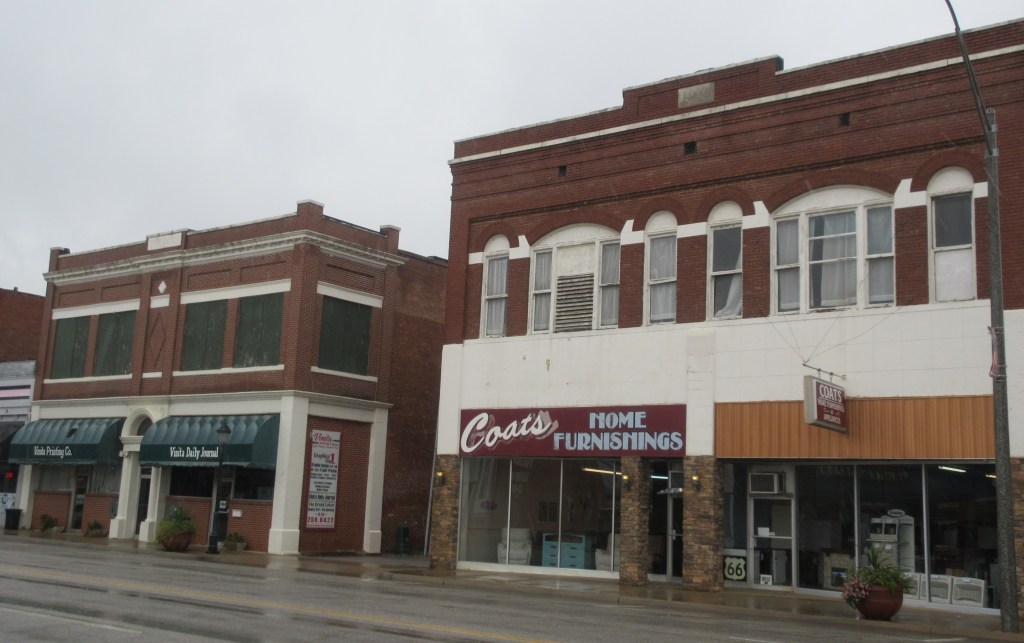
Historic buildings in Vinita, the one on the right is dated 1910 (Photograph by MRW October 24, 2019)
Historic building in Pryor dated 1900 (Photograph by MRW October 24, 2019)
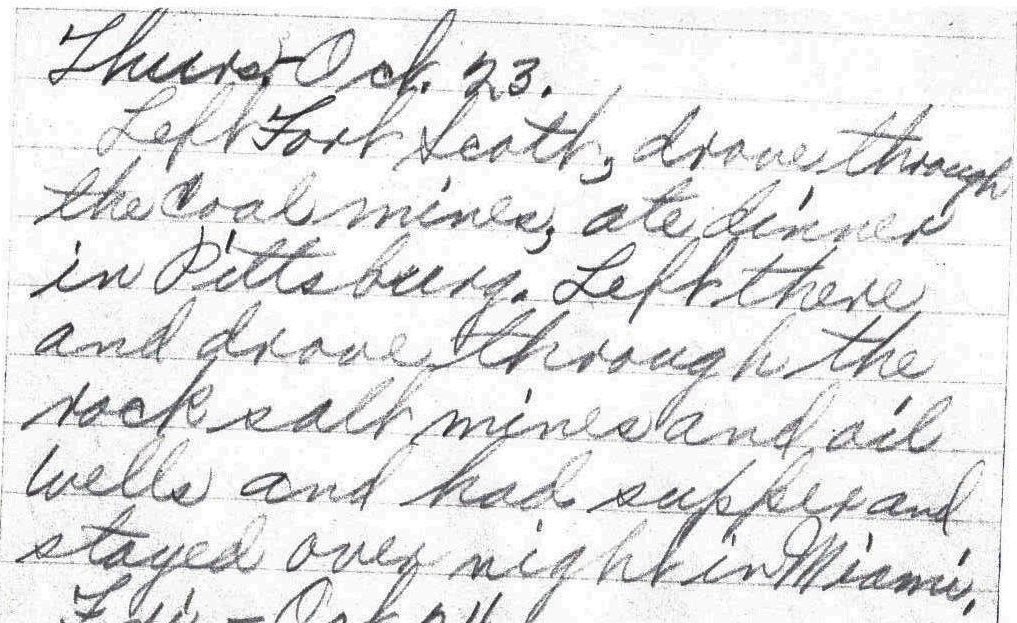
Left Fort Scott, drove through the coal
mines, ate dinner in Pittsburg. Left
there and drove through the rock salt mines and oil wells and had supper and
stayed over night in Miami. – Lena Bevers
This morning when my mother and I were eating our breakfast at a fast food place in Fort Scott, Kansas, on the wall behind us there was a panoramic photograph of downtown Fort Scott in 1917. Here is a picture I took of that photograph:
The town of Fort Scott had its beginnings as a small settlement beside the frontier fort of the same name. The fort was established in 1842 and was “charged with keeping the peace between American Indians and white settlers.”1 The fort was abandoned in 1853, but the town continued to grow.
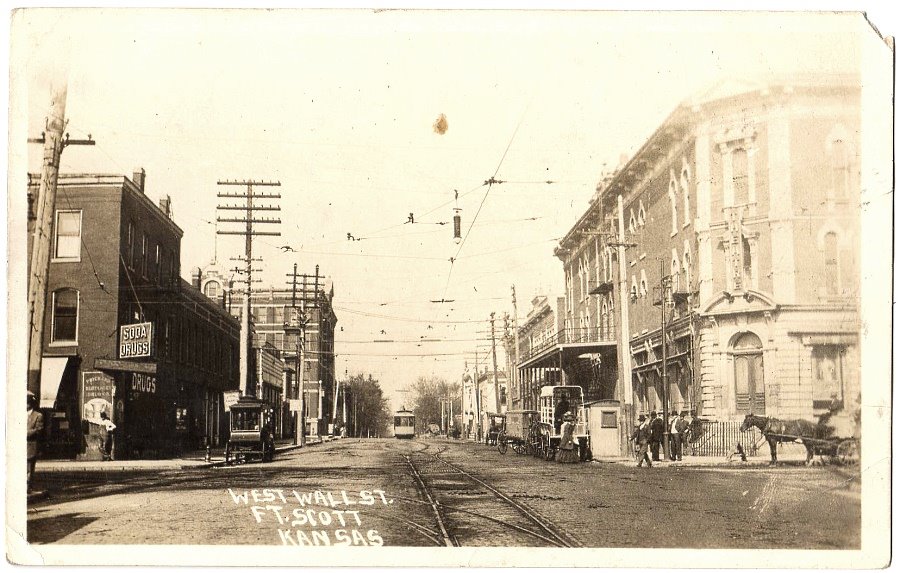
West Wall Street, Fort Scott, Kansas in 1916 (Courtesy of Bourbon County Historical Preservation Association, Kansas)
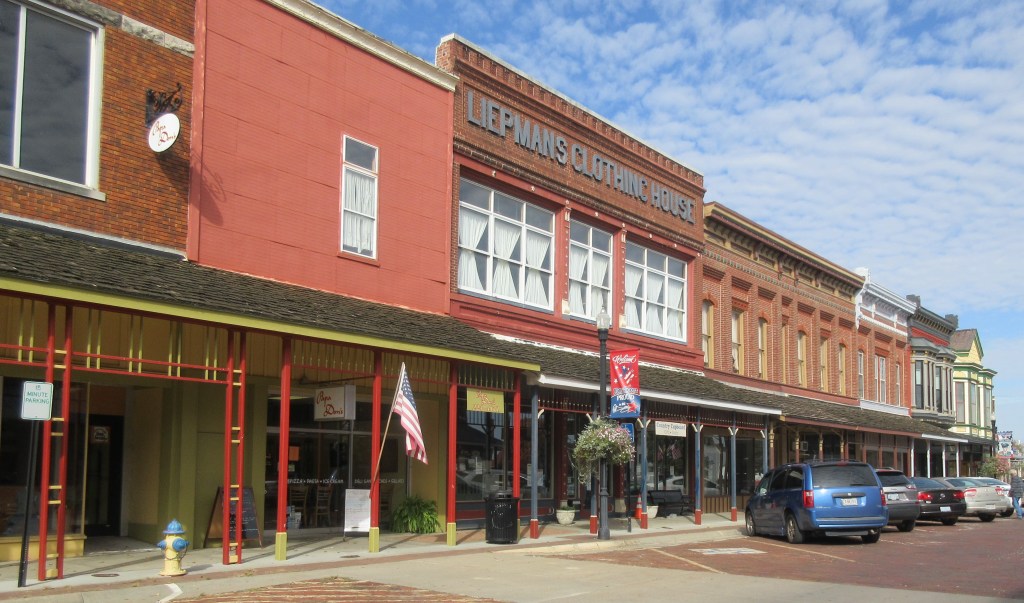
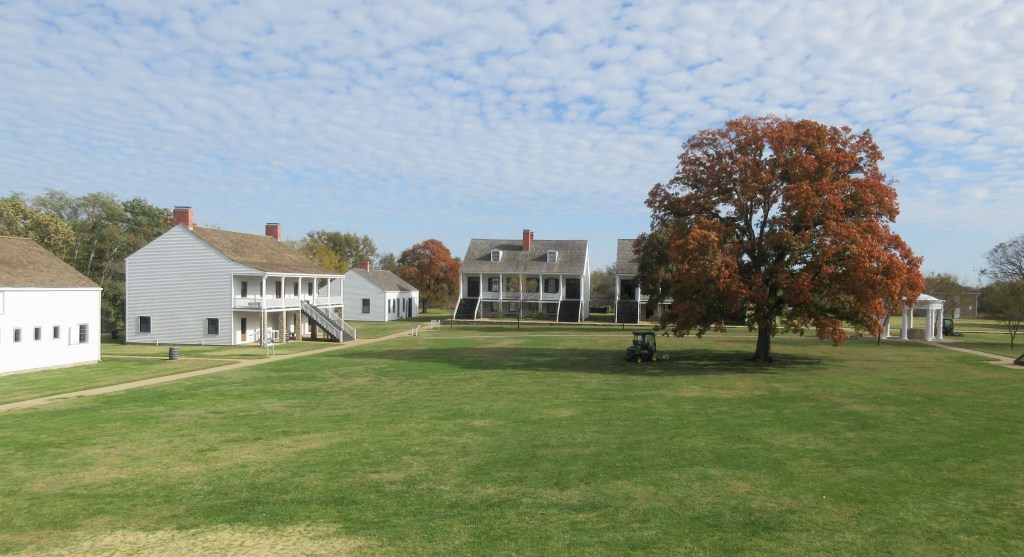
Before departing Fort Scott today, we spent a short time visiting one of the historic downtown streets and the site of the military fort. The grounds of the fort are maintained by the National Park Service. We briefly perused two of the exhibit halls.
Historic Downtown Fort Scott, Kansas (Photograph by MRW October 23, 2019)
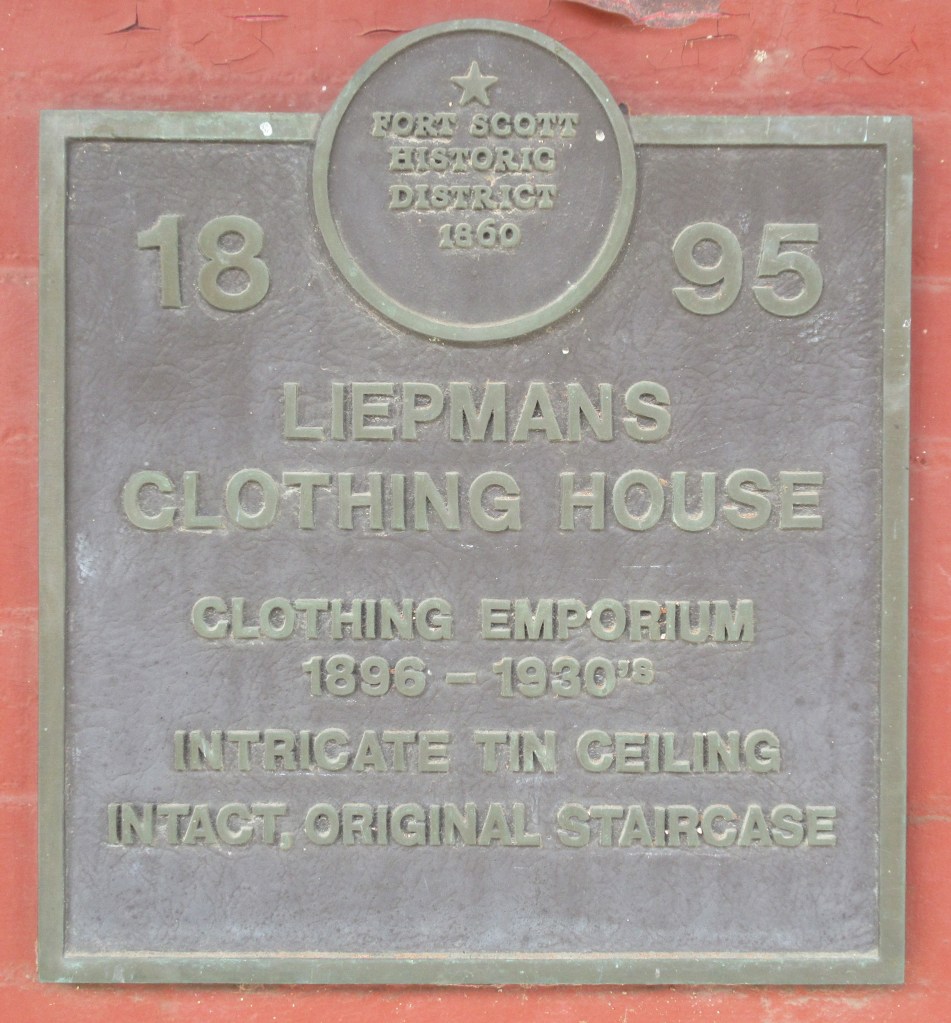
(Photograph by MRW October 23, 2019)
Fort Scott parade grounds (Photograph by MRW October 23, 2019)
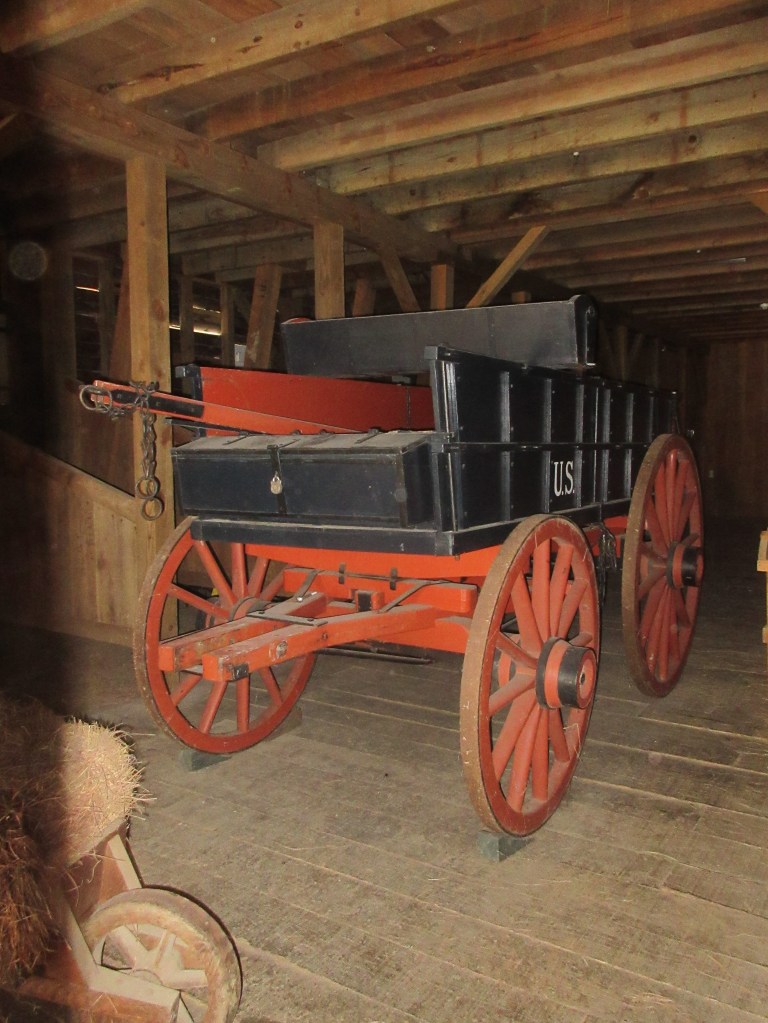
This army escort wagon was restored by Werner Wagon Works, the workshop where we were given a tour in Horton, Kansas, three days ago. (Photograph by MRW October 23, 2019)
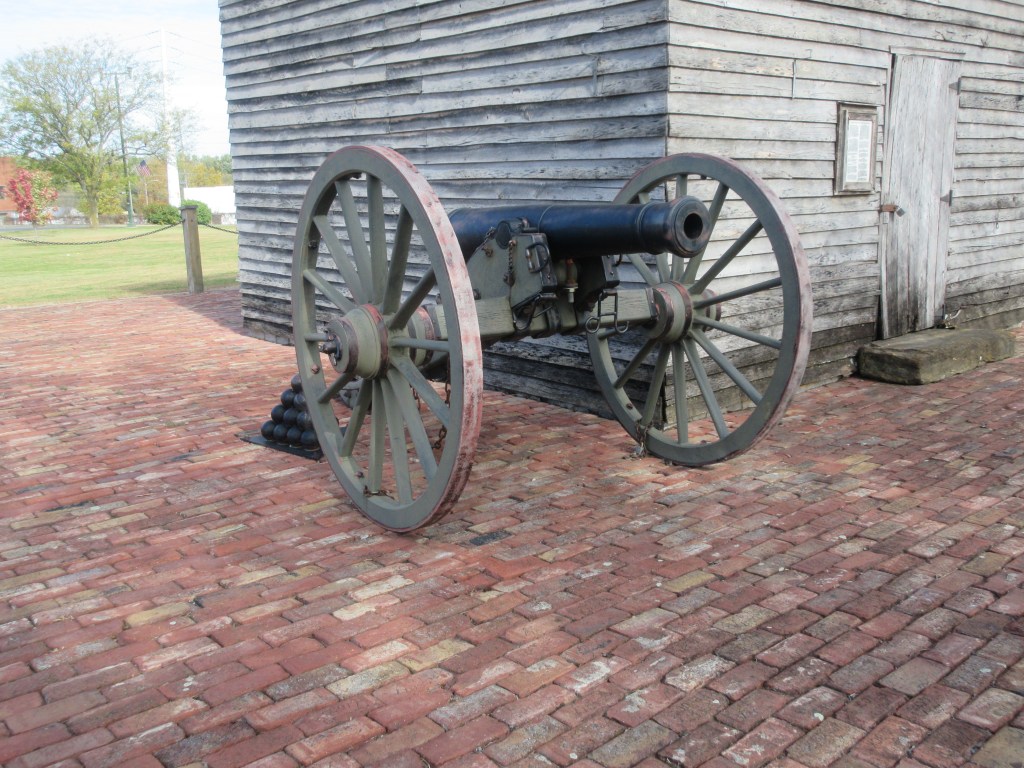
The bricks under this cannon appeared to be original from the 1800s. (Photograph by MRW October 23, 2019)
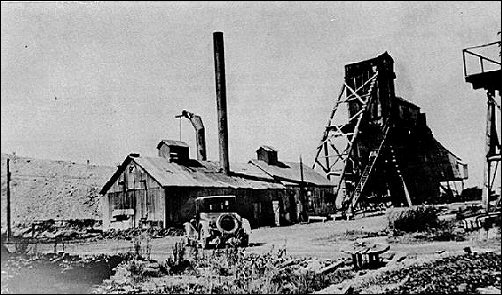
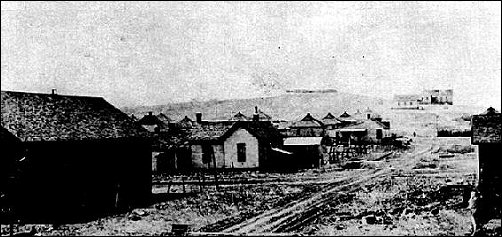
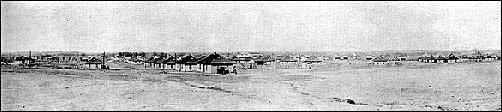
When Herbert and Lena headed south with their family on October 23, 1919, they continued driving on the Jefferson Highway. Lena recorded that they drove through coal mines. Southeastern Kansas was filled with mining camps at that time. Mining companies were mining for coal using underground mine shafts. This technique of coal mining declined during the 1920s and 1930s and the last mineshaft was closed in 1960.2 The region looks different now than it did when Lena and Herbert were here. As we traveled down U. S. Highway 69, there was an intermingling of woodlands, pastures and crop fields.
“The tipple, engine house, and tailing pile of former Crowe Company No. 16 shaft mine, active in the 1920’s.”3 (Courtesy of Kansas State Historical Society, Copy and Reuse Restrictions Apply)
“Part of Croweburg Camp as it existed between 1910 and 1920. “Crackerbox” houses are in the foreground and squarish houses appear in the background.”4 (Courtesy of Kansas State Historical Society, Copy and Reuse Restrictions Apply)
“Croweburg Camp in eastern Crawford county about 1920. Squarish houses with “hipped” roofs were common in the company camp.”5 (Courtesy of Kansas State Historical Society, Copy and Reuse Restrictions Apply)
Lena wrote in her travel log that the Bevers family ate their dinner in Pittsburg, Kansas. As my mother and I were heading to Pittsburg to have lunch, we stopped in the town of Franklin and visited the Miners Hall Museum.
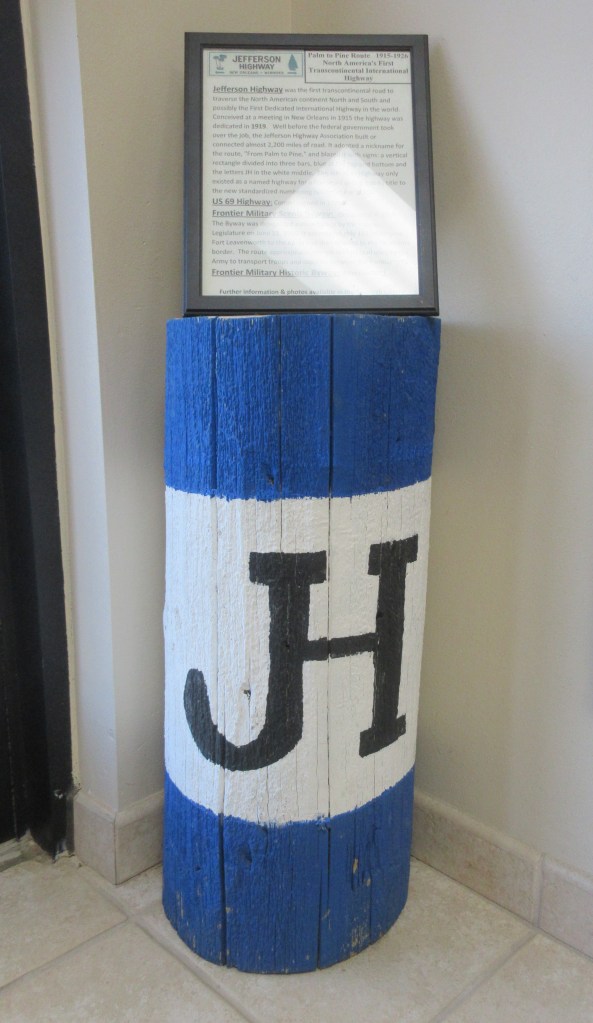
This replica of a pole marker of the Jefferson Highway was sitting in the Miners Hall Museum. (Photograph by MRW October 23, 2019)
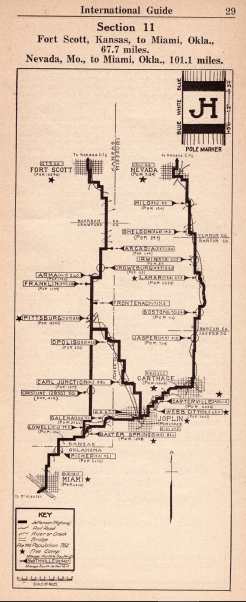
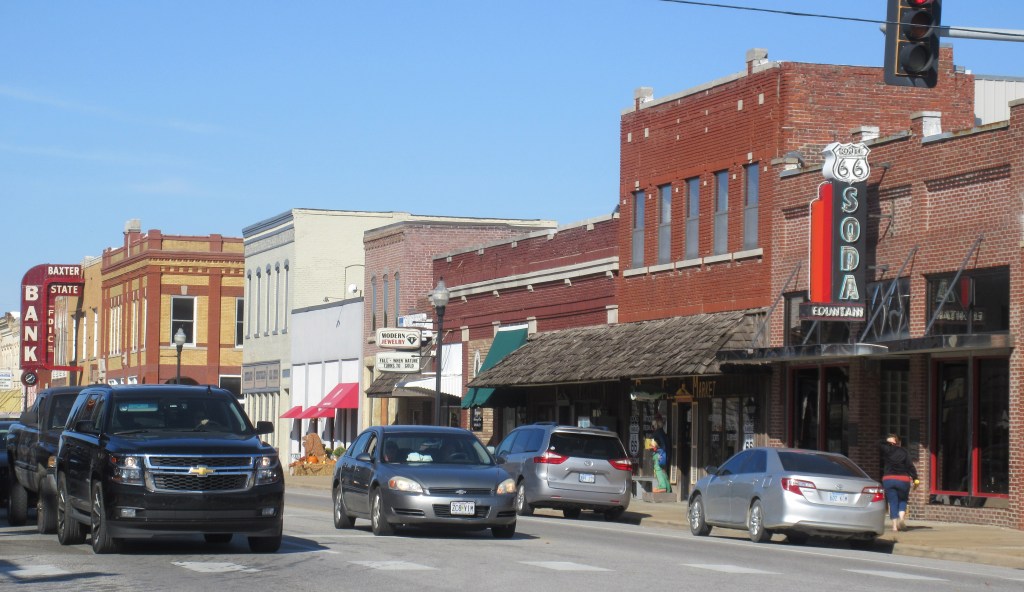
A map from the Jefferson Highway International Guide shows two branches of the highway.6 The Bevers family was traveling on the branch on the left. Lena’s daughter Florence recorded that they drove near Arma, Edward and Garland, had dinner in Pittsburg, then drove through Crestline, Riverton, Lowell, Baxter Springs, Picher, Cardin and Commerce.7
(Courtesy of Jefferson Highway Association)
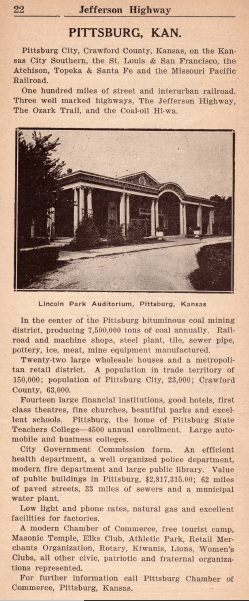
(Courtesy of Jefferson Highway Association)8
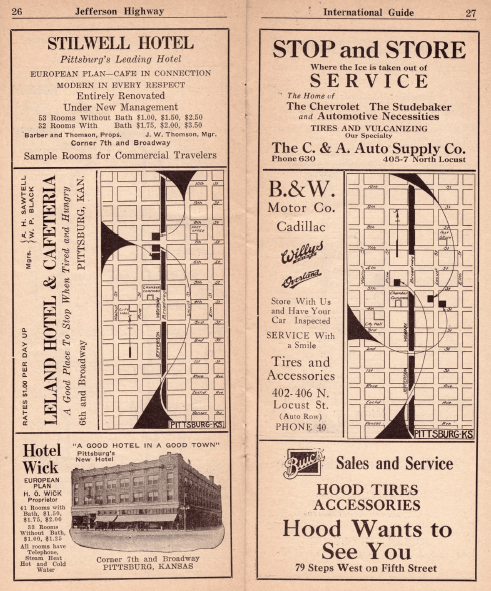
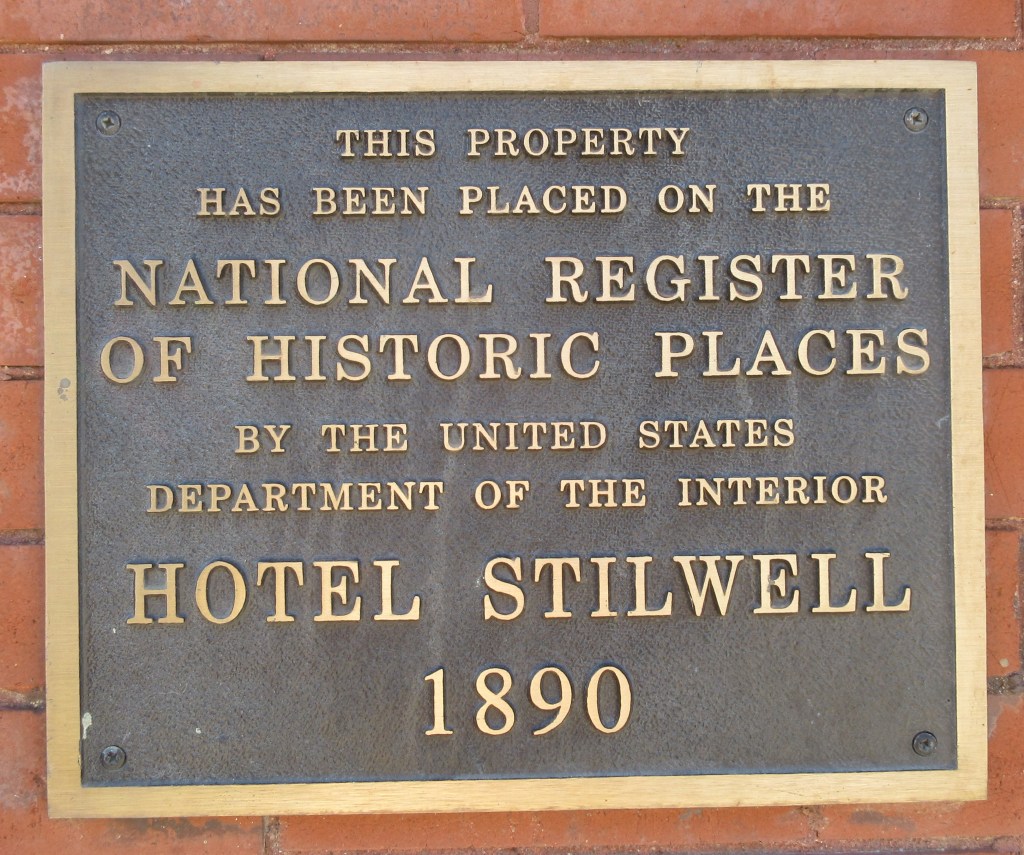
One of the buildings that Lena and Herbert probably drove past in Pittsburg was the Stilwell Hotel. The Jefferson Highway International Guide had an advertisement for the hotel.9 (See below in the upper left corner.) On the opposite page there are advertisements of services for tourists.
(Courtesy of Jefferson Highway Association)
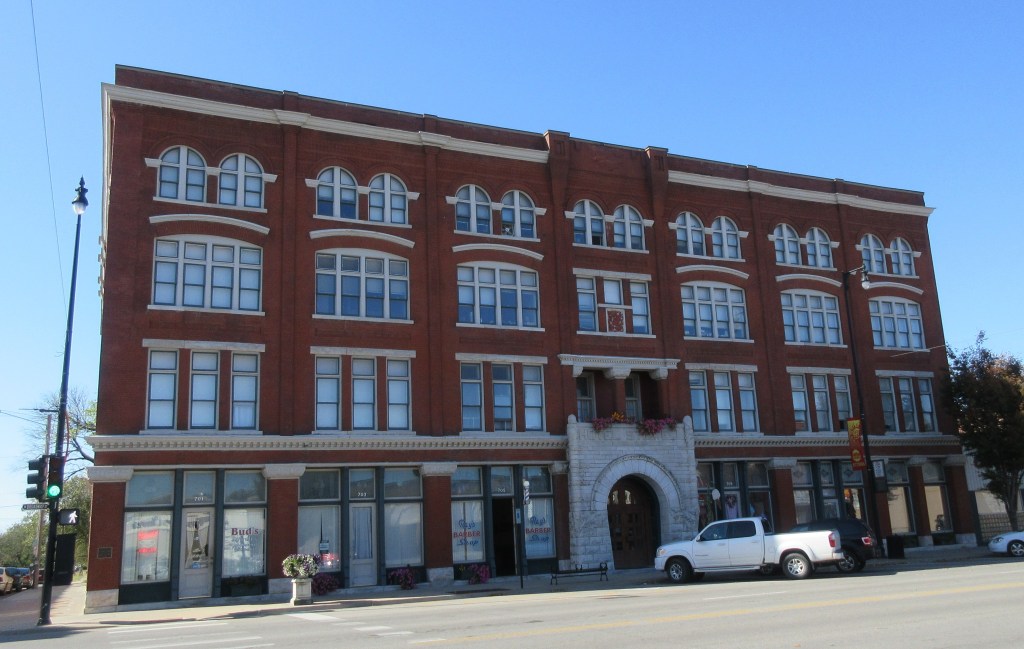
Stilwell Hotel (Photograph by MRW October 23, 2019)
At Baxter Springs, Historic U. S. Route 66 merged with U. S. Highway 69 (Photograph by MRW October 23, 2019)
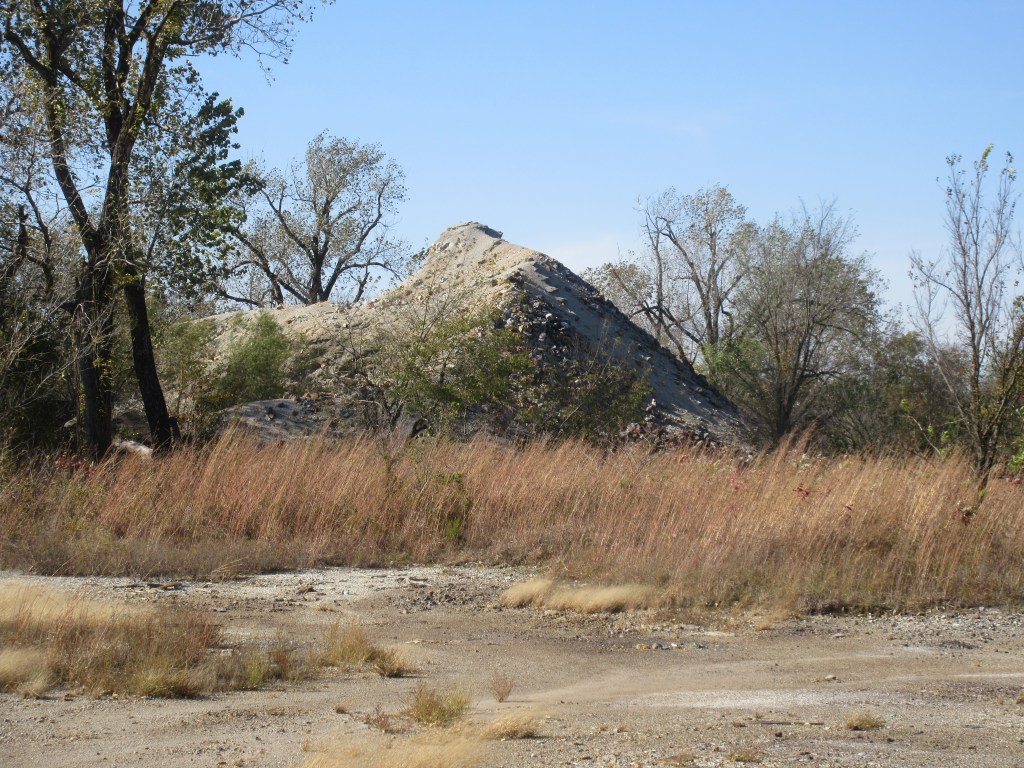
Lena stated that they drove through rock salt mines and oil wells. This mound was the only evidence we saw along U. S. highway 69 of rock salt mining in the past and we did not see any oil wells. (Photograph by MRW October 23, 2019)
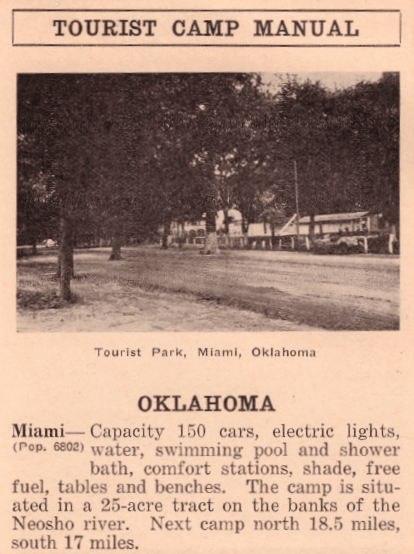
Lena only occasionally mentions the type of facility they stayed at each night. The Jefferson Highway Association published a Tourist Camp Manual in 1923 which gives us a clue of what they may have done. The manual identifies towns where tourists can camp along the highway. One of the places noted in the manual is in Miami, Oklahoma.10 We ended our day by checking into a motel in Miami at 4:00 PM.
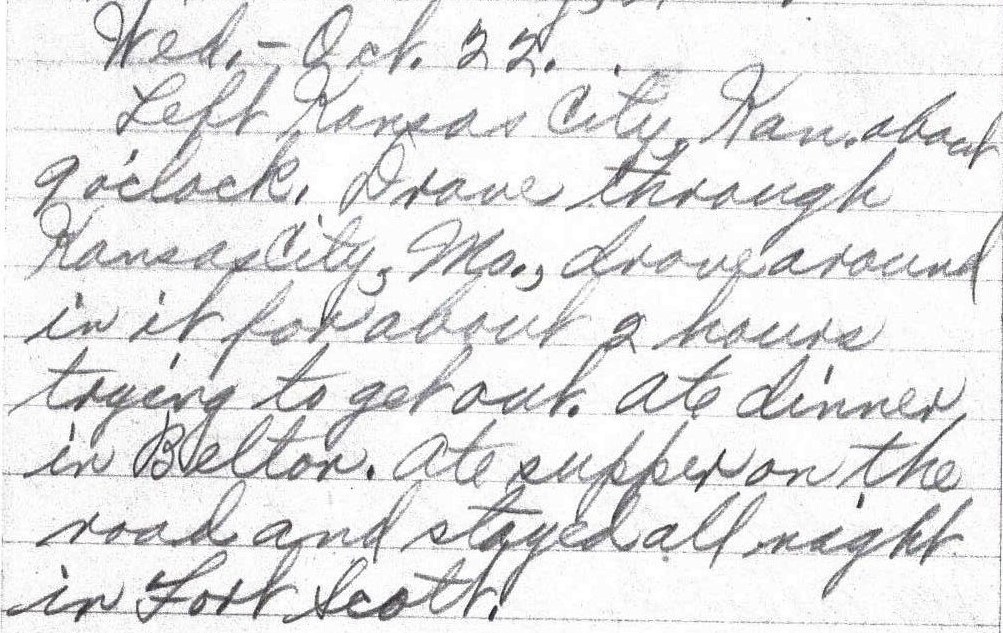
Left Kansas City, Kan. about 9 o’clock. Drove through Kansas City, Mo., drove around in it for about 2 hours trying to get out. Ate dinner in Belton. Ate supper on the road and stayed all night in Fort Scott. – Lena Bevers
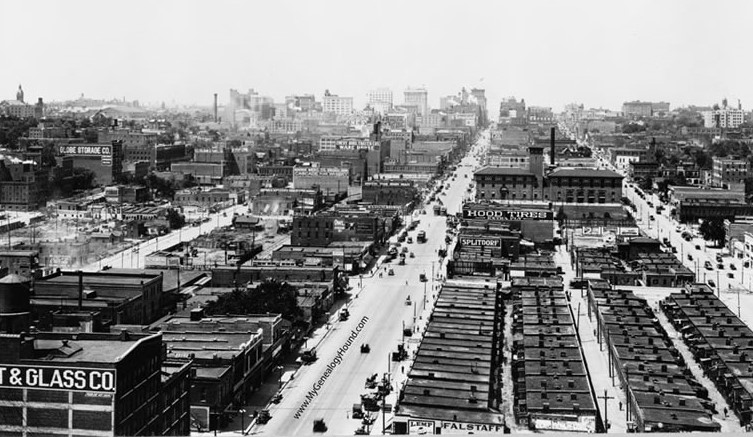
The downtown business district of Kansas City, MO, is in the center background of this photo taken in 1915.1 (Courtesy of My Genealogy Hound)
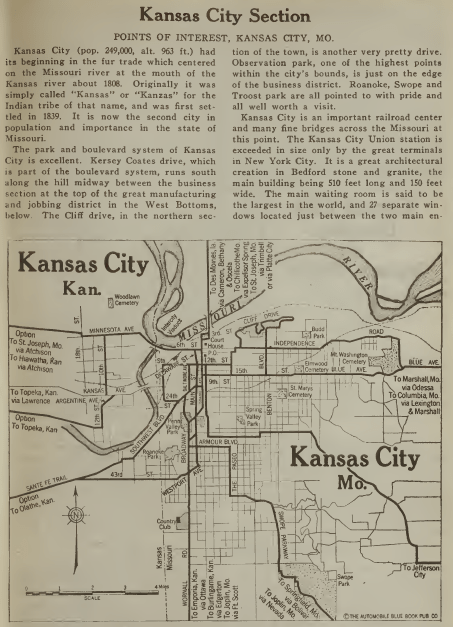
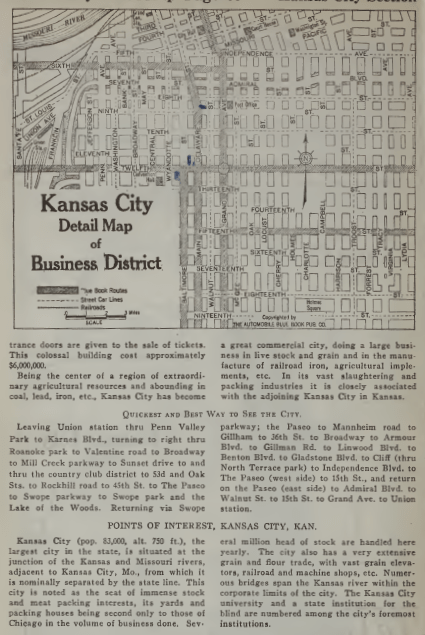
On October 22, 1919 the Bevers family started their day by going across the Kansas river from Kansas City, Kansas to Kansas City, Missouri. The running directions of Route 1042 of The Official Automobile Blue Book 1917 state that there was a 15-cent toll for crossing the Intercity Viaduct one-way and 25-cent toll for round-trip.2 (This is the bridge that crossed the Kansas River at Minnesota Avenue.) But in the 1920 edition of the Blue Book, there is no toll.3 In 1917 Kansas City, Kansas and Kansas City, Missouri bought the bridge and in 1918 the two cities opened the bridge as a free bridge.4 So when Herbert and Mr. McElhany drove over the viaduct they didn’t have to pay a toll. A sister bridge was built in 1962. The two bridges are now called the Lewis and Clark Viaduct. Presently, the eastbound lanes of Interstate Highway 70 travel over the original inter-city viaduct built in 1907.5 When my mother and I crossed the Kansas River today, we were driving on the same bridge that Herbert and Lena drove on.
(From The Official Automobile Blue Book 19206)
Upon entering Missouri, the speed law was: “‘Careful and prudent manner’; not exceeding 25 miles per hour.”7 After crossing the bridge, the two-car caravan somehow lost their way in Kansas City, Missouri. They “drove around in it for about 2 hours trying to get out.”8 Possibly they were trying to exit the city on the King of Trails Highway. Lena only mentions traveling through one town between Kansas City and their final destination, Fort Scott, which doesn’t provide enough information to determine on which side of the Kansas-Missouri border they traveled on. Florence’s travel log gives additional information: “Drove thru Stillwell, Louisburg, La Cygne, Trading Post, Pleasanton, Linton, Prescott, Fulton, and stayed all night in Ft. Scott.”9 According to a 1924 Rand McNally map of Nebraska and Kansas, the King of Trails Highway does not travel through any of those towns.10 Apparently, the highway they got on was the Jefferson Highway, another north-south transcontinental route.
The Jefferson Highway was envisioned by Edwin Thomas Meredith, a businessman and political activist of Des Moines, Iowa.11 He and a group of associates organized the national Jefferson Highway Association in 1915, establishing its terminal points as Winnipeg, Canada and New Orleans, Louisiana. This gave the Jefferson Highway the distinction of being the first international route to transect the United States. The highway was named in honor of President Thomas Jefferson for his role in the Louisiana Purchase. It was also known as the “From Pine to Palm” route and “The Vacation Route of America.”
The Jefferson Highway Association
published a guide book in 1923 to assist tourists when they were traveling on
the Jefferson Highway.12 The
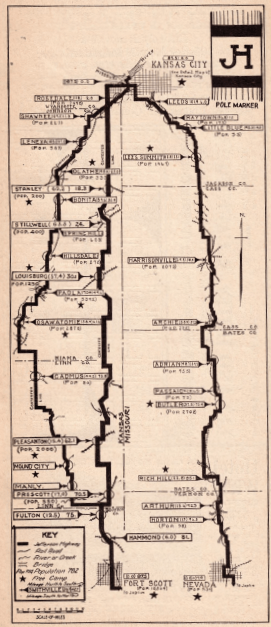
image below is a map of three branches of the Jefferson Highway from Kansas
City, Missouri to Fort Scott, Kansas.
The center branch goes through some of the towns in Florence’s list. The map also shows
four branches within the city limits. This is one example of road designations in
the early 1900s that confused automobile tourists.
(Courtesy of Jefferson Highway Association)
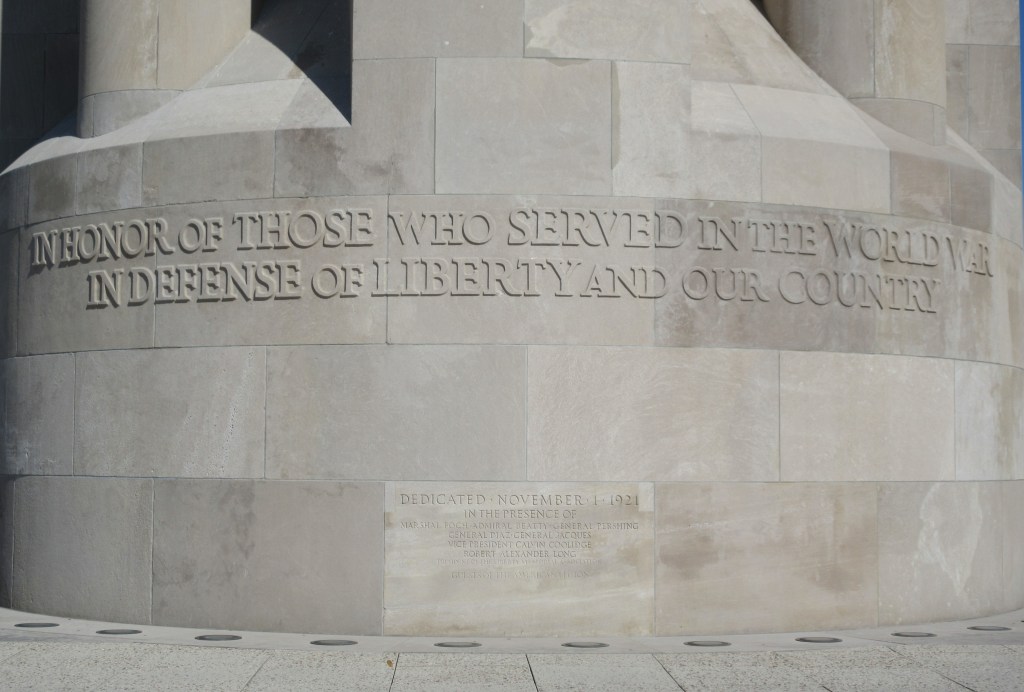
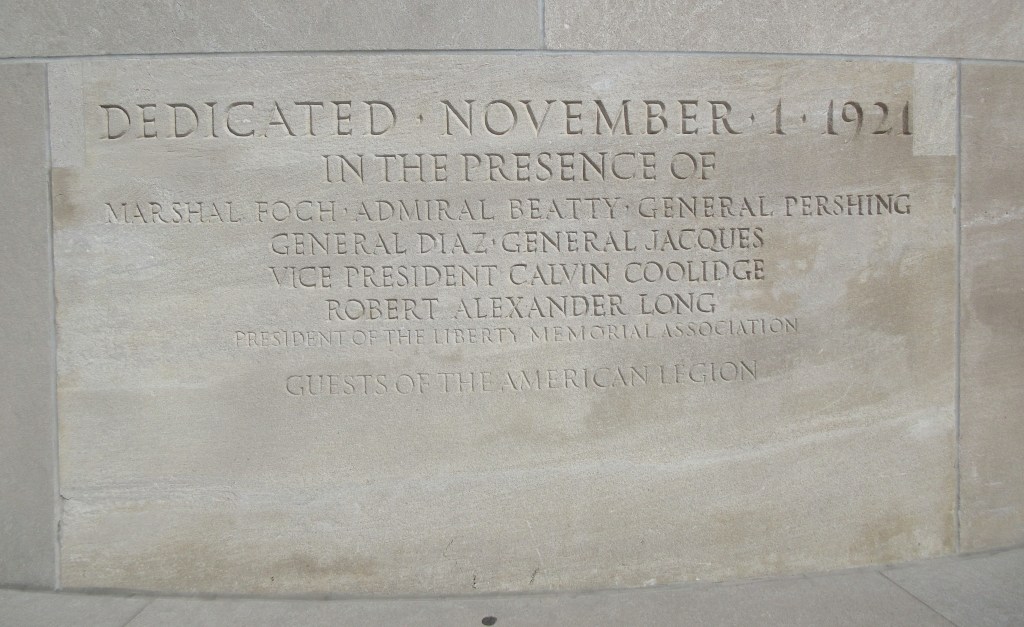
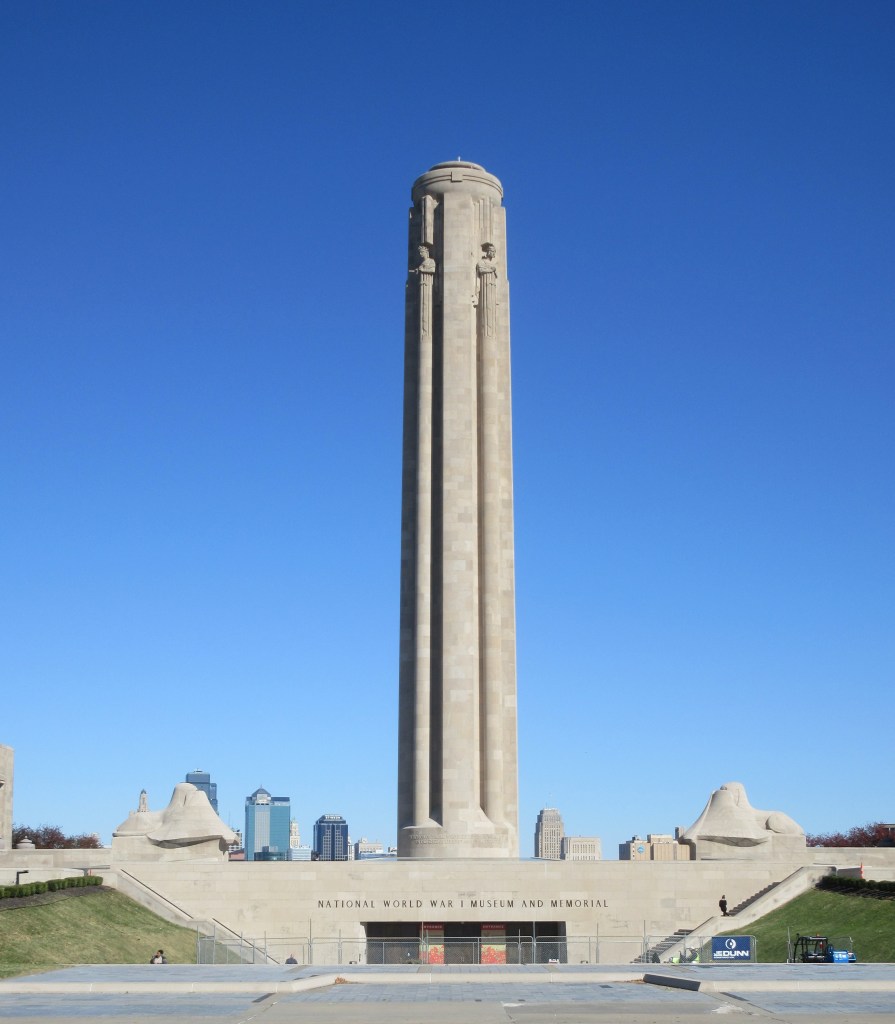
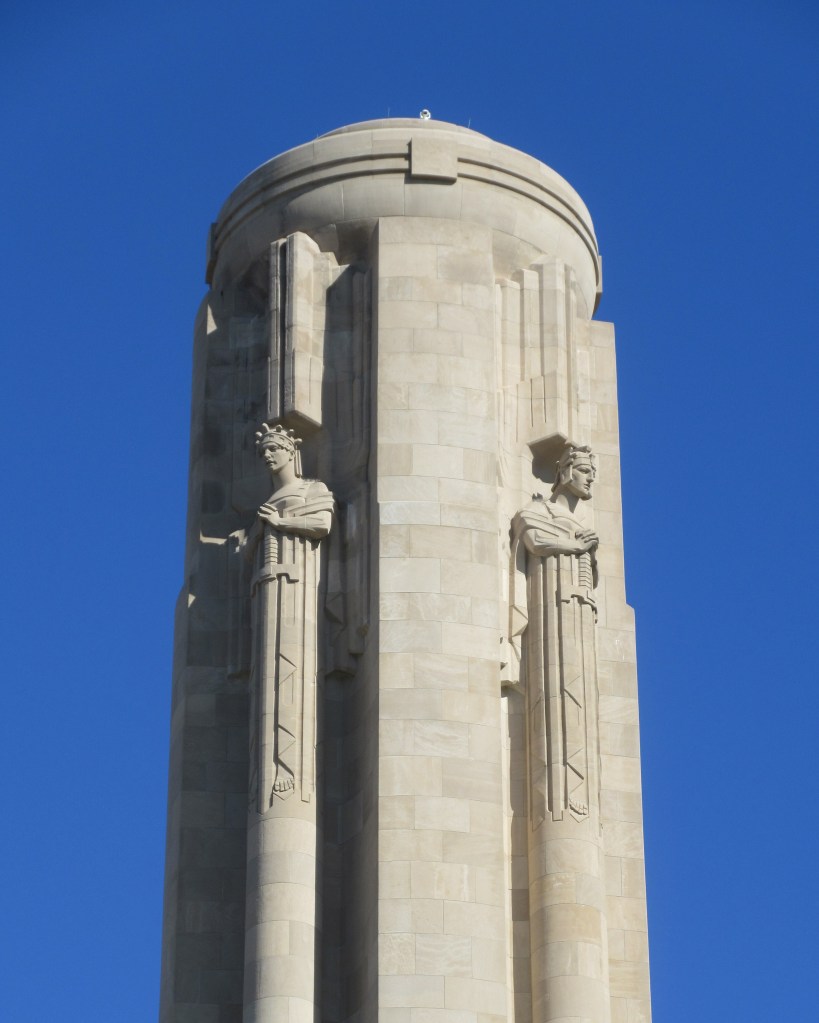
While in Kansas City, Missouri, my mother and I decided to go to the National World War 1 Memorial. World War 1 ended on November 11, 1918 and the site for this Memorial was dedicated on November 1, 1921. At the time of their trip to Texas, Herbert and Lena had two sons serving in the army, Clarence and Edgar.13
(Photograph by MRW October 22, 2019)
(Photograph by MRW October 22, 2019)
(Photograph by MRW October 22, 2019)
(Photograph by MRW October 22, 2019)
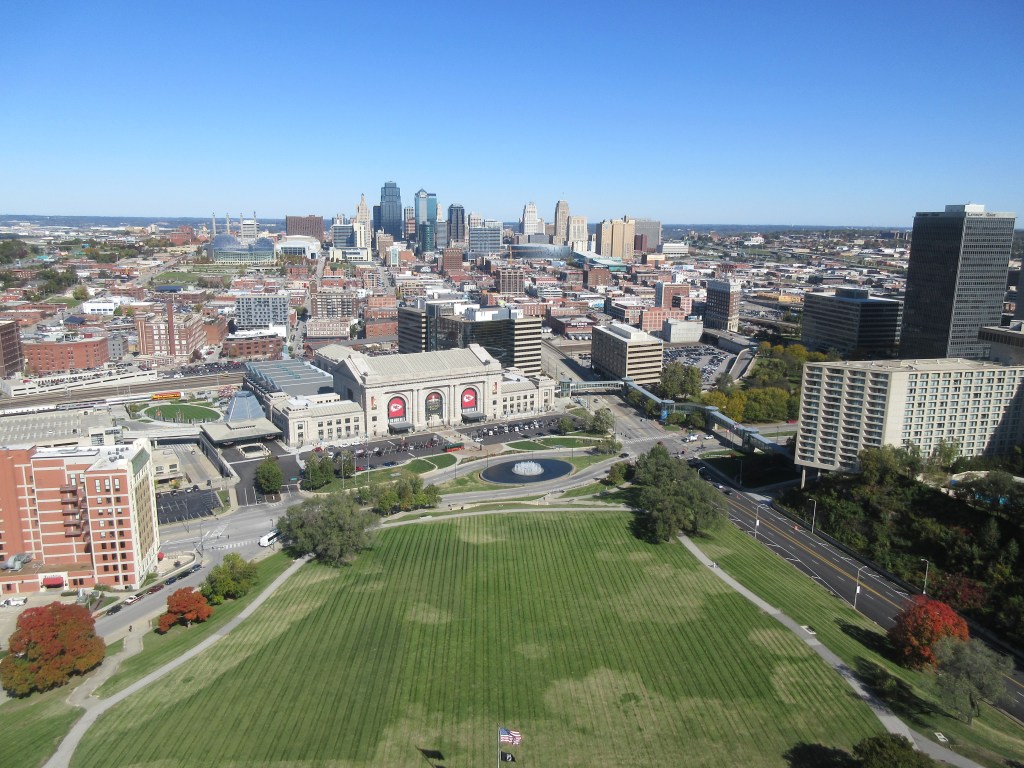
A view of Kansas City, Missouri, from the observation deck of the Liberty Memorial Tower (Photograph by MRW October 22, 2019)
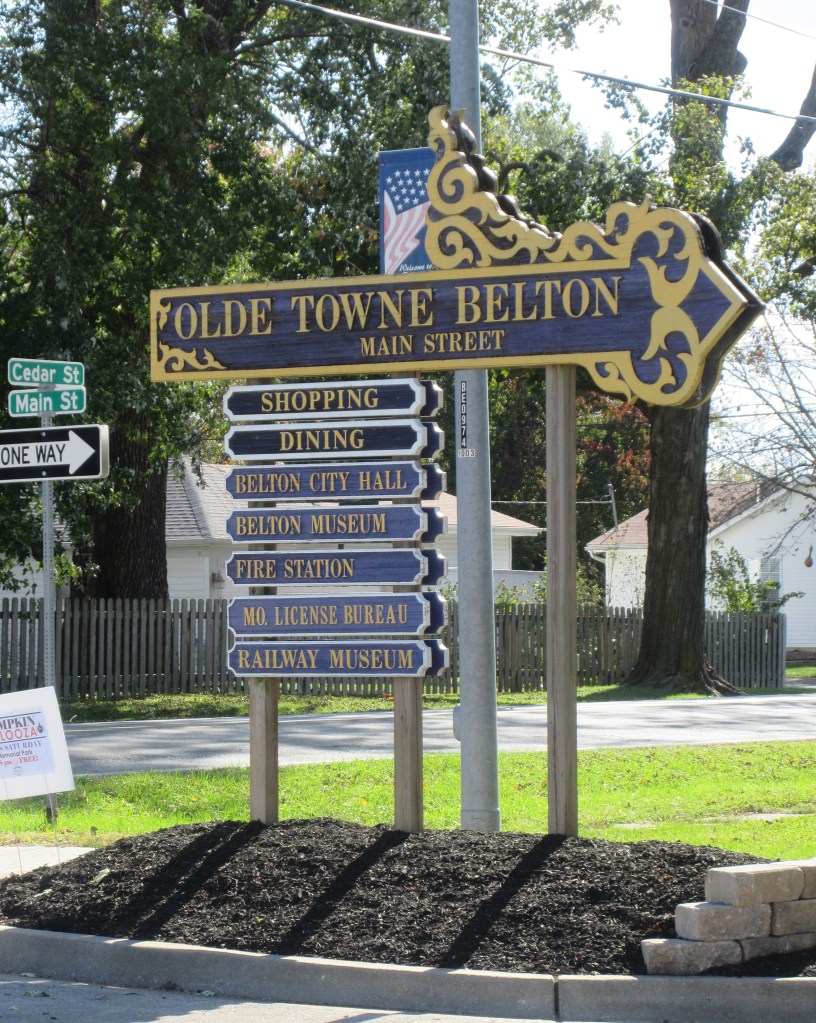
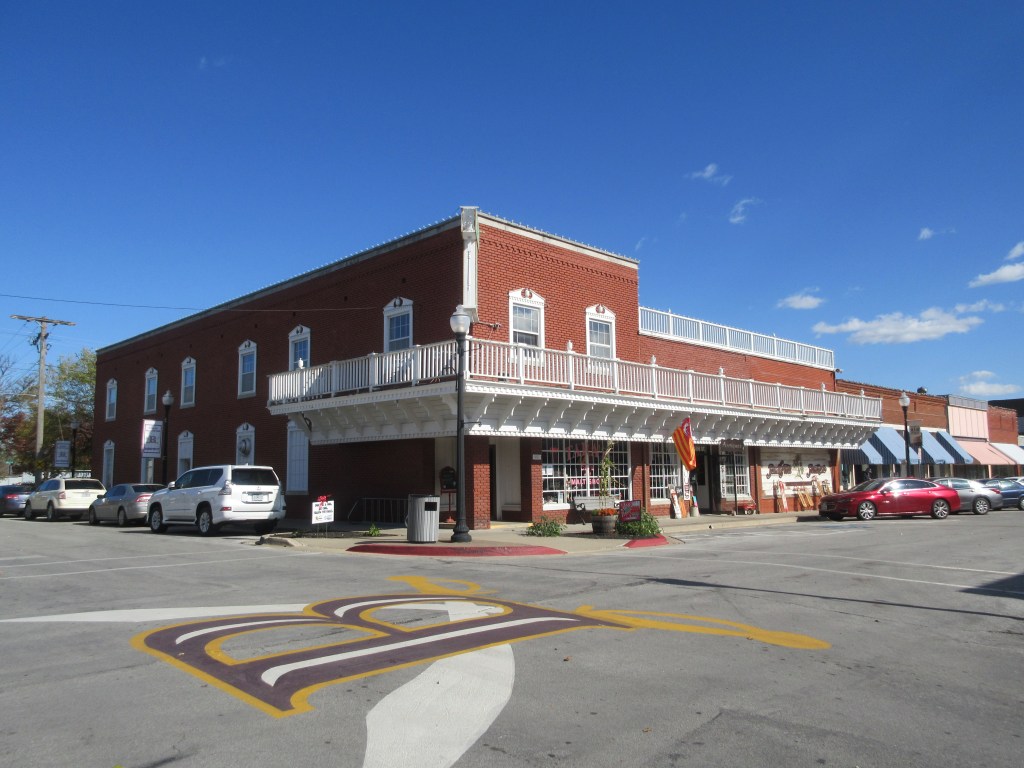
From our motel in Kansas City, Kansas, it took about 45 minutes to get to the Memorial and we found the location quite easily. When we left the memorial, we chose to take the city streets instead of a freeway and it took us about 45 minutes until we were out of the suburbs of the city, only having a little difficulty staying on our route. Then it took another twenty minutes to arrive at Belton, the town where Lena wrote that they had their dinner. Belton has an historical main street and we decided to have our lunch at a café that was decorated with Betty Boop and other retro décor. It was nearly 2:00 PM when we ordered our lunch, a bison burger for me and a grilled ham and cheese for my mother.
(Photograph by MRW October 22, 2019)
This restored building in Belton, Missouri, is where we ate our lunch. (Photograph by MRW October 22, 2019)
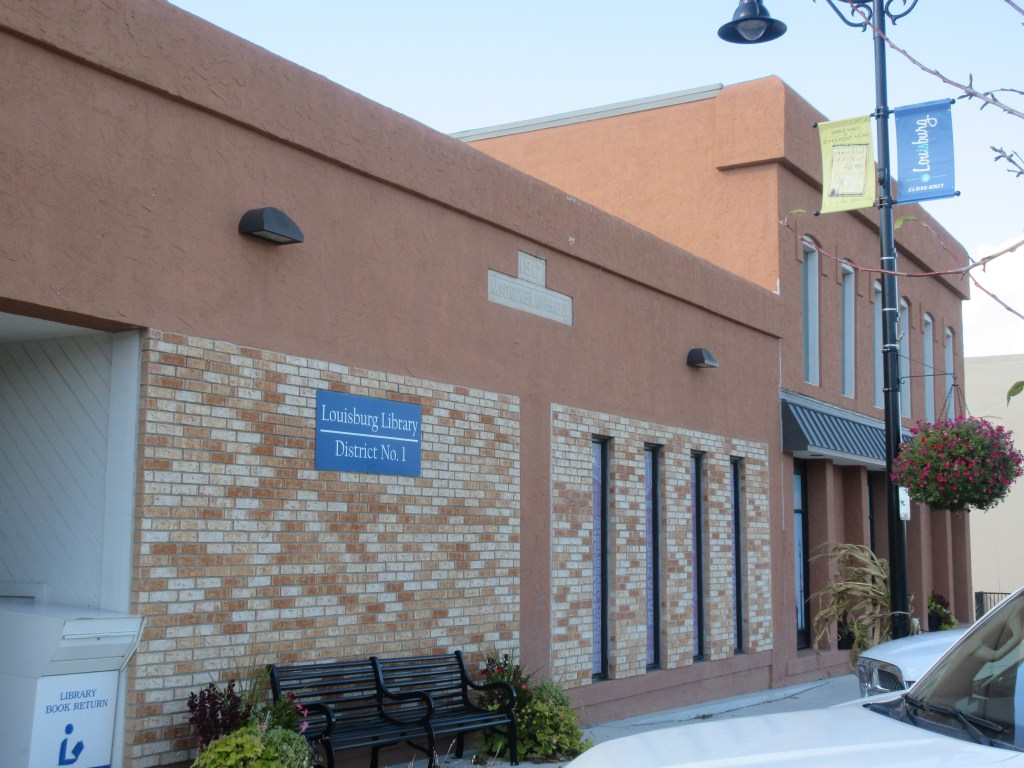
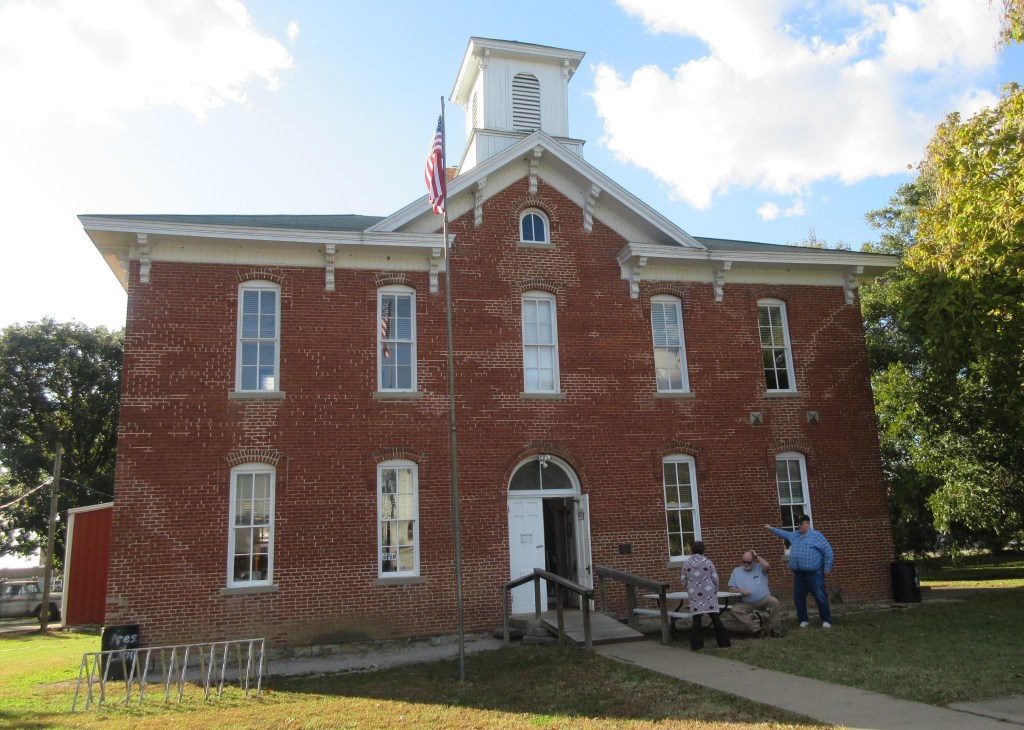
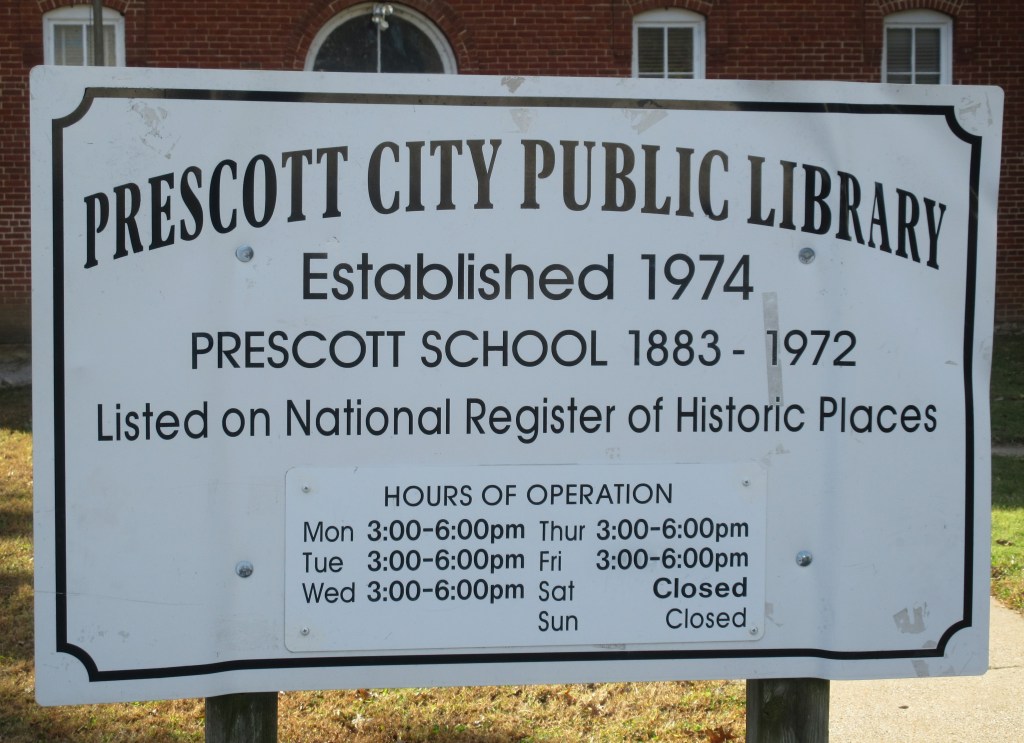
When we left Belton, we traveled on a winding country road (Route Y), which eventually took us across the state border, back into Kansas. Upon arriving at Louisburg, one of the towns Florence mentioned, our only option to continue toward Fort Scott was U. S. Highway 69, a modern freeway. A few times we got off the freeway to drive through towns in Florence’s list. Two of the towns are utilizing old buildings for public libraries. In Prescott, the library had formerly been a school house and we were invited inside to see the upstairs room that was set up as an historical classroom. We finally arrived at our motel at 5:00 PM.
Louisburg Public Library is in a 1917 building.(Photograph by MRW October 22, 2019)
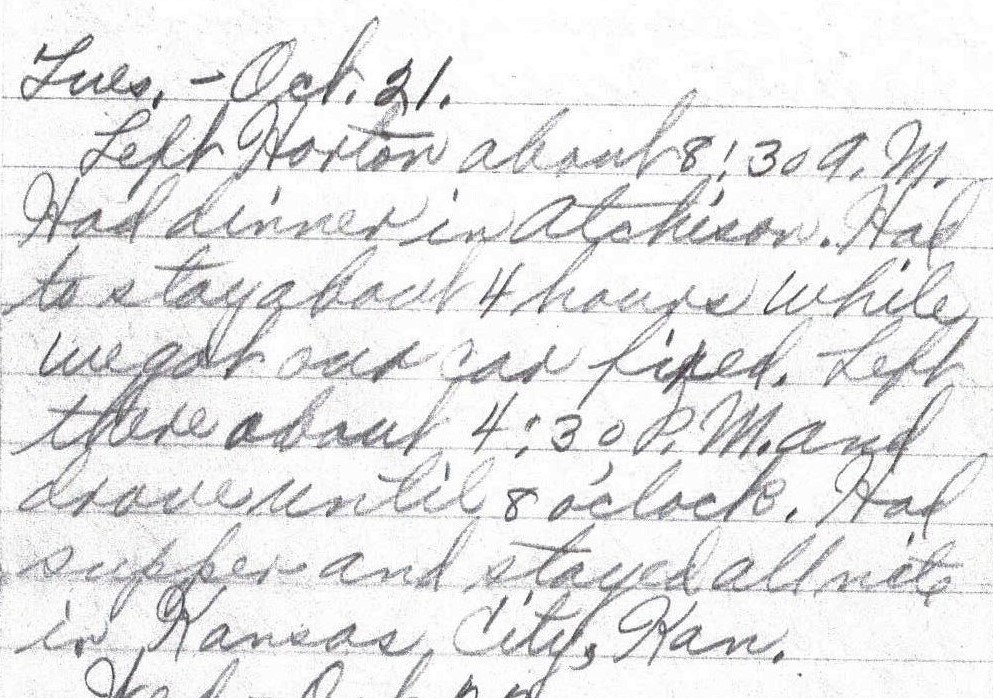
Left Horton about 8:30 A. M. Had dinner in Atchison. Had to stay about 4 hours while we got our car fixed. Left there about 4:30 P. M. and drove until 8 o’clock. Had supper and stayed all nite in Kansas City, Kan. – Lena Bevers
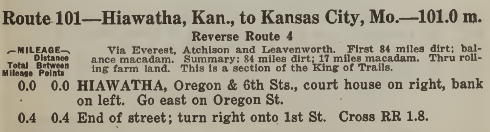
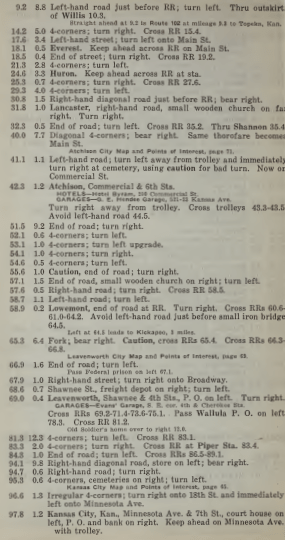
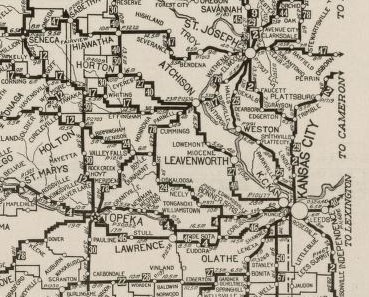
When Herbert Bevers and Mr. McElhany got on the road on October 21, 1919, they started out from Horton, Kansas at 8:30 AM. Horton is 12 miles south of Hiawatha and about five miles west of Everest. The town cannot be found on the running directions of Route 101 of The Official Automobile Blue Book 1920 (see below) because Horton is west of the route described, but starting at mile 18.1 we can follow the route that the two cars probably took to get to Kansas City, Kansas. Florence Bevers wrote in her travel log that they drove through Everest, Huron, Lancaster, Shannon, Leavenworth, Lansing, Wallula and Piper.1 Many of these towns are listed in Route 101. The introduction to Route 101 states that this route is a section of the King of Trails – confirmation that Herbert Bevers and Mr. McElhany were driving on the King of Trails.2
A section of a 1924 Rand-McNally map showing a route from Horton to Kansas City, Kansas.3
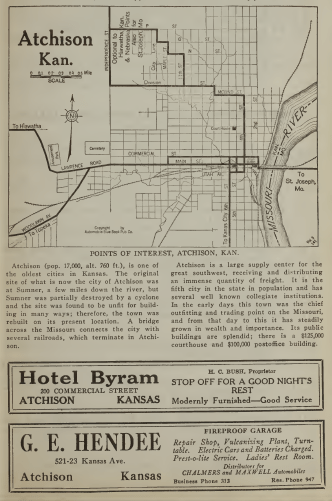
When the two cars arrived in Atchison, Herbert had to get their car fixed which took about four hours. Florence stated “they fixed the timer on our car.”4 In the above extract from the 1920 Blue Book, there is an advertisement for a garage.5 Maybe this is where the work was done on the Bevers’ car. When Florence wrote “timer,” perhaps she was referring to the odometer, which would have been very important for keeping track of the distance traveled, if they were following running directions, such as those in the 1920 Blue Book.
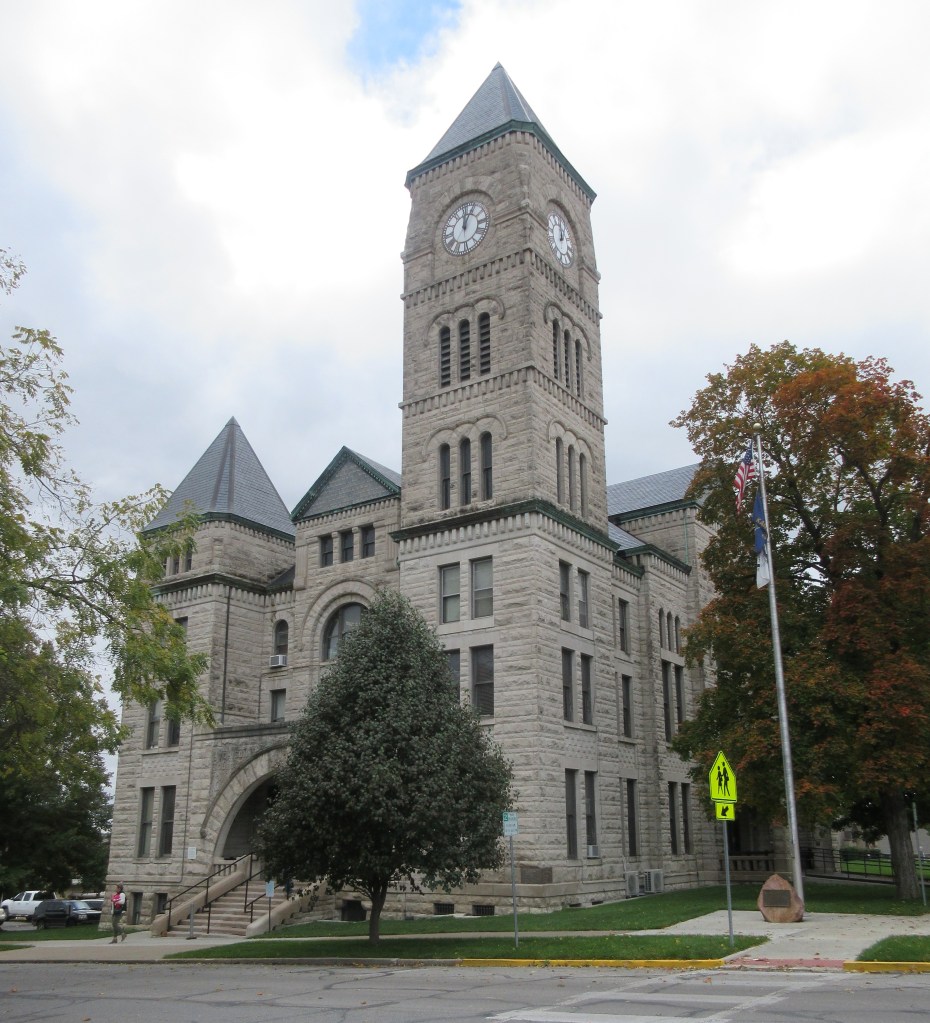
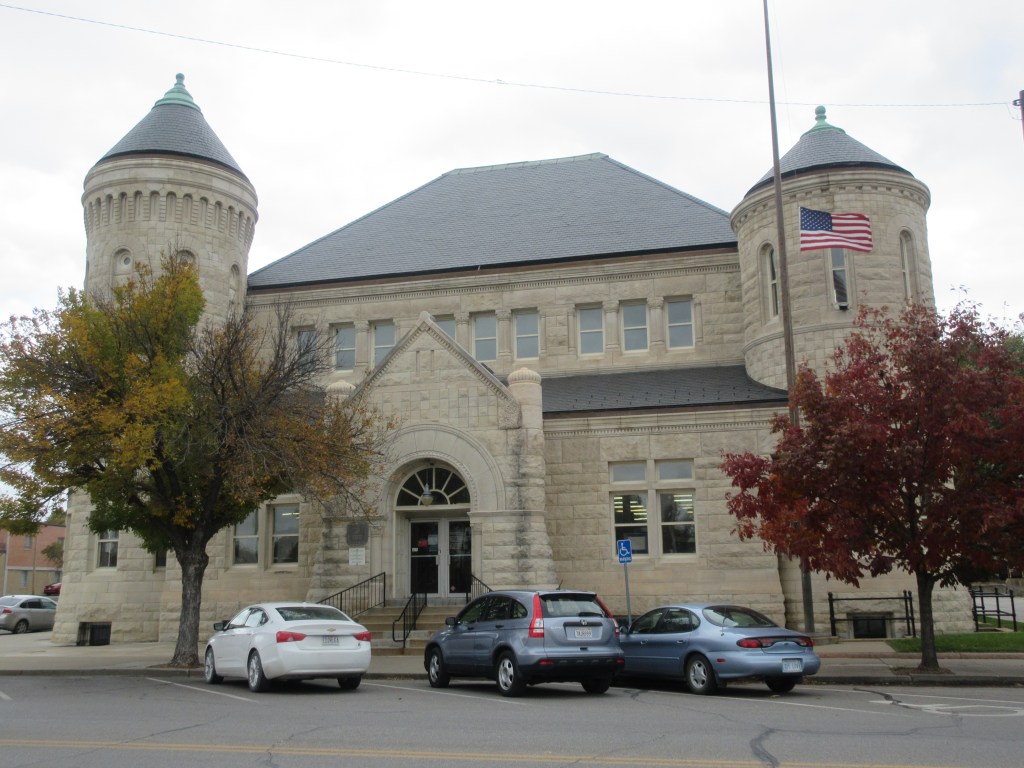
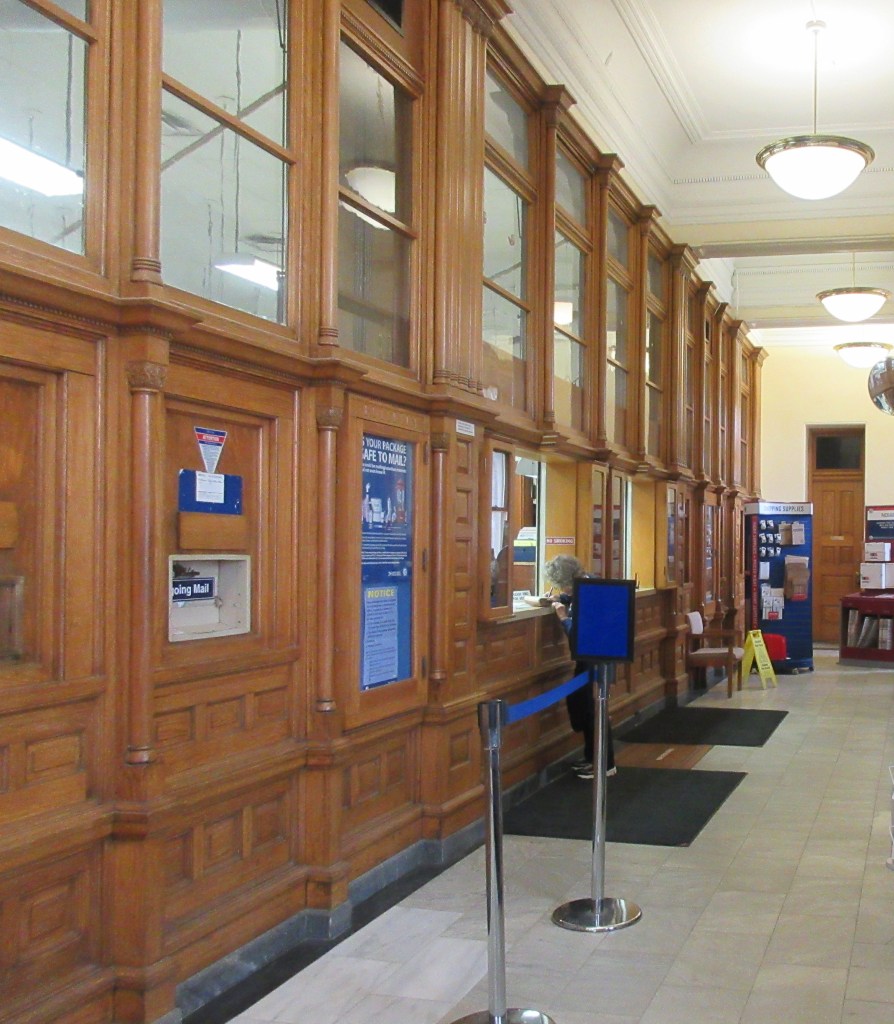
In the description of Atchison above, at the end of the article it mentions the “splendid” public buildings: a $125,000 Atchison County Court House and a $100,000 U. S. Post Office.6 When my mother and I left our motel, we drove around the city to see some of the sights. We went to the courthouse, the post office, the river front and the pedestrian mall. I needed to mail a letter so I went inside the post office to buy envelopes and stamps. The woodwork in the lobby was beautiful.
Atchison County Court House (Photograph by MRW October 21, 2019)
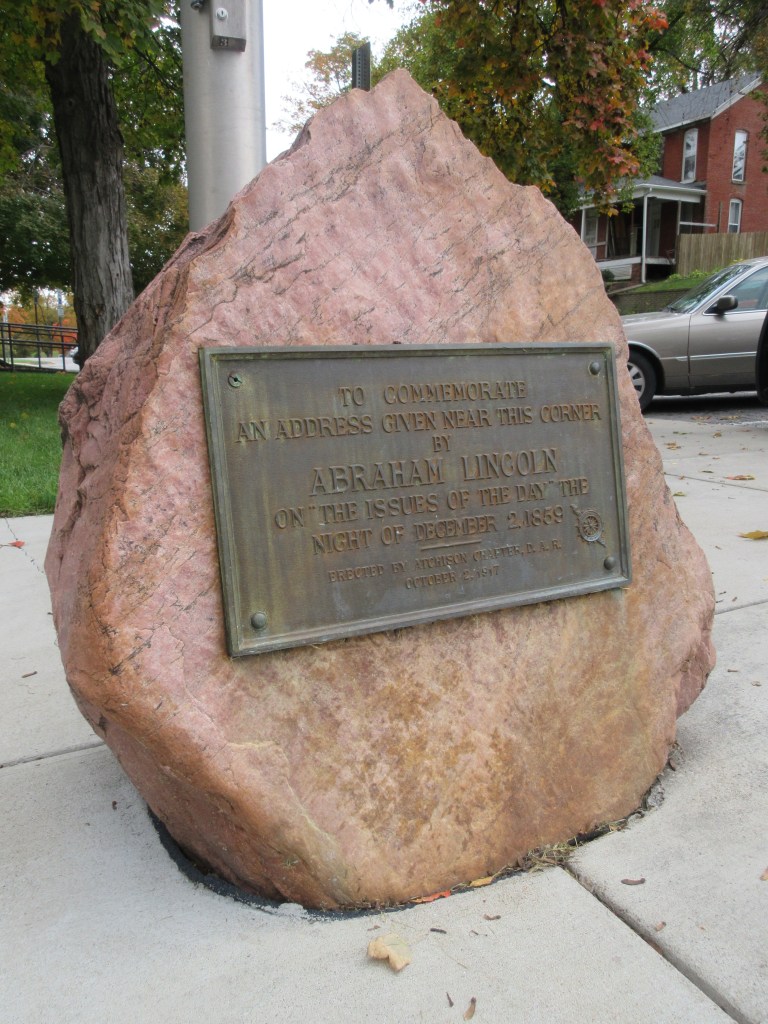
In 1869, Abraham Lincoln gave an address near the corner of 5th Street and Parallel Street in Atchison, Kansas (Photograph by MRW October 21, 2019)
U. S. Post Office, Atchison, Kansas (Photograph by MRW October 21, 2019)
Interior of the U. S. Post Office, Atchison, Kansas (Photograph by MRW October 21, 2019)
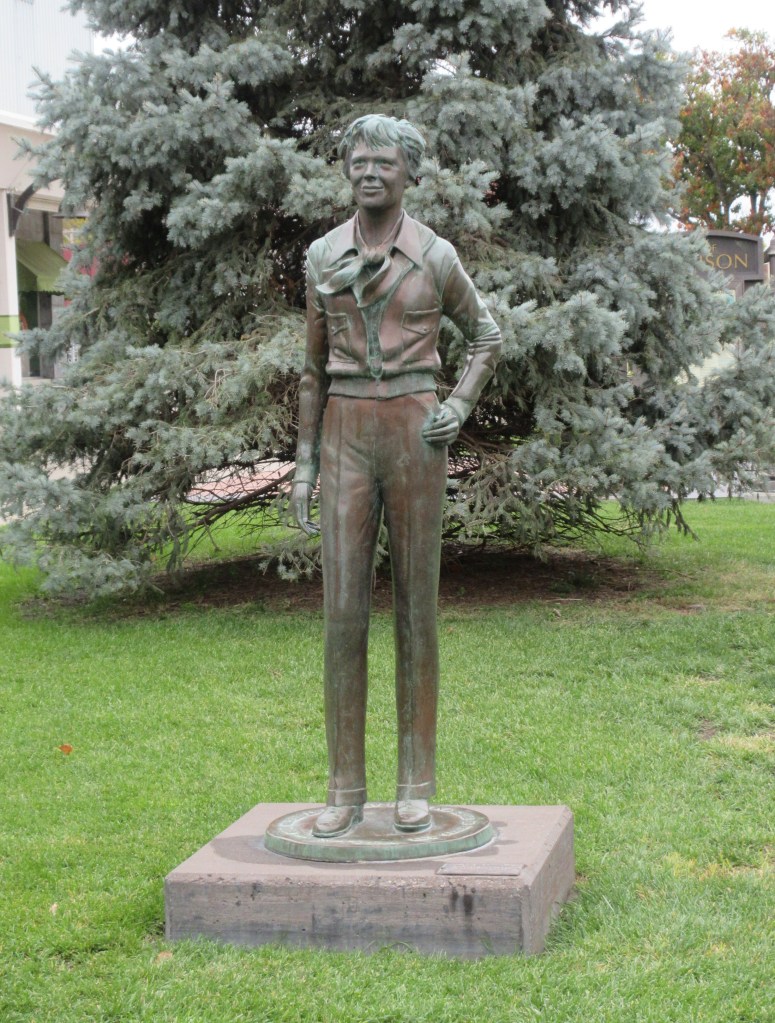
Amelia Earhart was born in Atchison, Kansas. A bronze statue of her stands in the middle of the pedestrian mall of Commercial Street, Atchison, Kansas. Around the base of the statue are the words: “Let there be peace on earth, and let it begin with me.” (Photograph by MRW October 21, 2019)
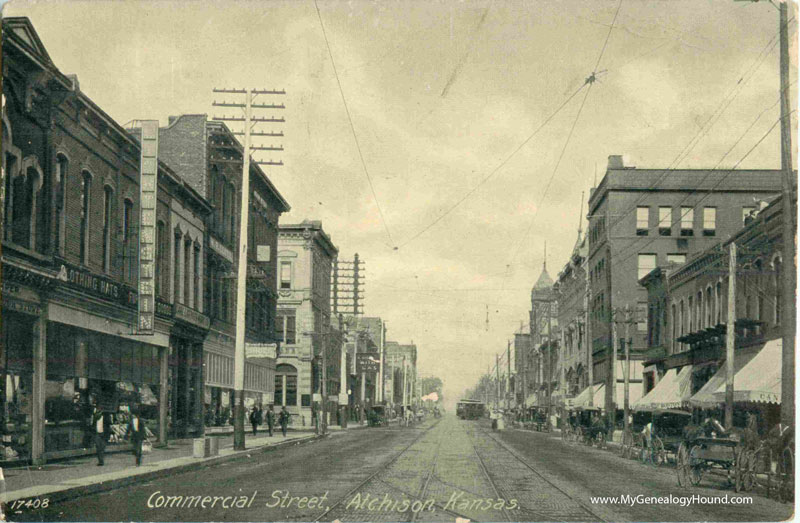
Commercial Street, Atchison, Kansas, about 19107 (Courtesy of My Genealogy Hound)
After our tour of Atchison, we headed south on U. S. Highway 73 which closely follows the King of Trails route. At mile 66.9 in the Route 101 running directions above, it tells the driver to pass a federal prison on the left.8 When we reached the point on U. S. Highway 73 where it seemed the prison should be, we searched the landscape for a building that looked like a prison. Finally, as we came over a hill, there on the left was a huge building. It was the United States Penitentiary at Leavenworth, a very impressive building. A sign in front of the grounds declared that photos were not to be taken, so I cannot post any pictures. Construction of the building began in March 1897 and continued for about 25 years.9 To see a picture of the prison, go to the Federal Bureau of Prisons website: https://www.bop.gov/locations/institutions/lvn/index.jsp.
Between Leavenworth and Kansas City, instead of the farm land we had been viewing for a week, we traveled through urban and suburban commercial districts and residential districts. U. S. Highway 73 becomes a modern four-lane highway south of Lansing. According to the introduction to Route 101 above, the Bevers family drove on dirt until they were within 17 miles of Kansas City, then they drove on macadam.10 Leaving Atchison at 4:30 PM, they drove about 55 miles and arrived in Kansas City about 8:00 PM. On this stretch, they drove almost 16 miles per hour.
Upon our approach to Kansas City, Kansas, my mother and I had difficulty finding our way to our motel, because our printed instructions weren’t correct, and I couldn’t understand how to read the Triptik from AAA. So, we entered the address of the motel in the Garman navigation device and trusted it to lead us to the motel. By using this method, we had to take a freeway to get to our destination. It worked and we arrived at our motel around 3:00 PM.
Notes:
B. Winkelmann, Our Trip to Texas [Transcription of Our Trip to Texas by Florence Bevers, 1919] (unpublished, n. d.): 2.
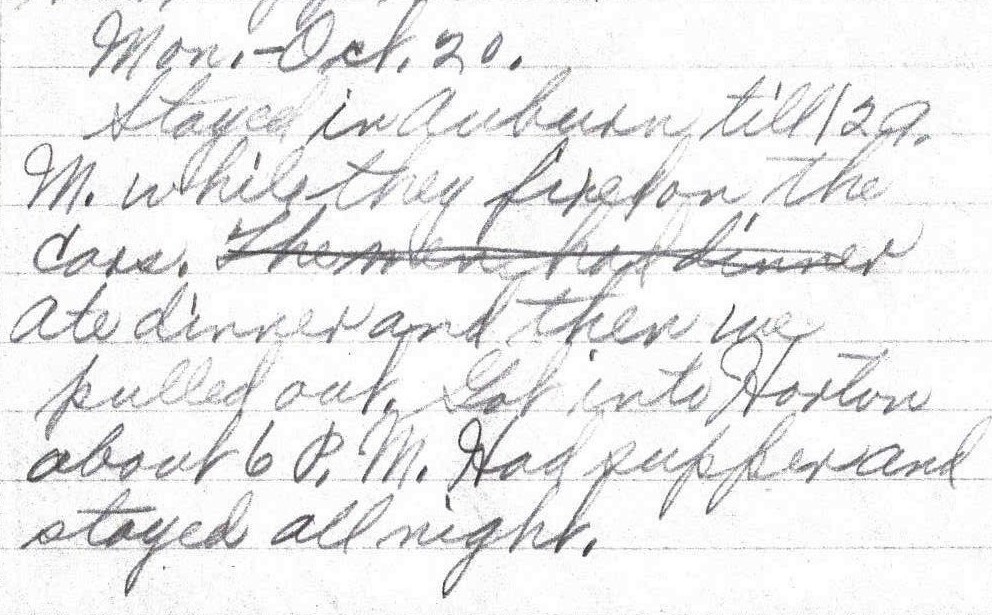
Stayed in Auburn till 12 A. M. while they fixed on the cars. Ate dinner and then we pulled out. Got into Horton about 6 P. M. Had supper and stayed all night. – Lena Bevers
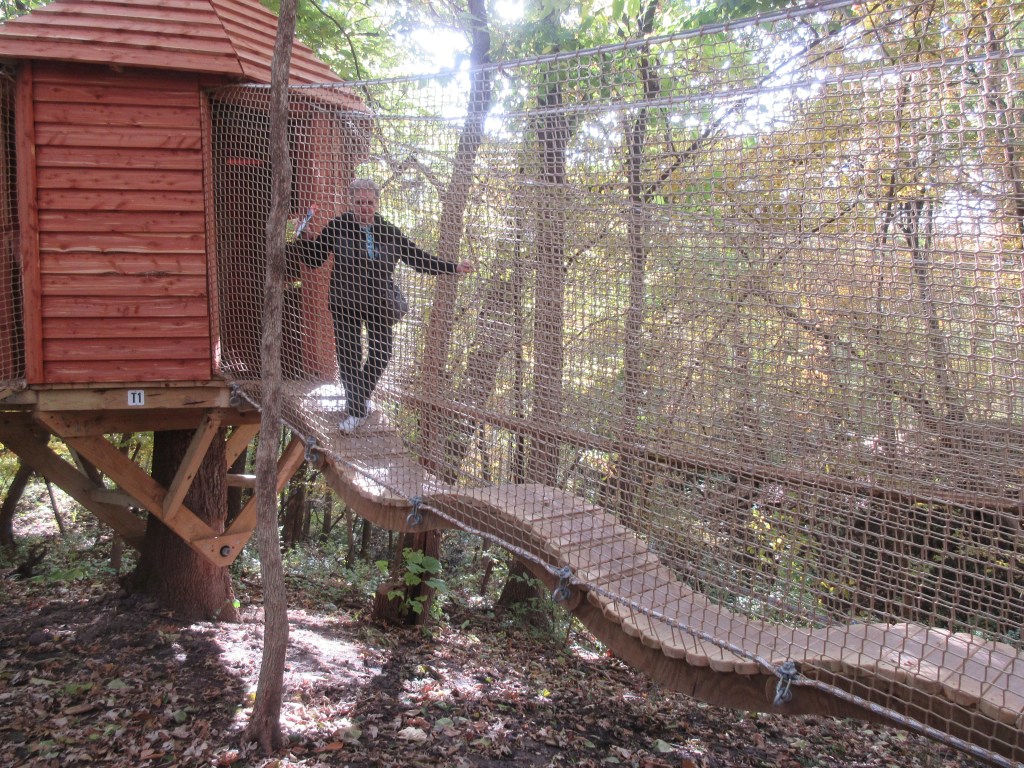
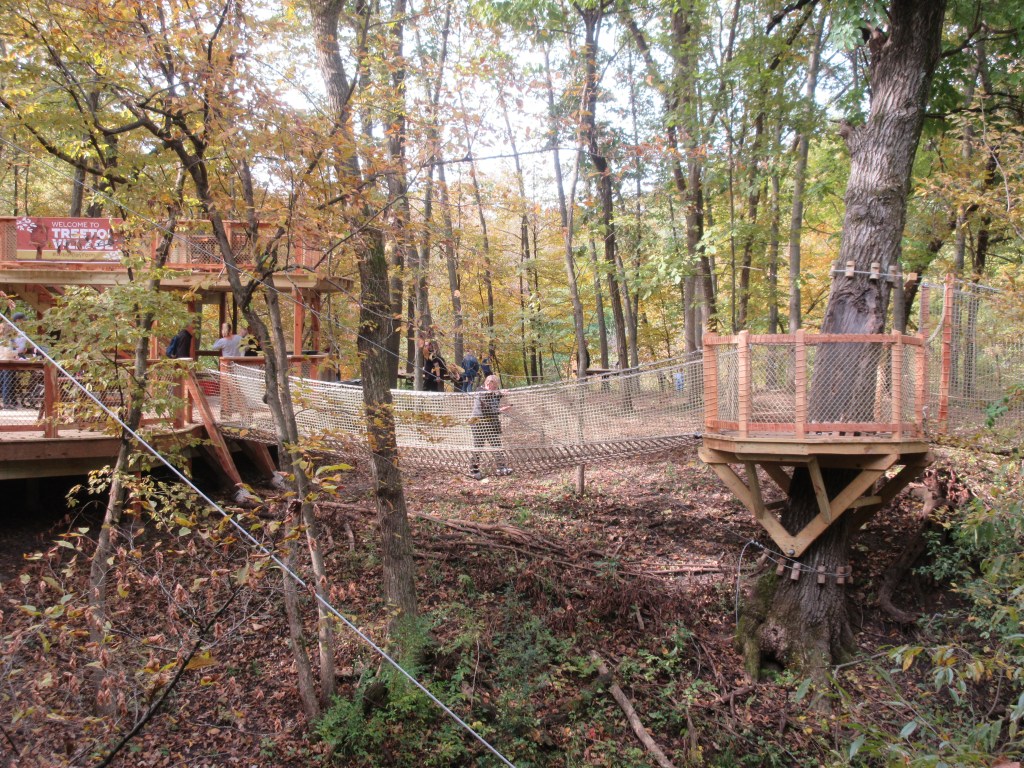
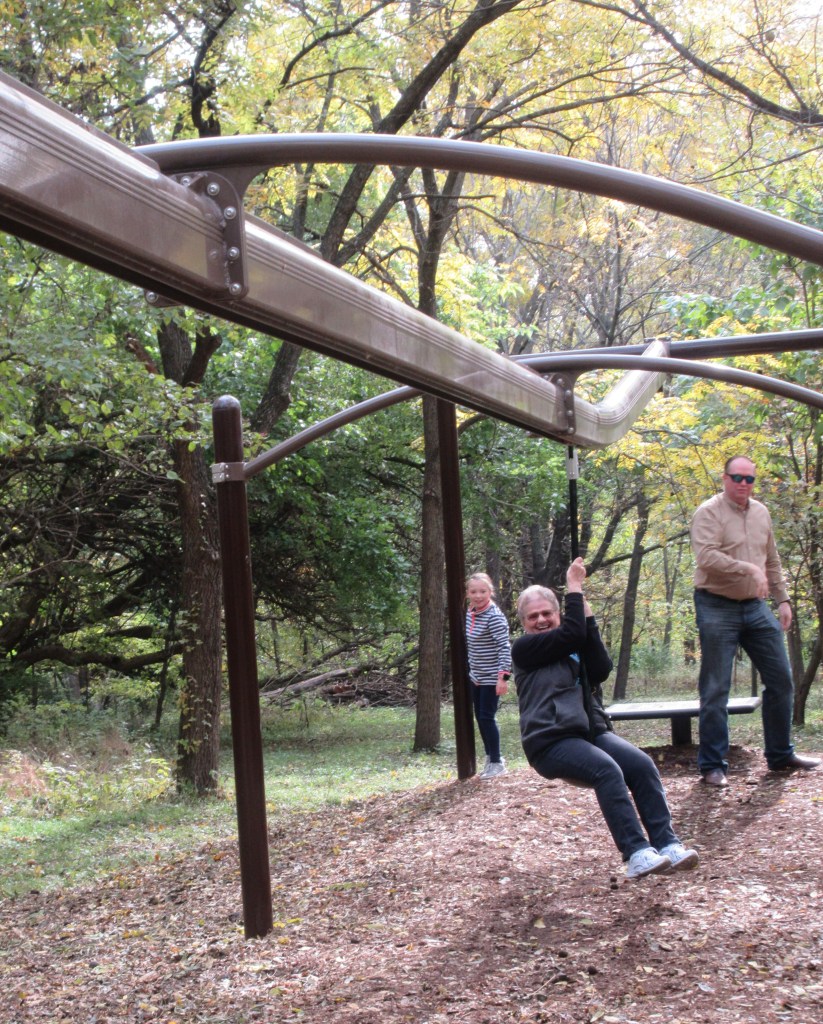
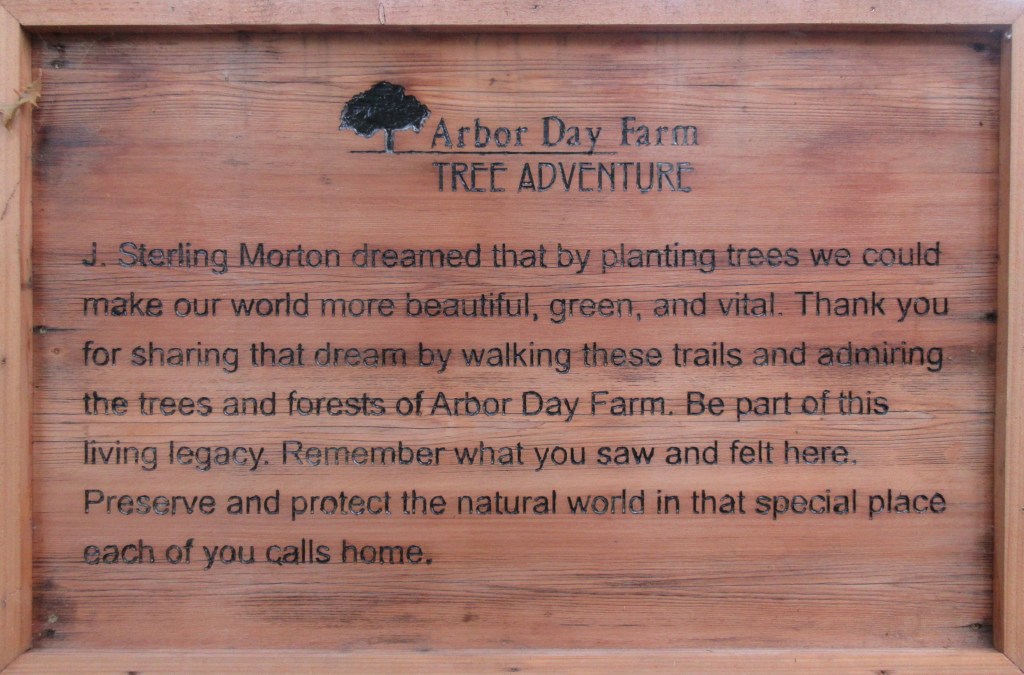
Lena writes in her travel log that the traveling party spent the morning of October 20 in Auburn, Nebraska because the men needed to fix their cars. Florence adds that “they fixed the fan on our car and the frame on McElhaney’s car.”1 My mother and I didn’t head down the road right away either. In the 2018 AAA TourBook Guide for Nebraska, my mother found the Arbor Day Farm in Nebraska City. This farm is operated by the Arbor Day Foundation, whose mission statement is: “We inspire people to plant, nurture, and celebrate trees.”2 We spent the morning viewing some of their informative exhibits, walking one of their trails and experiencing a very unique attraction: Treetop Village. If you are looking for evidence that you still have a kid in you, then try this out.
(Photograph by MRW October 20, 2019)
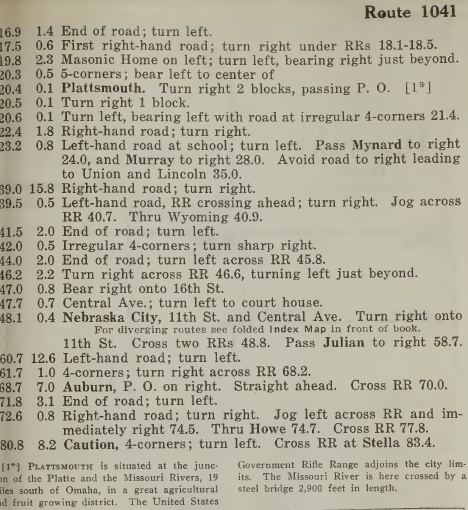
Lena stated that they headed down the road from Auburn at 12:00 PM after they ate dinner. Today we started down the road from Nebraska City about 12:30 PM after sharing a caramel apple at the Arbor Day Farm. U. S. Highway 75 roughly follows the King of Trails Highway until north of Dawson, Nebraska, then U. S. Highway 73 follows the King of Trails. Florence recorded that they traveled through Howe, Stella, and Verdon in Nebraska, then Reserve and Hiawatha in Kansas.3 The two-car caravan ended their day in Horton, Kansas at about 6:00 PM. In six hours, they had traveled about 63 miles, at not much more than 10 miles per hour.
Extract of Route 1041 from The Official Automobile Blue Book 19174
When my mother and I traveled down U. S. Highway 75, we went past and through several very small towns, for example Verdon has a population of 172. We could not find a business district in Verdon nor did we find one in Reserve. Auburn, the town where the Bevers family spent the previous night is small also, as well as Horton where they stopped on this day. Hiawatha was the largest town we drove through. It was very interesting to see the well-maintained historical buildings there.
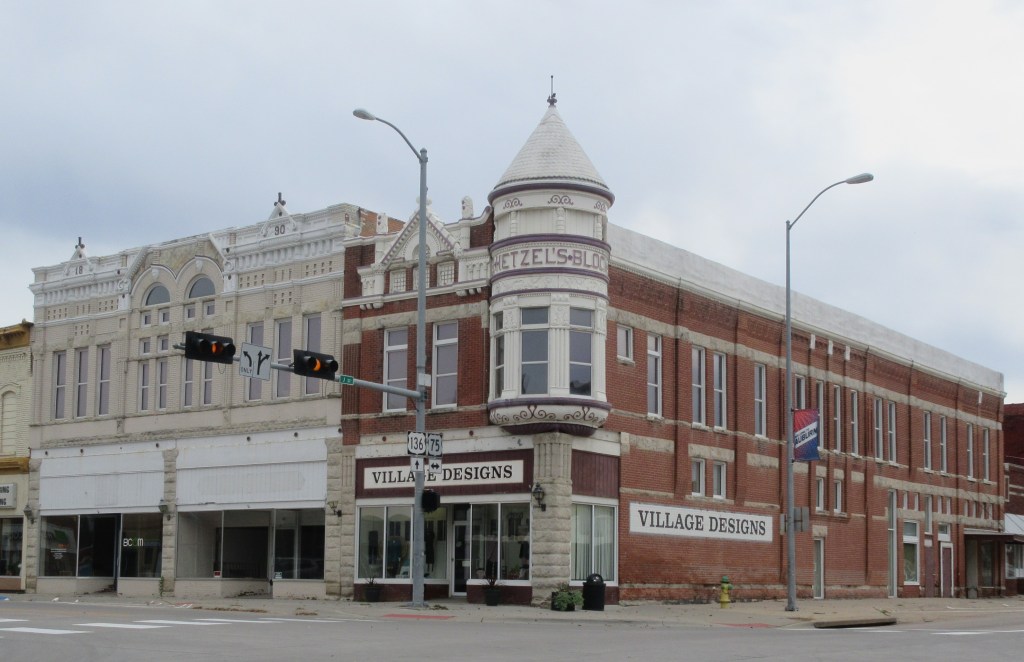
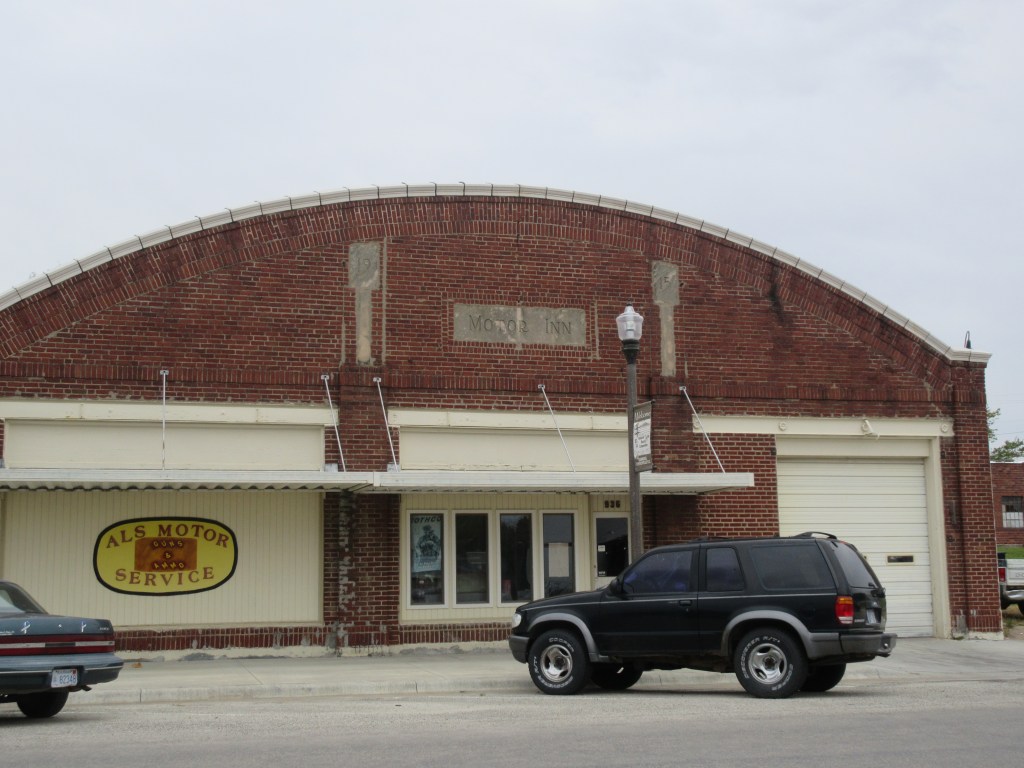
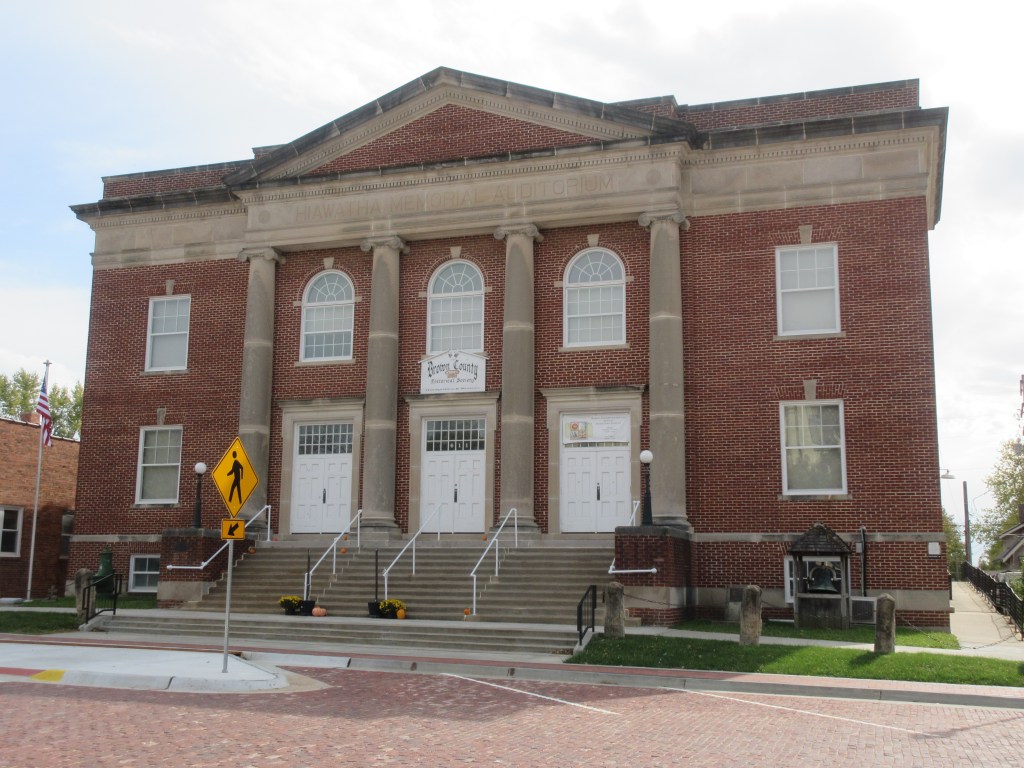
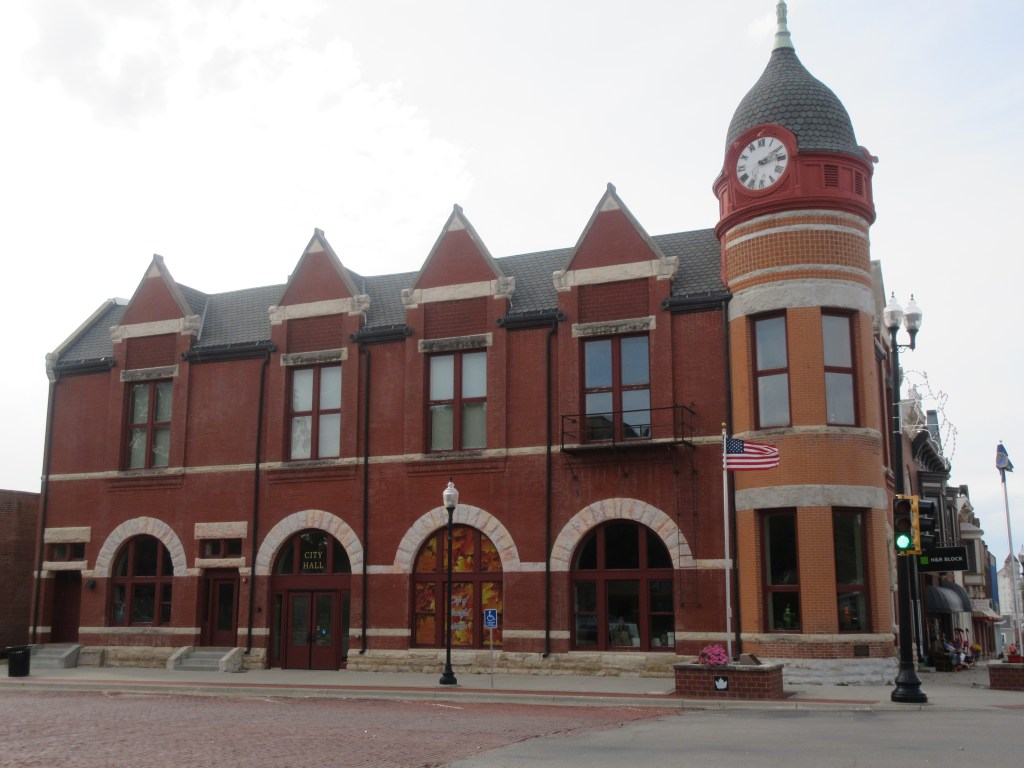
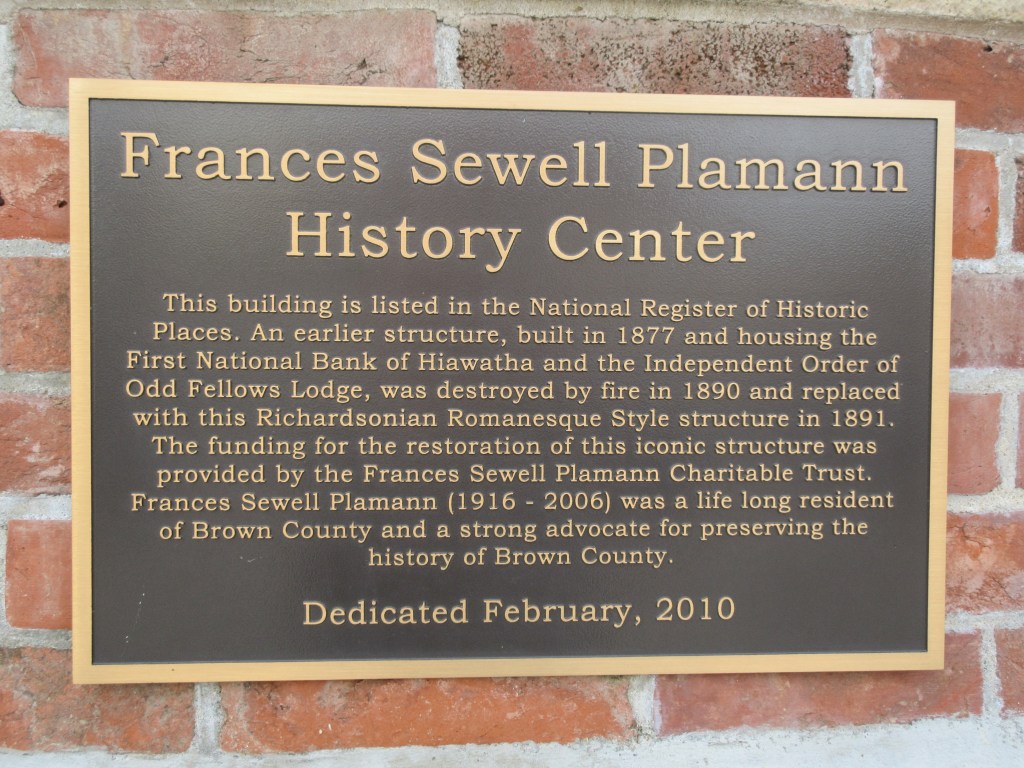
Hetzel’s Block in Auburn, Nebraska, dated 1890 (Photograph by MRW October 20, 2019)This building in Horton is dated 1915. The stone above the window says “Motor Inn.” (Photograph by MRW October 20, 2019)Originally called the Hiawatha Memorial Auditorium, this 1920 building houses the Brown County Historical Society. (Photograph by MRW October 20, 2019)
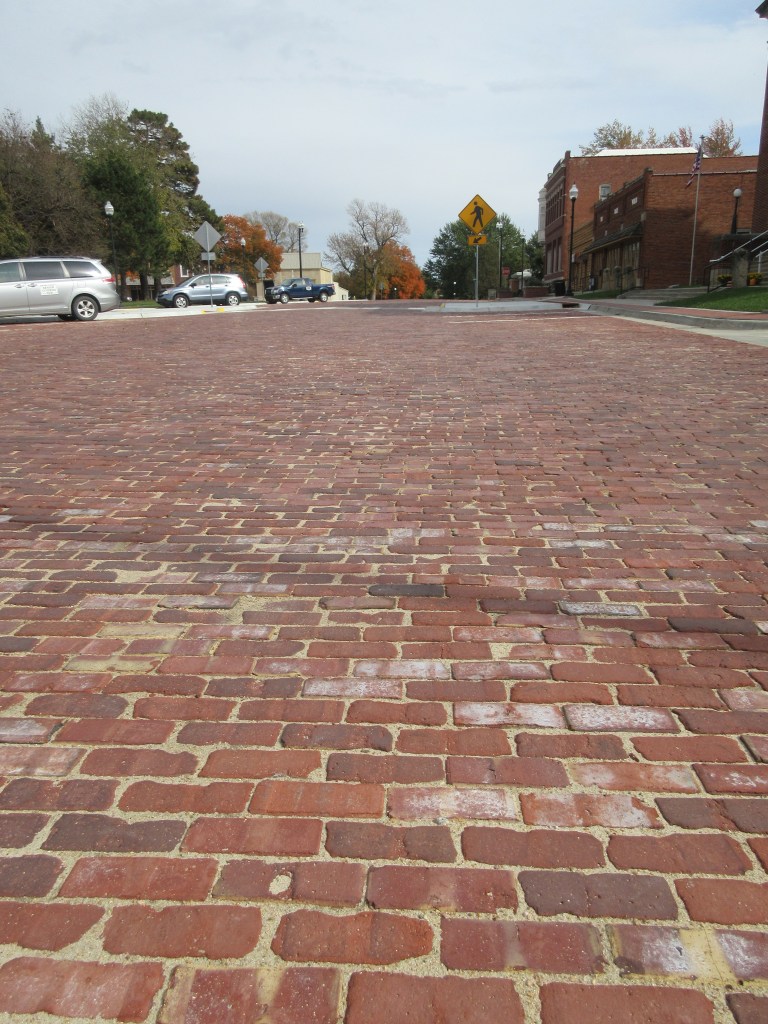
Brick paved streets encircle the Courthouse Square of Hiawatha. (Photograph by MRW October 20, 2019)
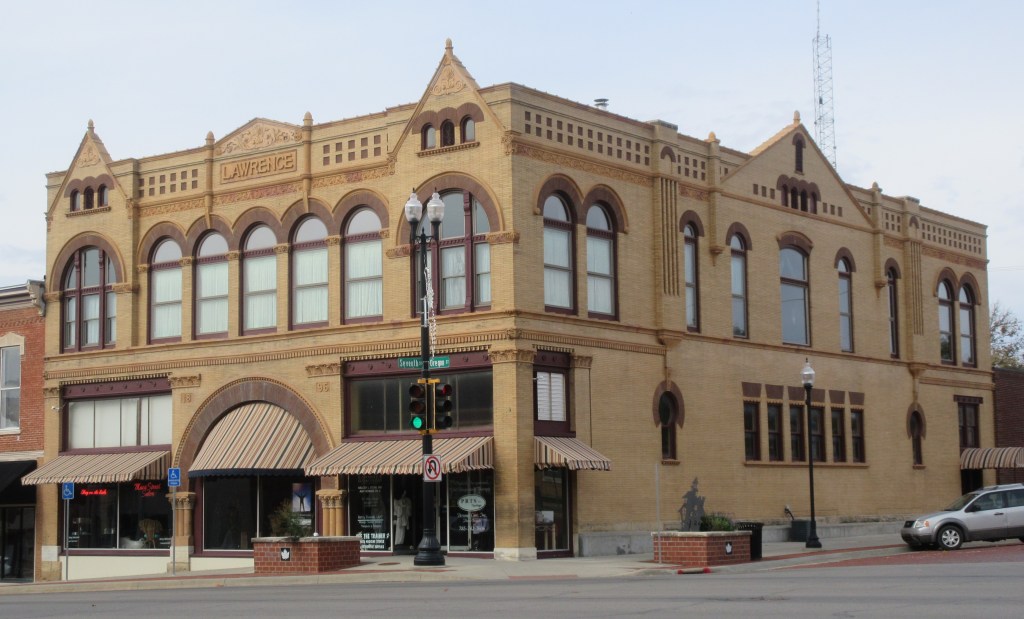
Lawrence Building, Hiawatha, Kansas, dated 1896 (Photograph by MRW October 20, 2019)
In 1919, the speed laws in Kansas were: “‘Reasonable and proper.’ ‘A rate of speed in excess of 25 miles an hour shall be presumptive evidence of driving at a rate which is not careful and prudent in case of injury to the person or property of another.’ Twelve miles per hour in city limits; eight miles an hour at crossings, intersections, bridges, curves, descents, etc. Six miles an hour at city intersections.”5 The 1920 edition of The Official Automobile Blue Book informed its readers that: “There is now a great interest in Kansas in the matter of good roads, and many miles of macadam, brick and concrete are being constructed under the supervision of the state highway commission.”6
When the Bevers family passed through
Hiawatha, they crossed over another transcontinental highway. Below is a
section of a Rand McNally map dated 1924, designating the King of Trails
Highway with the number 27.7 (As I’ve mentioned before, this number
corresponds to the map legend, it is not a highway number assigned by a
governmental agency.) At Hiawatha the
King of Trails intersects with the Pikes Peak Ocean-to-Ocean Highway (number 47
on the map.) The Ocean-to-Ocean Highway connected
New York City with Los Angeles.8
Section of Rand McNally Map of Nebraska & Kansas, 1924
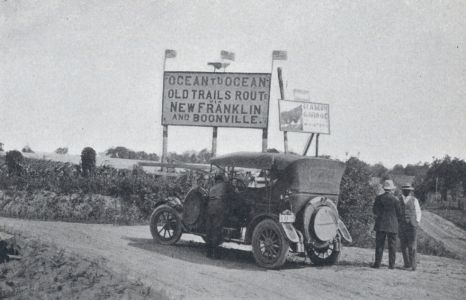
Ocean to Ocean Highway, 1913 (Public Domain; Courtesy of Federal Highway Administration)
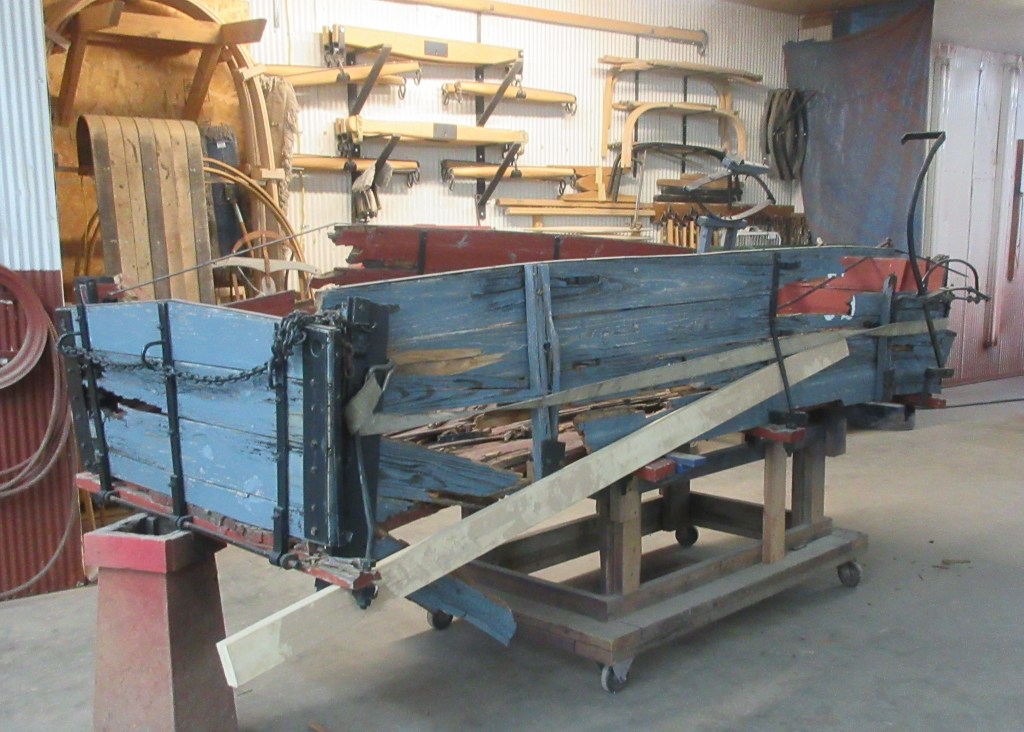
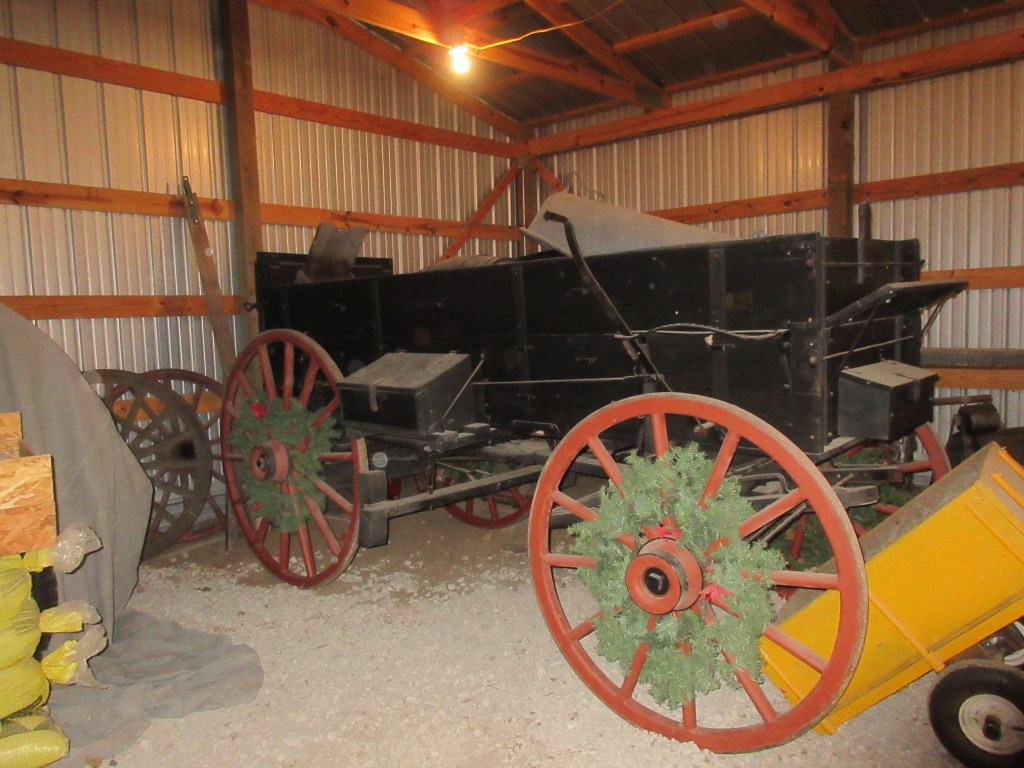
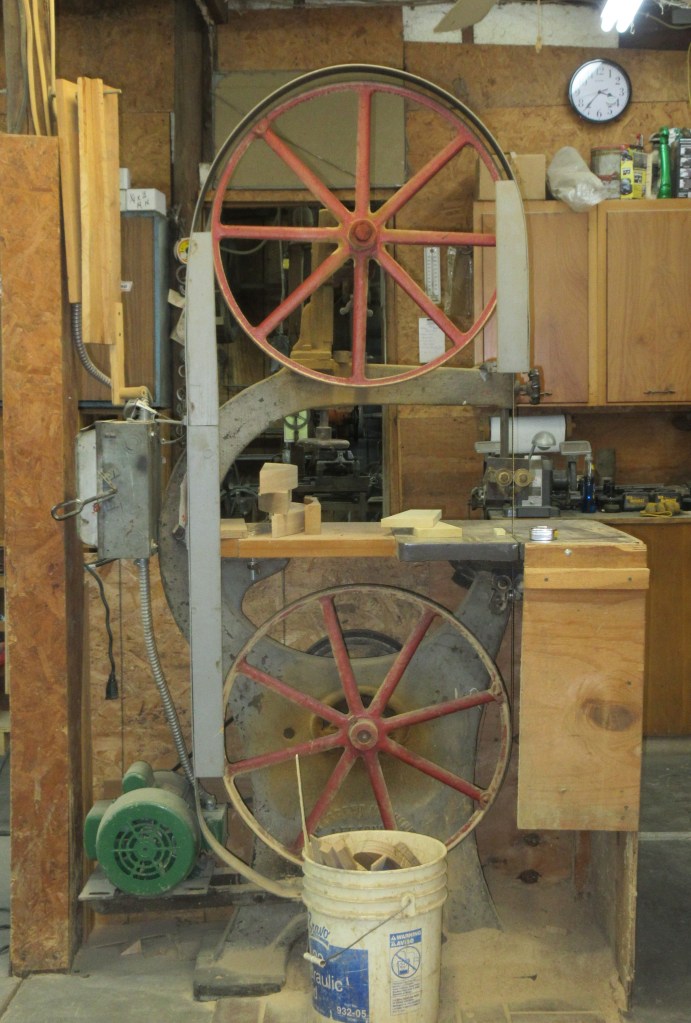
We didn’t stay in Horton as Lena’s family did because we weren’t able to locate online a motel in Horton, so instead we made a reservation in Atchison, Kansas. Before leaving Horton for our motel, we stopped at Werner Wagon Works. The proprietors restore and manufacture wagons in the style that were used in the eighteen hundreds. They kindly gave us a tour of their workshop. It was fascinating to see and imagine how our ancestors traveled before automobiles were invented.
An army escort wagon that will be restored by Werner Wagon Works. (Photograph by MRW October 20, 2019)A restored wagon completed about 1991 (Photograph by MRW October 20, 2019)Some of the restoration work is completed with this band saw built in the early nineteen hundreds. (Photograph by MRW October 20, 2019)
Notes:
B. Winkelmann, Our Trip to Texas [Transcription of Our Trip to Texas by Florence Bevers, 1919] (unpublished, n. d.): 2.
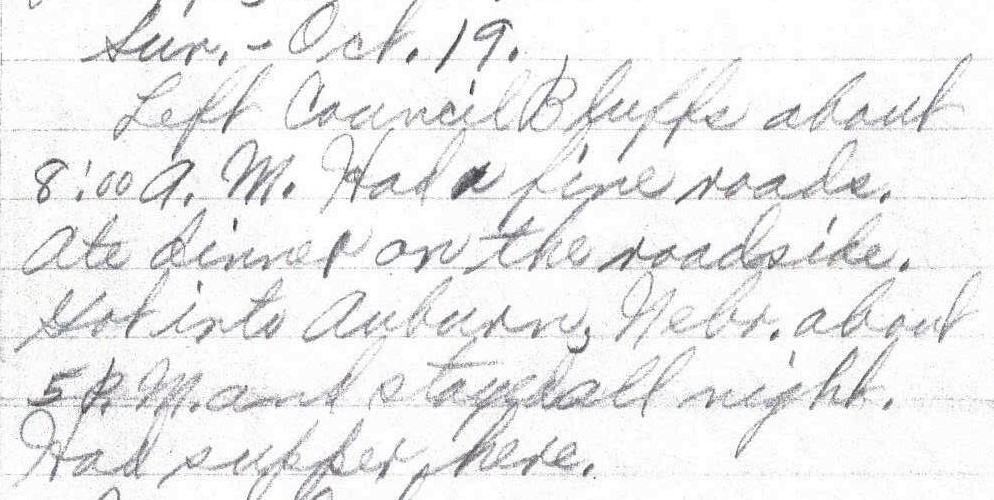
Left Council Bluffs about 8:00 A. M. Had fine roads. Ate dinner on the roadside. Got into Auburn, Nebr. about 5 P. M. and
stayed all night. Had supper here. – Lena Bevers
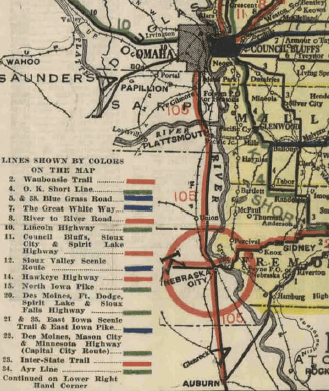
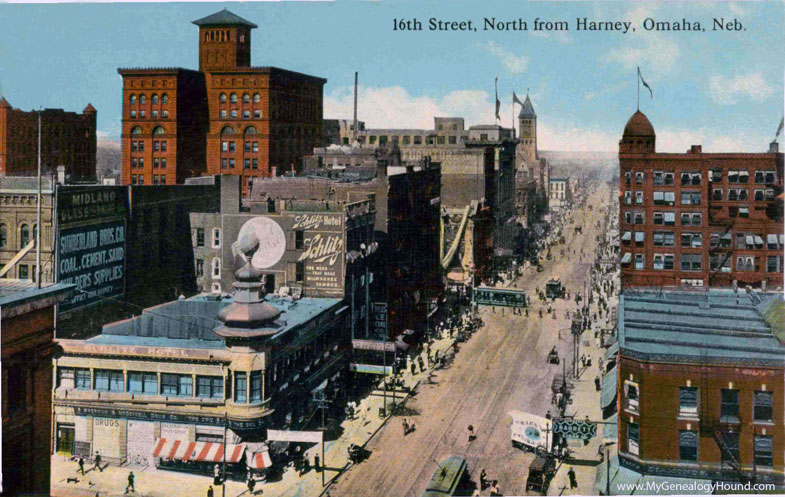
On this day one hundred years ago, Lena only recorded their starting and ending points. This isn’t much information to determine the route that they took on this day. Council Bluffs is on the east side of the Missouri River and Auburn is on the west side of the river, so one question is: Where did they cross the Missouri River? They could have crossed from Council Bluffs into Omaha, or they could have traveled south and crossed at Nebraska City. To make the choice, initially I referred to the Map of Iowa Showing Principal Automobile Routes, dated 1919, which I obtained from the Iowa Department of Transportation website. A portion of the King of Trails Highway is highlighted on this map, indicating that the highway crossed the Missouri River at Omaha and traveled south through Plattsmouth, Nebraska City and Auburn.1 So that is the route that I chose. Just a couple weeks ago, when my mother obtained from her cousin a copy of Florence Bevers’ travel log, we found confirmation that Herbert and Mr. McElhany did follow the King of Trails Highway into Omaha and then traveled south. Florence wrote: “Left Council Bluffs, ate breakfast on our way, same as always, about 8 am. Had fine roads. Drove thru Omaha, Albright, Ft. Crook, Plattsmouth, Murry, Union, Wyoming and Nebraska City. Ate dinner on the roadside. Got into Auburn, Nebraska about 5 pm and stayed all night. Stopped early so they could fix the car.”2
Section of the Map of Iowa Showing Principal Automobile Routes
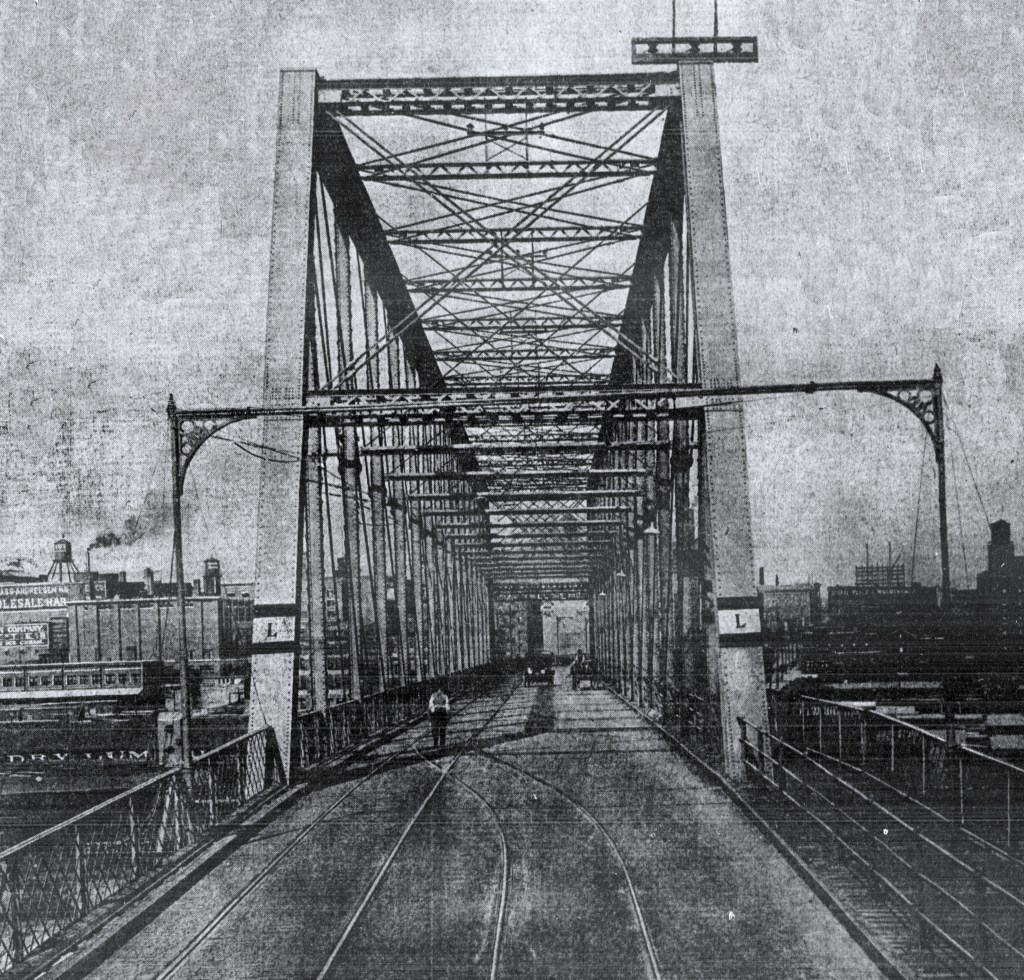
The bridge they would have used was one that between 1913 and 1930 was called the Lincoln Highway Bridge, which was a toll bridge. At the end of Lena’s travel log, she notes that they crossed four toll bridges. The King of Trails and the Lincoln Highways both crossed the Missouri River on the Lincoln Highway Bridge. Originally this bridge was called Douglas Street Bridge. It was a truss bridge built by Omaha and Council Bluffs Street Railway Company in 1888, designed to handle streetcars. On the photograph below, note the signs on each side of the bridge with the capital letter L. These were the signs posted to indicate to the motorists that they were on the Lincoln Highway.
Photograph of the Douglas Street Bridge by Omaha Daily Bee in July 1914. (Public Domain.)3
In 1938 a group of businessmen called the Knights of Ak-Sar-Ben (by the way, read this word backwards), bought the bridge with the intentions of making it a free bridge, which they accomplished in 1947.4 The bridge which was then named the Ak-Sar-Ben Bridge served the two cities until November 1966 when the Interstate Highway 480 Bridge was opened. All that is left of the Ak-Sar-Ben Bridge is an east pier near the east bank of the river, south of the I-480 Bridge.
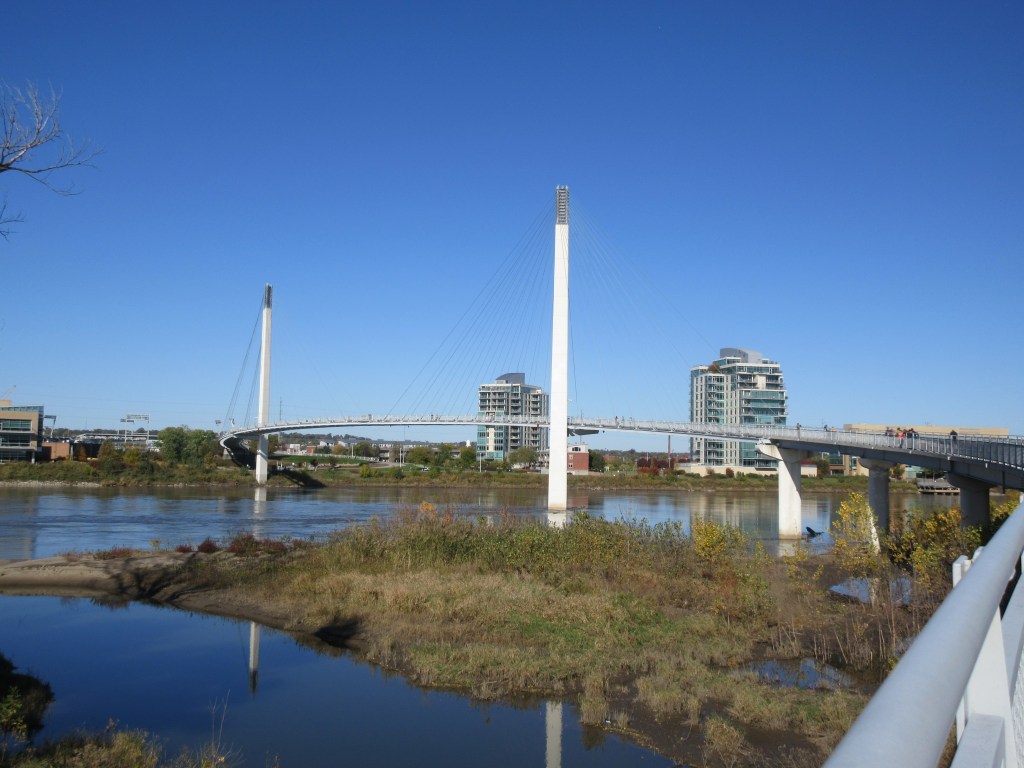
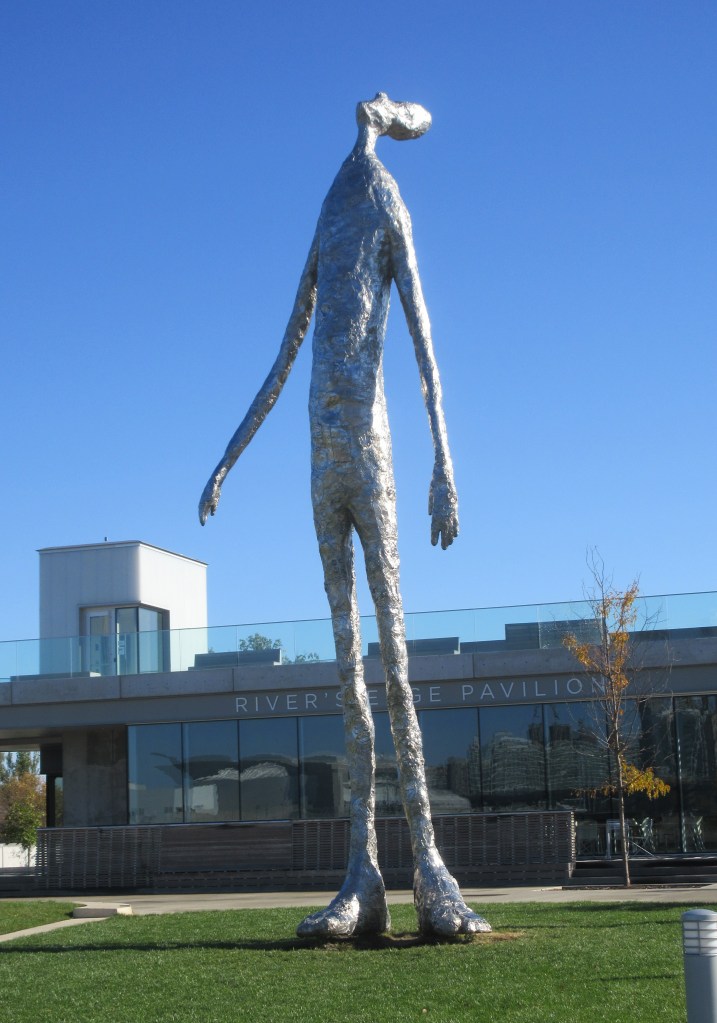
The first thing my mother and I did this morning was drive to River’s Edge Park in Council Bluffs. It was a lovely morning and very pleasant for walking partway across the pedestrian bridge that spans the Missouri River and viewing the motivating statue that stands in the park.
(Photograph by MRW October 19, 2019)
(Photograph by MRW October 19, 2019)
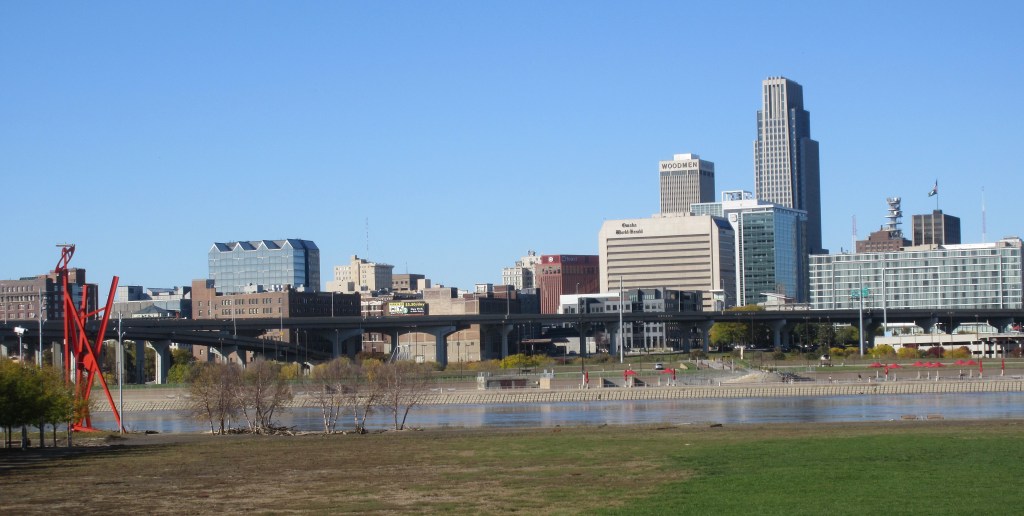
The Interstate 480 Bridge entering Omaha (Photograph by MRW October 19, 2019)
The Interstate Highway 480 Bridge is the bridge we used to cross the Missouri River (Photograph by MRW October 19, 2019)
Herbert and Lena’s daughter-in-law Gladys Daily Bevers was born in Omaha. Gladys’ mother Maggie Bonewitz Daily moved with her parents to Omaha from Fairfield, Iowa in 1880 and her father Charles Daily, who worked his way west from Indiana, arrived in Omaha about 1888. Charles and Maggie married in 1891 and except for a short stint of farming near Topeka, Kansas they stayed in Omaha until 1915.
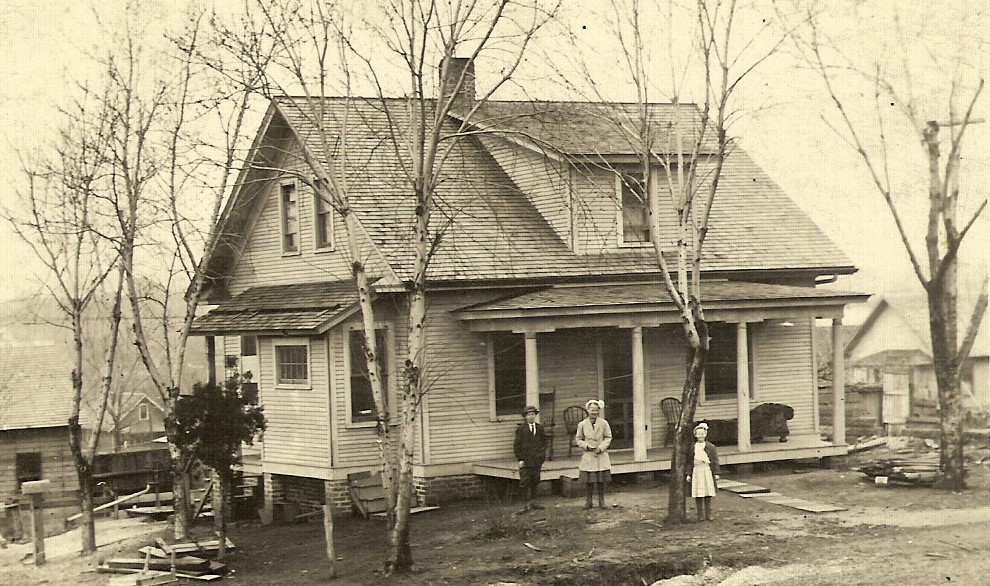
On Easter Sunday in March 1913, there was a devastating tornado that swept through Omaha and destroyed hundreds of homes. Today, my mother and I did some research in the Omaha Public Library and found an article in the Omaha World-Herald that confirmed that the home of Gladys’ grandmother, Josephine Bonewitz, was destroyed.5 Charles and Maggie’s home, two blocks away, was also destroyed, although they were not living in it at the time. Their son Robert has related that they had returned to Omaha from Kansas ten days before Easter and were waiting to move into their house at the beginning of the next month.6 Robert also explains that following the tornado, his father and Maggie’s brother H. Finley built a cottage for Josephine and a house for the Dailys. A year after the tornado, the Daily home was photographed at the same address as their former house, so it may be concluded that this is the re-built home. In 1915 the Daily family moved to a farm north of Watertown, South Dakota.
Charles and Maggie Daily’s Home in Omaha in March, 1914
Courtesy of My Genealogy Hound7
In 1919 upon entering Nebraska, the speed law was: “Reasonable and proper; not to exceed 25 miles per hour in any case, 12 miles in the city limits, 8 miles at an intersection, bridge, etc.; at intersection of streets in city, 6 miles.”8 In Omaha the Lincoln Highway broke away from the King of Trails Highway, traveling west toward Cheyenne, Wyoming, while the King of Trails Highway turned south to travel along the eastern border of Nebraska. Today when we left Omaha, we traveled alongside U. S. Highway 75 for about 10 miles. Then we had to get on U. S. Highway 75, which at that point was a modern four-lane highway. Then from Murray to Nebraska City it became a two-lane highway.
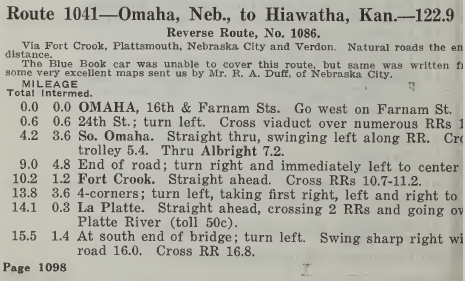
Route 1041 from The Official Automobile Blue Booktakes one from Omaha to Hiawatha, Kansas. Lena’s family stopped for the night at Auburn which is at mile 68.7 on this route. In the introductory explanation, I would interpret the “natural roads” to be dirt roads.9 Also, the “Blue Book car” could be equated with the current day Google Maps car.
The above directions (from the 1917 Blue Book) say that there was a toll of 50 cents to go over the Platte River10, but the 1920 Blue Book states that the cost to cross the toll bridge was 25 cents for the car and driver and 5 cents for each additional passenger.11 At the end of Lena’s travel log, she adds a postscript, saying that they had driven over four toll bridges. It appears that on this day, they traveled over two of the four toll bridges: the Lincoln Highway Bridge and the Platte River Bridge.
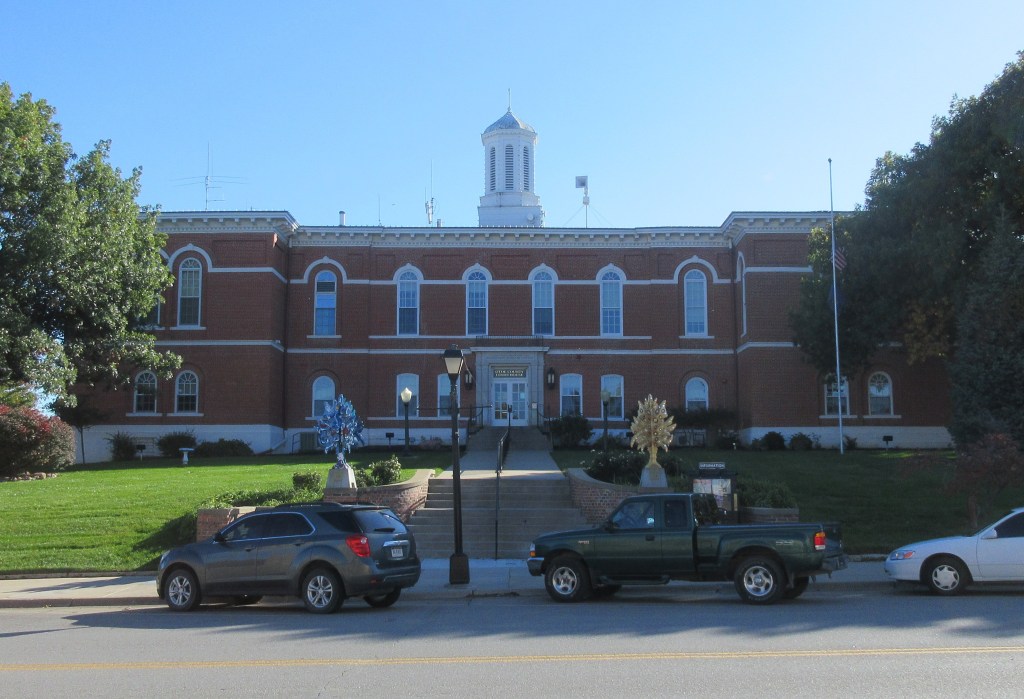
When my mother and I were looking online for a motel, we could not locate one in Auburn. The most economical one we found near Auburn was in Percival, Iowa. So, today we ended our day at 4:30 PM in Percival, instead of traveling as far as Auburn. Before going over the Missouri River to Percival, we decided to stop in Nebraska City for dinner (our end of the day meal). While we were looking for a restaurant, we passed the courthouse, which was erected in 1864. Nebraska City is one of the towns in Florence’s list of towns that the Bevers family passed through. She also notes that they: “Stopped early so they could fix the car.”12
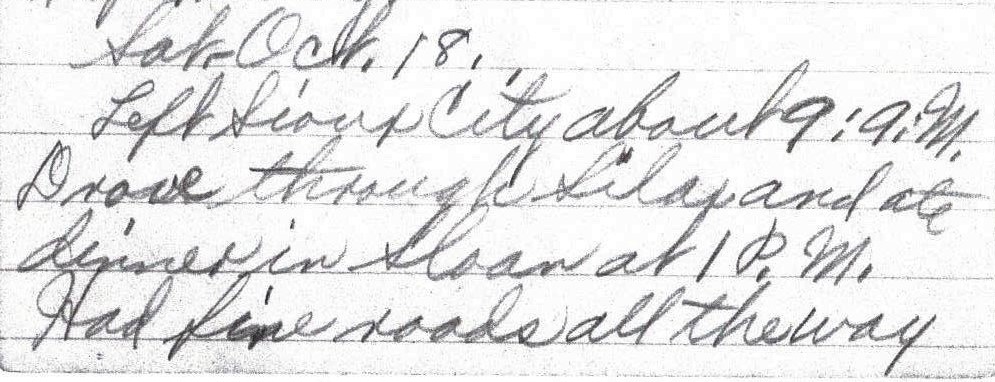
The Bevers family had a late start on Saturday, October 18. Lena’s daughter Florence explains in her travel log that they “were waiting for an answer to our telegram from Edgar.”1 Herbert and Lena’s son Edgar had enlisted in the military on July 21, 1918 and would be discharged on Oct. 25, 1919.2
The
drive for this day was one of the longest they made during their 27-day
trip. Lena says they had fine roads all
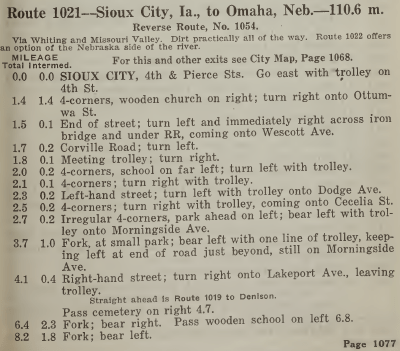
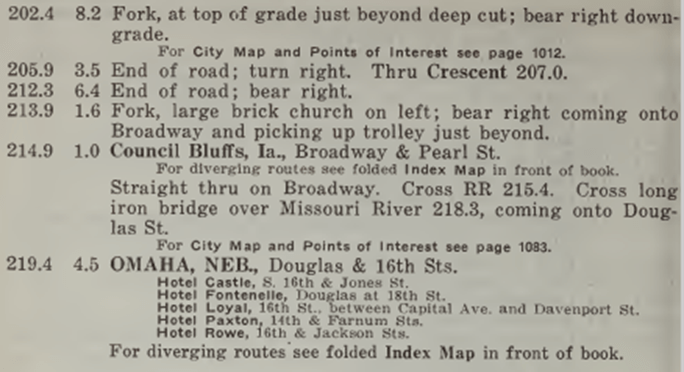
the way from Sioux City to Council Bluffs, Iowa. Route 1021 of The Official Automobile Blue
Book describes the condition of the road as: “Dirt practically all of the
way.”3 By following this
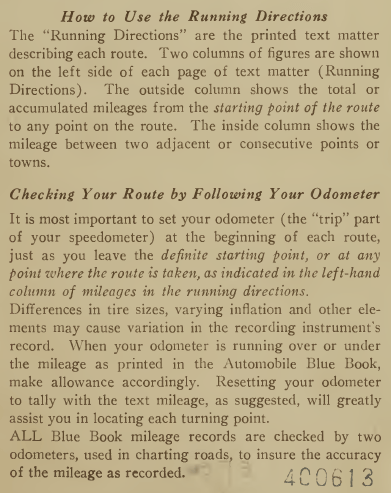
route the distance between the cities was calculated at 106 miles.4 The 1917 Blue Book included
instructions on how to use the book most effectively5:
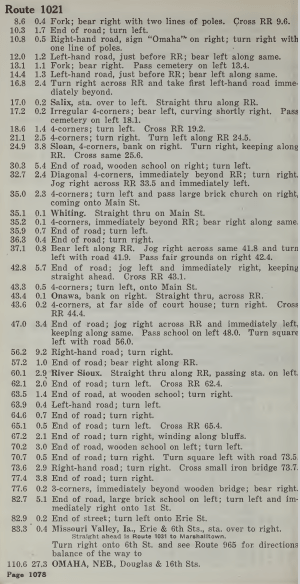
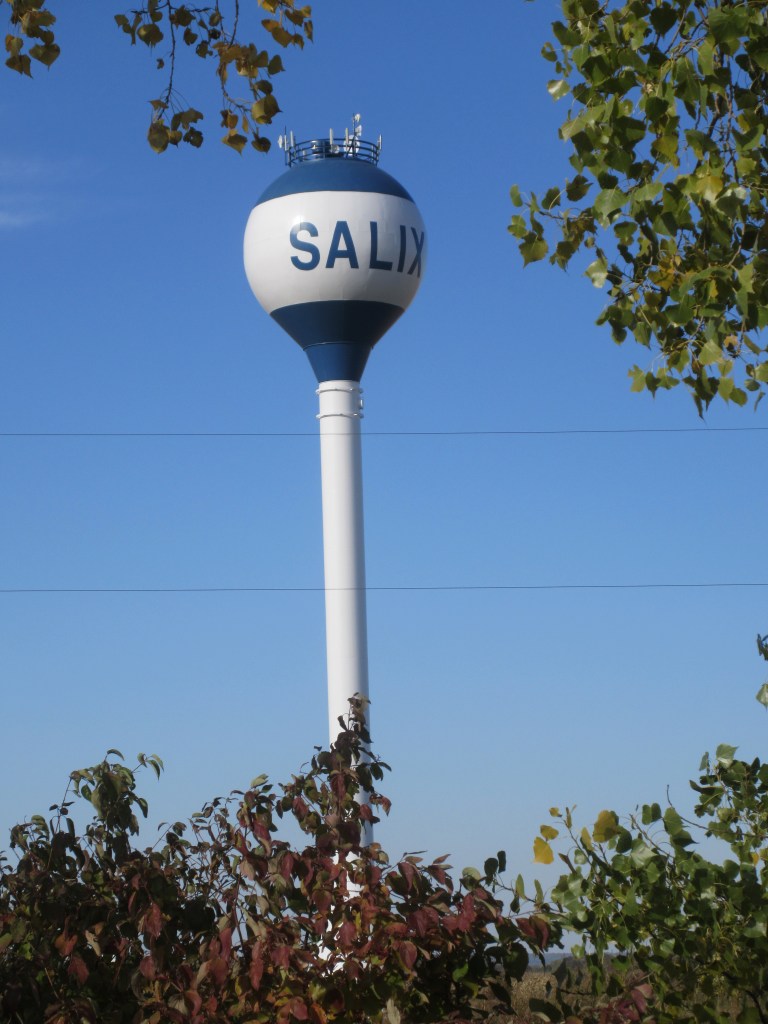
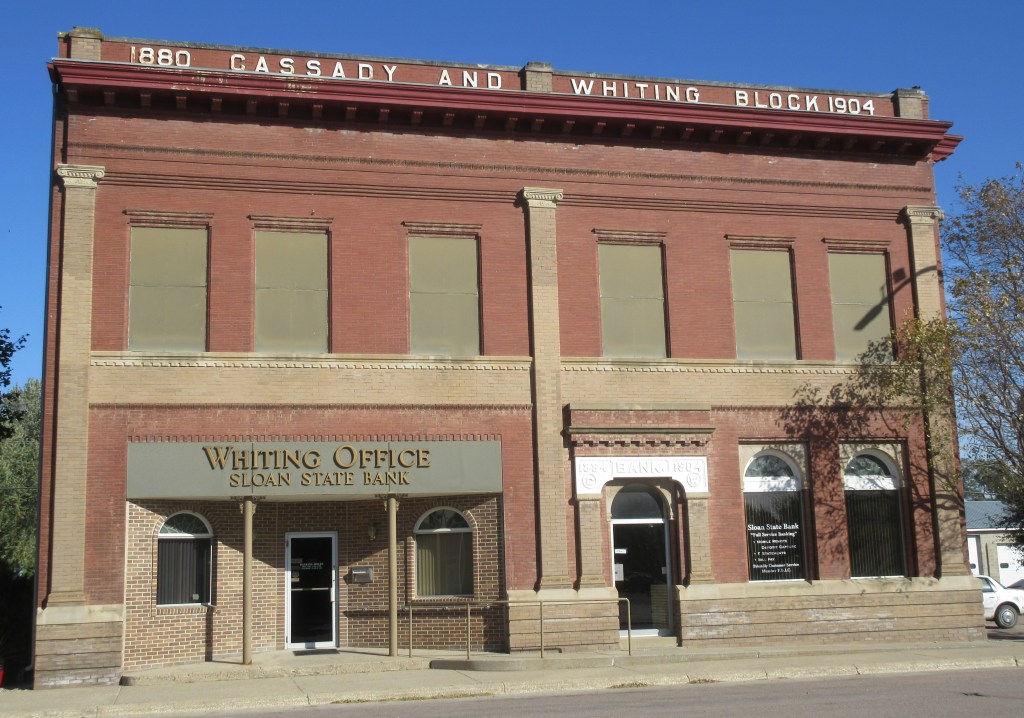
Our motel happened to be on Lakeport Avenue, so when we set out at 10:00 AM we just needed to make a couple turns to get on Old Lakeport Avenue (at mile 4.1 in Route 1021 above), which became Old Highway 75 (K45). At one time this highway was the King of Trails Highway. Fifteen minutes later we were in Salix, the first town that Lena mentions in her travel log and 15 minutes after that we were at the second town, Sloan. Both of these towns are still small, as well as all of the towns we went through until we got to Missouri Valley.
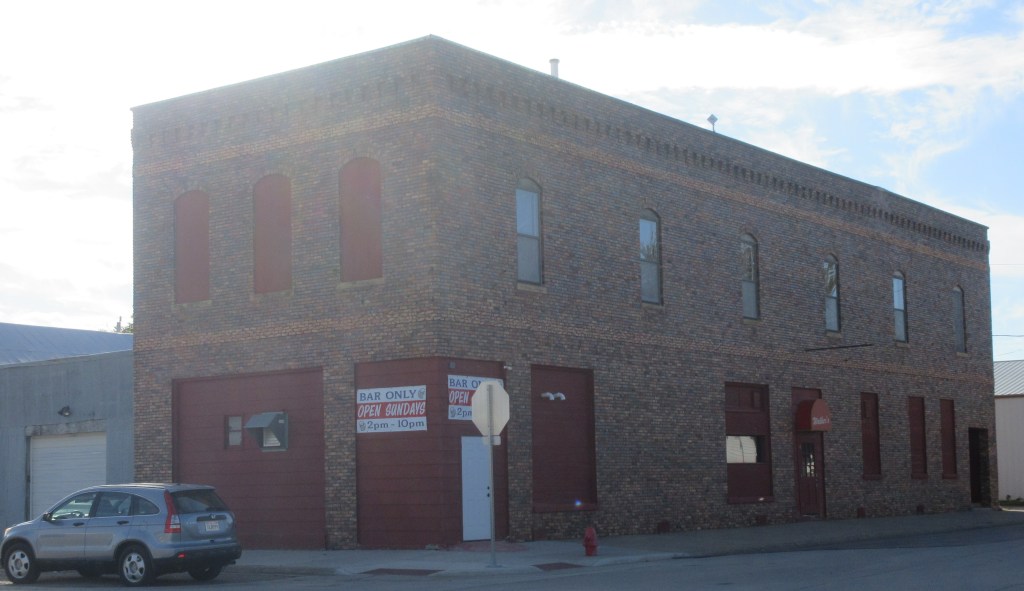
In Salix, this appeared to be an old building, but the brick face had been re-done and looked quite modern.
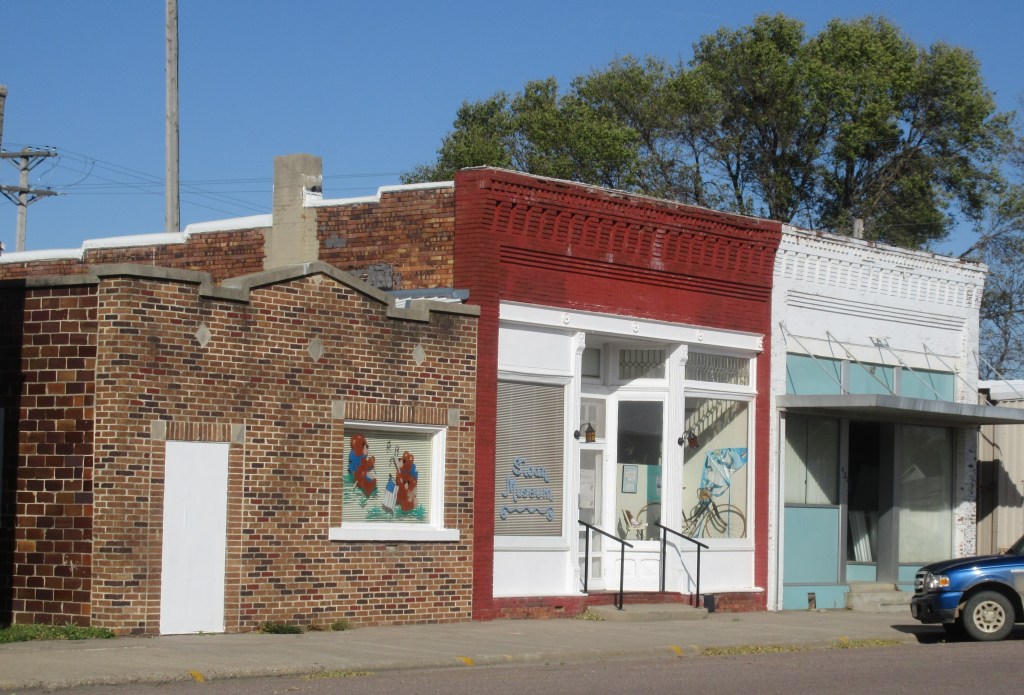
The center building is the Sloan Museum, which was closed when we passed by.
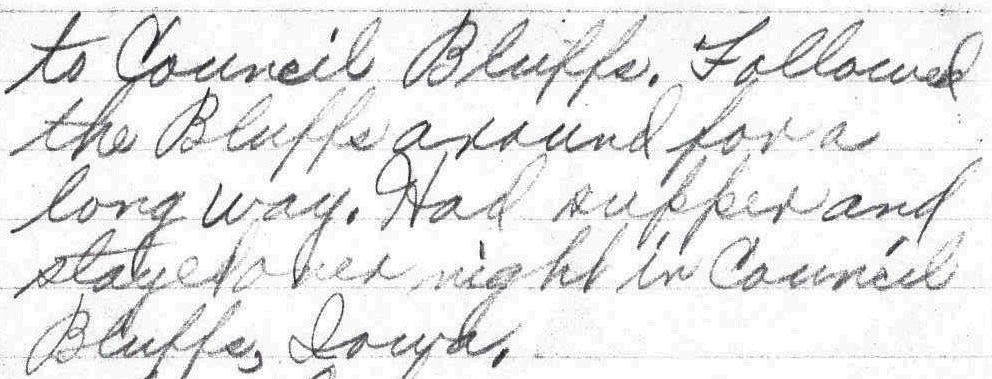
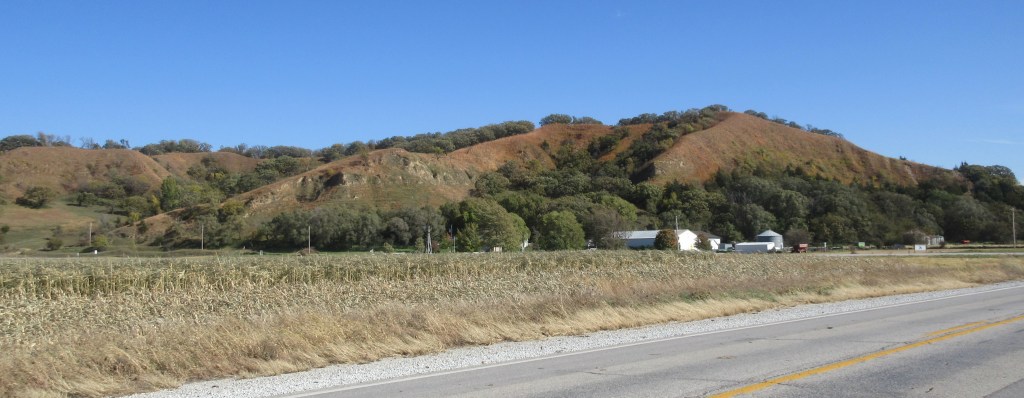
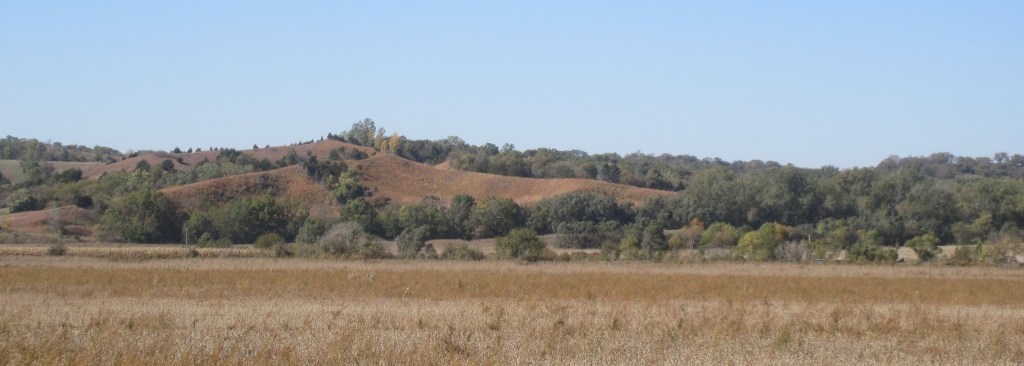
As we were driving south on Highway K45, to our left we could see wooded hills a few miles away and to the right, Interstate Highway 29 was nearly always in sight. In Lena’s travel log, this was the first day that she mentioned the landscape they were traveling through: “Followed the Bluffs around for a long way.”6 Lena didn’t mention any other towns, but Florence did: “…drove thru Whiting, Onawa, River Sioux, Missouri Valley, Loveland, Koney Creek/Crescent ….”7 So we were able to follow closely the route they had taken. Whiting, Onawa and River Sioux were on Highway K45. At Mondamin we turned east for about five miles, then turned south to reach Missouri Valley. We skirted the bluffs for about thirty miles.
This building was in Whiting, another small town we traveled through.
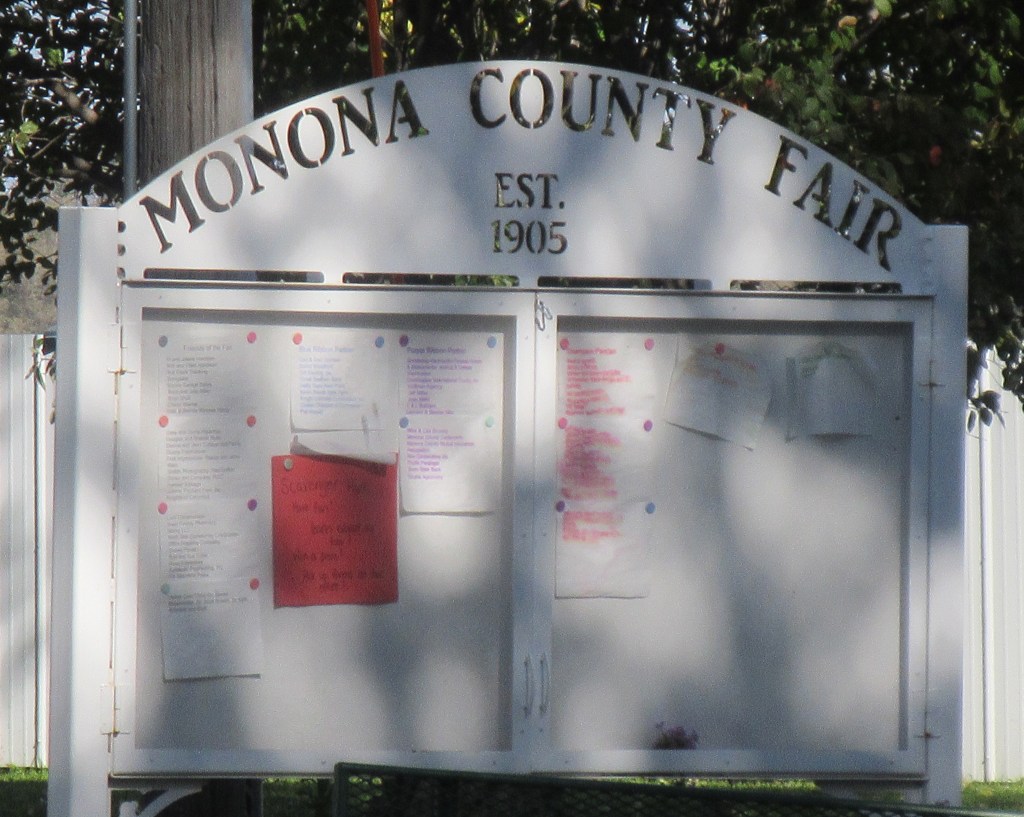
At mile 37.1 in Route 1021 above, a “fair grounds” is mentioned. We found the Monona County Fairgrounds at the edge of Onawa.
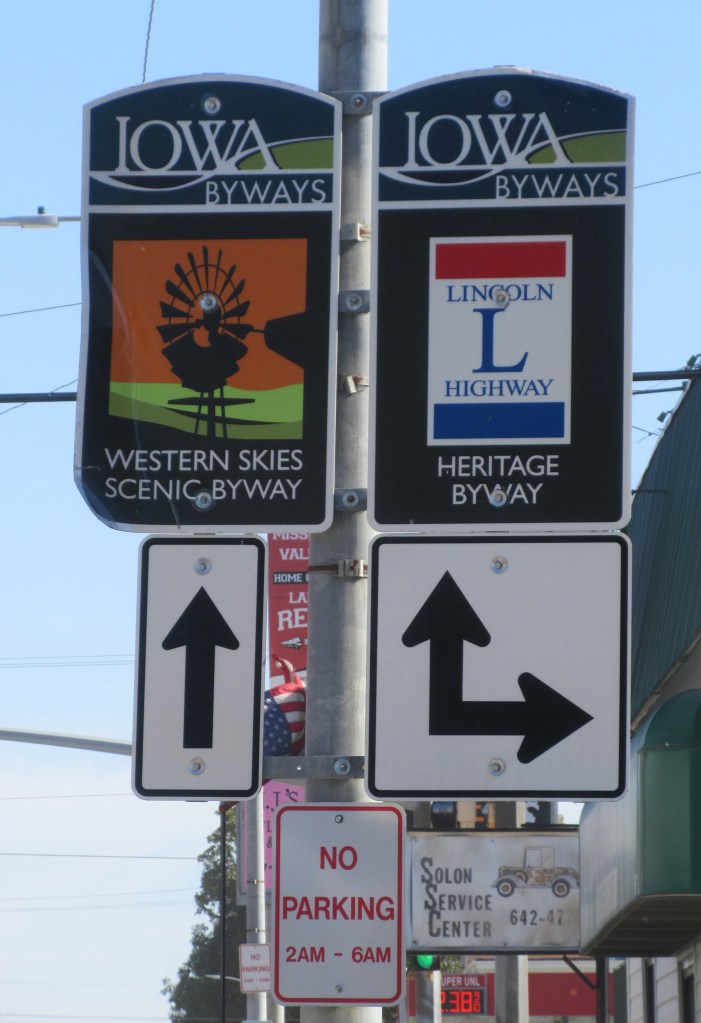
The town of Missouri Valley was the largest town we went through today until we came to Council Bluffs. In this town we began driving on the historic Lincoln Highway, which is another transcontinental highway.
Lincoln Highway sign in Missouri Valley, Iowa (Photograph by MRW October 18, 2019)
On this section of the Map of Iowa Showing Principal Automobile Routes, the highway marked red with the number 105 is the King of Trails Highway. The highway marked green with the number 10 is Lincoln Highway.8
The first transcontinental highway across the United States was the Lincoln Highway, named after Abraham Lincoln. The idea of creating this transcontinental was Carl Fisher’s, who had also built the Indianapolis Motor Speedway.9 In 1912 Carl Fisher enlisted communities to build connecting roads from San Francisco to New York City. The project would cost $10,000,000 and Fisher raised funds for the project by asking for donations from auto manufacturers and accessory companies. In 1913 the Lincoln Highway Association was established. Membership was open to the public by paying a $5.00 membership fee. The Lincoln Highway was marked by painted signs, mainly on telephone posts: red, white and blue bands with a blue capital L. For about 25 miles between Missouri Valley and Council Bluffs, the King of Trails Highway and the Lincoln Highway traveled the same roads.
(From The Official Automobile Blue Book10)
Today was a very breezy day, so after we checked into our motel at 1:30 PM, we stayed indoors, rather than go to the River Front. We decided it was a good day to do our laundry at the laundromat across the street from the motel. This evening, making sure our devices were all charged was a priority. The Bluetooth was plugged into a bathroom outlet, the camera battery charger was plugged into the entryway outlet, a phone was plugged into the outlet near the bureau, and the I-pad and laptop were plugged into the wall outlet by the desk.
Notes:
B. Winkelmann, Our Trip to Texas [Transcription of Our Trip to Texas by Florence Bevers, 1919] (unpublished, n. d.): 2.
C. M. Bevers, personal communication with E. J. Jones (October 17, 2019).
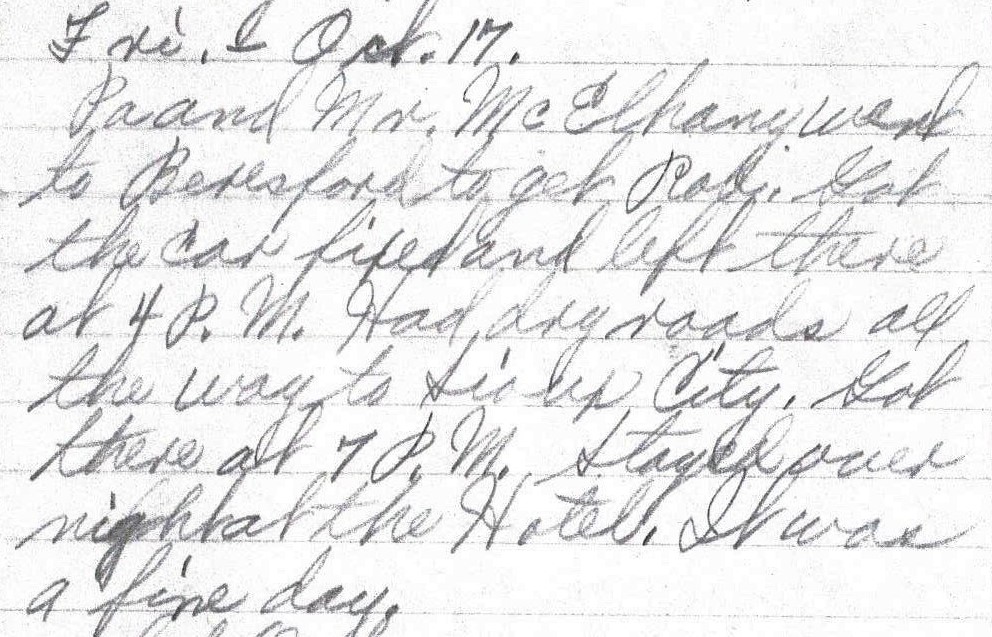
Pa and Mr. McElhany went to Beresford to get Rob. Got the car fixed and left there at 4 P. M. Had dry roads all the way to Sioux City. Got there at 7 P. M. Stayed over night at the Hotel. It was a fine day. – Lena Bevers
Yesterday I related that Rob (most likely a member of the traveling party) had gone to Beresford on Thursday to have an axle made. On Friday, Pa (Herbert) and Mr. McElhany went to the town to pick up Rob and the axle that had been made in one day. Then they were able to complete the repairs to Mr. McElhany’s car on that day also. So, after a two-day delay, Herbert and Lena’s family get on the road in the late afternoon. Upon leaving the Fleege farm, they drove about 40 miles to get to their destination, Sioux City.
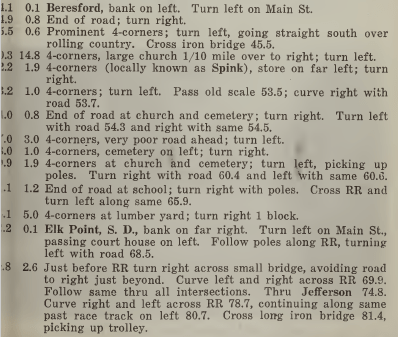
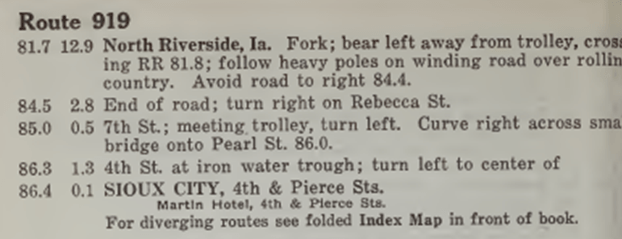
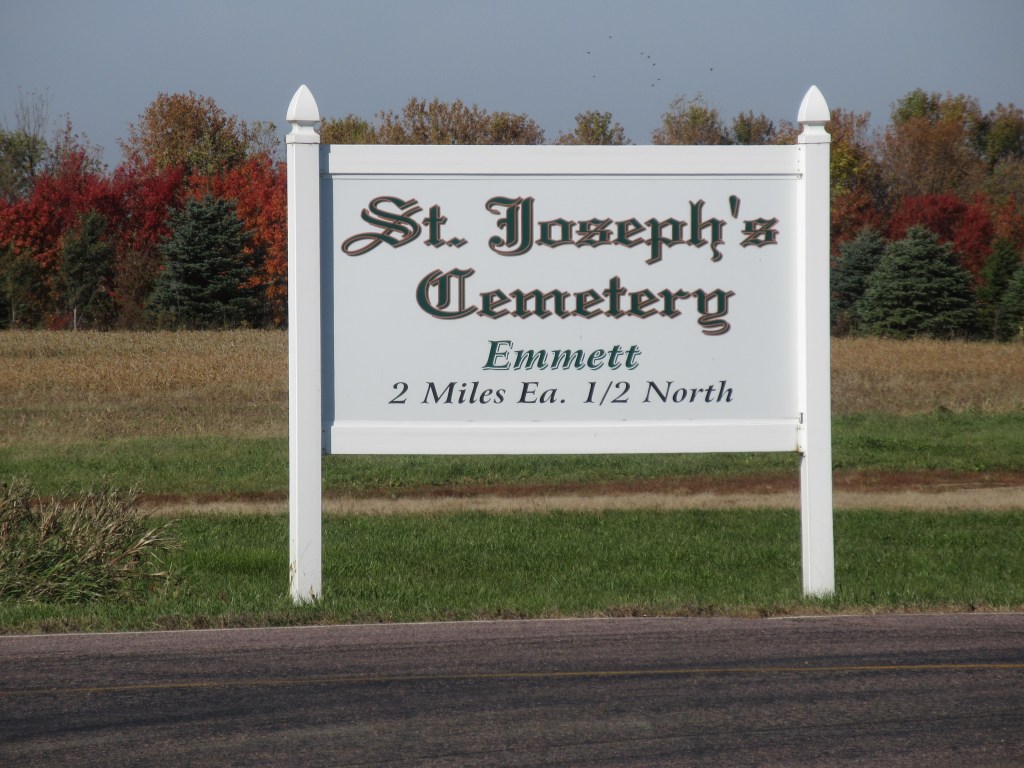
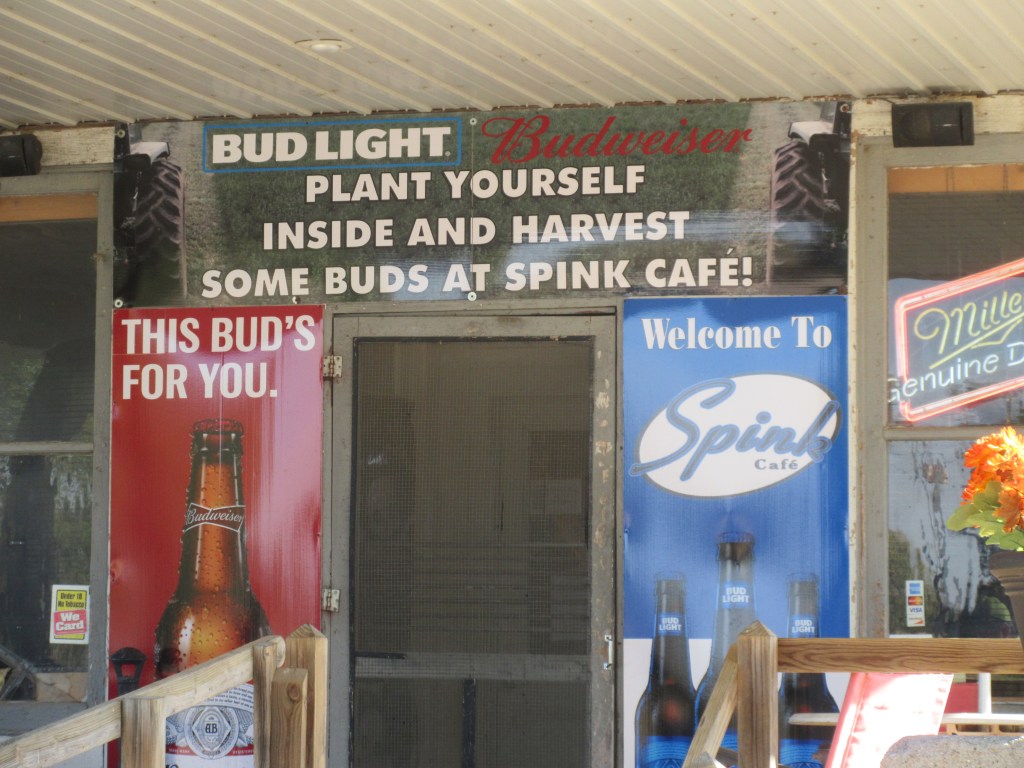
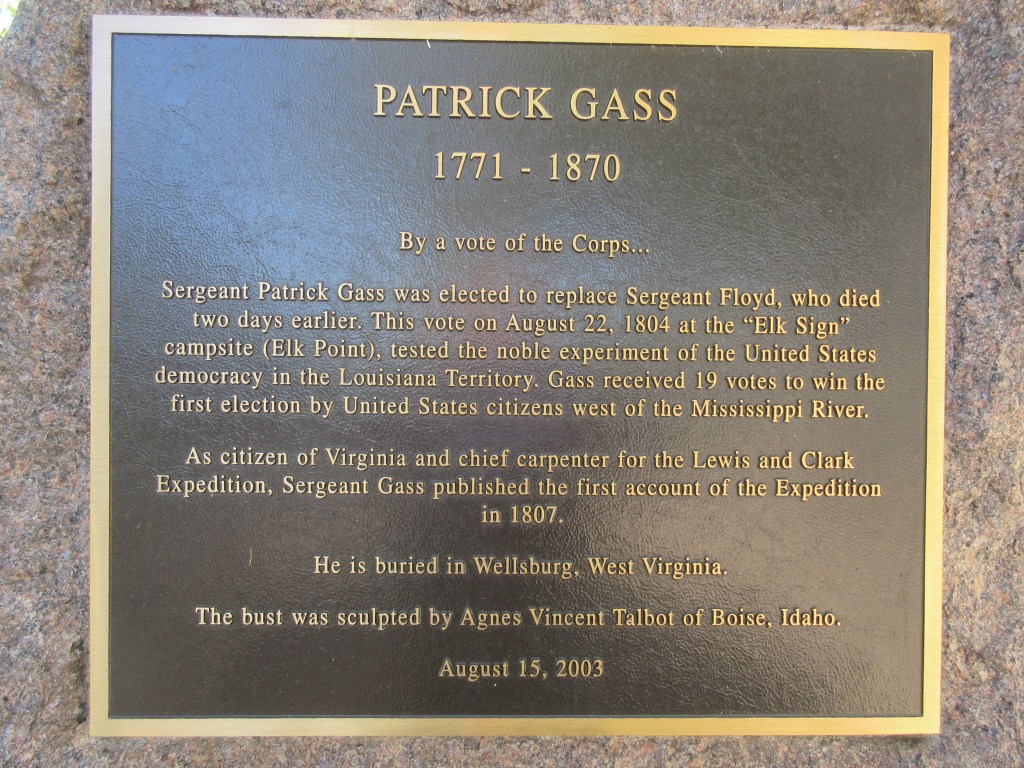
From Beresford, my mother and I had about 50 miles to drive today, so we didn’t leave the motel until 10:30 AM and we made several stops along the way. We headed down Highway 1C and came across a sign for a cemetery in Emmet. This confirmed for us that we were passing the area where the Fleege farm was located. Several miles down the road we took a short side trip in order to locate Spink, a town that is mentioned in the 1917 Blue Book on the route from Sioux Falls to Sioux City. When we got to Elk Point, we decided to eat a picnic lunch at the city park and campground where there was an historical exhibit explaining an event that occurred when Lewis and Clark’s party camped at “Elk Sign” campsite. And we also stopped at a place where the 1917 Blue Book states there was a racetrack along the route.
Route 919 from The Official Automobile Blue Book 19171
Emmet Township is the location of the Fleege farm, where the Bevers family stayed two nights. (Photograph by MRW October 17, 2019)
Spink is a town on Route 919 of The Official Automobile Blue Book 1917. (Photograph by MRW October 17, 2019)
Elk Point is the location of the first democratic election to the west of the Mississippi River. (Photograph by MRW October 17, 2019)
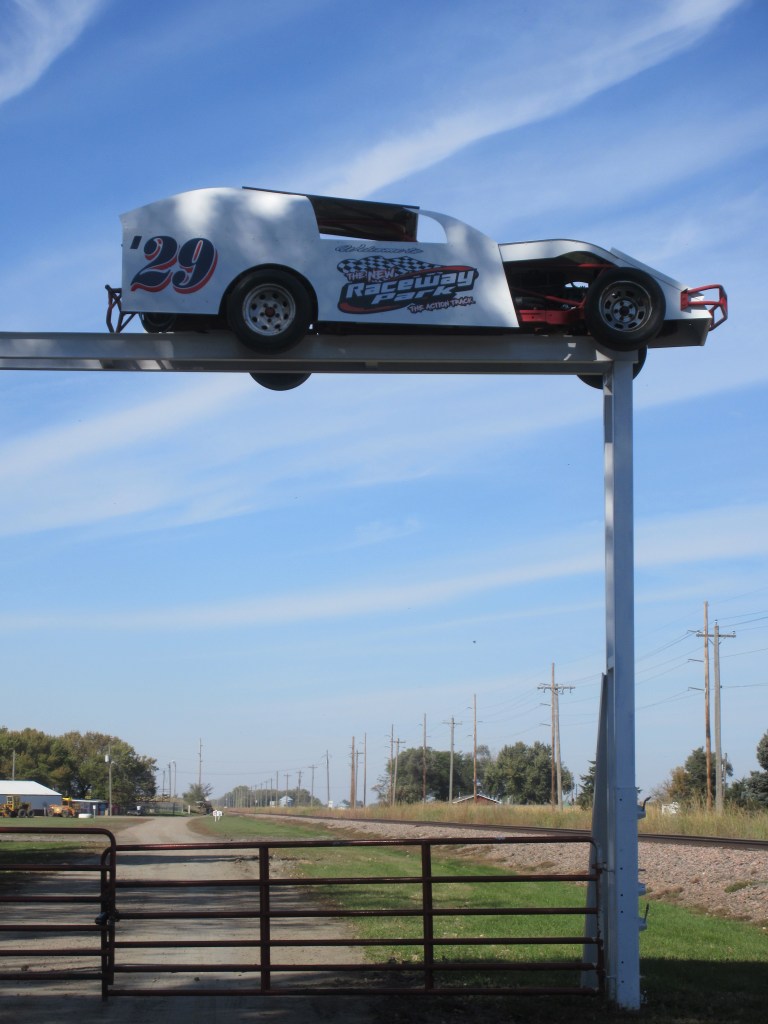
One of the landmarks identified in the 1917 Blue Book Route 919 was a racetrack. This is what we found at that point along our drive. A local resident told us that there was a racetrack beyond this gate, and across the railroad tracks and the highway (to the right), there was another racetrack for cars, which at one time had been a racetrack for horses. (Photograph by MRW October 17, 2019)
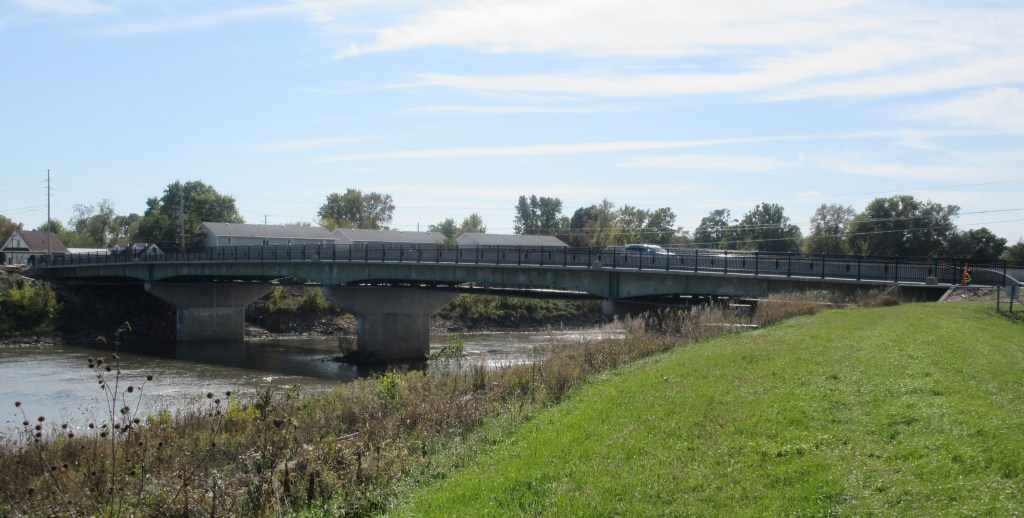
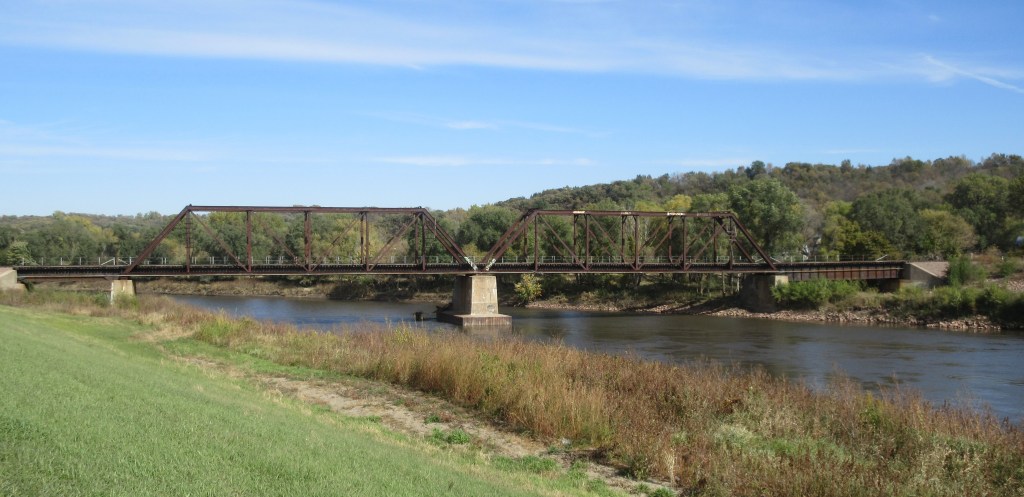
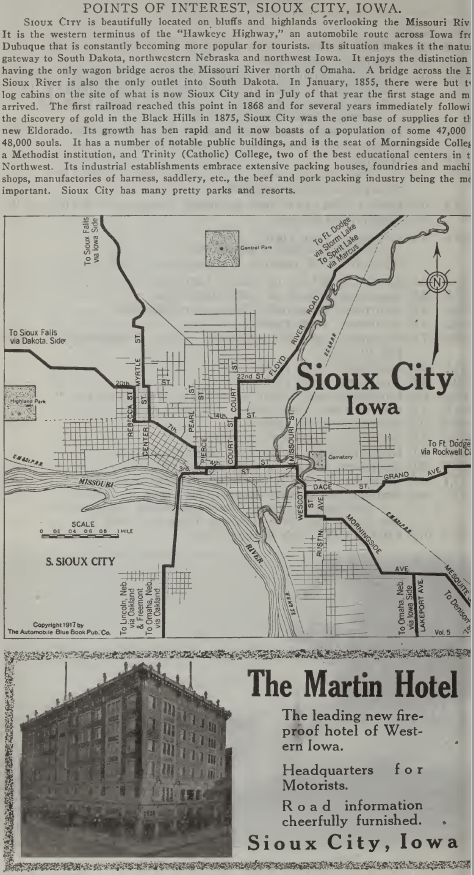
According to the description of Sioux City in The Official Automobile Blue Book 1917, one hundred years ago, there was only one bridge crossing the Big Sioux River from South Dakota to Iowa.2 When we arrived at the river between South Dakota and Iowa, we found a bridge that looked brand new. And not far from it was a bridge for the train tracks that we had been traveling beside since we left Elk Point.
(Photograph by MRW October 17, 2019)(Photograph by MRW October 17, 2019)
In 1917, upon entering Iowa, the speed law was “In a careful and prudent manner, not to exceed 25 miles an hour.”3 According to 1917 Blue Book, Sioux City had a population of 47,000 to 48,000.4 Two years later, a map of Iowa highways reported the population at 61,774.5 It took Herbert and Mr. McElhany three hours to drive to Sioux City and when they got there they checked into a hotel. This is the only day that Lena writes that they stayed in a hotel. At the bottom of Route 919 in the 1917 Blue Book, there is the name and location of a hotel, Martin Hotel. There is also an advertisement for the hotel under the description of Sioux City.6 It is unknown whether this hotel is where the Bevers family stayed, but there is a possibility that they did. We checked into a motel on the southeast side of the city at 2:15 PM.
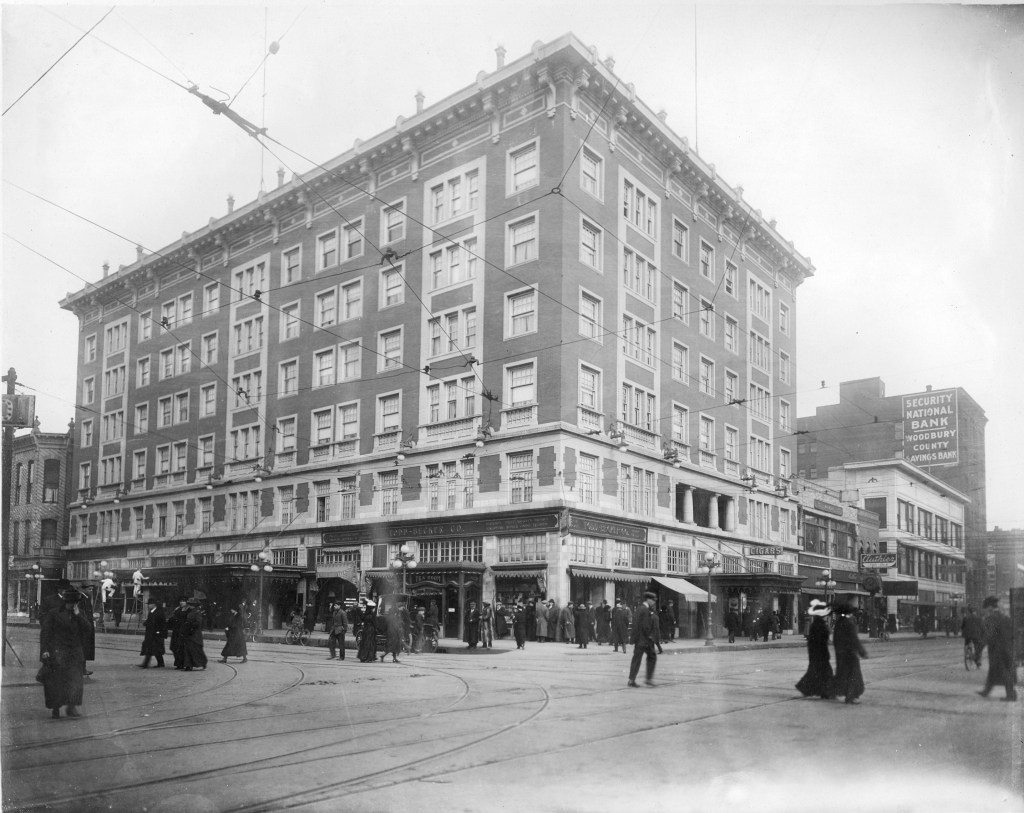
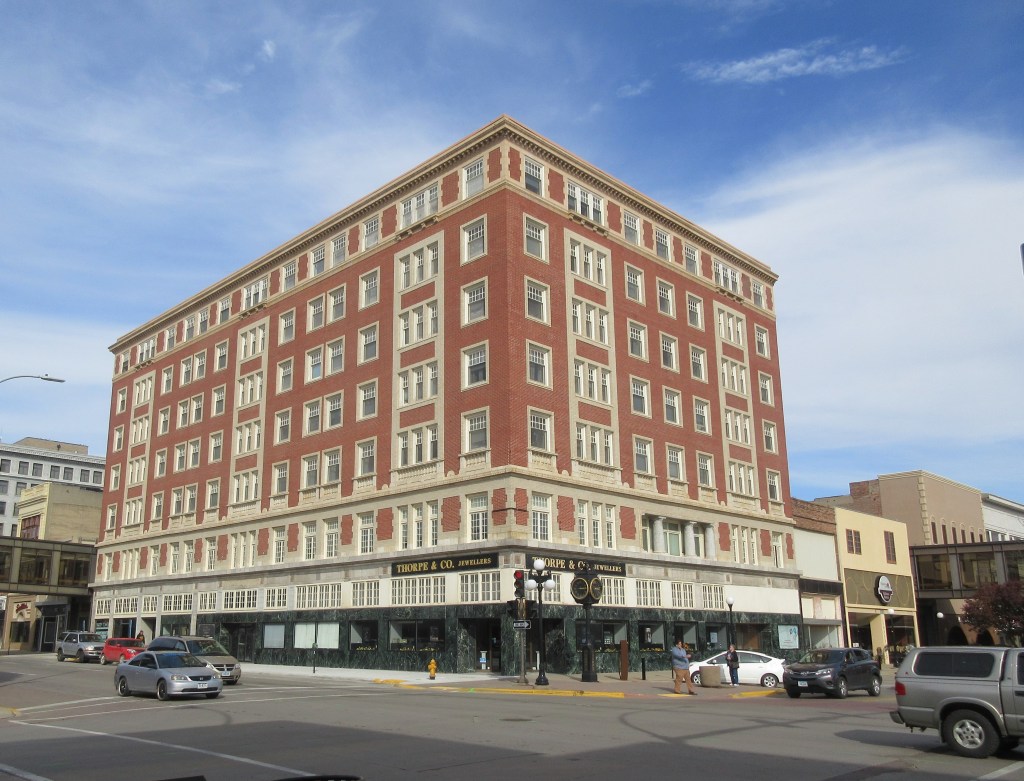
“Originally six stories in height, the main body of the building rested on a two-story base, capped by an elaborate cornice featuring heavy dental molding and classically-inspired scrolled brackets. … When the Martin Hotel opened in November 1912, it was proclaimed as Sioux City’s largest, finest and most modern hotel. A 7th floor was added in 1918, requiring the removal of the original cornice, which was replaced by a simpler design featuring dental molding. … It was eventually converted into apartments and was listed on the National Register of Historic Places in 1983.”7
Martin Hotel, c. 1913 (Courtesy of the Sioux City Public Museum)
Former Martin Hotel (photographed by MRW October 17, 2019)
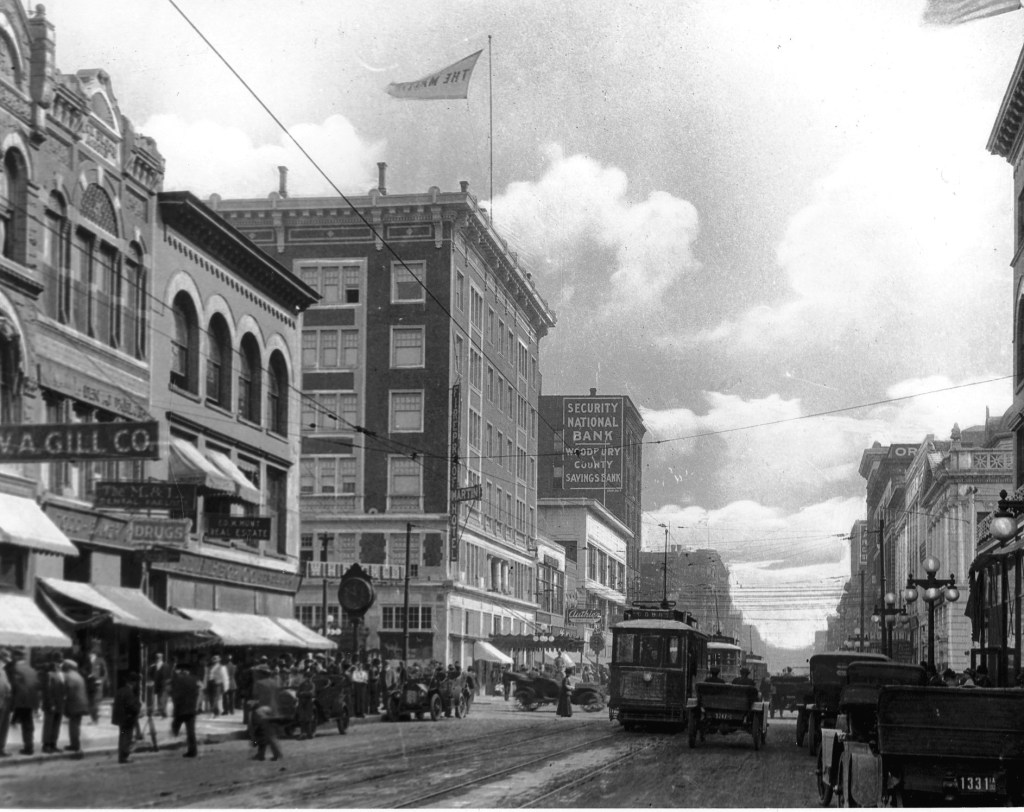
Looking east along 4th Street toward Pierce Street, c. 1913 (Courtesy of the Sioux City Public Museum)
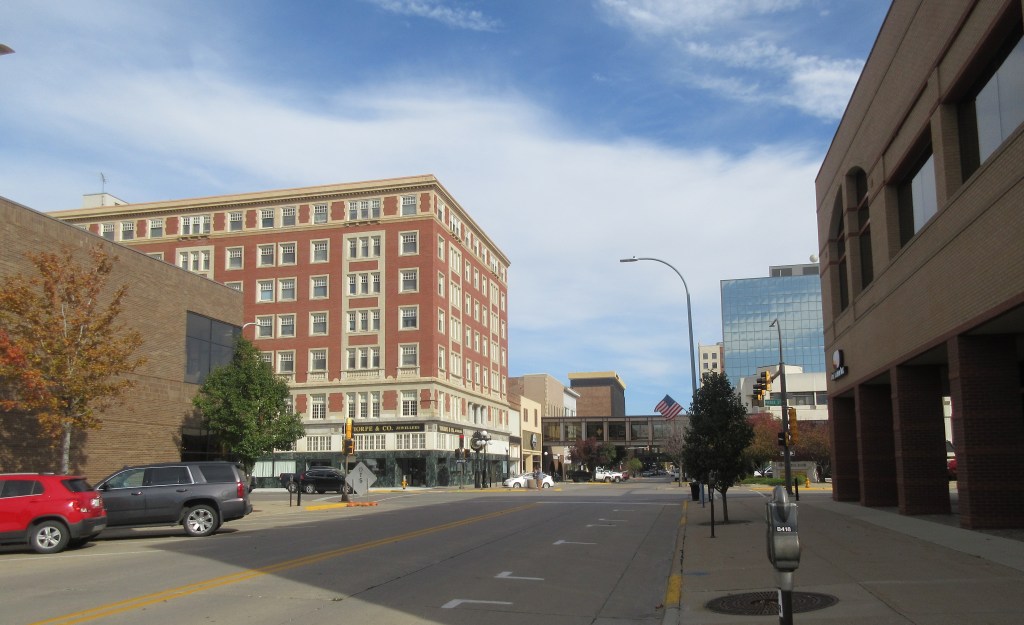
Looking east along 4th Street toward Pierce Street (photographed by MRW October 17, 2019)






 Sojourners, Settlers & Other Legacy Conveyors


