The Oldest Mementos of “The Breitenstein Bible”

“The Breitenstein Bible” came into possession of our family when my mother-in-law passed away.  For a dozen years, it remained packed away, undisturbed.  Finally, when down-sizing our belongings and upon deciding to pass the Bible on to our son, I took the time to look through the Bible.  Turning the leaves, I found news clippings, obituaries and funeral folders dispersed between its more than 2000 pages.  Another dozen years would pass before I had the opportunity to peruse those pages and mementos again.  In December 2023, I examined the Bible and photographed the mementos it has safe-guarded for decades, a few items for more than a century.  This blogpost is devoted to the oldest items in “The Breitenstein Bible” and the people with whom they are connected.  A description of the Bible itself, which was published about 1900, can be found on the Legacy Page entitled “The Breitenstein Bible.”

The Bible had been passed down to my mother-in-law through her father, who was a Breitenstein, but the oldest mementos would suggest that the Bible came to him from his mother’s line not his father’s. The oldest identifiable item is a handwritten note about Amos Goodhart. My mother-in-law’s ancestry can be traced to Amos K. Goodhart, so perhaps the Bible should be called “The Goodhart Bible.”

The original owner of the Bible is unknown.  None of the family register pages are filled in.  Besides the note about Amos Goodhart, there are two other handwritten notes which appear to be written in the same handwriting.  Since Amos’ wife had already passed away when he died, I propose that it was his daughter Sarah (Sallie) that wrote the notes.  Sallie married Jacob B. Breitenstein; they were my mother-in-law’s grandparents.
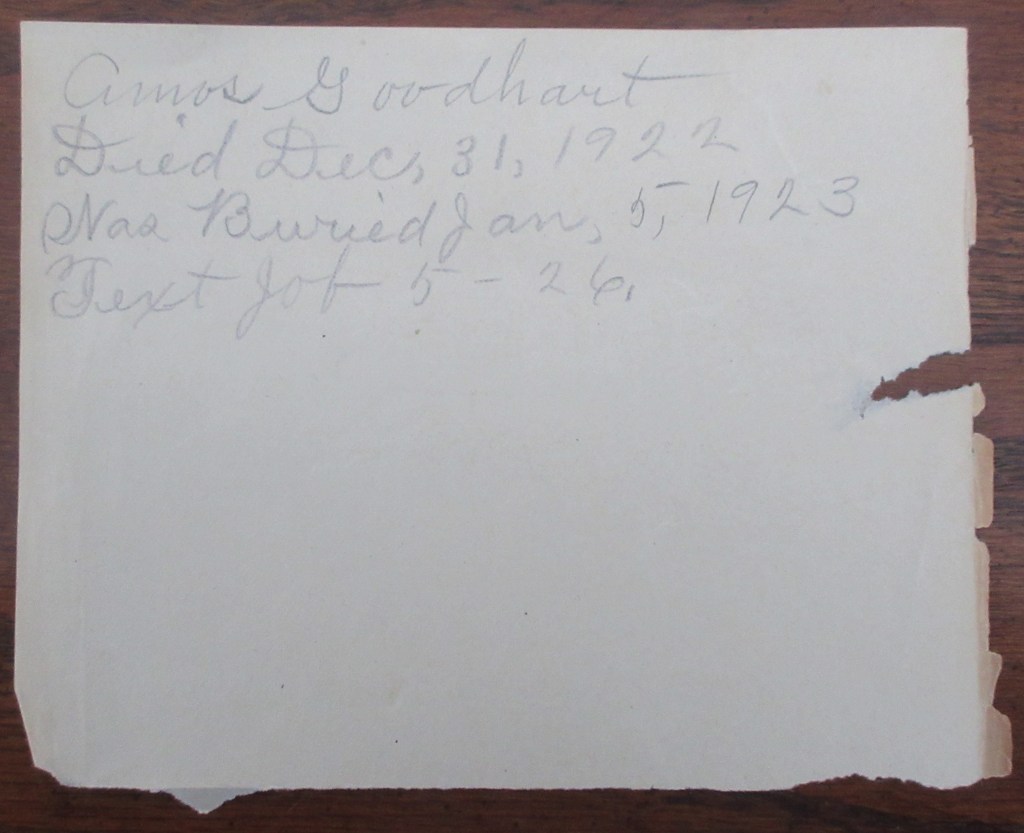
The oldest handwritten note found in “The Breitenstein Bible”

Amos’ ancestors had been living in Berks County, Pennsylvania, since at least 1754, when it was still a province.  His 2nd great-grandfather Fredrick Goodhart was recorded as residing in the district (or township) of Alsace when a tax list was created for the first assessment of taxes of the newly organized Berks County (which had been carved out of Philadelphia County).1  Fredrick Goodhart’s son, Frederick, acquired a homestead in Exeter Township.2  At the time of Amos’ death, the Goodharts had been residing in Exeter Township for roughly 130-140 years. Amos K. Goodhart, born February 23, 1852, was the son of John Newkirk Goodhart (1821-1898) and Sophia Kline (1827-1902).  As a child his family lived in Exeter Township3 and upon marrying Ellen Levan, they began raising their family on a farm in the township,4 remaining in Exeter Township their whole lives.

This handwritten note documents the dates of Amos’ death and burial, and very likely the text that was used at his funeral.  He was buried in the Schwarzwald Cemetery on January 5, 1923, having died on December 31, 1922 of “complications” according to the death register of Schwarzwald Reformed Church.5  In addition to his death, the church records also have an entry about his baptism and confirmation, which didn’t occur until he was 43 years old.6  Having been catechized, Amos was baptized on October 12, 1895 and then confirmed on the following day. Amos’ son Victor and his daughter Sarah were confirmed on that very same day. 

Job 5:26 as printed in “The Breitenstein Bible,” which is the text recorded along with Amos Goodhart’s death and burial dates.

Of the two other handwritten notes in “The Breitenstein Bible,” one note gives the burial date of Mrs. Hiester Fisher and the reference to a scripture text.  The other note simply states the name Mrs. Frank Harner and a scripture reference.  Over the years, as I’ve compiled a genealogy of my husband’s family, I have never seen the name Fisher nor Harner.  So, I proceeded to try to identify who Mrs. Hiester Fisher and Mrs. Frank Harner were.

In my search for someone named Hiester Fisher, I came up with no likely candidates.  But a search using the spelling Heister (e before i) led me to someone that could be the husband of the woman commemorated in “The Breitenstein Bible.”  In 1920, Sallie Breitenstein (Amos’ daughter) and her husband were living in Amity Township in Berks County.7  There was also living in this township a Heister Fisher with his wife Ellen.8  A few years later Ellen and subsequently Heister were buried in Saint Paul’s Church Cemetery in Amity Township.  The date of death engraved on Ellen’s gravestone is January 10, 1924,9 which would correspond to the burial date listed on the handwritten note, January 14.  A search in family trees on Ancestry.com leads to the conclusion that her maiden name was most likely Ellen Wise or Weise or Weiss.  She would have been in the generation of Sallie’s mother. Incidentally, Saint Paul’s Church Cemetery is where Sallie and her husband would later be buried. 
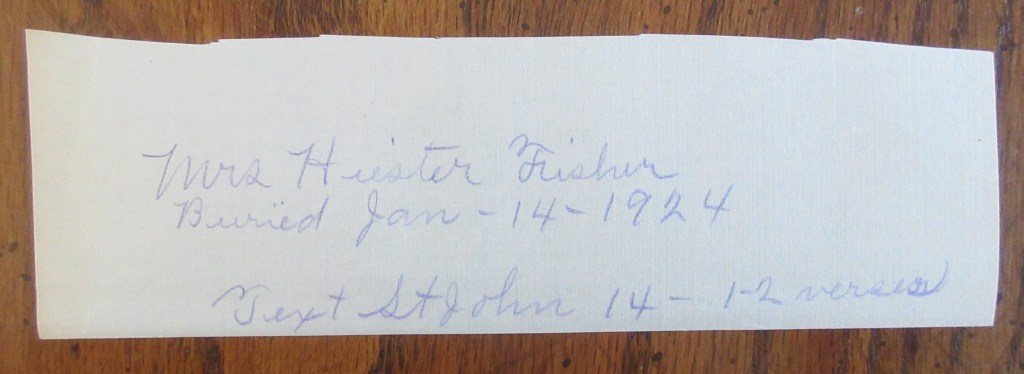
Presumably, the second-oldest handwritten note in “The Breitenstein Bible”
John 14:1-2 as printed in “The Breitenstein Bible,” which is the text recorded along with Mrs. Hiester Fisher’s burial date

Since the handwritten note about Mrs. Frank Harner doesn’t have a death or burial date, it is difficult to determine with any certainty who she was.  My guess is that she was Catherine (Kate) S. Rhoads who is buried in Saint Paul’s Church Cemetery with her husband, Franklin, but the last name on the gravestone is Herner, instead of Harner.  Kate Rhoads was also of the generation of Sallie’s mother.  Her death date was April 8, 1925.10  Kate’s sister, Rosa Ellen Rhoads, had married a man named Wellington Wise,11 who was possibly a relation of Ellen Wise (Mrs. Heister Fisher above.)
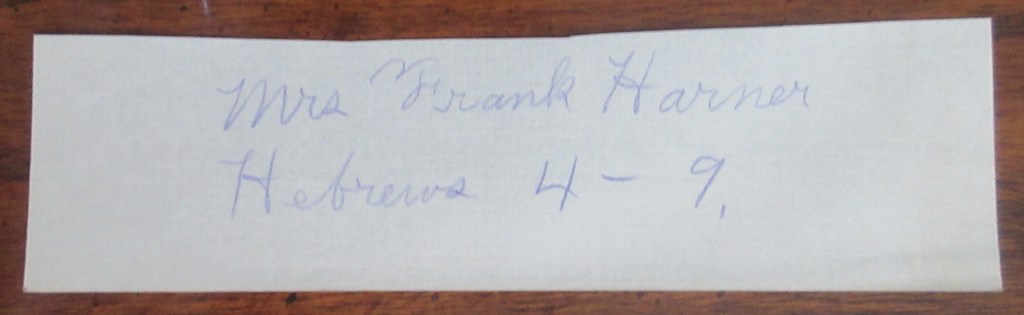

Presumably, the third-oldest handwritten note in “The Breitenstein Bible”
Hebrews 4:9 as printed in “The Breitenstein Bible,” which is the text noted with Mrs. Frank Harner’s name

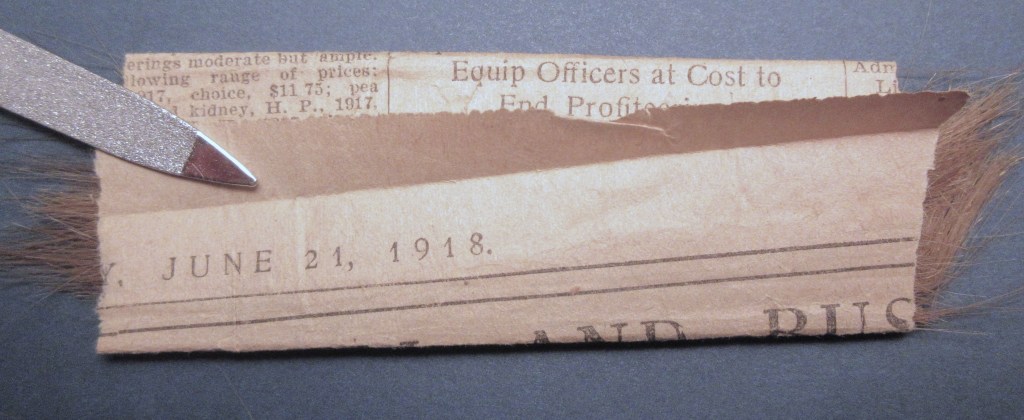
There is an item in “The Breitenstein Bible” that is older than the three handwritten notes.  It is a lock of hair wrapped in a scrap of newsprint dated June 21, 1918.  Perhaps this could be the hair of Ellen S. Goodhart, saved as a memento by her husband Amos or her daughter Sallie.  Born March 29, 1849, Ellen was the daughter of Peter S. Levan (1822-1894) and Sarah E. Snyder (1825-1898).  One historian of Berks County made this statement in 1886: “The Levan family have occupied a prominent position in [Exeter] township for one hundred and fifty years, having, during this time, owned a large area of farming land where the members of that family are now located.  They gave much encouragement to the Schwartzwald Church by liberal contributions.”12  The Levan family can be traced back to three brothers whose father Daniel Levan was a French Huguenot.  “The Huguenots were French Protestants most of whom eventually came to follow the teachings of John Calvin, and who, due to religious persecution, were forced to flee France to other countries in the sixteenth and seventeenth centuries.”13  Daniel Levan fled from France to Amsterdam, Holland, which is where Isaac Levan was born, Ellen Levan’s 4th great-grandfather.14  Isaac and his brothers emigrated from Amsterdam to America and Isaac eventually settled in Exeter Township about 1730.
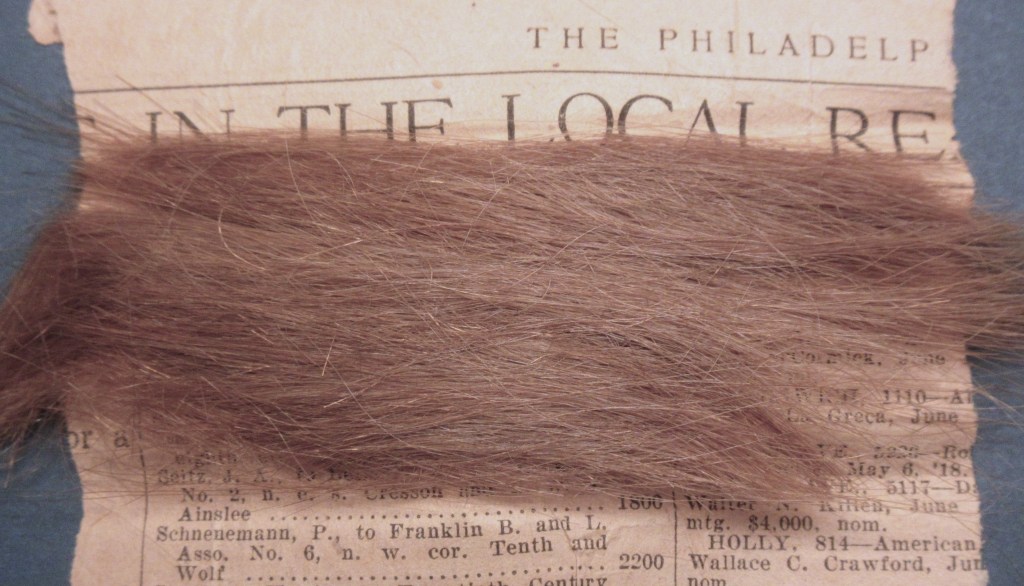
A lock of hair, which was wrapped in a scrap of newsprint, found in “The Breitenstein Bible”
The scrap of newsprint dated June 21, 1918

Ellen Goodhart died on October 19, 1918 and was buried in Schwarzwald Cemetery.15  Like her husband, her death was recorded in the death register of Schwarzwald Reformed Church.  During that time period, the usual number of burials per month in that cemetery was one or two, or sometimes three.  But in October 1918, the death register lists seven people dying between October 14 and October 27.  Although the causes of death were recorded as heart disease, pneumonia, tuberculosis, and influenza, consideration should be given to an historic event that was taking place in Pennsylvania during the fall of 1918.  An epidemic of influenza had begun in Philadelphia in late September and travelled from the city west through the state, reaching Berks County.

In The Great Influenza, author John M. Barry thoroughly relates the events and timelines of many of the outbreaks of influenza in the United States, and a few places abroad, from 1917 to 1919.  He devotes a portion of his book to the rise of the epidemic in Philadelphia.16  The details and quotes below are from Barry’s book.  In 1918 influenza spread to Pennsylvania when on “September 7, three hundred sailors arrived from Boston at the Philadelphia Navy Yard.”  Four days later, “nineteen sailors reported ill with symptoms of influenza.”  Knowing that influenza was wreaking havoc in Boston:

Lieutenant Commander R. W. Plummer, a physician and chief health officer for the Philadelphia naval district … ordered the immediate quarantine of the men’s barracks and the meticulous disinfecting of everything the men had touched. …

… The next day eighty-seven sailors reported ill.  By September 15, … the virus had made six hundred sailors and marines sick enough to require hospitalization, and more men were reporting ill every few minutes”.

On September 18, “…the Evening Bulletin assured its readers that influenza posed no danger, was as old as history ….”  The first two sailors dying of influenza in Philadelphia occurred the next day.  “…Plummer declared, ‘The disease has about reached its crest.  We believe the situation is well in hand.  From now on the disease will decrease.’”  The city’s director of public health, Dr. Wilmer Krusen insisted that “the dead were not victims of an epidemic; he said that they had died of influenza but insisted it was only ‘old-fashioned influenza or grip.’”  The next day fourteen sailors died and the first civilian died.  The following day there were more than twenty deaths.

On September 21, the city’s Board of Health “assured the city that it was ‘fully convinced that the statement issued by Director Krusen that no epidemic of influenza prevails in the civil population at the present time is absolutely correct.’”

Seven days later, on September 28, a great Liberty Loan parade, designed to sell millions of dollars of war bonds, was scheduled.  Weeks of organizing had gone into the event, and it was to be the greatest parade in Philadelphia history, with thousands marching in it and hundreds of thousands expected to watch it.

Influenza continued spreading through the city, “… the day before the parade, hospitals admitted two hundred more people – 123 of them civilians ….”  Even though several doctors urged Krusen to cancel the parade, “Krusen declared that the Liberty Loan parade and associated rallies would proceed.”

On September 28, marchers in the greatest parade in the city’s history proudly stepped forward.  The paraders stretched at least two miles, two miles of bands, flags, Boy Scouts, women’s auxiliaries, marines, sailors, crushing against each other to get a better look, the ranks behind shouting encouragement over shoulders and past faces to the brave young men.  It was a grand sight indeed.

Two days after the parade, Krusen issued a somber statement: ‘The epidemic is now present in the civilian population and is assuming the type found in naval stations and cantonments.’

… Within seventy-two hours after the parade, every single bed in each of the city’s thirty-one hospitals was filled.  And people began dying.

… On October 1, the third day after the parade, the epidemic killed more than one hundred people – 117 – in a single day.

From Philadelphia the epidemic spread west into Pennsylvania.  Three weeks after the parade, people in Berks County were dying of influenza.  The Schwarzwald Reformed Church death register documents that two of its members succumbed to influenza.  A question lingers over the other five deaths recorded that month – was the influenza virus a contributing factor in their deaths; for example, in Ellen Goodhart’s death which was recorded as heart disease?


In October 2018 Surgeon General Rupert Blue of the U. S. Public Health Service issued the following information about the epidemic:

The disease now occurring in this country and called ‘Spanish Influenza’ resembles a very contagious kind of ‘cold’ accompanied by fever, pains in the head, eyes, ears, back or other parts of the body and a feeling of severe sickness.  In most of the cases the symptoms disappear after three or four days, the patient then rapidly recovering.  Some of the patients, however, develop pneumonia, or inflammation of the ear, or meningitis, and many of these complicated cases die. …

There is as yet no certain way in which a single case of ‘Spanish influenza’ can be recognized.  On the other hand, recognition is easy where there is a group of cases.  In contrast to the outbreaks of ordinary coughs and colds, which usually occur in the cold months, epidemics of influenza may occur at any season of the year.  Thus the present epidemic raged most intensely in Europe in May, June and July.  Moreover, in the case of ordinary colds, the general symptoms (fever, pain, depression) are by no means as severe or as sudden in their onset as they are in influenza.  Finally, ordinary colds do not spread through the community so rapidly or so extensively as does influenza. …

No matter what particular kind of germ causes the epidemic, it is now believed that influenza is always spread from person to person, the germs being carried with the air along with the very small droplets of mucus, expelled by coughing or sneezing, forceful talking, and the like by one who already has the germs of the disease.  They may also be carried about in the air in the form of dust coming from dried mucus, from coughing and sneezing, or from careless people who spit on the floor and on the sidewalk.  As in most other catching diseases, a person who has only a mild attack of the disease himself may give a very severe attack to others. …

It is very important that every person who becomes sick with influenza should go home at once and go to bed.  This will help keep away dangerous complications and will, at the same time, keep the patient from scattering the disease far and wide.  It is highly desirable that no one be allowed to sleep in the same room with the patient.  In fact, no one but the nurse should be allowed in the room. …

… Only such medicine should be given as is prescribed by the doctor.  It is foolish to ask the druggist to prescribe and may be dangerous to take the so-called ‘safe, sure and harmless’ remedies advertised by patent medicine manufacturers.

If the patient is so situated that he can be attended only by some one who must also look after others in the family, it is advisable that such attendant wear a wrapper, apron or gown over the ordinary house clothes while in the sick room and slip this off when leaving to look after the others.

Nurses and attendants will do well to guard against breathing in dangerous disease germs by wearing a simple fold of gauze or mask while near the patient. …

When crowding is unavoidable, as in street cars, care should be taken to keep the face so turned as not to inhale directly the air breathed out by another person.

“It is especially important to beware of the person who coughs or sneezes without covering his mouth and nose.  It also follows that one should keep out of crowds and stuffy places as much as possible, keep homes, offices and workshops well aired, spend some time out of doors each day, walk to work if at all practicable – in short, make every possible effort to breathe as much pure air as possible.

In all health matters follow the advice of your doctor and obey the regulations of your local and state health officers.

Cover up each cough and sneeze,

 if you don’t you’ll spread disease.17


1. __________, “Erection of County” in Historical and Biographical Annals of Berks County Pennsylvania, vol. 1, ed. Morton L. Montgomery (Chicago: J. H. Beers & Co., 1909), 8.

2. __________, “Daniel B. Keehn” in Historical and Biographical Annals of Berks County Pennsylvania, vol. 2, ed. Morton L. Montgomery (Chicago: J. H. Beers & Co., 1909), 999.

3. “United States Census, 1860”, , FamilySearch (https://www.familysearch.org/ark:/61903/1:1:MXPZ-BTN : Thu Mar 07 06:01:10 UTC 2024), Entry for John Newkirk Goodhart and Sufiah Goodhart, 1860.

4. “United States Census, 1880”, , FamilySearch (https://www.familysearch.org/ark:/61903/1:1:MW6B-F7D : Sun Mar 10 10:50:22 UTC 2024), Entry for Amos Goodhart and Ellen Goodhart, 1880.

5. Schwarzwald Reformed Church, Protocol of the German Reformed Church at Schwartzwald commencing with the ministry of Rev. Aaron S. Leinbach in Pennsylvania and New Jersey, Church and Town Records, 1708-1985 [microfilm collection of Historical Society of Pennsylvania] (Provo, UT, USA: Ancestry.com Operations, Inc., 2011), image 115, http://www.Ancestry.com.

6. Schwarzwald Reformed Church, German Reformed Church at Schwartzwald, image 75.

7. “United States Census, 1920”, , FamilySearch (https://www.familysearch.org/ark:/61903/1:1:M6BG-RV5 : Fri Mar 08 15:45:19 UTC 2024), Entry for Jacob Breitinstine and Sallie Breitinstine, 1920.

8. “United States Census, 1920”, , FamilySearch (https://www.familysearch.org/ark:/61903/1:1:M6BP-24K : Sat Mar 09 08:45:24 UTC 2024), Entry for Heister Fisher and Ellen Fisher, 1920.

9. Find a Grave, “Ellen G. Weiss Fisher,” https://www.findagrave.com/memorial/59396049/ellen-g-fisher.

10. Find a Grave, “Catherine S. “Kate” Rhoads Herner,” https://www.findagrave.com/memorial/59239221/catherine_s-herner.

11. __________, “Wellington L. Wise” in Historical and Biographical Annals of Berks County Pennsylvania, vol. 2, ed. Morton L. Montgomery (Chicago: J. H. Beers & Co., 1909), 1101.

12. M. L. M., “Townships of Berks County,” History of Berks County, Pennsylvania (location unknown: Everts, Peck & Richards, 1886), 973.

13. National Huguenot Society, Who Were the Huguenots? (2024), https://nationalhuguenotsociety.org/who-were-the-huguenots/.

14. __________, “Henry B. Levan” in Historical and Biographical Annals of Berks County Pennsylvania, vol. 1, ed. Morton L. Montgomery (Chicago: J. H. Beers & Co., 1909), 494.

15. Schwarzwald Reformed Church, German Reformed Church at Schwartzwald

16. John M. Barry, The Great Influenza (New York: Viking Press, 2004): 197-220.

17. “Uncle Sam’s Advice on Flu,” Saturday News (Watertown, South Dakota), October 10, 1918, 5, Newspapers.com.
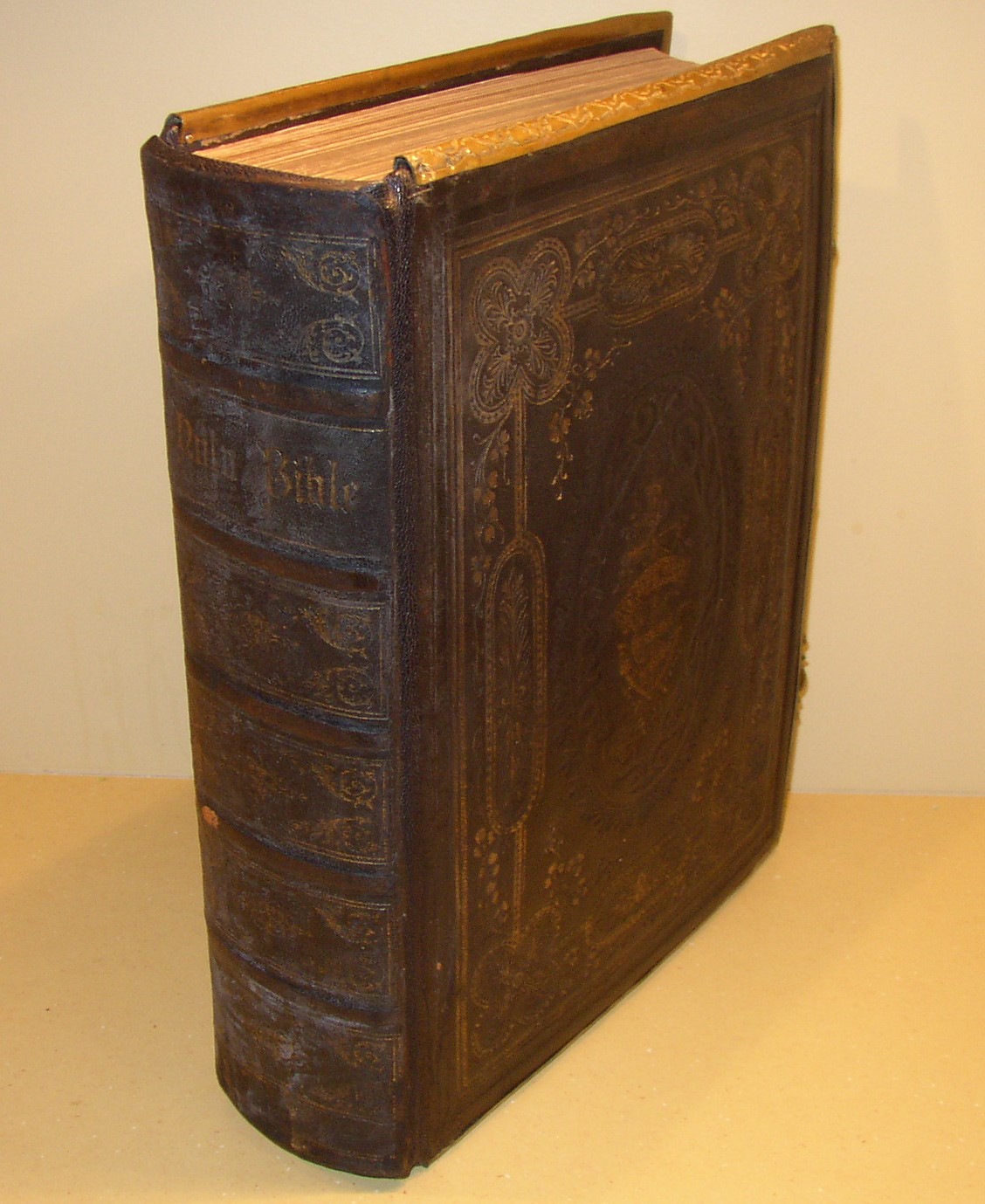
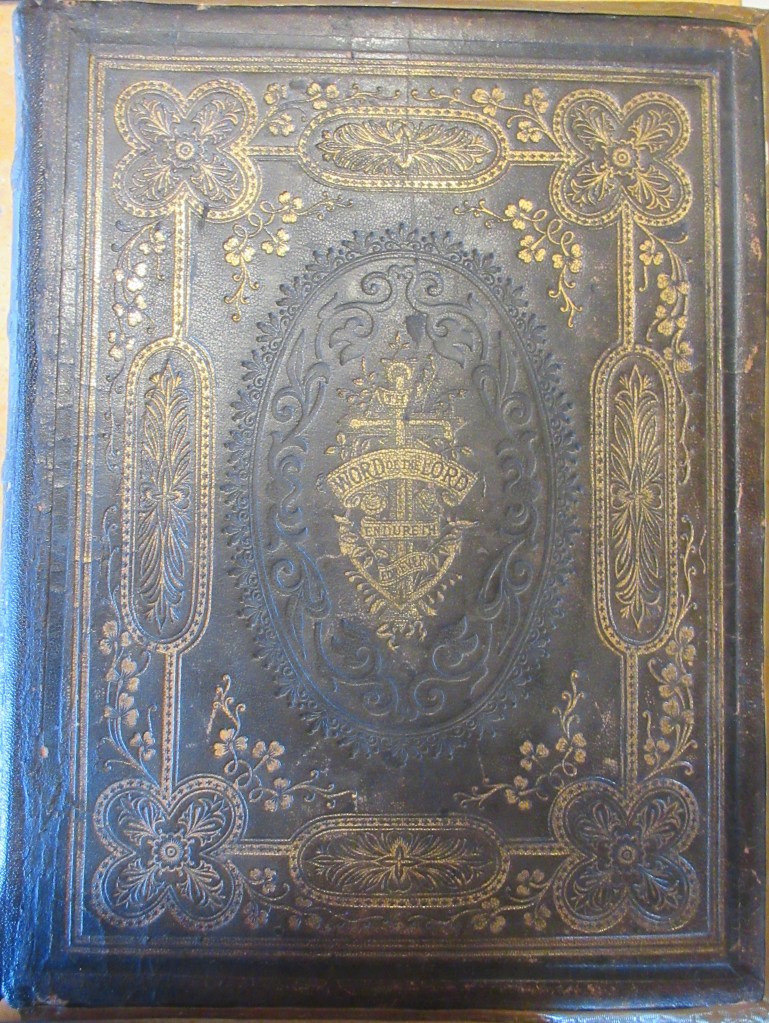
Alfred and Mary Bevers’ Family Bible

One of the sources that documents the marriage and offspring of Alfred C. and Mary N. (nee Bridges) Bevers is the Family Register on which, it is assumed, either Alfred or Mary wrote in distinguished script the details of their marriage as well as the births and deaths of their children.  (To see these records, go to this Legacy page: https://sojourners.family.blog/legacies/bevers-family-bible/.)  This Family Register can be found in a Bible that has been in the possession of one of Alfred and Mary’s great-great-grandsons, Kyle N. Bevers.  He relates: “It was in terrible shape when my parents rescued it from the sale items after Maude Bevers Waters died in 1958.  There were many loose pages and both the leather covers were completely separated from the binding.  It was passed on to me by my father ….”1 Maude Waters was Alfred and Mary’s youngest daughter (b. 1875) and she was a grandaunt of Kyle’s father.

There is no publication date in the Bevers’ Family Bible, but based on some comparisons with similar Bibles sold on the Internet, at the time Kyle’s parents obtained the Bible, it was probably around eighty or ninety years old.  Another fifty years would pass by before the Bible would be restored and rebound.  Kyle’s wife decided to take it to a bookbinder, and in 2007 the Bible’s original august appearance was renewed.  Kyle explains: “the binder … is a native of England and was trained by monks there who did book binding.  He has some great old equipment and was of course thrilled to work on the book that size and of such antiquity.”2

The bookbinder’s goal of restoration was “to retain the original appearance” of the Bible and he declared that, if the book was cared for, the restoration would enable it to exist for another one or two hundred years.3  The restoration included:

  • Mending the pages with an archival quality repair tape, especially the pages around the family history section
  • Making new cloth-jointed endpapers using authentic Victorian Bible papers imported from England
  • Attaching new linings of linen and kraft paper on the spine
  • Attaching a new silk page marker ribbon
  • Attaching endbands at the head and tail of the spine
  • Re-backing the spine of the book with new goatskin leather (archivally tanned in England) which was placed underneath the original leather
  • Re-mounting the original spine onto the newly bound spine
  • Dyeing and polishing the faded original leather
  • Re-attaching the brass clasps with brass pins4

Alfred and Mary’s Bible is an edition of The Self-Interpreting Family Bible edited by Rev. John Brown of Haddington, Scotland.  Their edition was printed in Glasgow, Scotland, although the publisher was located in Bolton-Le-Moors, England.  The title of the Bible is followed by explanations of its contents:

CONTAINING THE

OLD AND NEW TESTAMENTS

TO WHICH ARE ANNEXED

AN EXTENSIVE INTRODUCTION; MARGINAL REFERENCES AND ILLUSTRATIONS;

AN EXACT SUMMARY OF THE SEVERAL BOOKS;

A PARAPHRASE ON THE MOST OBSCURE OR IMPORTANT PARTS;

EXPLANATORY NOTES, EVANGELICAL REFLECTIONS, &c., &c. …

WITH MANY ADDITIONAL REFERENCES AND A LIFE OF THE AUTHOR.

WITH NUMEROUS COLOURED ILLUSTRATIONS IN OIL.5

Rev. John Brown who lived from 1722 to 1787 published his original edition of The Self-Interpreting Family Bible in 1778.6 For about 140 years, there were numerous versions printed in Scotland and America.7 The Dunham Bible Museum provides a description of the uniqueness of Brown’s edition over other Bibles of the time:

Brown’s Bible included explanatory notes placed at the bottom of the page with the scriptural text above.  These notes, focusing primarily on translation issues, grammar or historical background, were primarily to make the text more understandable.  The notes for each section were followed by “reflections,” which applied the Scripture to the heart.  Throughout his work Brown emphasized that the goal of Scripture was to promote holiness and virtue and to glorify God.  Dates and Scripture cross-references were placed in the margin.8

Rev. Brown himself remarked about his work on this Bible: “I can truly say, that my labor, in collecting the parallel texts in this work, has afforded me much more Pleasant Insight into the oracles of God than all the numerous commentaries which I ever perused.”9 (A digitized version of The Self-Interpreting Bible can be found on the Reformed Standards website.)

Although Alfred and Mary’s edition of Brown’s Family Bible does not have a date of publication, an estimated date can be surmised by the contents of the Bible.  One of the items listed on the title page is “a life of the author.”  A version of Rev. John Brown’s biography, believed to be written by his son William Brown, appeared in the 1859 edition of Brown’s Self-Interpreting Family Bible.10 The biography does not give the author’s name, but William Brown was the editor of the 1859 edition.  Since there is a biography in Alfred and Mary’s Bible, it is unlikely that their edition was printed before 1859.  Another item which helps date the Bible is the title page in Alfred and Mary’s Bible.  The same title page can be found in Bibles published by different publishers (all of the wording is the same except the name of the publisher at the bottom).  One publisher’s edition of Brown’s Bible having this version of the title page was listed on a book seller’s website.  The description of the Bible on the website says that it was printed by the same printer as Alfred and Mary’s Bible, and the book seller supplied an estimated printing date of 1870.11


Excerpts from a biography of Rev. John Brown

The REV. JOHN BROWN was born in the year 1722, at Carpow, a small village in the parish of Abernethy, and county of Perth.  His parents ranked in that class of society who earn their bread by the sweat of their brow.  His father could boast of no rent-rolls, nor had he any title of honour, save that of an honest man and an industrious mechanic, who, during the greater part of his life, laboured in the profession of an operative weaver. … he was nevertheless a man of considerable intelligence, moral worth, and Christian sincerity.  He made conscience of keeping up the worship of God in his family, and set a Christian example before them ….12

When Brown was about 11 years old, both of his parents passed away, first his father and shortly afterwards his mother.

An elder in the parish of Abernethy – an aged shepherd and an eminent Christian, respectable also for his intelligence, though so destitute of education that he could not so much as read – cheerfully embraced the opportunity of supplying the deficiency under which he laboured, by engaging the homeless orphan, to assist him in tending his flock, and in reading for him as opportunity allowed.13

Throughout this arrangement, the elder and young Brown read, conversed and prayed together, resulting in spiritual nurturing as the youngster grew.

… by pondering over the books he read, and the sermons he heard, the young man was brought under very impressive apprehensions of the majesty of God, the hatefulness of sin, the love of Christ, and the utter insignificance of all earthly enjoyments, when contrasted with the glories of heaven; so that the pleasure of his secret devotions was greatly augmented, while he felt his conscience daily becoming more tender, and his walk and conversation more assimilated to that of his Lord and Master.14

When the elder chose to settle in Abernethy, Brown found a position with a nearby farmer.  During this time, he felt it was his duty to join the Secession Church, a sect that had separated from the Church of Scotland due to its institution of a policy to disregard the expression of dissenting opinions.15 Brown continued to study diligently, mostly on his own, so that he could become a “shepherd of souls.”16 His studies included becoming acquainted with the Greek and Latin languages.

… he was, at this time, anxious to obtain a Greek Testament, that he might have the satisfaction of reading, in the original language, the character and work, the holy life and vicarious death, of Him who feedeth his flock like a shepherd, and laid down his life for his sheep.  Buoyed up with these hopes, and excited by this anxiety, after folding his flock one summer evening, and procuring the consent of his fellow-shepherd to watch it next day, he made a nocturnal trip to St. Andrews, distant about twenty-four miles, where he arrived in the morning.  He called at the first bookseller’s shop that came in his way, and having inquired for the article in question, the shopman, on observing his apparent rusticity and mountain habiliments (dress characteristic of his occupation), told him that he had Greek Testaments and Hebrew Bibles in abundance, but suspected an English Testament would answer his purpose much better.  In the mean time some gentlemen, said to have been professors in the university, happened to enter the shop, and learning what was going on, seemed much of the shopman’s opinion.  One of these, however, ordered the volume to be produced, and, taking it in his hand, said, “Young man, here is the Greek Testament, and you shall have it at the easy charge of reading the first passage that turns up.”  It was too good an offer to be rejected: the shepherd accepted the challenge, and performed the conditions to the satisfaction and astonishment of the party; and Mr. Brown very modestly retired with his prize.17

Eventually, Brown left his vocation as a shepherd and took up being an itinerant salesman.  As he traveled around the countryside, he would often take up reading the books of his hosts rather than attend to his business of selling wares.18 Subsequently, it was suggested to Brown that he may do well as a schoolmaster.  This profession he did for two years and it is noteworthy that nine of his students became ministers.19 During the school vacations, Brown studied philosophy and divinity.  After completing several courses, he was licensed in 1751 by the presbytery of Edinburgh.20 Shortly thereafter, he accepted the call from the congregation at Haddington to serve as their pastor.

Rev. Brown had an exceptional capacity to learn languages as well as committing scripture passages to memory.

In the summer months his constant rule was to rise between four and five, and during the winter by six.  From these early hours, till eight in the evening, excepting the time allotted to bodily refreshment, family worship, or when called away on the duties of office, he continued to prosecute his studies with unremitting application.  To a mind so ardent in the acquisition of knowledge, with a judgment so clear, a retentive memory, and exertions so intense, it was by no means surprising that he became greatly superior to most men engaged in discharging the same sacred duties.

In acquiring the knowledge of languages, ancient or modern, he possessed a facility altogether his own.  Without an instructor [except for one month], … he soon got so far acquainted with [Latin] as to relish its beauties; and, left to his own resources, … he soon became critically acquainted with the Greek, and especially the Hebrew.  Of the living languages, he could read and translate the Arabic, Syriac, Persic, and Ethiopic, the French, Spanish, Italian, Dutch, and German.

With him natural history, civil law, natural and moral philosophy, were particular objects of research; but divinity, and the history of human affairs, sacred or civil, were his favourite studies ….21

While Rev. Brown served as a minister at Haddington, he also became an author.  His first publication was a “large work on the Catechism, which appeared in the year 1758 …,” and the publication which required the most work was his Dictionary of the Bible.22 In 1768, he was elected by a branch of the Secession Church to be a professor of divinity.23 Rev. Brown continued his ministerial services until shortly before his death in 1787.


For many of the years that Alfred C. Bevers and his wife lived in Dakota Territory and then in South Dakota after it was organized as a state, Alfred was a supply pastor in the Dakota Conference of the Methodist Episcopal Church.  Over a period of about 15 years, Alfred was assigned to seven churches.  As they moved from town to town, it is likely that the Family Bible was transported with them.  It is intriguing to contemplate that this Bible with its well-researched explanations and notes by Rev. John Brown was available to Alfred when he wanted to study the Scriptures.

1 K. N. Bevers, email communication with M. R. Wilson, dated April 23, 2020.

2 Bevers, April 23, 2020.

3 T. Farthing, personal letter to M. A. Bevers, dated Christmas, 2006.

4 Farthing, Christmas, 2006.

5 W. Bruckshaw, Publisher, Brown’s Self-Interpreting Bible, (Bolton-Le-Moors, Lancashire, England: n. d.): Title Page.

6 Dunham Bible Museum, “John Brown’s Self-Interpreting Bible” (Houston, Texas: Dunham Bible Museum, 2008): 1, https://www.hbu.edu/publications/museums/Dunham_Bible_Museum/DBM_JohnBrown_Self-Interpreting_Bible.pdf.

7 Reformed Standards, https://reformedstandards.com/bible/.

8 Dunham Bible Museum, “John Brown’s Self-Interpreting Bible”: 3.

9 Dunham Bible Museum, “John Brown’s Self-Interpreting Bible”: 3.

10 R. E. Waddell, “Rev John Brown of Haddington,” https://www.ornaverum.org/family/brown/john-haddington.html.

11 Halden Books (Exeter, Devon, United Kingdom, accessed January 27, 2023): https://www.abebooks.co.uk/servlet/BookDetailsPL?bi=31176038172&searchurl=sortby%3D17%26tn%3Dbrown%2527s%2Bself%2Binterpreting%2Bfamily%2Bbible%2Bcontaining%2Bthe%2Bold%2Band%2Bnew%2Btestaments&cm_sp=snippet-_-srp1-_-title9.

12 J. D. Chitty, “Memoir of the Rev. John Brown, part 1” [transcription of author’s biography of The Self-Interpreting Bible (Glasgow, Edinburgh and London: Blackie and Son, 1859)], (August 24, 2010): https://capthk.com/category/books/john-browns-self-interpreting-bible/memoir-of-the-rev-john-brown-of-haddington/.

13 Chitty, “Memoir of the Rev. John Brown, part 2,” [transcription] (August 25, 2010).

14 Chitty, “Memoir of the Rev. John Brown, part 2,” [transcription] (August 25, 2010).

15 Chitty, “Memoir of the Rev. John Brown, part 3,” [transcription] (August 31, 2010).

16 Chitty, “Memoir of the Rev. John Brown, part 4,” [transcription] (September 1, 2010).

17 Chitty, “Memoir of the Rev. John Brown, part 4,” [transcription] (September 1, 2010).

18 Chitty, “Memoir of the Rev. John Brown, part 6,” [transcription] (November 27, 2011).

19 Chitty, “Memoir of the Rev. John Brown, part 6,” [transcription] (November 27, 2011).

20 Chitty, “Memoir of the Rev. John Brown, part 7,” [transcription] (February 26, 2012).

21 Chitty, “Memoir of the Rev. John Brown, part 8,” [transcription] (November 3, 2012).

22 Chitty, “Memoir of the Rev. John Brown, part 10,” [transcription] (November 8, 2012).

23 Chitty, “Memoir of the Rev. John Brown, part 9,” [transcription] (November 5, 2012).

The Search for Herbert and Lena Bevers’ Texas Farm

On Thursday, November 7, 2019 my mother and I accomplished the main goal of our trip to Texas.  We retraced Lena Huppler Bevers’ travel log to the best of my understanding of the roads that were in existence in 1919.  Once we got to Raymondville, we had another hope to fulfill.  We wanted to see the farm where Herbert and Lena and their family lived.  On Thursday and Friday of last week, we did some research at the Willacy County Records Office and the Cameron County Archives Office.  The only information we had to start our research was the statement in Lena’s travel log saying that they had arrived in Raymondville and a record in the 1920 U. S. Census of Herbert Bevers which said that he was renting a farm in Justice Precinct #8 of Cameron County.1  I had learned that Raymondville and its surrounding area wasn’t a part of Willacy County until 1921, so I was unsure where we should look to find property records for the Raymondville area.

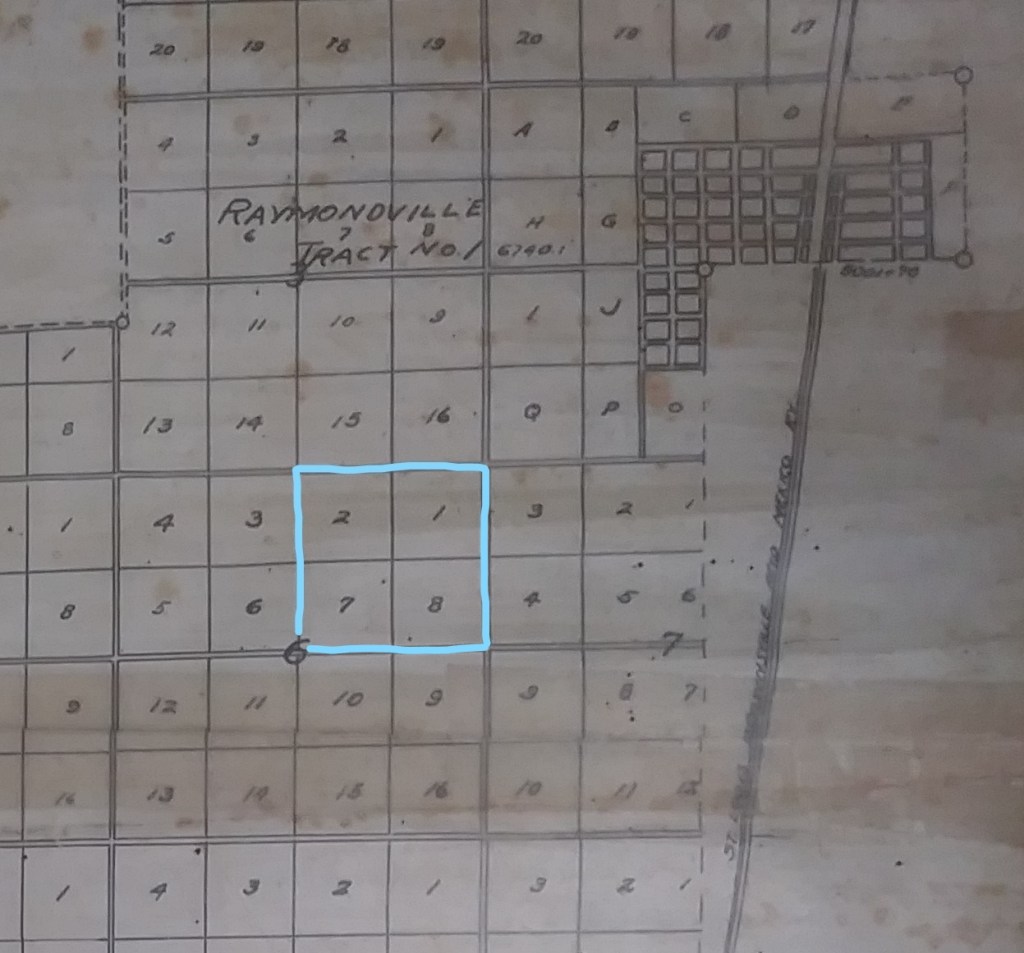
The first thing we wanted to determine was whether Herbert had purchased property in the Raymondville area.  Our search in the Willacy County and Cameron County offices didn’t reveal any transaction by Herbert.  So, our conclusion is that he was renting a farm for the entire time that he and his family were in Texas.  We also looked for purchases of property by Mr. McElhany, but we didn’t find any transactions by him.  In addition, because we knew that Herbert and Lena’s daughter Florence got married in Texas, we looked for a purchase by someone with her married name: Kamrath, and we did find a purchase near Raymondville by a man named Frederick Kammrath.  This was Florence’s father-in-law.  We then obtained a copy of the deed which gave us the legal description of the Kammrath property.  At the Willacy County Deeds office, we were able to take a picture of an historic plat map of the Raymondville area.  The roads were not yet named on that map, so it took some comparison of landmarks on a current map in order to identify where the Kammrath property was.
The following photograph is an edited portion of The Kleberg Town & Improvement Co. Map of Raymondville and Other Districts, Cameron Co., Texas, dated April 18, 1906.  In the upper right corner is the town of Raymondville.  Along the right side, the railroad tracks of the St. Louis, Brownsville and Mexico Railway are drawn.  In the town on each side of the railroad tracks are 6th and 7th Streets, and 1st to 5th streets can be counted to the left of 6th Street.  Presently, the main road that enters Raymondville from the west is Highway 186 (Hidalgo Avenue).

In December 1916, Frederick Kammrath purchased Lot 1-2, 7-8 Section 6, Raymondville Tract No. 1, containing 160 acres (highlighted above).2

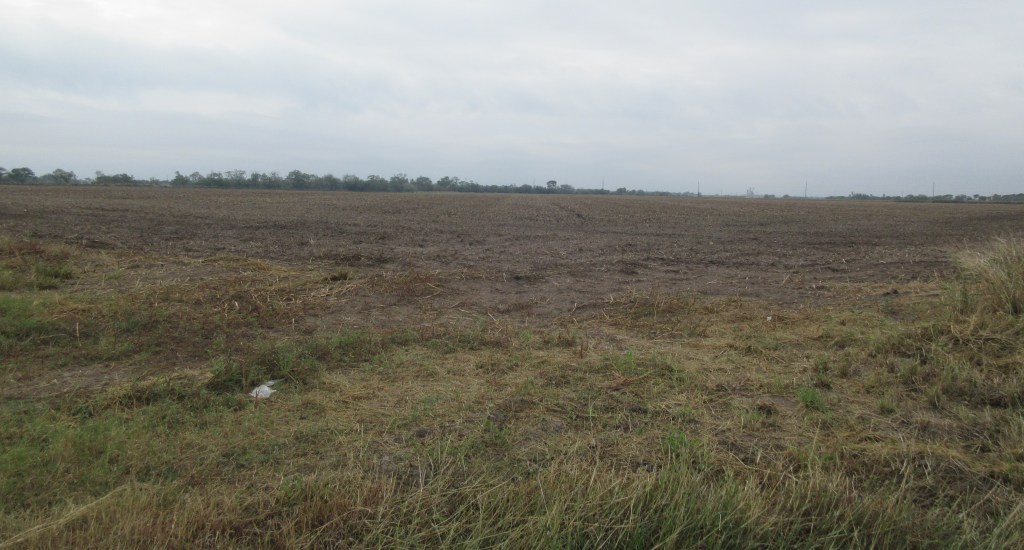
Another thing we did to locate where the Bevers lived in 1920 was look for the property transactions of five property owners listed on the 1920 census sheets close to Herbert’s name.  We found three owners, Eddie A. Jones, Curtis S. Stockwell and E. H. Whitney.  On the plat map above, Eddie A. Jones owned Lots 11-14 in Section 63, Curtis S. Stockwell owned Lots 9-11 in Section 74 and E. H. Whitney owned Lot J in Raymondville5.  This gives us evidence of the location of the farm where the Bevers family lived.  All three of the owners were in close proximity to Frederick Kammrath’s property.  Curiously, the Kammrath name does not appear on the 1920 census of the area where the Kammrath property is located.

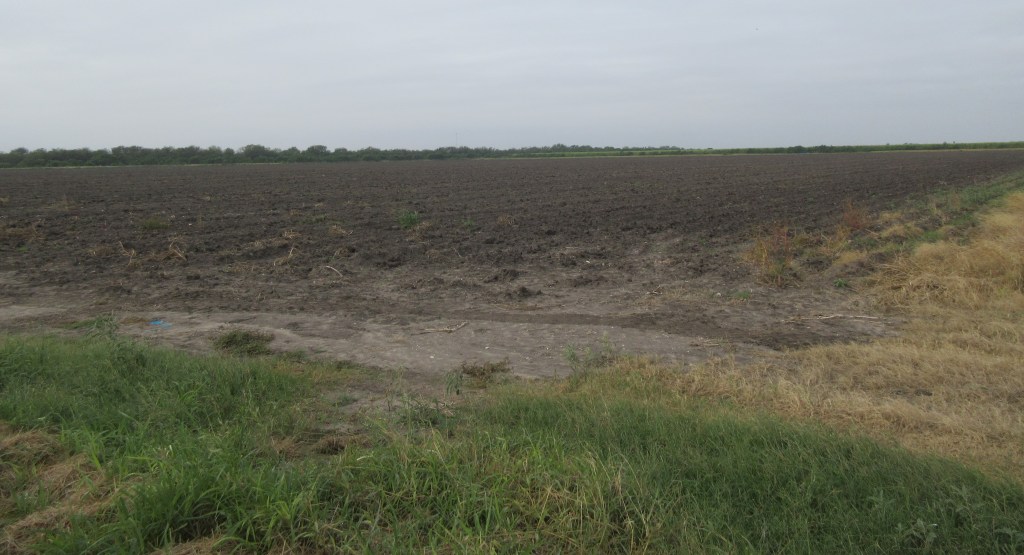
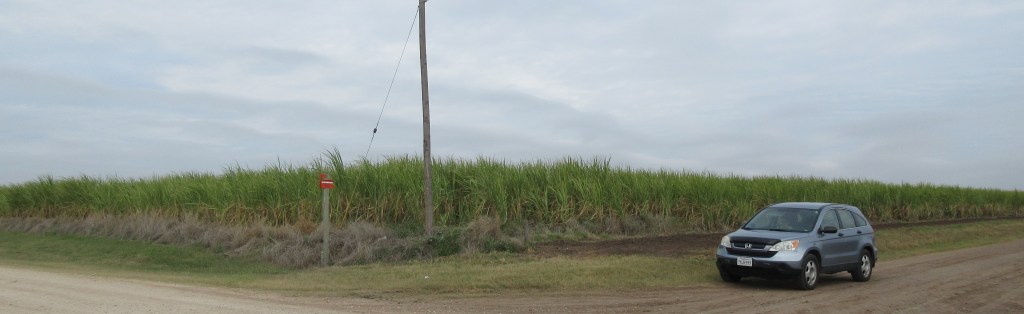
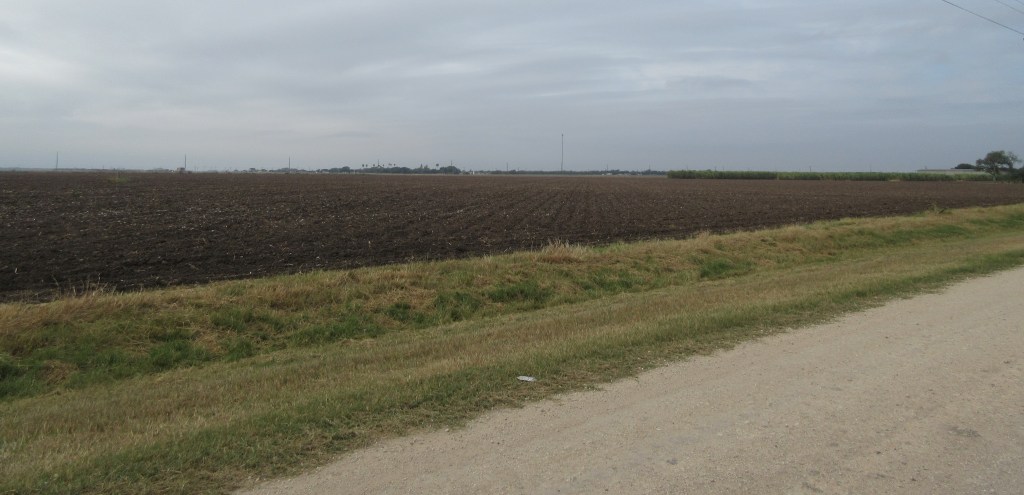
Based on the information we had learned, we started out Saturday morning, November 9, with a drive to the property that Frederick Kammrath purchased.  We believe there is a strong possibility that Herbert Bevers was renting the Kammrath farm.

Kammrath farm, lot 1 (Photograph by MRW November 9, 2019)
Kammrath farm, lot 8 (Photograph by MRW November 9, 2019)
Stockwell farm, lot 9 (Photograph by MRW November 9, 2019)
Jones farm, lot 11 (Photograph by MRW November 9, 2019)

Notes:

  1. “United States Census, 1920,” database with images, FamilySearch (https://familysearch.org/ark:/61903/1:1:MHYY-RT1 : accessed 20 November 2019), Herbert J Bevers, Justice Precinct 8, Cameron, Texas, United States; citing ED 38, sheet 2A, line 50, family 28, NARA microfilm publication T625 (Washington D.C.: National Archives and Records Administration, 1992), roll 1784; FHL microfilm 1,821,784.
  2. “Kammrath, Frederick,” General Index to Deeds – Grantees (Brownsville, Texas: Cameron County Clerk): 31.
  3. “Jones, Eddie A.,” General Index to Deeds – Grantees (Brownsville, Texas: Cameron County Clerk): 3.
  4. “Stockwell, Curtis S.,” General Index to Deeds – Grantees (Brownsville, Texas: Cameron County Clerk): 101.
  5. “Whitney, E. H.,” General Index to Deeds – Grantees (Brownsville, Texas: Cameron County Clerk): 18.

Day Twenty-Seven: Raymondville, Texas

November 8, 2019

Retracing Lena Huppler Bevers’ Travel Log

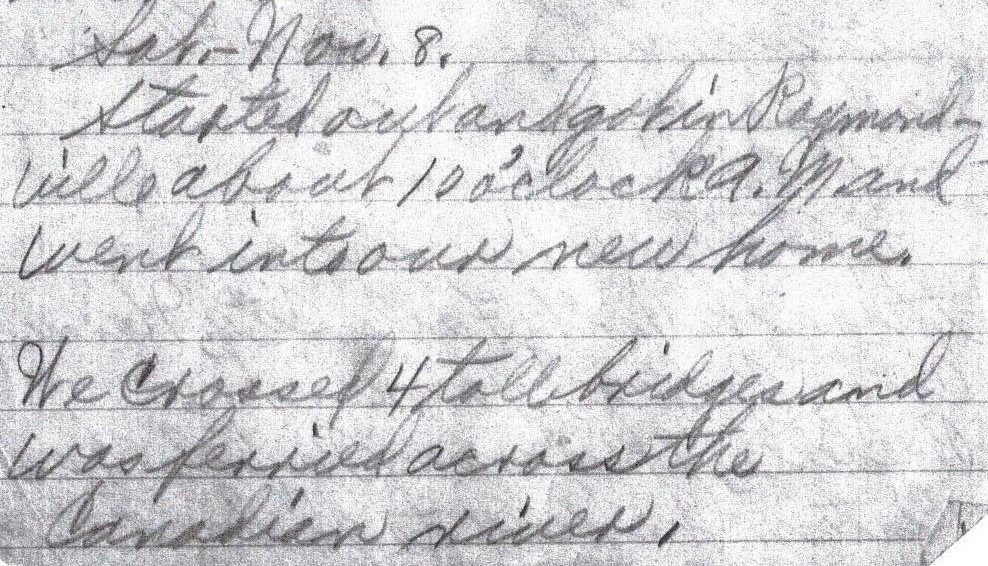
Sat. – Nov. 8.

Started out and got in Raymondville about 10 o’clock A. M. and went into our new home.

We crossed 4 toll bridges and was ferried across the Canadian river. – Lena Bevers

On the twenty-seventh day after leaving Watertown, South Dakota, Lena Bevers recorded that her family arrived in Raymondville, Texas about 10:00 AM. Her daughter Florence wrote in her travel log that they had driven 50 miles that morning.1 They were still traveling about 15 miles per hour.

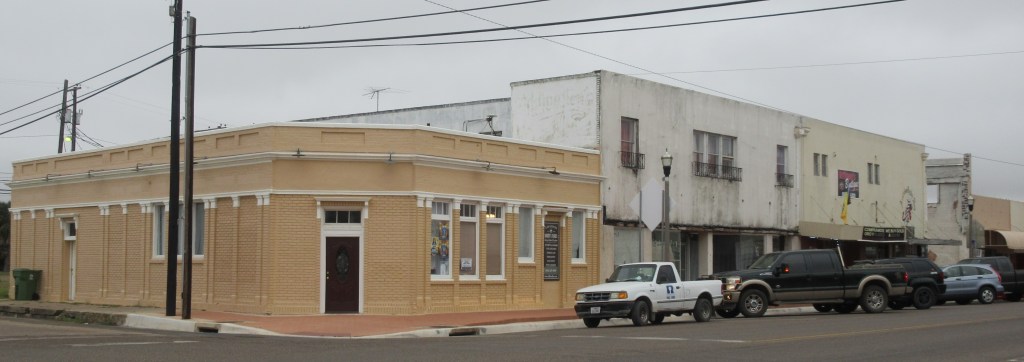
Raymondville was only 15 years old when Herbert and Lena arrived there.  It was a small town.  By 1914 the population was only 350, but there were “four general stores, a bank, a newspaper, a hotel, a cotton gin, and a lumber company. Agriculture, primarily the raising of sorghum, cotton, citrus fruits, vegetables, and corn, drove the town’s growth in its early years.”2  Today, my mother and I didn’t find any dated historical buildings of the early 1900s.

Raymondville, Texas (Photograph by MRW November 8, 2019)
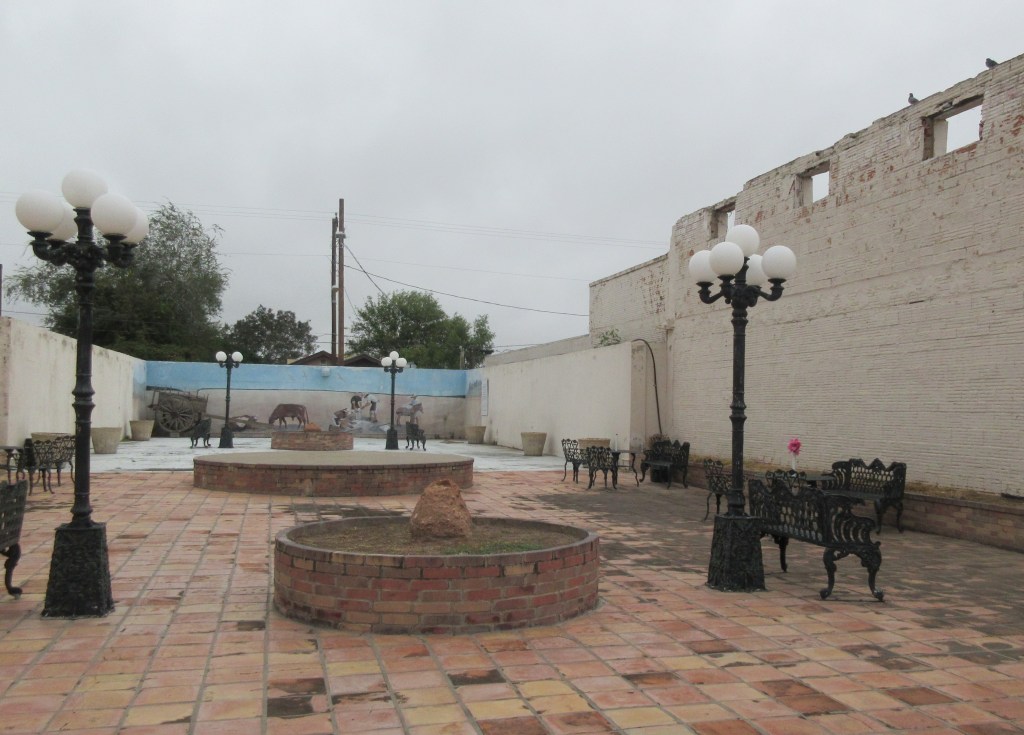
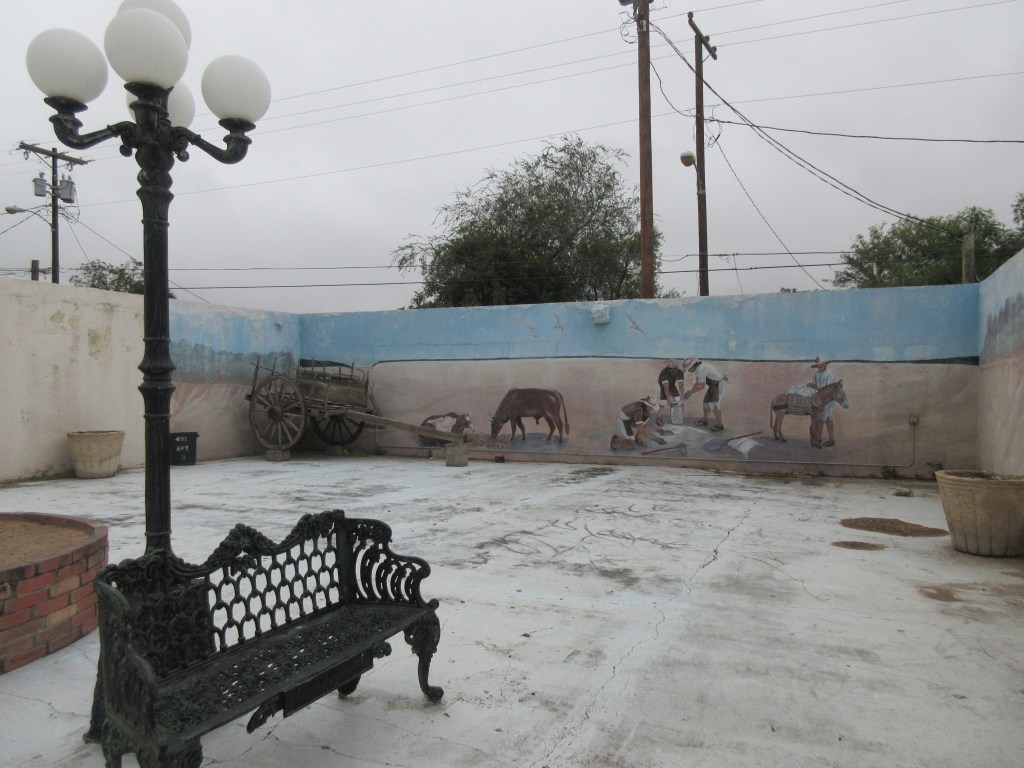
Courtyard in downtown Raymondville, Texas (Photograph by MRW November 8, 2019)
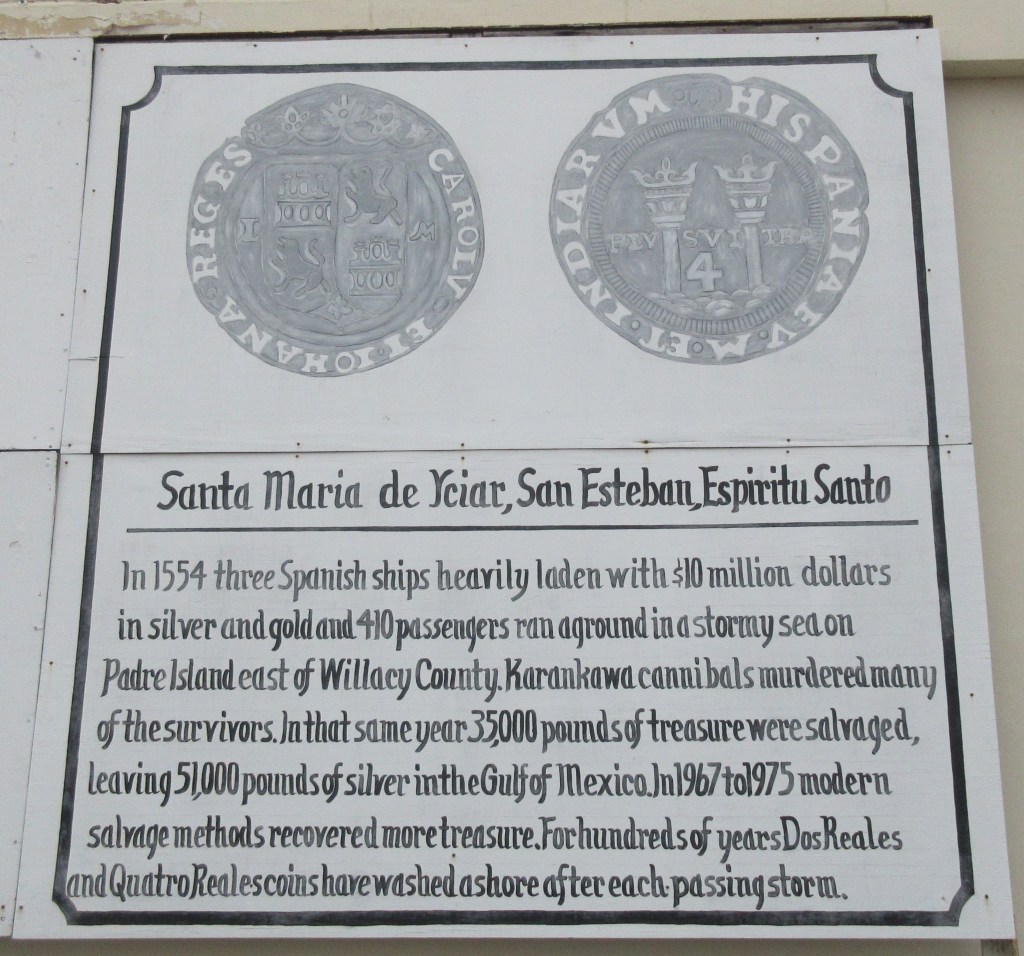
A mural in the courtyard in downtown Raymondville, Texas (Photograph by MRW November 8, 2019)
A mural in downtown Raymondville, Texas (Photograph by MRW November 8, 2019)

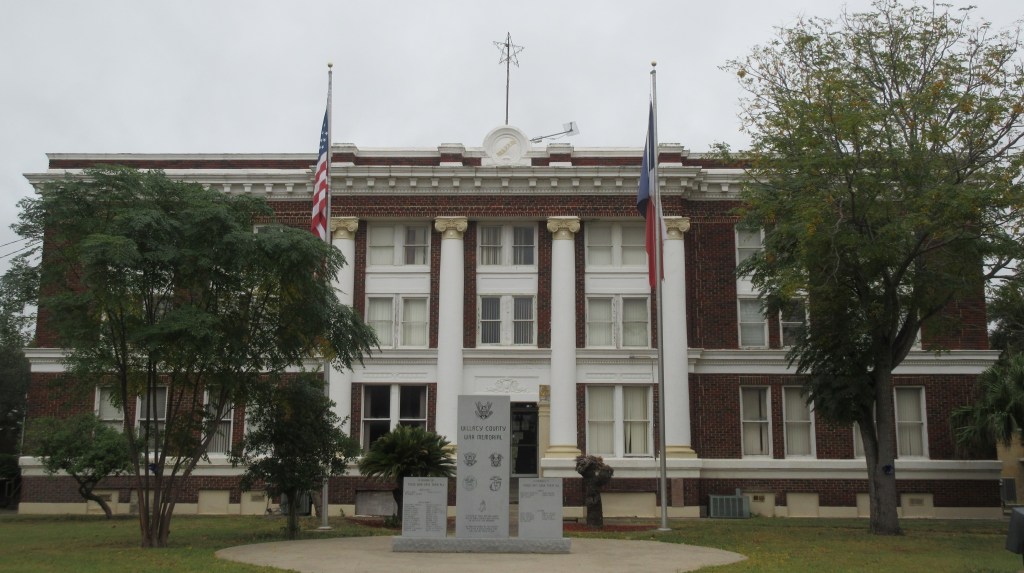
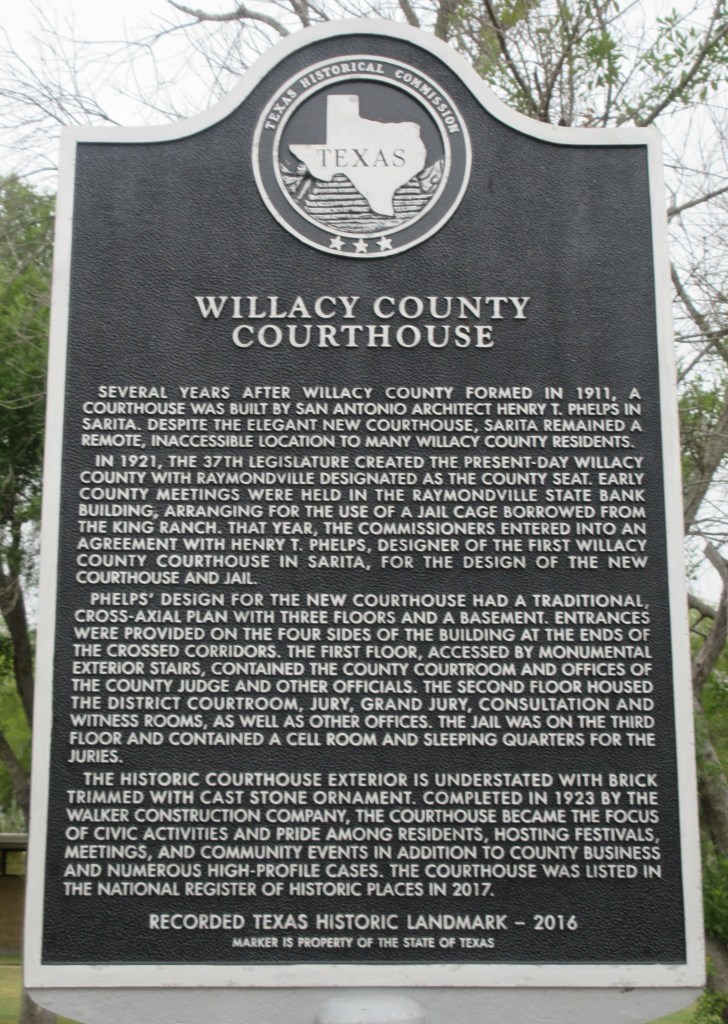
On January 5th, 1920 a U. S. census taker visited the Bevers family.  At that time, Raymondville was in Cameron County, then in 1921 Willacy and Cameron Counties were reorganized.  Raymondville became the county seat for Willacy County.  According to the census record, Herbert was a farmer and he and his family were living on a rented farm.3  Herbert was 50 years old and Lena was 48.  The six children that rode with them in the car are listed on the census record, as well as their son Willis who had accompanied the livestock on the train.  Today, my mother and I spent a couple hours at the Cameron County Archives Office in Brownsville, Texas.  We uncovered enough information that we believe will lead us to the area where Herbert Bevers was farming and we will go there tomorrow.

Willacy County Courthouse completed in 1923, Raymondville, Texas (Photograph by MRW November 8, 2019)

Notes:

  1. B. Winkelmann, Our Trip to Texas [Transcription of Our Trip to Texas by Florence Bevers, 1919] (unpublished, n. d.): 5.
  2. Handbook of Texas Online, Stanley Addington, “RAYMONDVILLE, TX,” http://www.tshaonline.org/handbook/online/articles/hfr02.
  3. “United States Census, 1920,” database with images, FamilySearch (https://familysearch.org/ark:/61903/3:1:33S7-9RX1-KXK?cc=1488411&wc=QZJT-MQX%3A1037034201%2C1036604401%2C1037078301%2C1589332571 : 14 September 2019), Texas > Cameron > Justice Precinct 8 > ED 38 > image 3 of 25; citing NARA microfilm publication T625 (Washington, D.C.: National Archives and Records Administration, n.d.).

Day Twenty-Six: Alice to Raymondville, Texas

November 7, 2019

Retracing Lena Huppler Bevers’ Travel Log

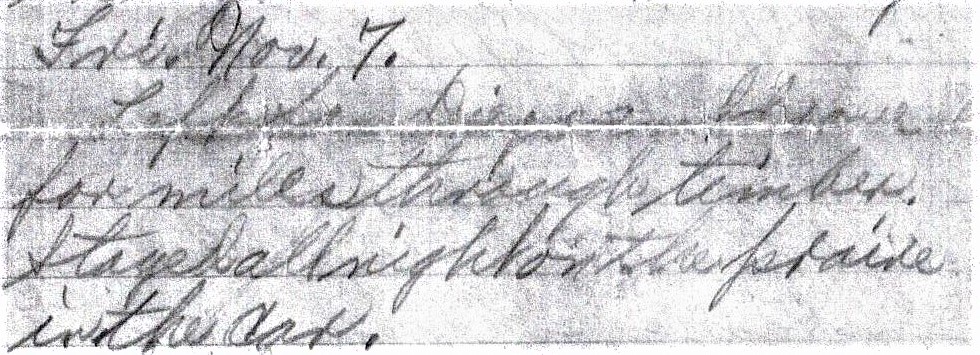
Fri. Nov. 7.

Left San Diego and drove for miles through timber.  Stayed all night on the praire in the car. – Lena Bevers

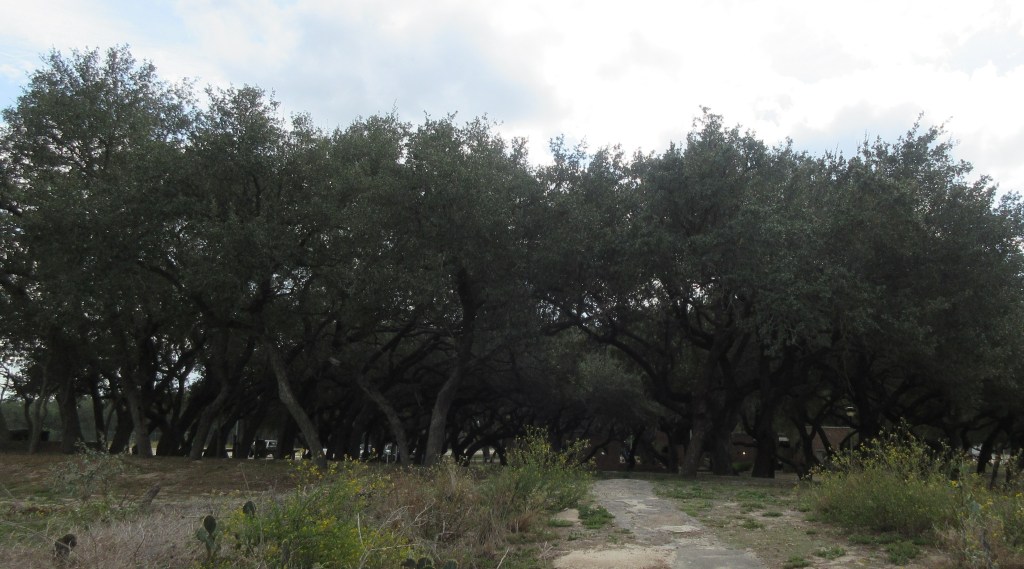
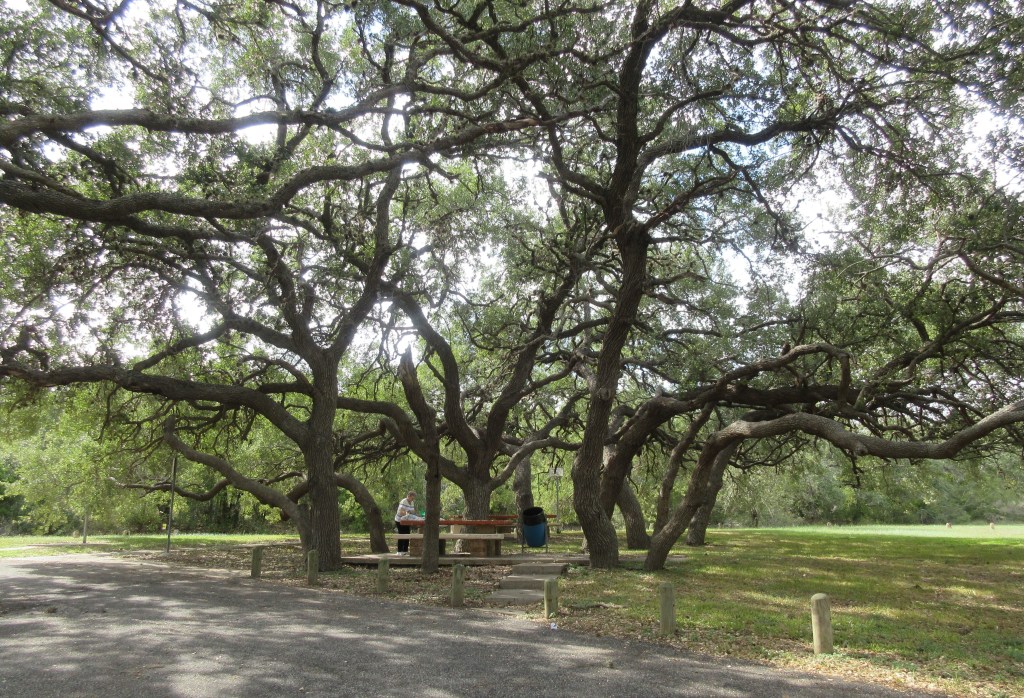
November 7, 1919 was a very similar day for the Bevers family as the day before.  They continued their drive south through timber.  For my mother and I, the landscape today was also similar to yesterday’s: fields and pastures with patches of woods, especially at the edges of the fields and along the highway.

A grove at a roadside park could be similar to the type of timber that the Bevers family traveled through. (Photograph by MRW November 7, 2019)

From Alice, Texas there are two routes that we could take to get to Raymondville.  U. S. Highway 281 runs south from Alice to Linn, then Highway 186 goes east to Raymondville. An alternative route would be driving to Kingsville, then take U. S. Highway 77 south to Raymondville.  On a 1924 Rand McNally map there are roads at the location of U. S. Hwy 281 and Highway 186.1  There is also a road to Kingsville, but about 15 miles south of Kingsville the road doesn’t extend to Raymondville.  Therefore, the highways we drove today were U. S. Highway 281 and Highway 186.

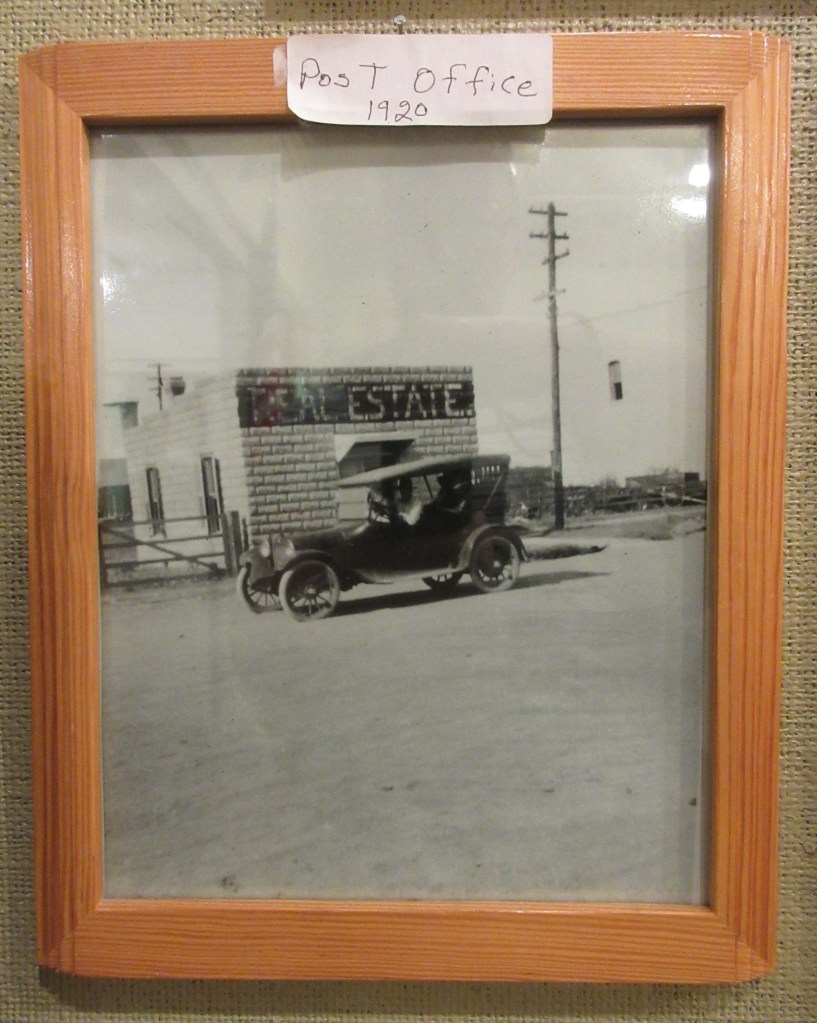
At Falfurrias, we decided to visit the Heritage Museum.  One picture on the display wall seems to represent what Herbert was doing in Texas.

A photograph of a real estate office in Falfurrias, Texas in 1920, hanging in the Falfurrias Heritage Museum. (Photograph by MRW November 7, 2019)

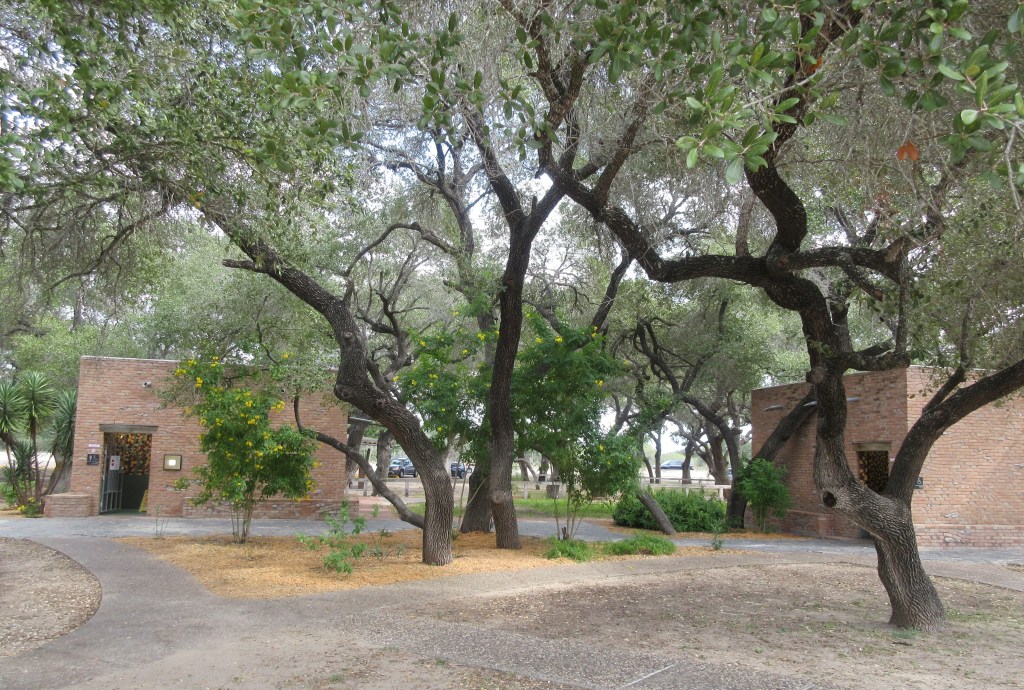
In Florence Bevers’ travel log, in the entry for November 8, 1919, she states that they had 50 miles to drive to get to Raymondville.2  Based on this statement, I propose that the Bevers and McElhanys spent the night in the vicinity of Encino or Rachal, Texas.  The place where my mother and I stopped for a picnic lunch at a roadside park is close to the point where Lena wrote that they spent the night on the prairie in their cars.

A beautiful roadside park in the center median of U. S. Highway 291, south of Falfurrias, Texas (Photograph by MRW November 7, 2019)

Instead of staying on the prairie, my mother and I continued south to Raymondville.  After 26 days of traveling, I drove into Raymondville at 1:50 PM.  Our first stop was at the Register of Deeds for Willacy County, where we searched the deed indexes to locate a transaction by Herbert purchasing property in the Raymondville area.  We were not successful in finding Herbert’s deed, nor did we find one for McElhany.  But we did find the deed of Frederick Kammrath, who in 1919 was Florence’s future father-in-law.  After our research at the Register of Deeds, we checked into our motel about 4:00 PM.

Notes:

Day Twenty-Five: Sinton to Alice, Texas

November 6, 2019

Retracing Lena Huppler Bevers’ Travel Log

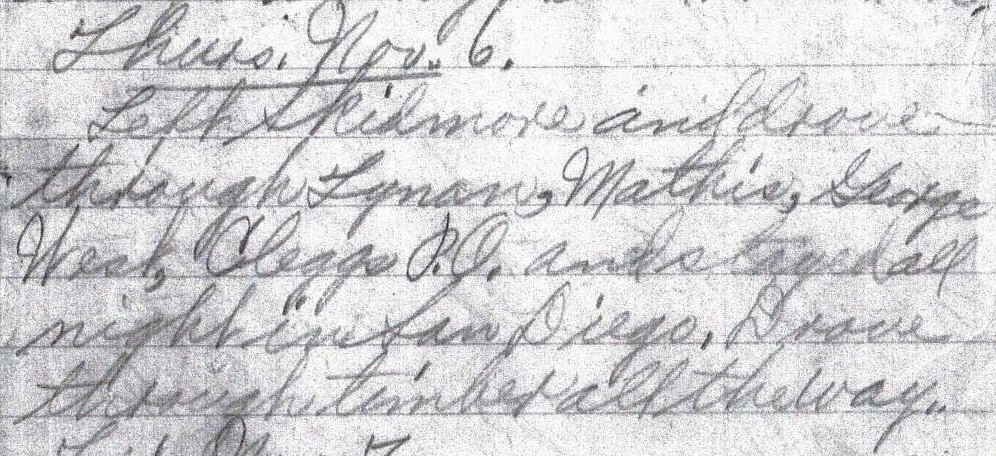
Thurs. Nov. 6.

Left Skidmore and drove through Tynan, Mathis, George West, Cleggs P.O. and stayed all night in San Diego.  Drove through timber all the way. – Lena Bevers

Having had to return to Skidmore on the previous day, on November 6, 1919 Herbert Bevers and Mr. McElhany had to find a way to cross the Nueces River.  First, they head southwest toward Mathis, traveling through Tynan on the way.  Apparently, there was no way to cross there either, so they drove northwest to the town of George West, where they were able to cross the river and begin driving in a southerly direction again.

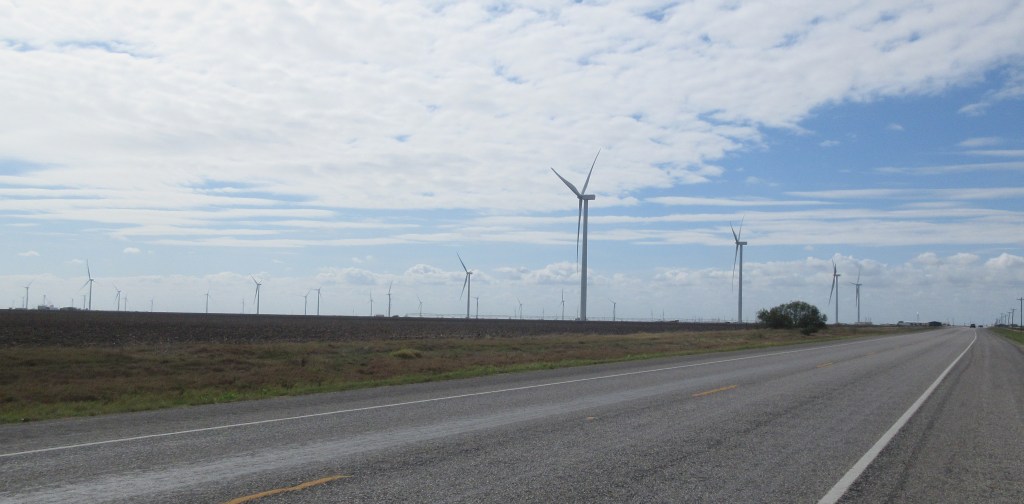
Since my mother and I stayed in Sinton for the night instead of Skidmore, we needed to return to Skidmore on U. S. Highway 181.  When we turned out of the driveway of our motel, we assumed the highway we were getting on was the highway that would take us to Skidmore.  It wasn’t until 10 miles later that we realized we were not on U. S. Highway 181, so we turned around and found the intersection where we could head in the right direction.  At Skidmore we took Route 359 to Tynan and Mathis, then followed a service road beside Interstate Highway 37, which at one point was closed, so we drove on the interstate for part of the way.

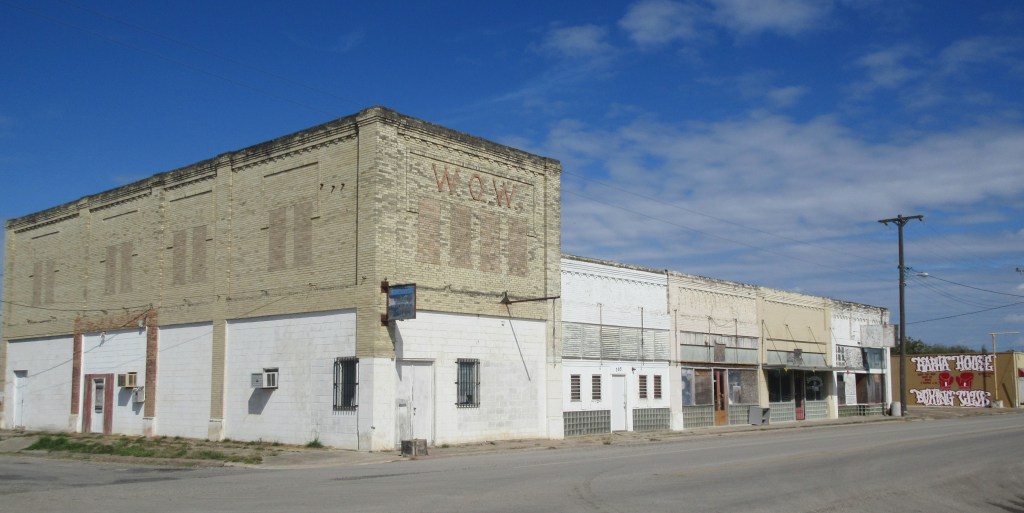
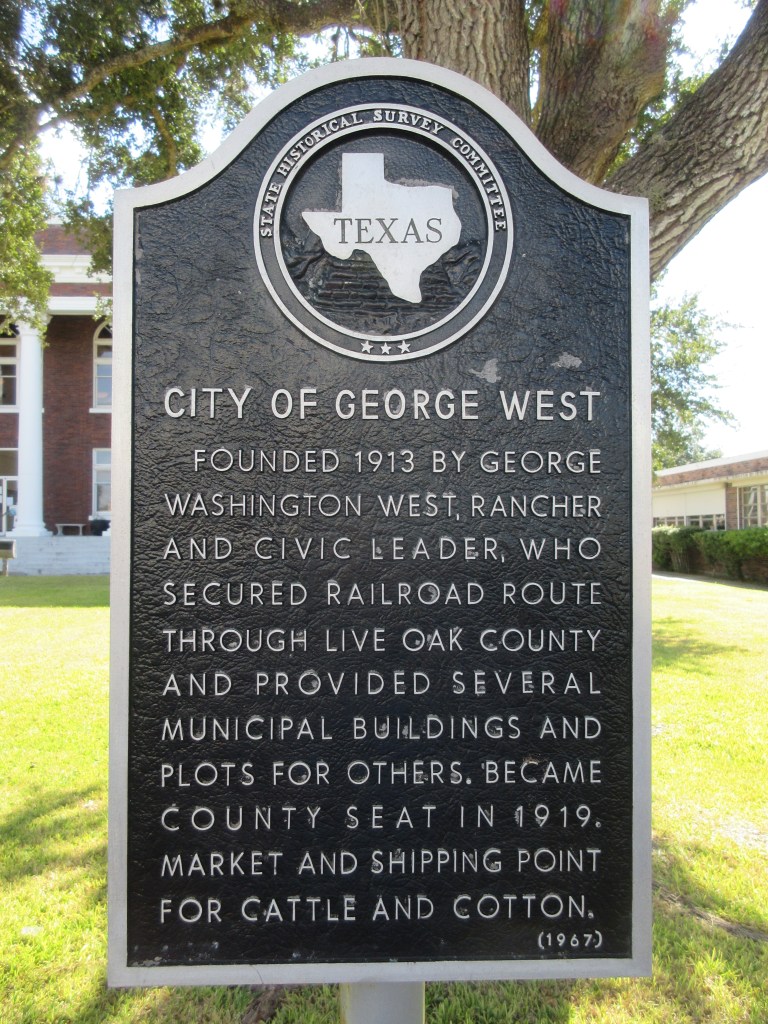
Tynan was a very small town in the midst of crop fields and windmills.  We didn’t find any historical buildings.  Mathis is also a small town and we found a few old buildings, but it didn’t appear that they were in use.  We continued on Interstate Highway 37 until we came to U. S. Highway 59, which took us to the town of George West. This town was only seven years old when the Bevers family drove through it. George West became the county seat of Live Oak County in 1919.  Although it is a small town, it was the largest one we visited today.

Tynan was surrounded by windmills (Photograph by MRW November 6, 2019)
Mathis only had a few old buildings; the date of these buildings is unknown. (Photograph by MRW November 6, 2019)
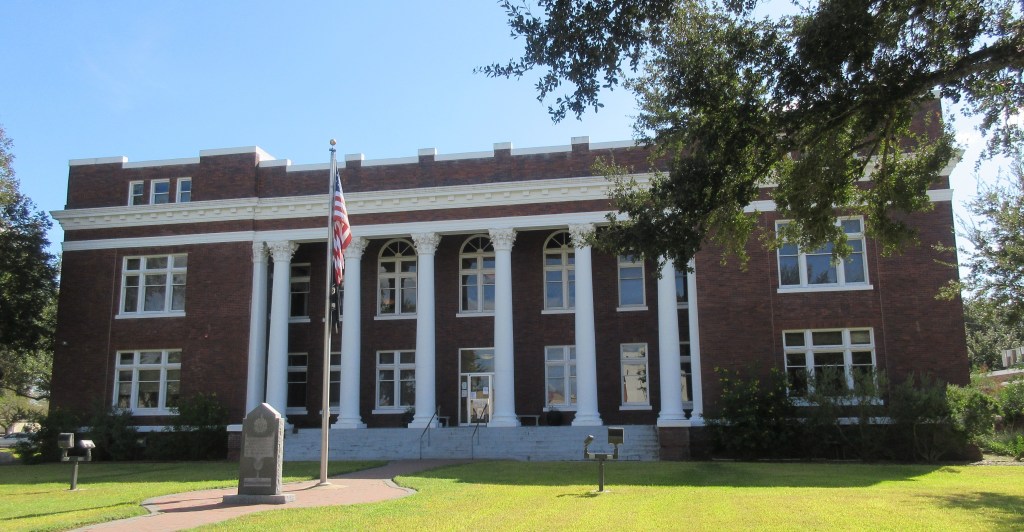
Live Oak County Courthouse, George West, Texas (Photograph by MRW November 6, 2019)
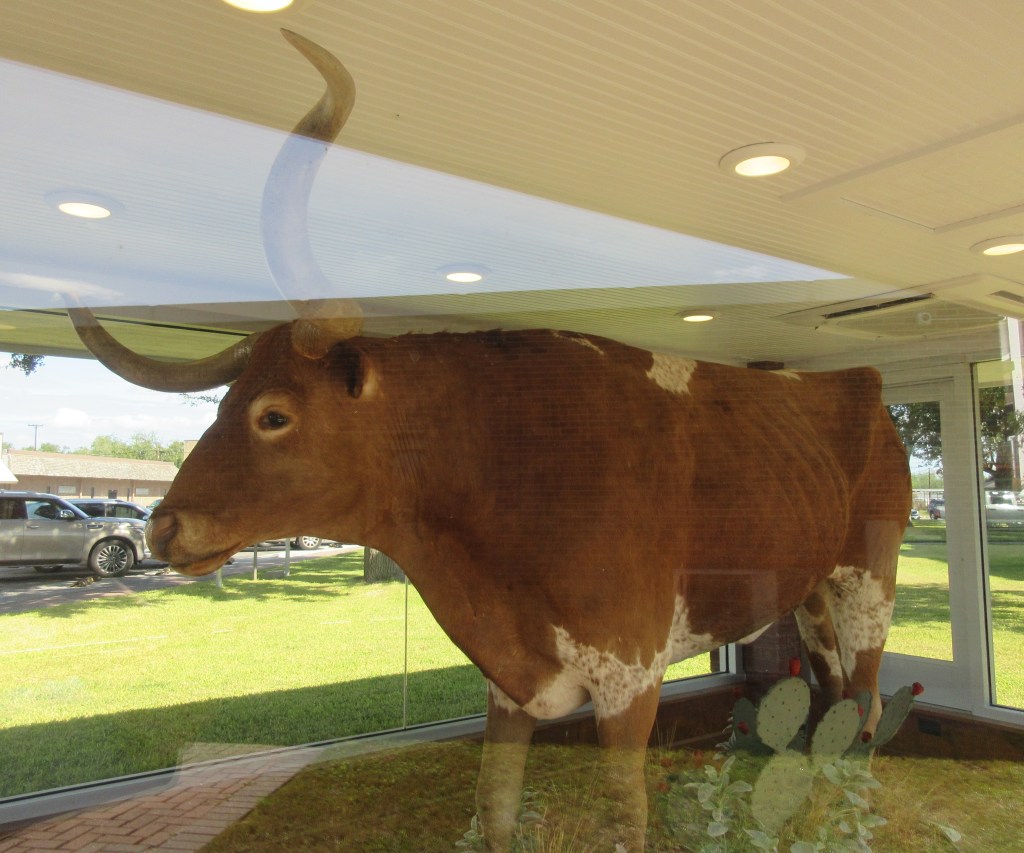
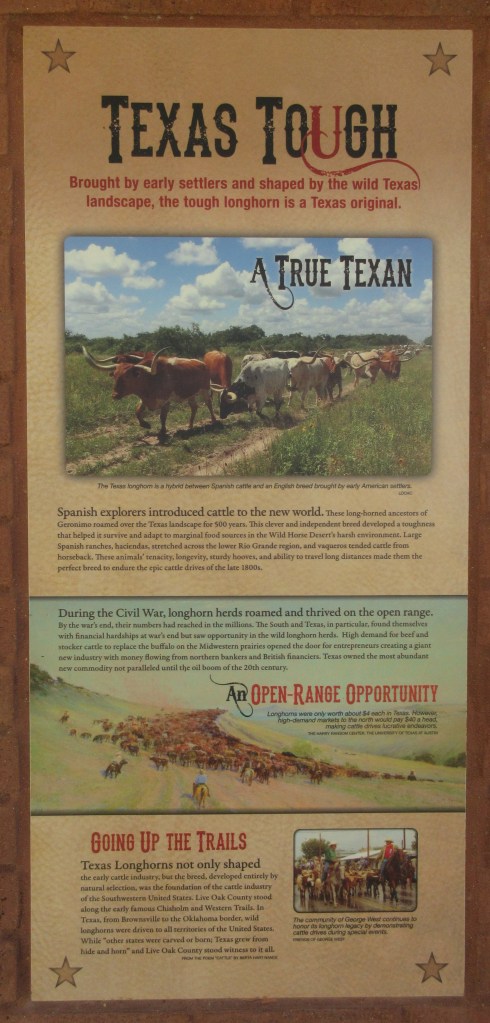
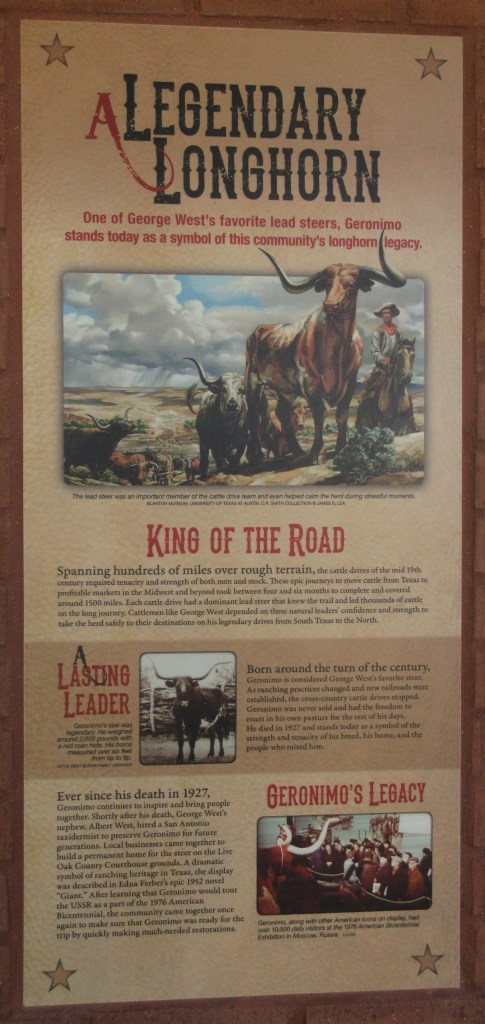
Geronimo, a favorite longhorn of its owner George West, preserved and encased in glass in 1927, Town of George West, Texas (Photograph by MRW November 6, 2019)

To get to Clegg, we took U. S. Highway 59 southwest to a farm road that the navigation program on my mother’s phone directed us to take.  Then we traveled east among shrubs and short trees.  At the point were the navigator said that we had arrived at Clegg, there were only a couple ranch houses and some farm buildings.

The landscape was not what we envisioned it would be like based on Lena Bever’s statement that they “drove through timber all the way.”  Much of the land that we drove through today had been cleared of trees for crop fields and pastures.  There were sections of trees, but the trees were not as tall or as old as we expected them to be.

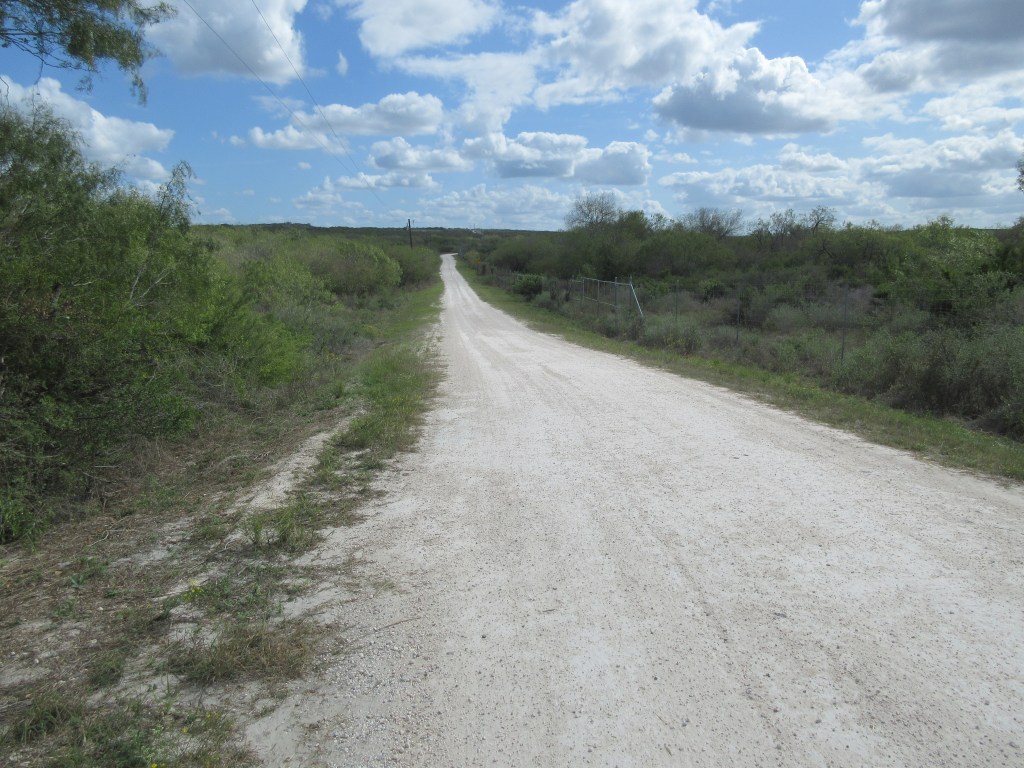
An unimproved road near Clegg, Texas, is more similar to the road Herbert Bevers and Mr. McElhany drove in 1919 than most of the roads that we have driven in 2019. (Photograph by MRW November 6, 2019)
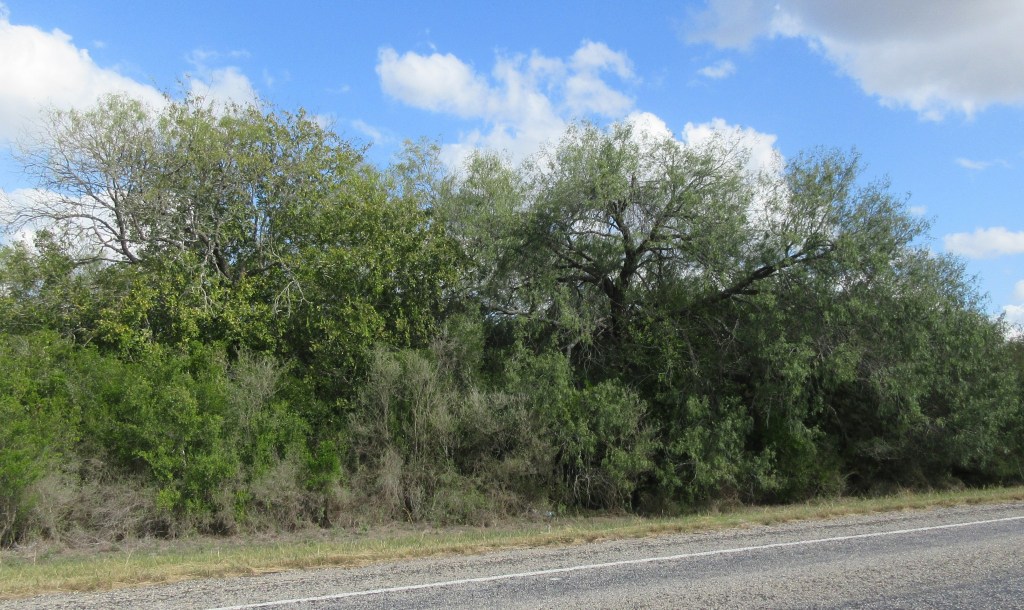
An example of the “timber” we saw in Live Oak County, Texas (Photograph by MRW November 6, 2019)

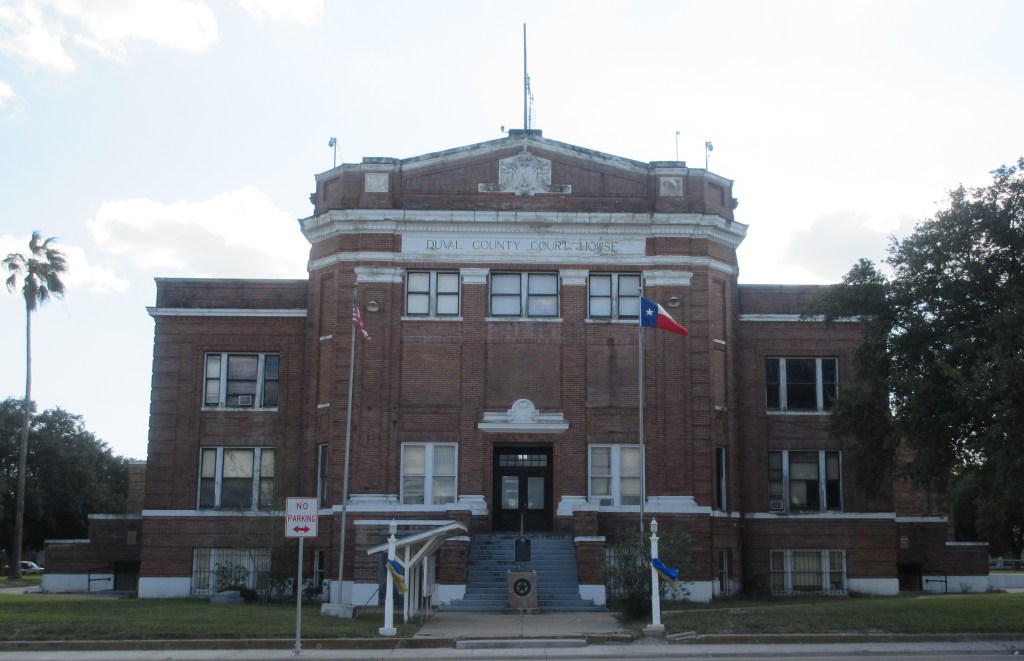
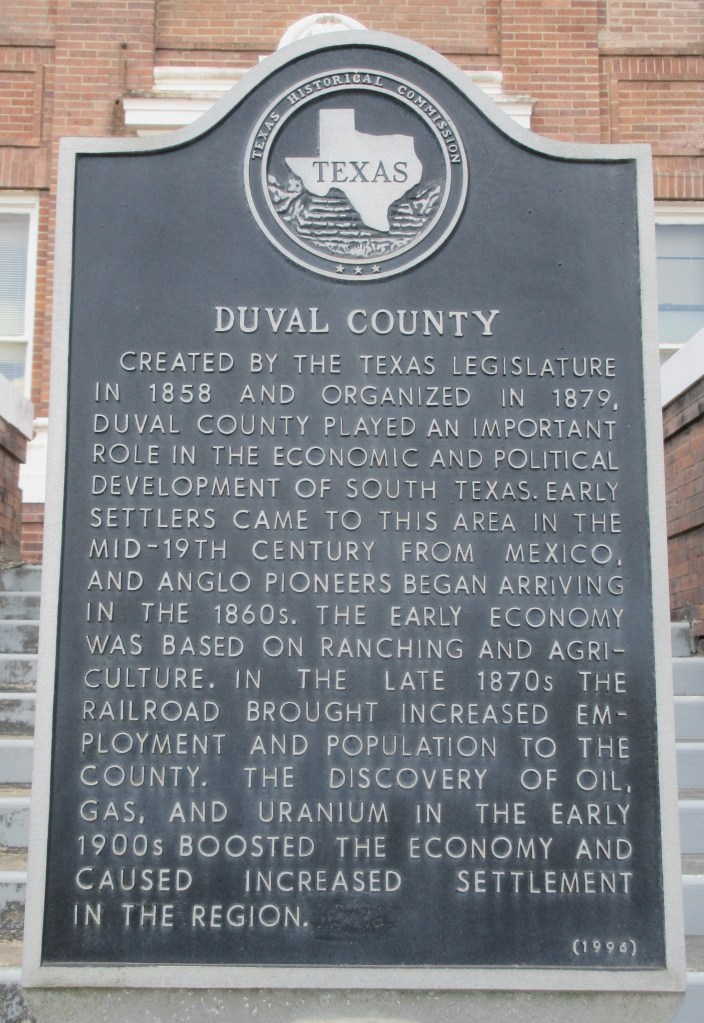
From Clegg, the navigation program directed us to U. S. Highway 281 and Highway 44 in order to get to San Diego, which is the county seat of Duval County.  The courthouse in San Diego was only three years old when the two-car caravan drove through the town.  “Duval County’s first courthouse was built shortly after county organization in the late 1870s.  It burned down on August 11, 1914. It was replaced by the current Classical Revival style red brick courthouse which was built in 1916.”1

The Bevers family stayed overnight in San Diego, Texas.  We didn’t find a motel there so we drove to Alice for the night, arriving there about 2:45 PM.

Duval County Courthouse, San Diego, Texas (Photograph by MRW November 6, 2019)
This 1909 Building is now the Duval County Public Library. (Photograph by MRW November 6, 2019)
San Diego, Texas (Photograph by MRW November 6, 2019)

Notes:

  1. Terry Jeanson, “Photographer’s note,” Duval County Courthouse, http://www.texasescapes.com/SouthTexasTowns/SanDiegoTexas/Duval-County-Courthouse-San-Diego-Texas.htm

Day Twenty-Four: Floresville to Sinton, Texas

November 5, 2019

Retracing Lena Huppler Bevers’ Travel Log

Wed. Nov. 5.

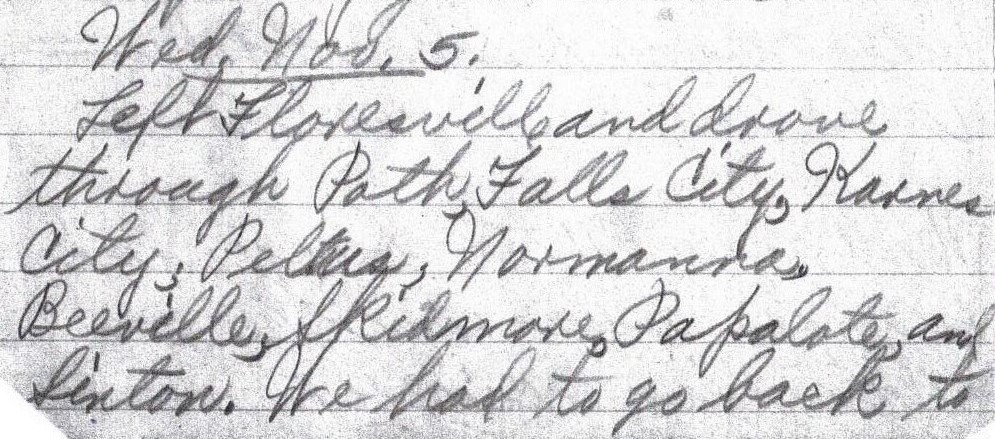
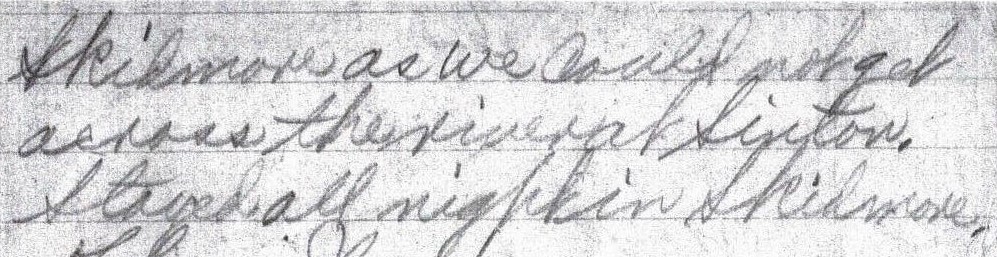
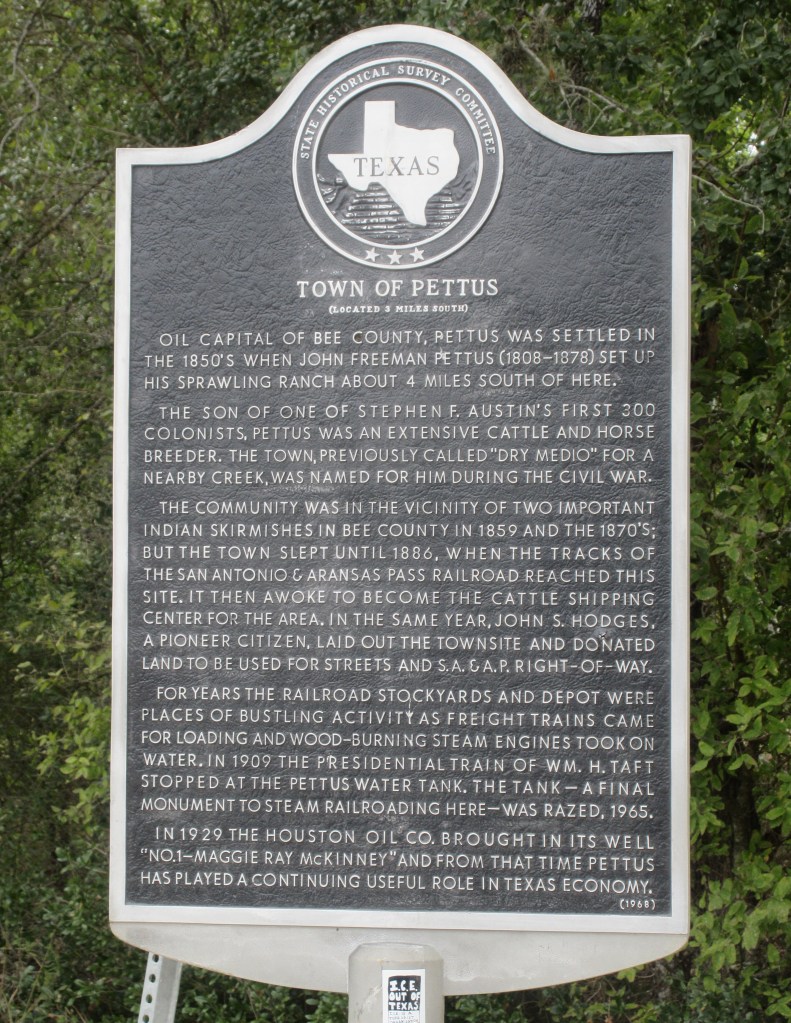
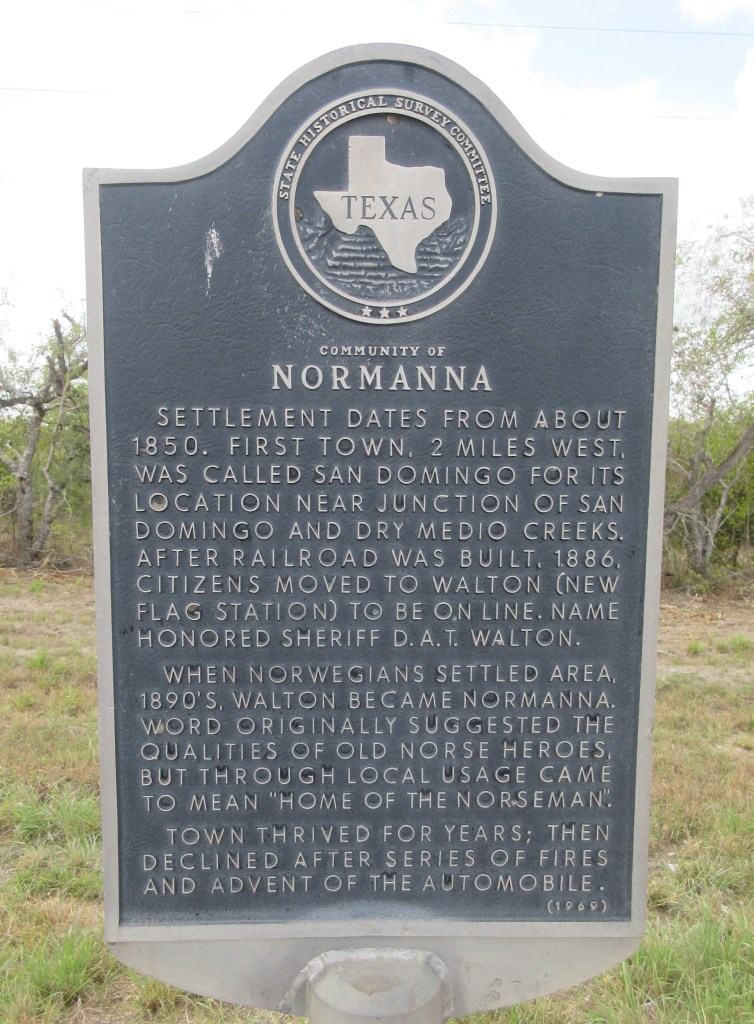
Left Floresville and drove through Poth, Falls City, Karnes City, Peltus, Normanna, Beeville, Skidmore, Papalote, and Sinton.  We had to go back to Skidmore as we could not get across the river at Sinton.  Stayed all night in Skidmore. – Lena Bevers

On November 5, 1919 Herbert Bevers and Mr. McElhany drove the most miles on that day than on any other day of the 27-day trip.  They drove about 112 miles, driving through four counties: Wilson, Karnes, Bee and San Patricio.  They also drove through four county seats: Floresville, Karnes City, Beeville and Sinton.  Between these county seats were very small communities, some of which are no longer in existence.  According to an article written in 1922 in The Parsons Daily Sun, the towns that Lena listed in her travel log were on a branch of the King of Trails Highway.1

My mother and I started our tour at 11:00 AM in Floresville, Texas.  We had ten stops on our itinerary for the day.  All of the towns were along U. S. Highway 181.  Of the ten places, we were able to find something to photograph in seven of them.  Pettus, Skidmore and Papalote did not have anything historical.

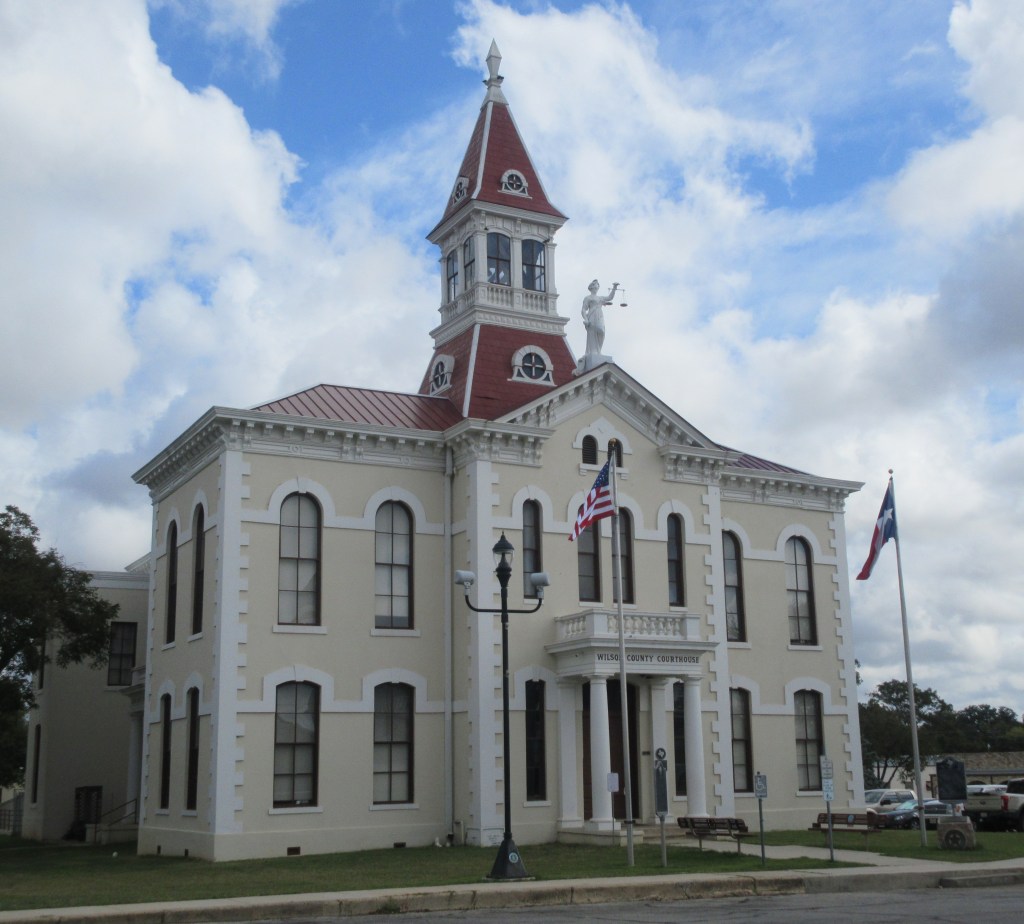
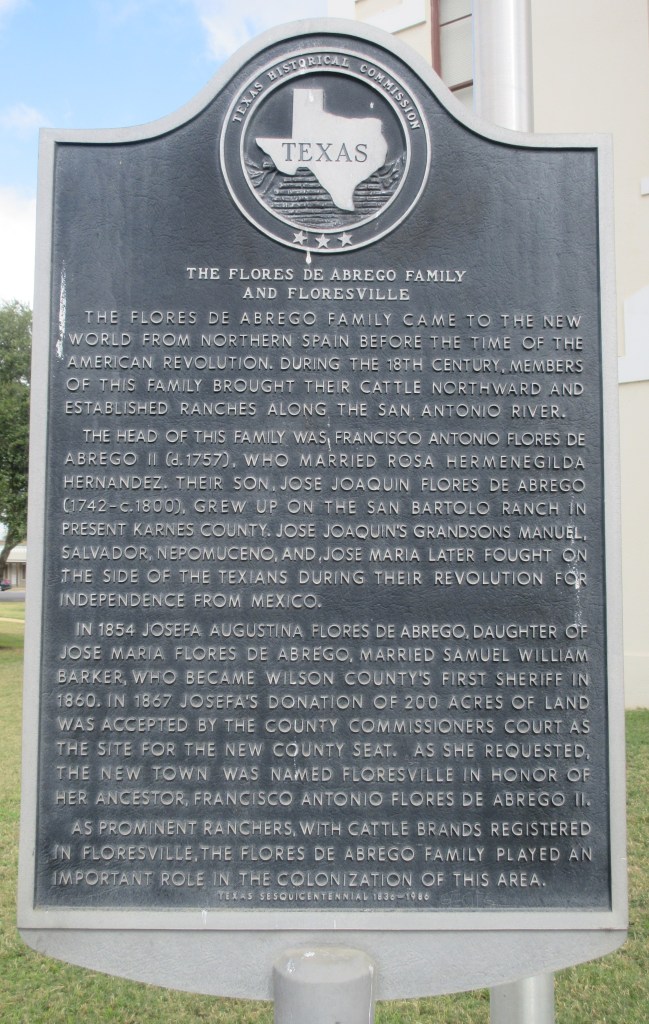
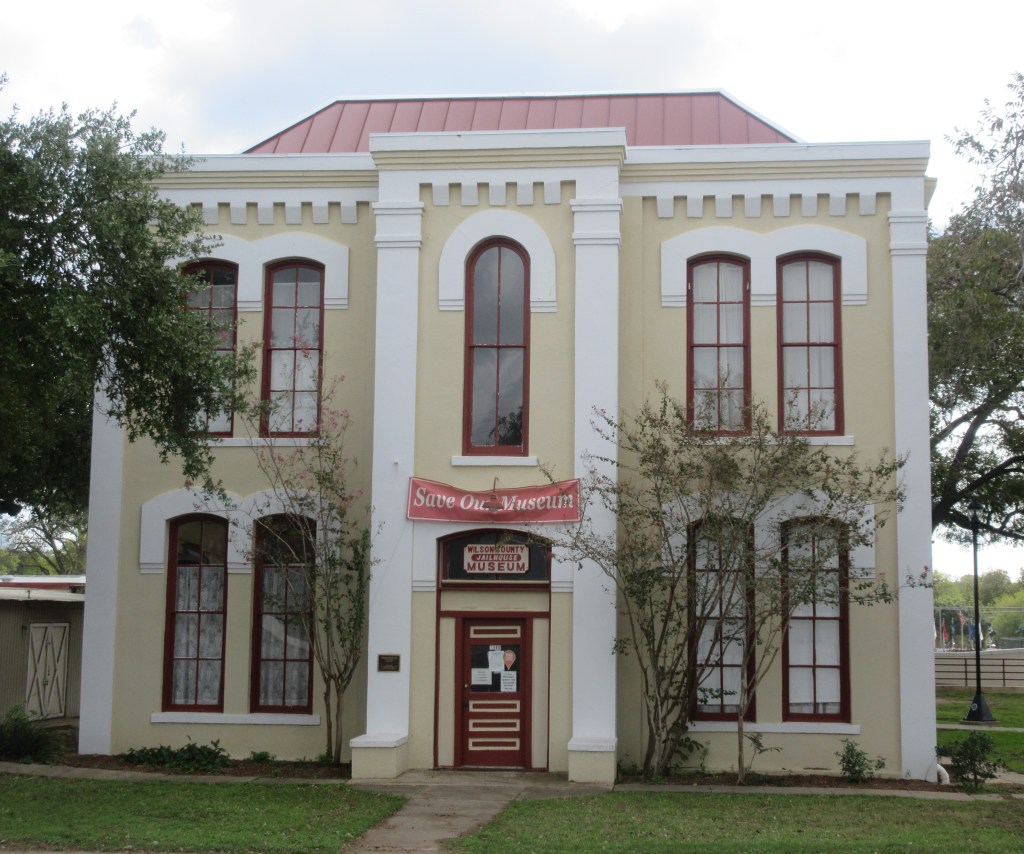
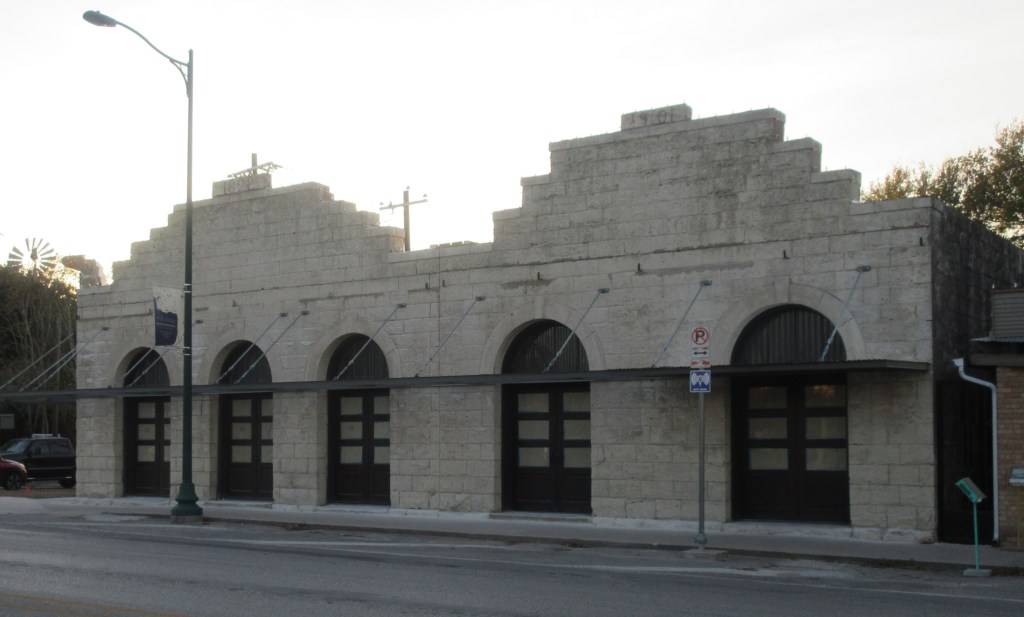
Wilson County Courthouse, Floresville, Texas (Photograph by MRW November 5, 2019)
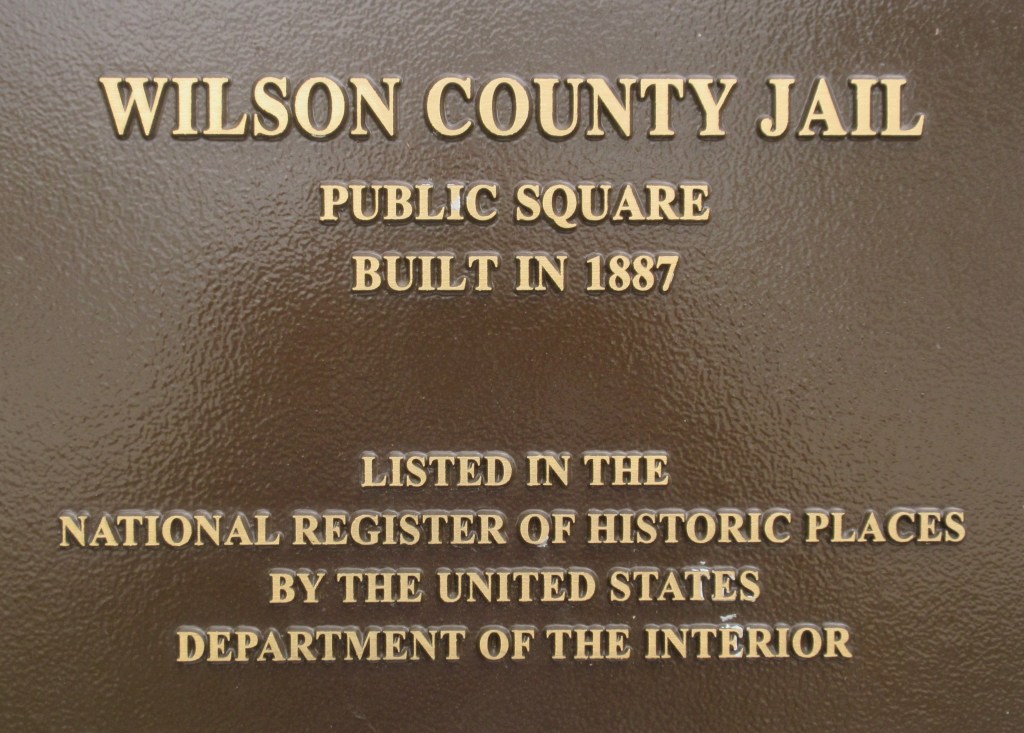
(Photograph by MRW November 5, 2019)
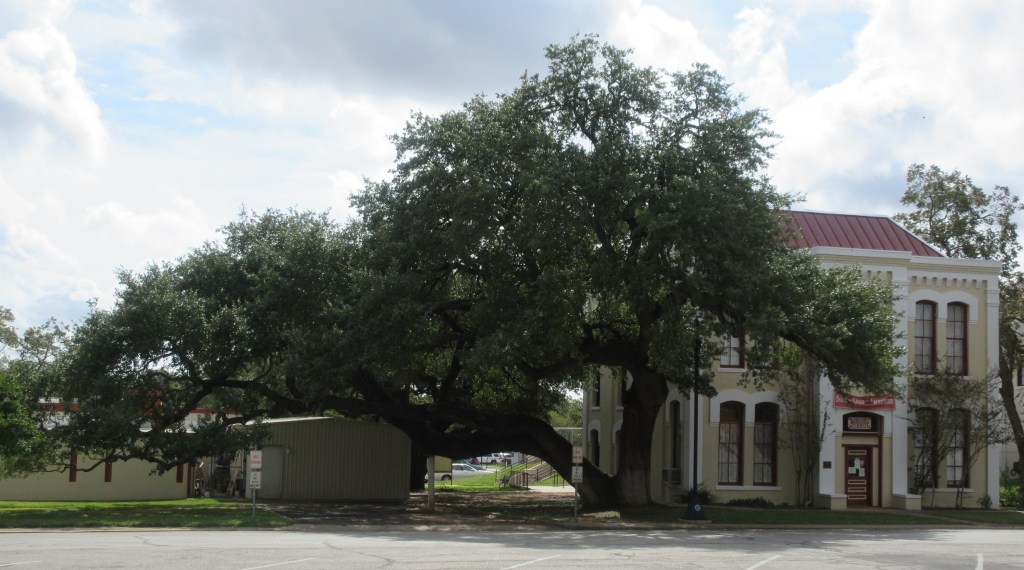
This tree beside the historic jail in Floresville looks like it could have been standing there when Herbert Bevers drove through the town with his family. Note that the left trunk/branch is supported by a white concrete post near the shed. (Photograph by MRW November 5, 2019)
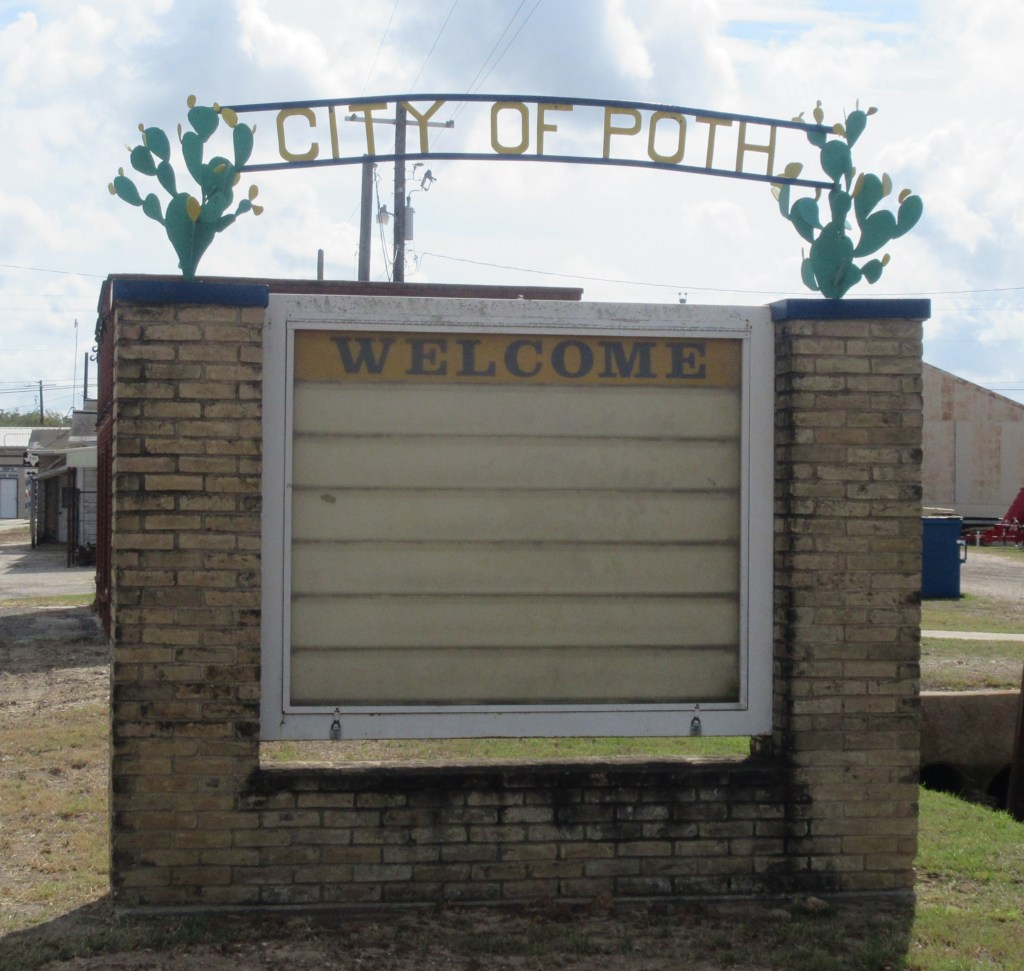
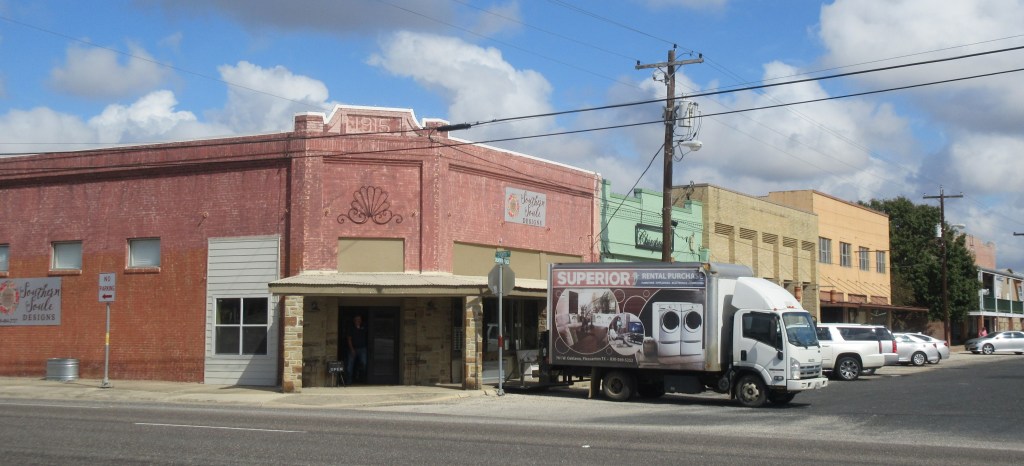
The red corner building is dated 1915, Poth, Texas (Photograph by MRW November 5, 2019)
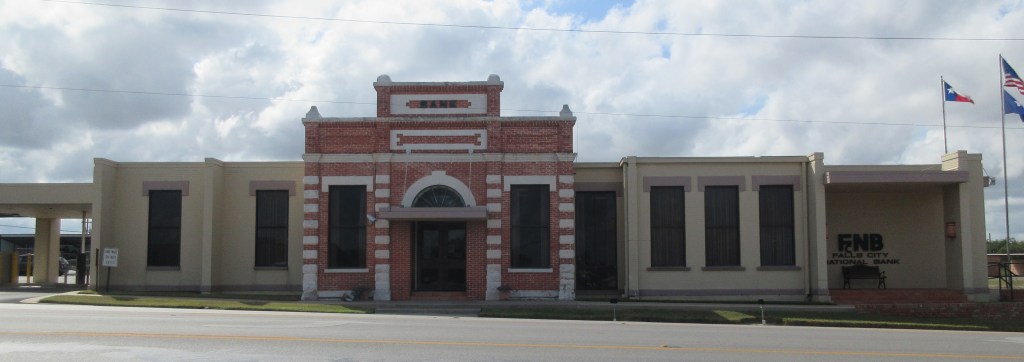
Falls City National Bank has added wings to the original bank building. (Photograph by MRW November 5, 2019)
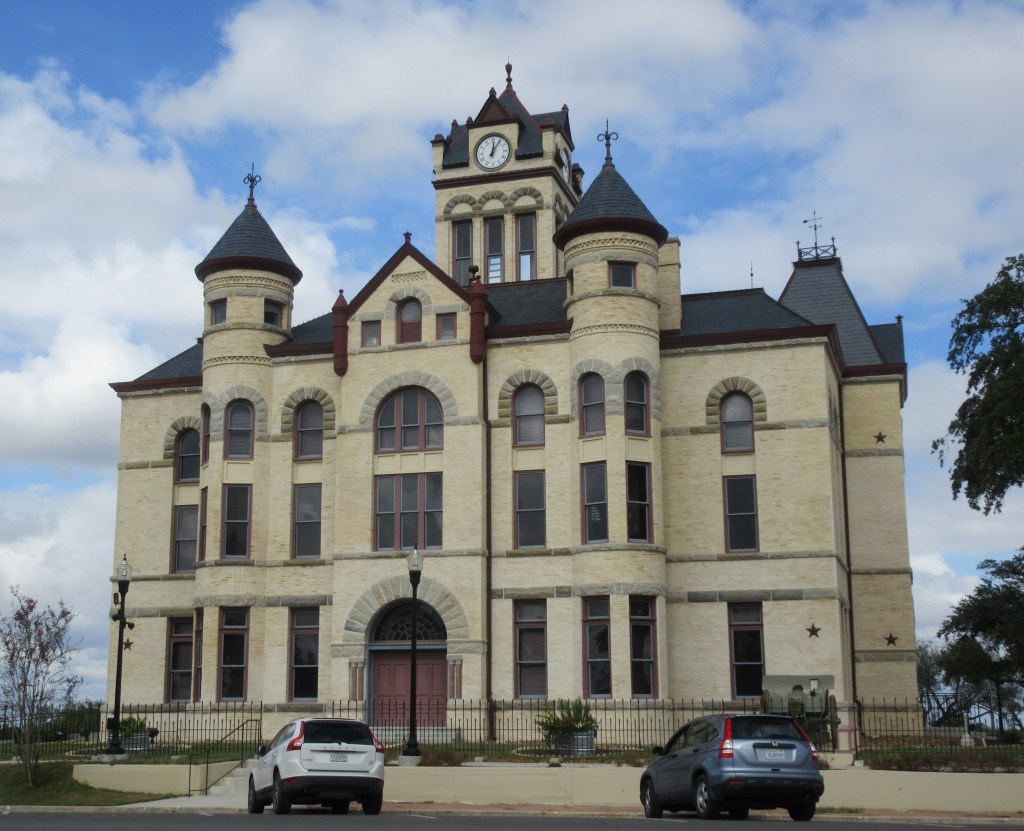
Karnes County Courthouse was completed in 1895, Karnes City, Texas (Photograph by MRW November 5, 2019)
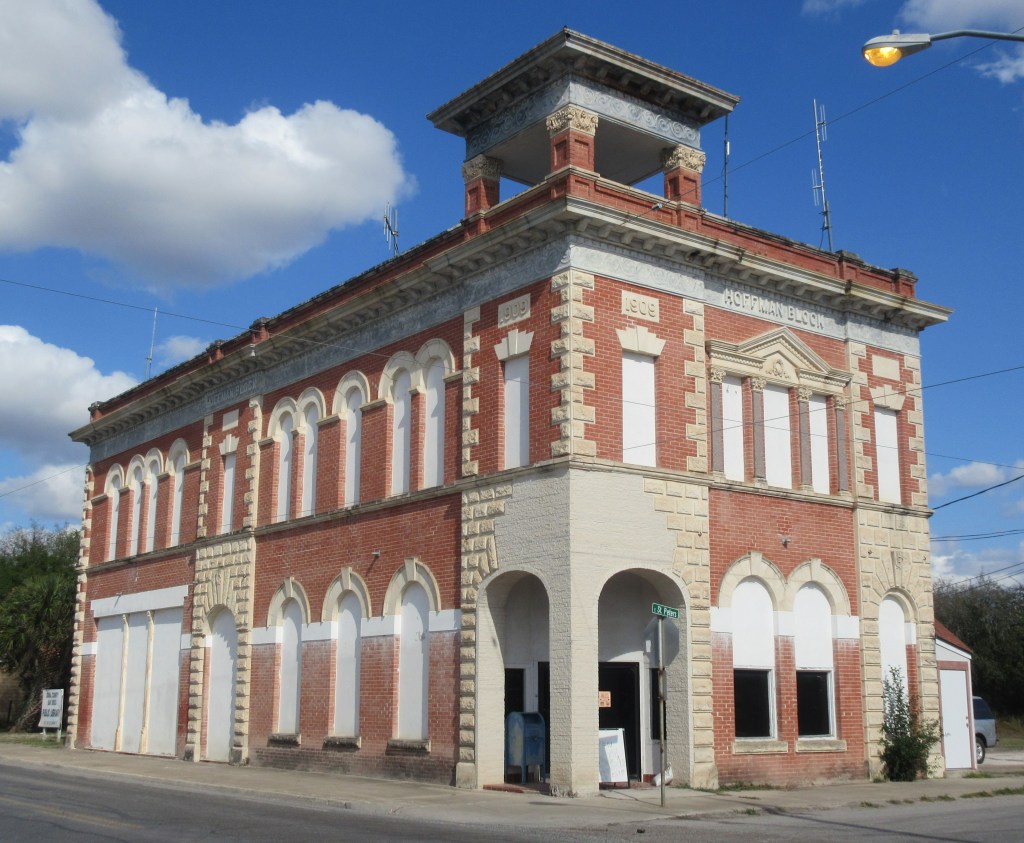
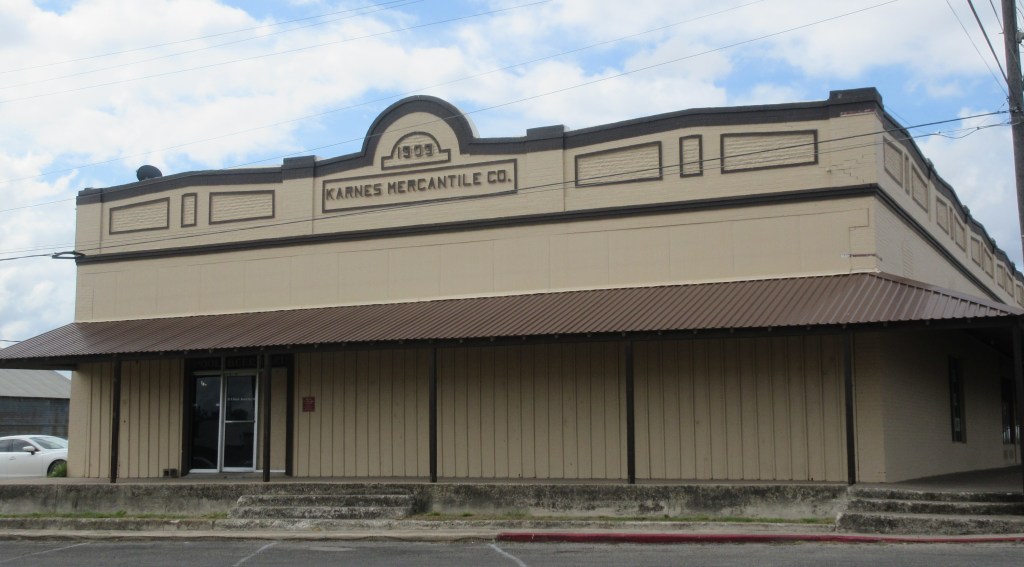
This building is dated 1909, Karnes City, Texas (Photograph by MRW November 5, 2019)
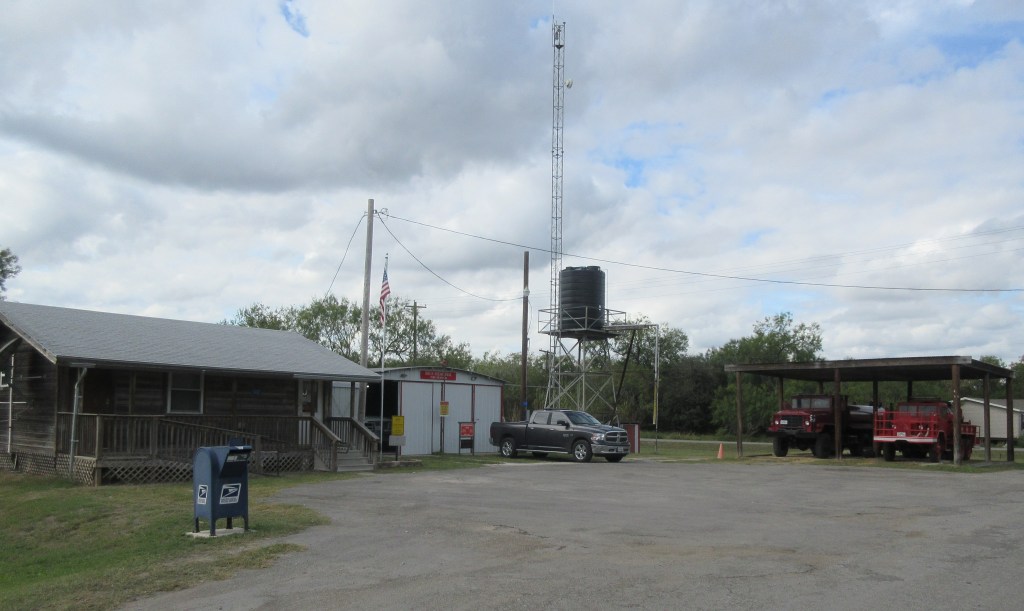
We could not find any historic buildings in Normanna, but the above are the government buildings of the town: the post office on the left, the fire station in the middle with fire trucks on the right. (Photograph by MRW November 5, 2019)

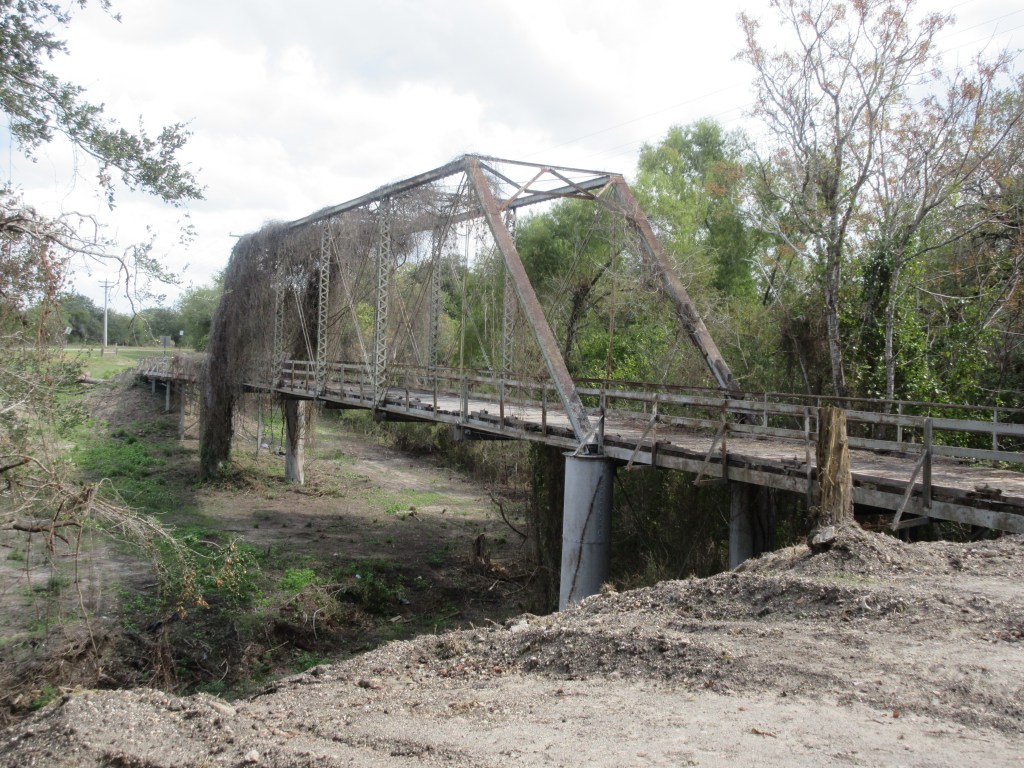
Medio Creek Bridge, a through truss bridge, is about one mile west of Normanna.  It is on the National Register of Historic Places.  “The bridge arrived in kit form and was assembled by the Austin Brothers Bridge Company.”2 It was “built in 1897 by the New Jersey Iron and Steel Company, this bridge has served as one of the major crossings on the road from Beeville to San Antonio. … The bridge remained in service for vehicular traffic until 1987.’”3

Medio Creek Bridge is probably a bridge the Bevers family used, near Normanna, Texas (Photograph by MRW November 5, 2019)
The roadside park where we had our picnic lunch, along U. S. Highway 181 north of Beeville. (Photograph by MRW November 5, 2019)

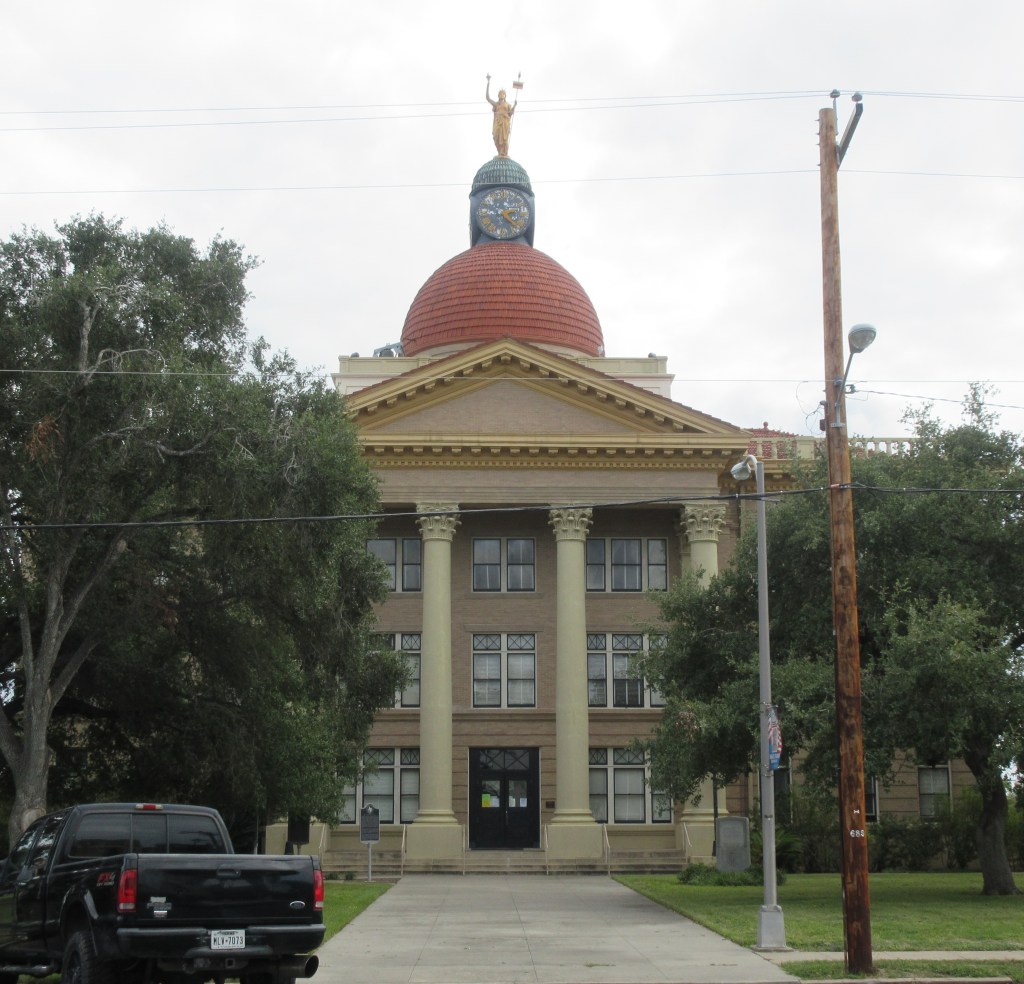
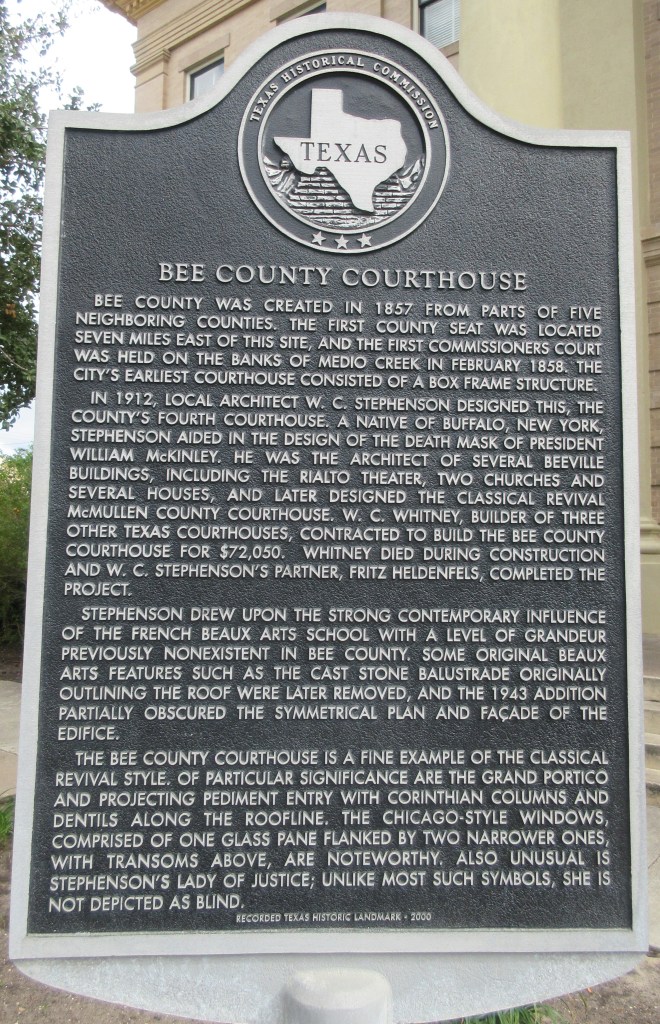
When the Bevers family arrived in Beeville, the streets were not paved.  They were paved in 1921.4  “Beeville’s 1912 Courthouse has most of the accessories you look for in a courthouse – A clock, dome, statue of the Goddess of Justice and large Corinthian columns.”5

Bee County Courthouse, Beeville, Texas (Photograph by MRW November 5, 2019)
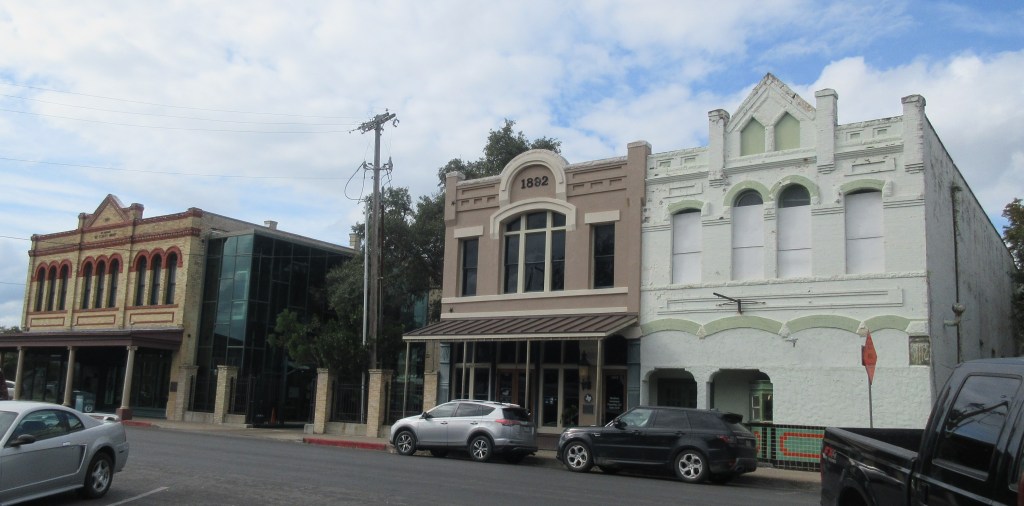
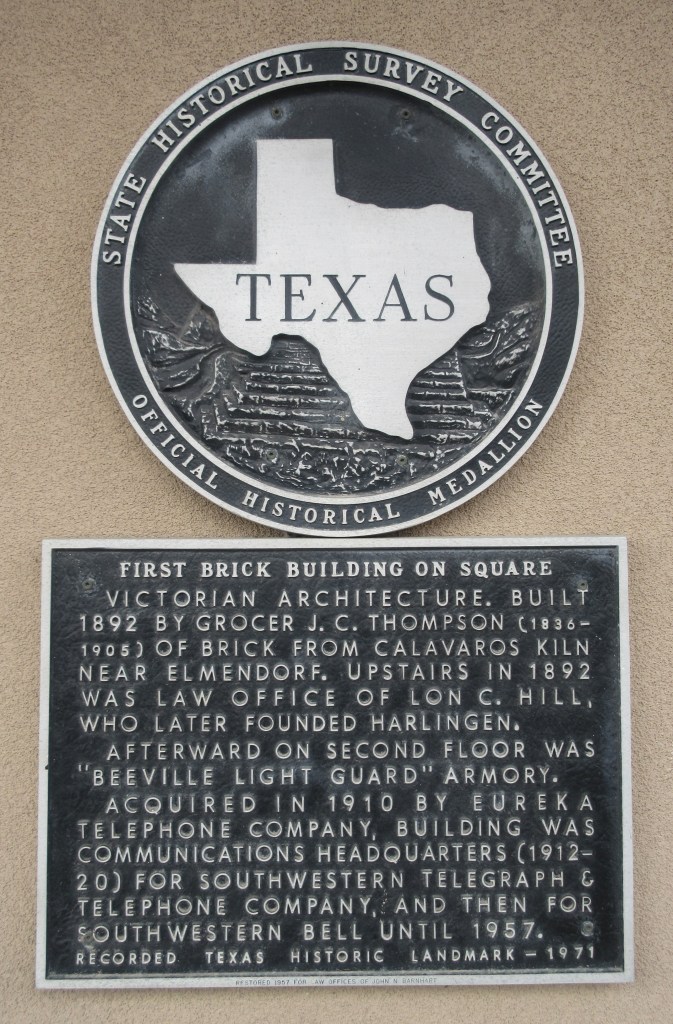
The center building is dated 1892, Beeville, Texas (Photograph by MRW November 5, 2019)
On the corner of courthouse square, Beeville, Texas (Photograph by MRW November 5, 2019)
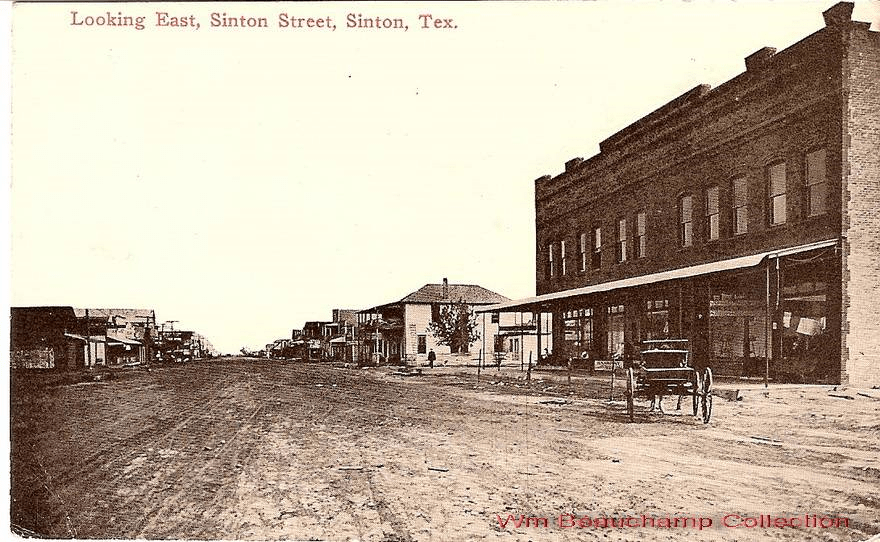
A 1912 postcard: Looking East, Sinton Street, Sinton, Texas (Courtesy of TXGenWeb Project6)
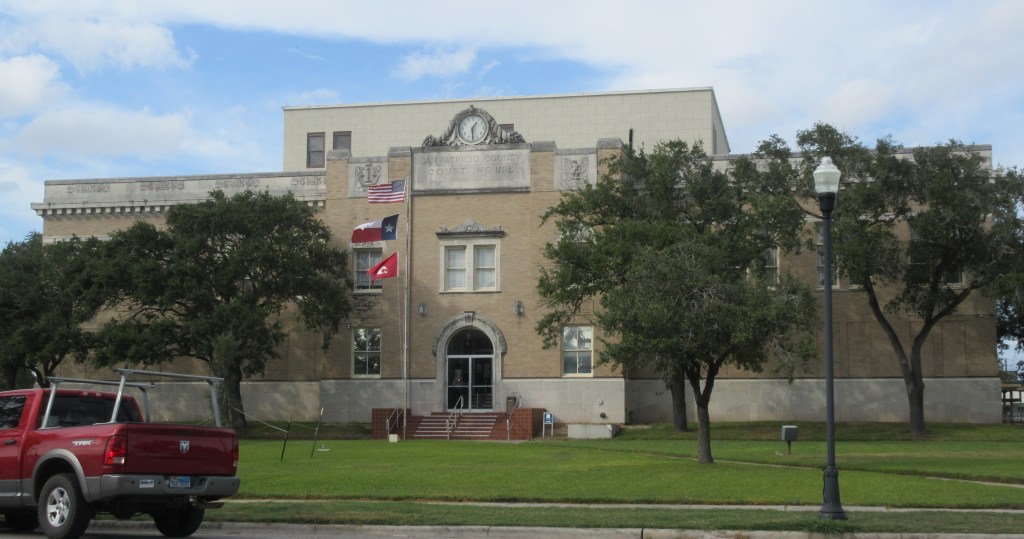
The 1928 San Patricio County Courthouse, Sinton, Texas (Photograph by MRW November 5, 2019)
This corner building is dated 1909, Sinton, Texas (Photograph by MRW November 5, 2019)

When the two automobiles arrived in Sinton, Lena wrote in her travel log that they could not get across the river, and her daughter Florence wrote that “it was in the Gulf storm territory so every thing was torn up.”7  On September 14, 1919 there had been a devastating hurricane.

“San Patricio County as a whole sustained considerable damage during the 1919 storm.  Practically all windmills in the county were either blown to the ground or dismantled.  Power and communication lines were severely damaged.  Many buildings were either damaged or destroyed.  The county received 14 inches of rain in 12 hours and flooding was extensive.  The greatest damage sustained in the county was that of the complete destruction of all of the cotton crop that had not yet been picked.”8

Possibly Herbert and Mr. McElhany were planning to travel alongside the railways which ran along the Gulf Coast through Kingsville and south to Brownsville and the Mexican border.  This route would have taken them through the town of Odem.  The hurricane of 1919 washed out the S. A. U. and G. railroad west of Odem.9  Due to the inability to continue south from Sinton, the travelers returned to Skidmore and Florence wrote that they stayed all night in their cars.10

When my mother and I were looking online for a motel in Skidmore, we weren’t able to find one.  Therefore, we decided to make our reservation in Sinton instead.  We arrived in Sinton about 2:45 PM and went to a public library to look for information about the hurricane of 1919.  Then we made it to the motel about 4:00 PM.

Notes:

  1. “Parsons National Headquarters, King of Trails Highway Ass’n,” The Parsons Daily Sun, February 18, 1922: 4, http://bikeallencounty.org/news/king-trails-highway/.
  2. Texas Escapes, Medio Creek Bridge, http://www.texasescapes.com/TexasBridges/Bee-County-Normanna-Texas-Medio-Creek-Bridge.htm.
  3. Texas Historic Landmark, Medio Creek Bridge (1987), http://www.texasescapes.com/TexasBridges/Bee-County-Normanna-Texas-Medio-Creek-Bridge.htm.
  4. Grace Bauer, “Beeville, Texas”, Handbook of Texas Online, http://www.tshaonline.org/handbook/online/articles/heb04.
  5. Texas Escapes, Bee County Courthouse, http://www.texasescapes.com/SouthTexasTowns/BeevilleTx/Bee-County-Courthouse-Beeville-Texas.htm.
  6. Looking east, Sinton Street, Sinton, Texas (1912), http://sites.rootsweb.com/~txpstcrd/Towns/Sinton/SintonStScene1912.jpg.
  7. B. Winkelmann, Our Trip to Texas [Transcription of Our Trip to Texas by Florence Bevers, 1919] (unpublished, n. d.): 5.
  8. Keith Guthrie, The History of San Patricio County (Austin, Texas: Nortex Press, 1986): 276.
  9. David Roth, Texas Hurricane History, https://www.weather.gov/media/lch/events/txhurricanehistory.pdf.
  10. B. Winkelmann, Our Trip to Texas, 5.

Day Twenty-Three: New Braunfels to Floresville, Texas

November 4, 2019

Retracing Lena Huppler Bevers’ Travel Log

Tues. Nov. [4].

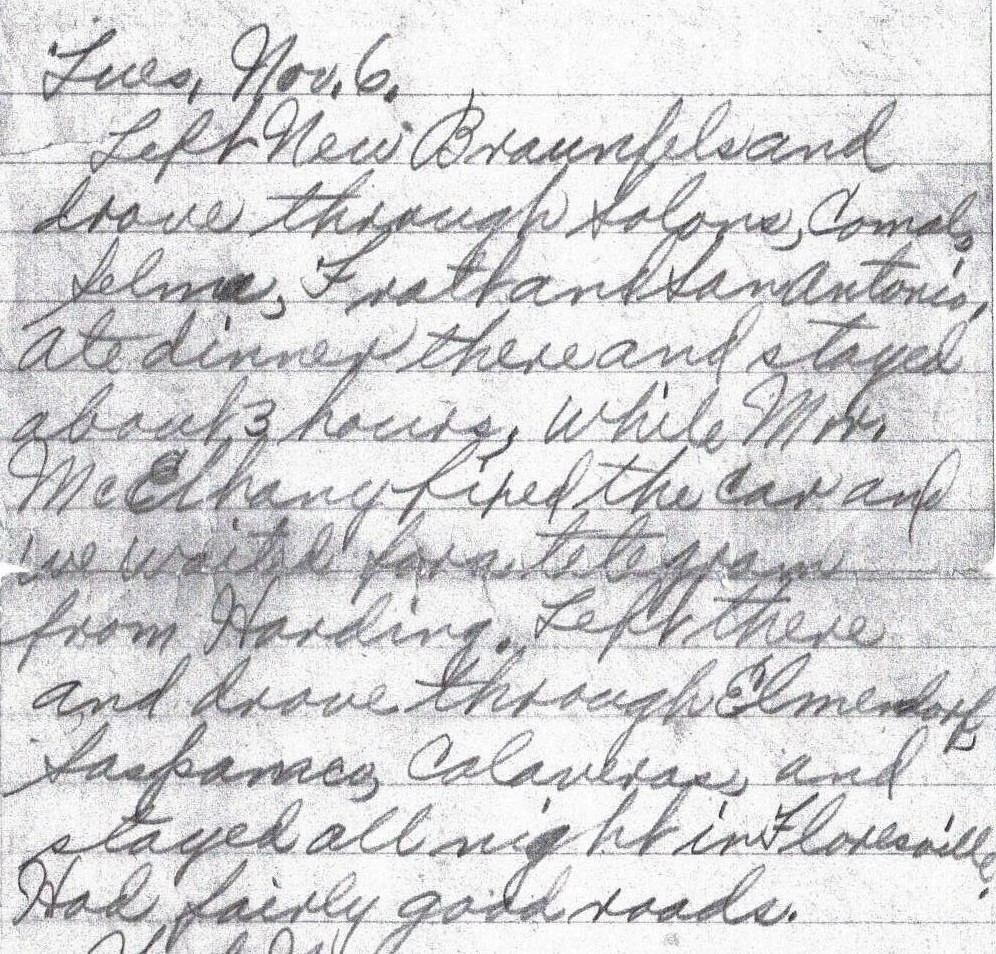
Left New Braunfels and drove through Solons, Comal, Selma, Fratt and San Antonio.  Ate dinner there and stayed about 3 hours, while Mr. McElhany fixed the car and we waited for a telegram from Harding.  Left there and drove through Elmendorf, Saspanaco, Calaveras, and stayed all night in Floresville.  Had fairly good roads. – Lena Bevers

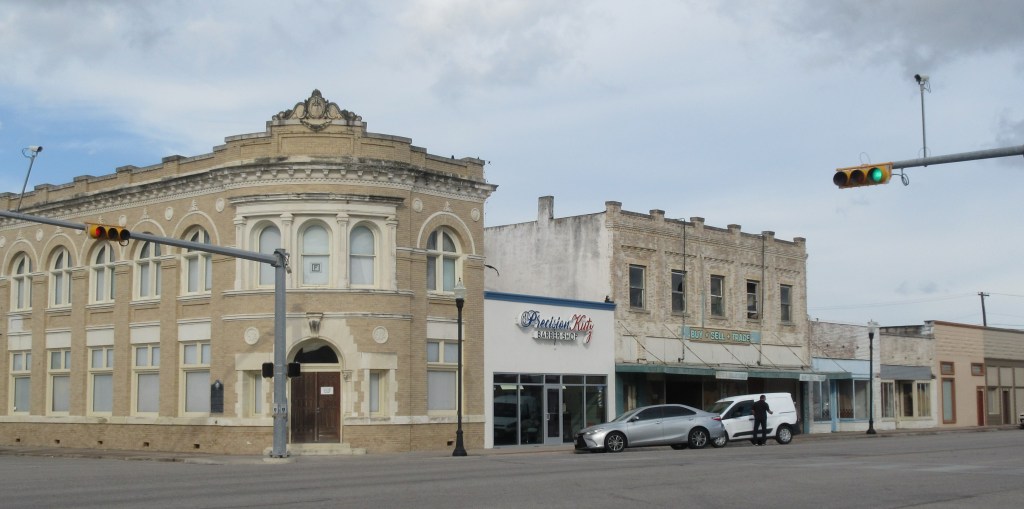
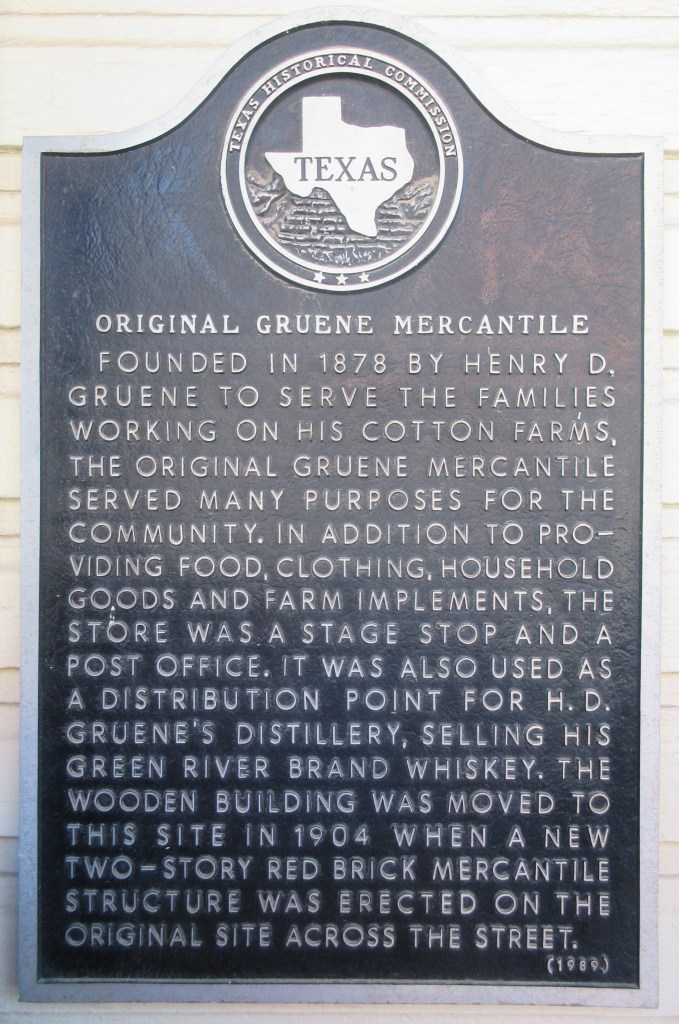
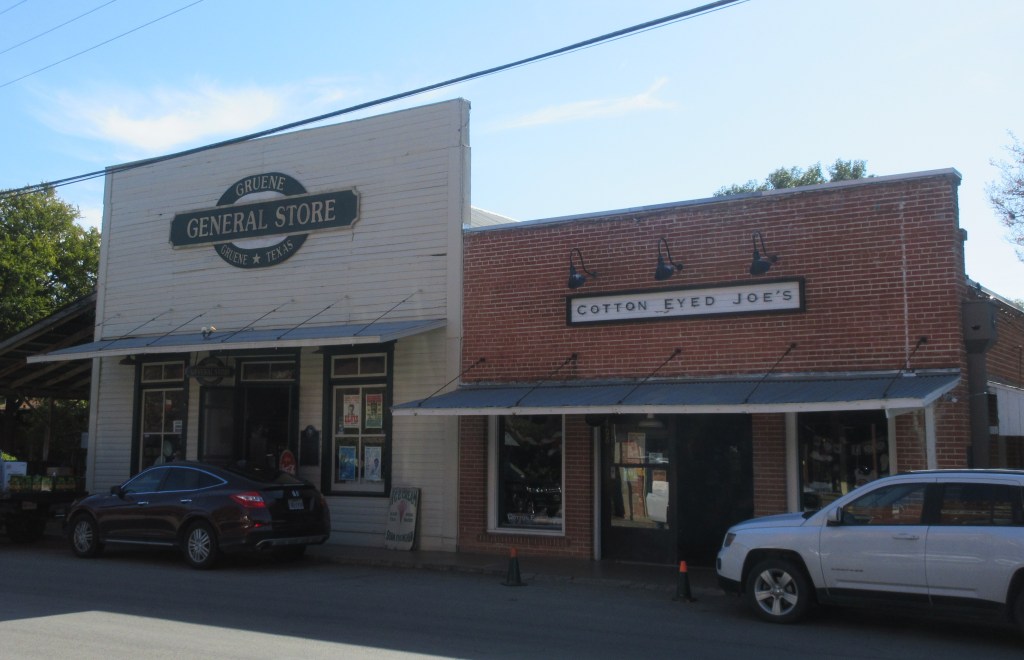
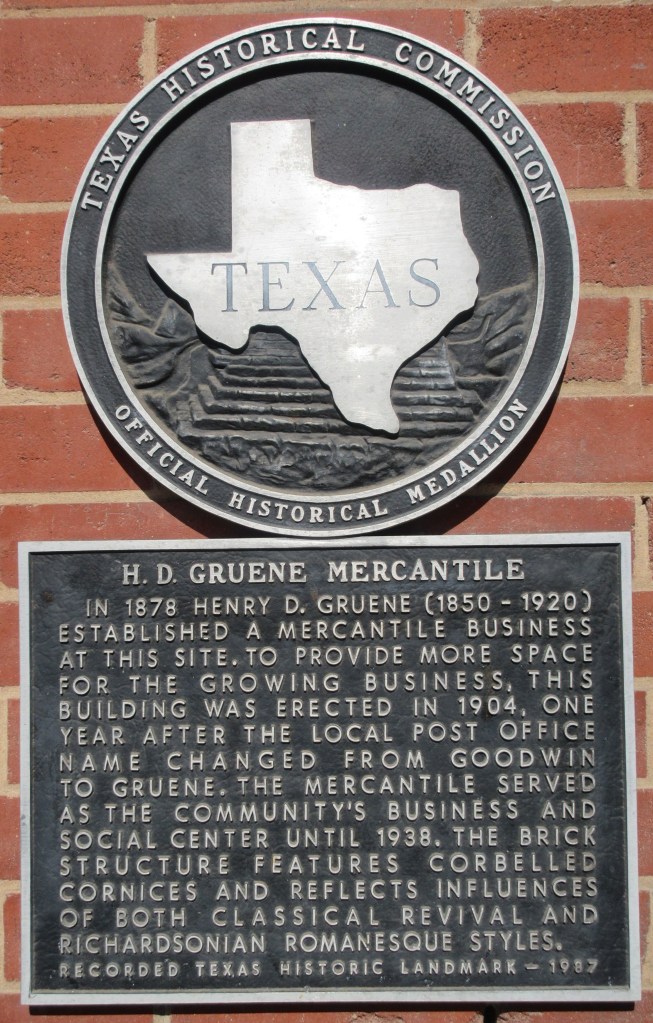
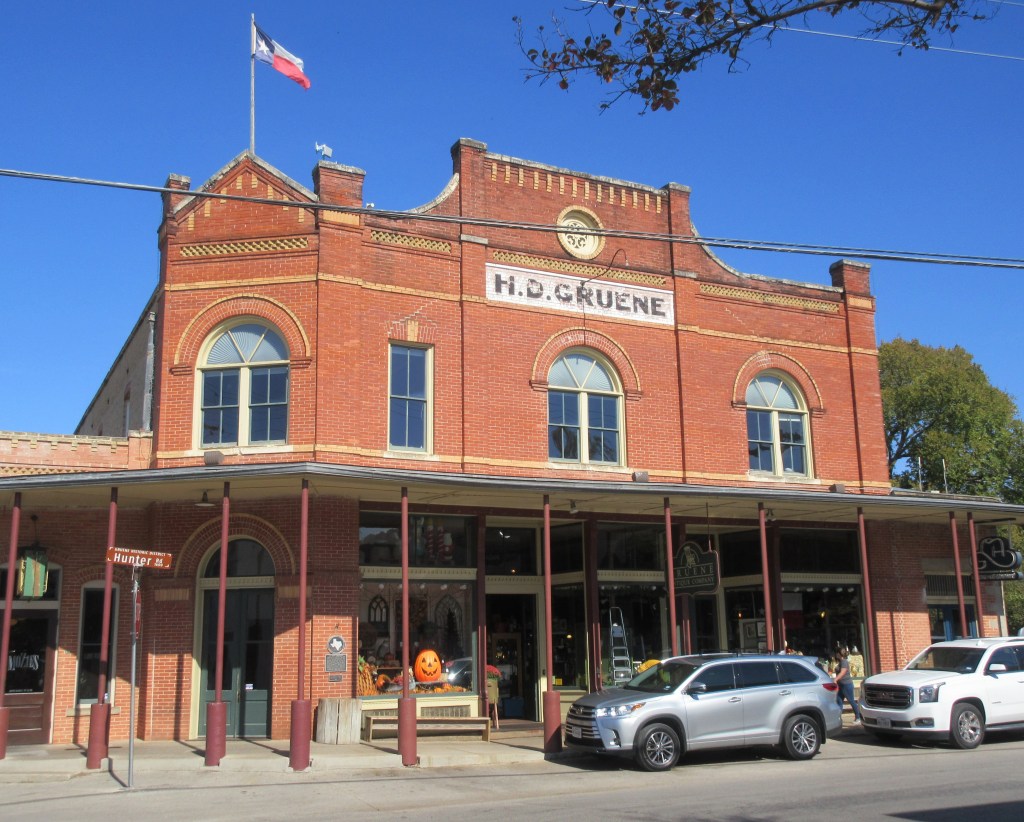
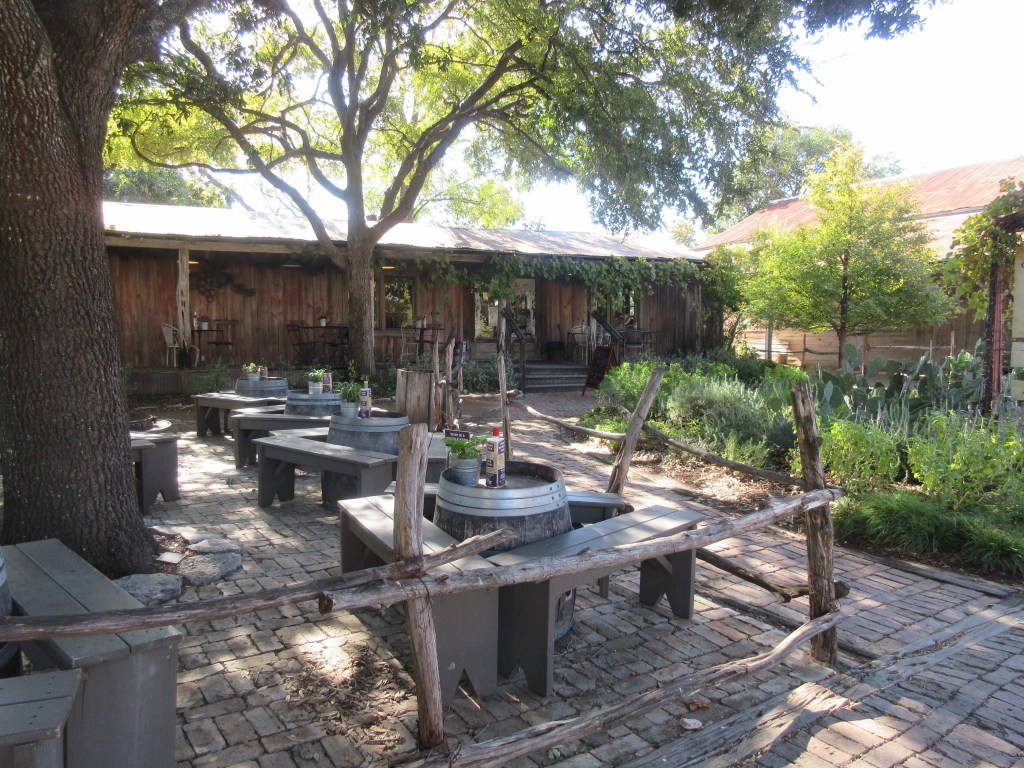
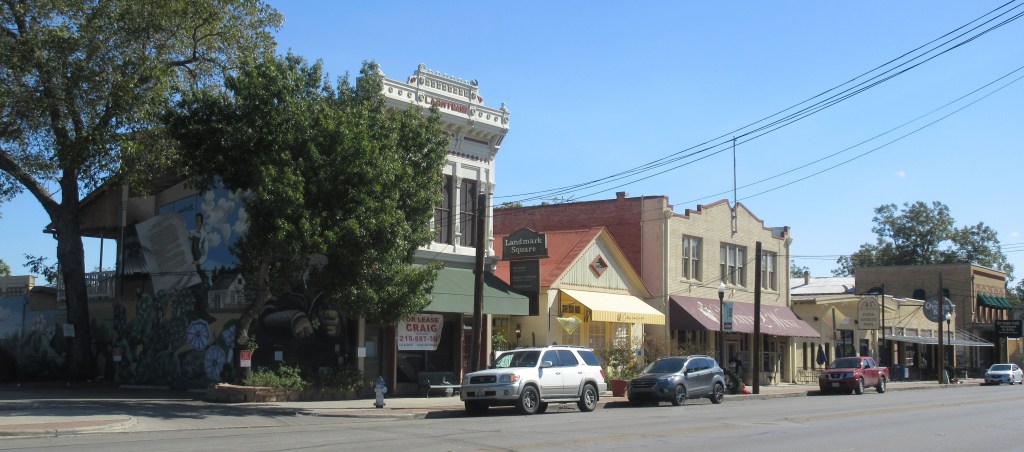
This morning my mother and I began the day by driving to Gruene, which is not far from New Braunfels.  We had not gone there yesterday because we passed by too late in the evening.  Gruene is a small community, but has a very attractive historic area.

Gruene, Texas (Photograph by MRW November 4, 2019)
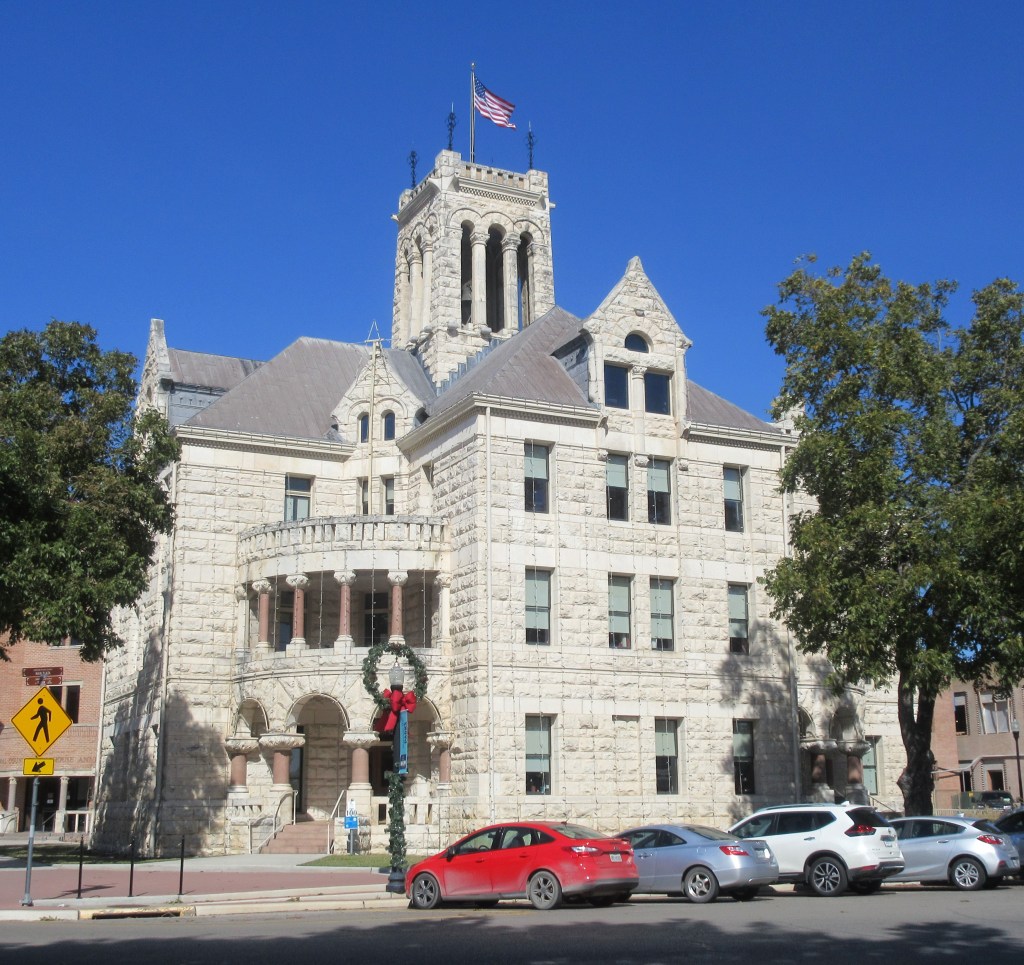
Comal County Courthouse, New Braunfels, Texas (Photograph by MRW November 4, 2019)
New Braunfels, Texas (Photograph by MRW November 4, 2019)
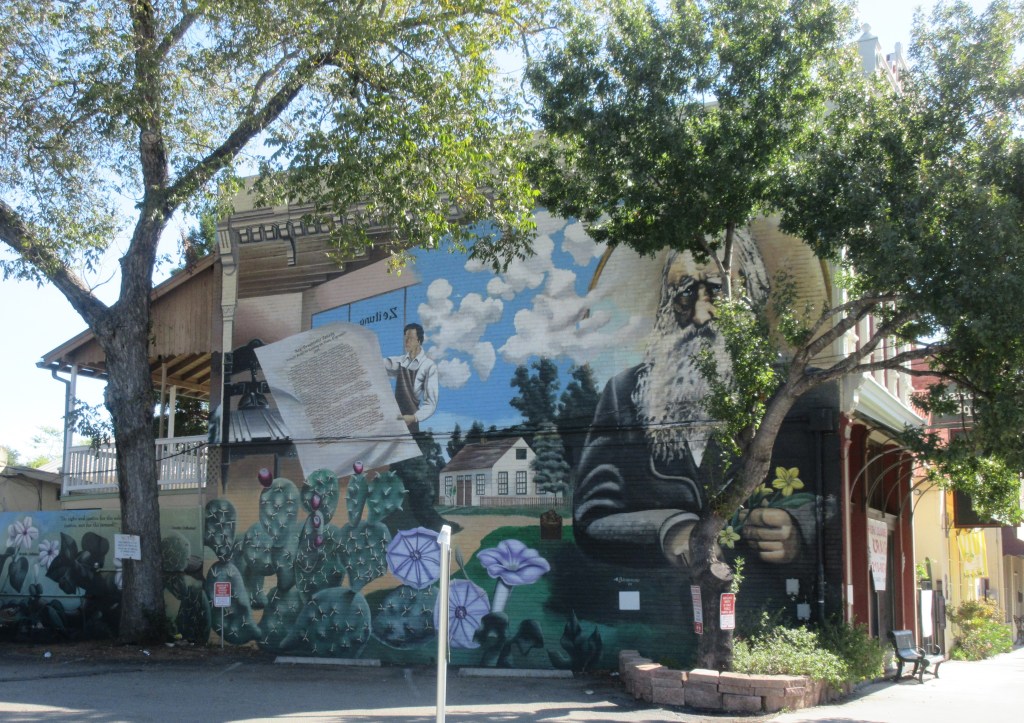
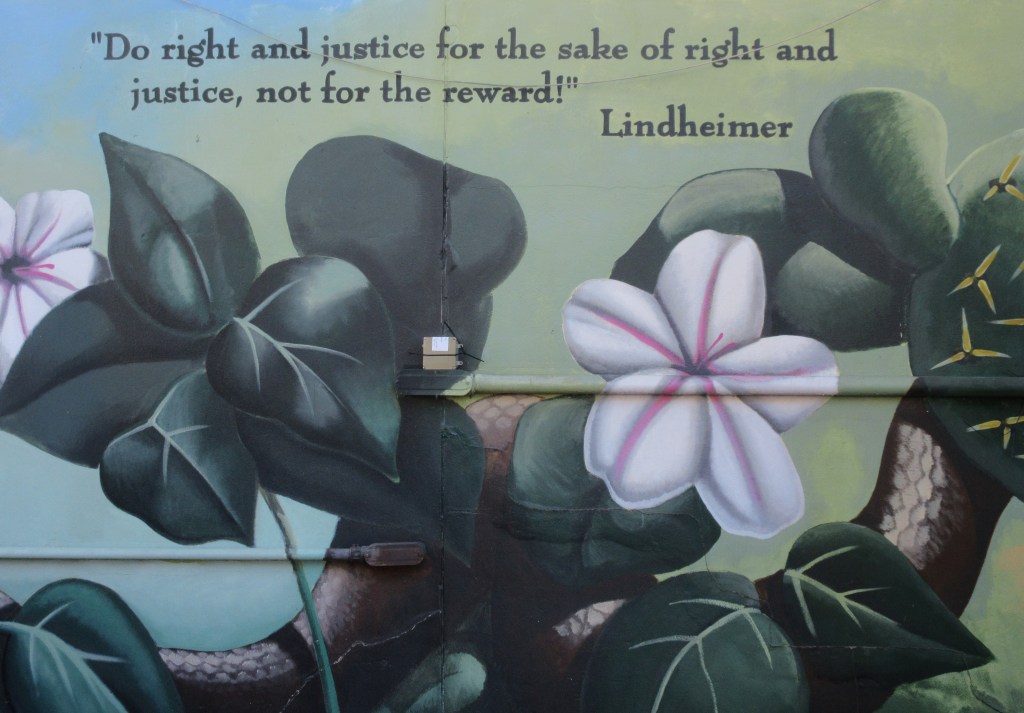
A mural on an historic building in New Braunfels, Texas (Photograph by MRW November 4, 2019)

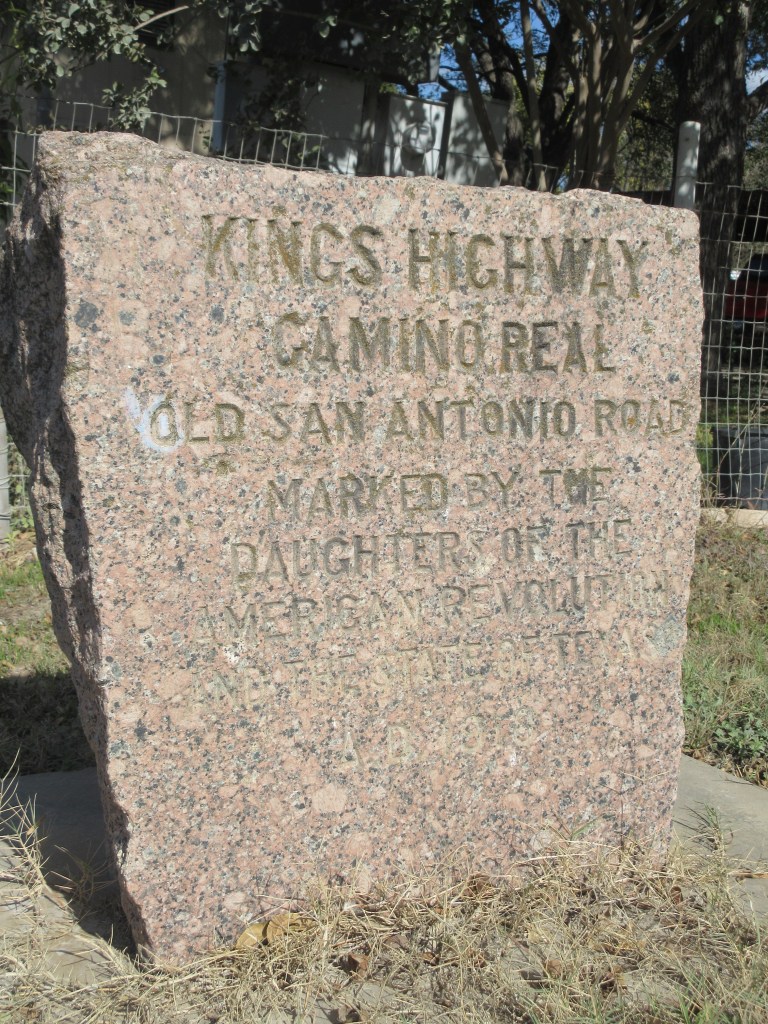
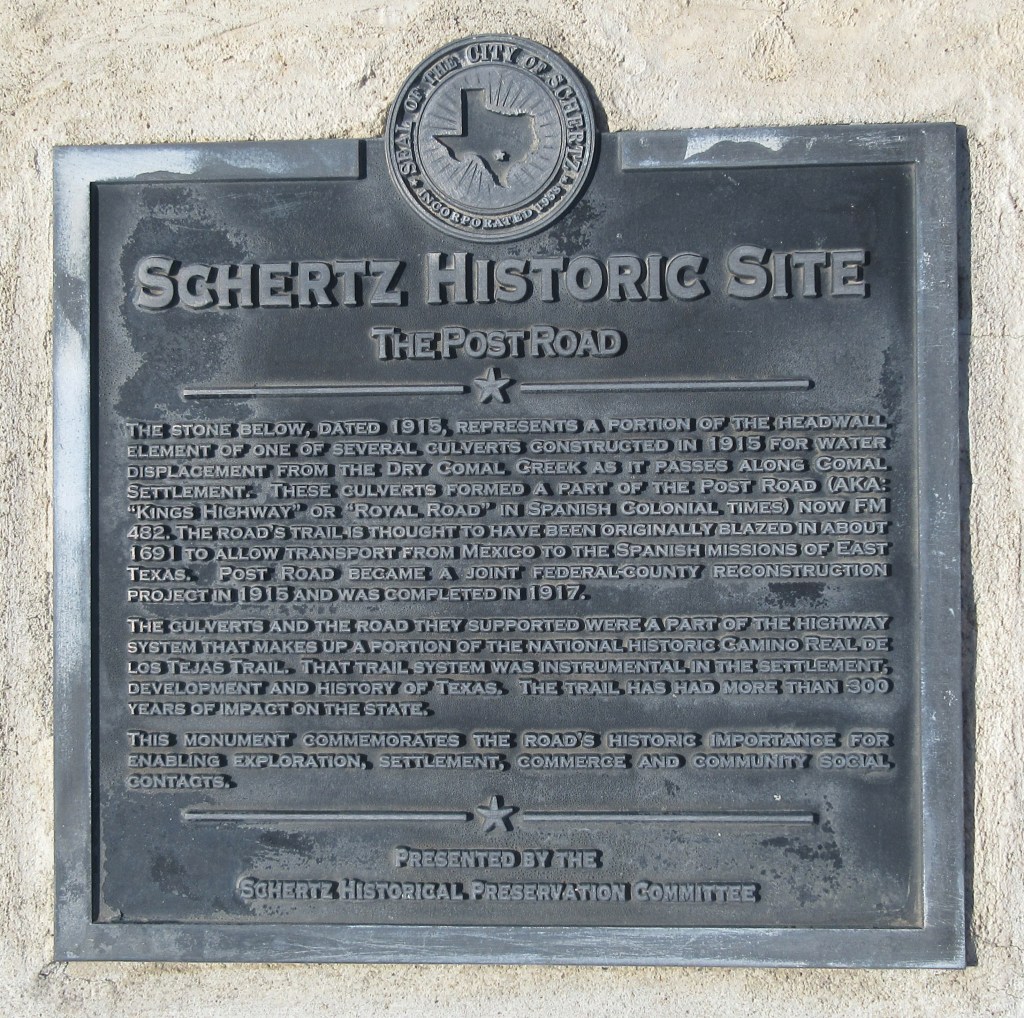
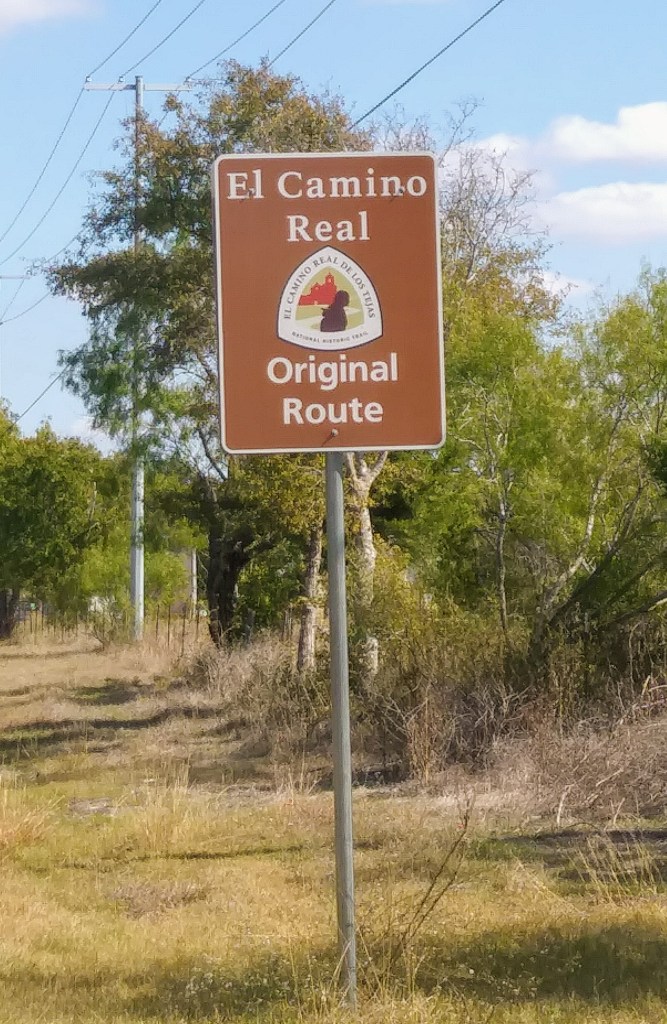
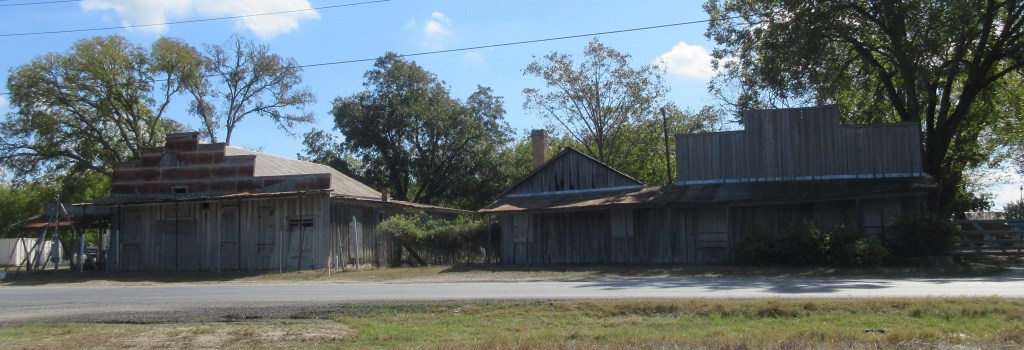
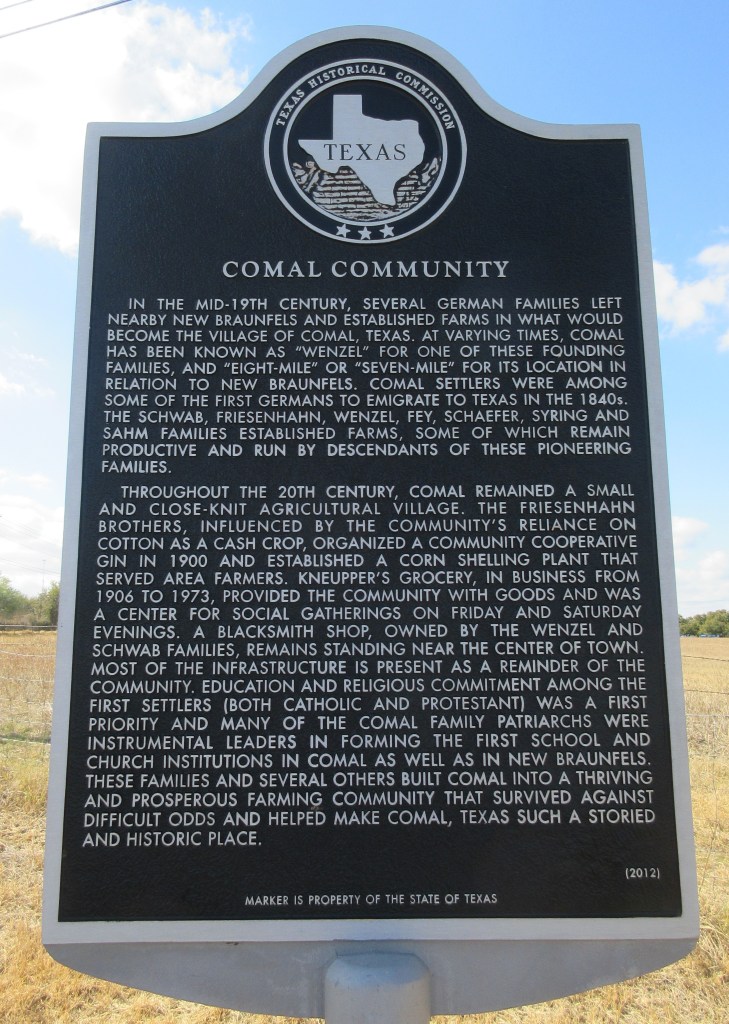
Through Solms and Comal we drove on a road that was at one time the Camino Real or King’s Highway, and we located an historical marker that was placed on the highway in 1918.  A plaque at Comal gave additional information about the road, calling it the Post Road.  Perhaps Lena and Herbert and their family were driving on this road.  Shortly after leaving Comal, we had to get on Interstate 35 to continue our drive.  Selma and Fratt are suburbs of San Antonio. 

“Kings Highway, Camino Real, Old San Antonio Road, Marked by the Daughters of the American Revolution and the State of Texas, A. D. 1918” (Photograph by MRW November 4, 2019)
Comal, Texas is nearly a ghost town. (Photograph by MRW November 4, 2019)

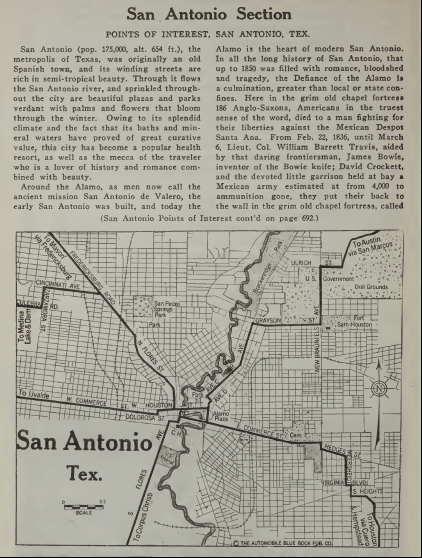
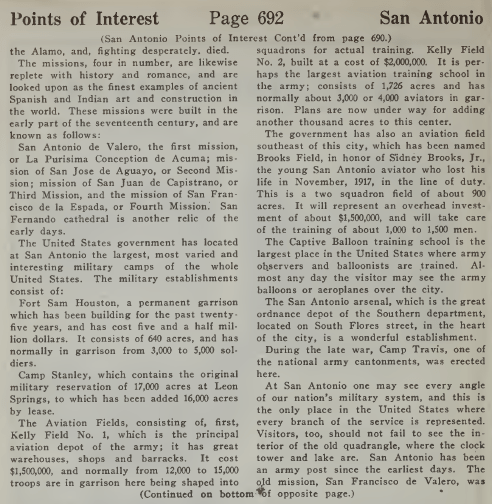
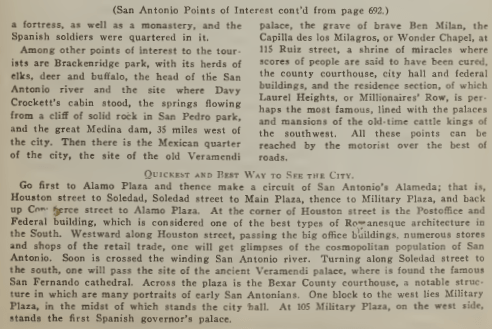
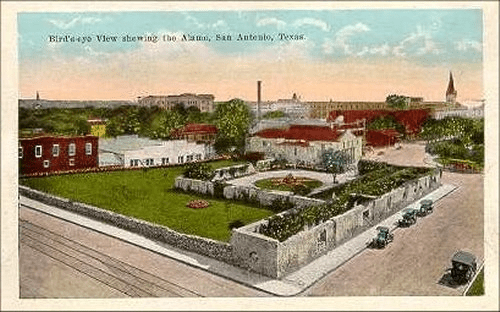
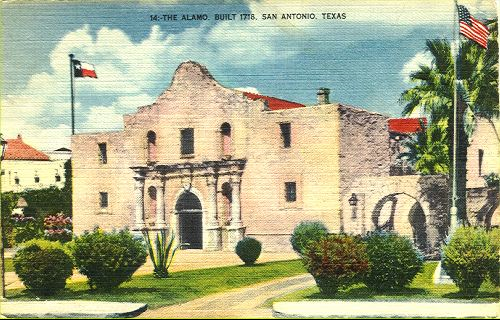
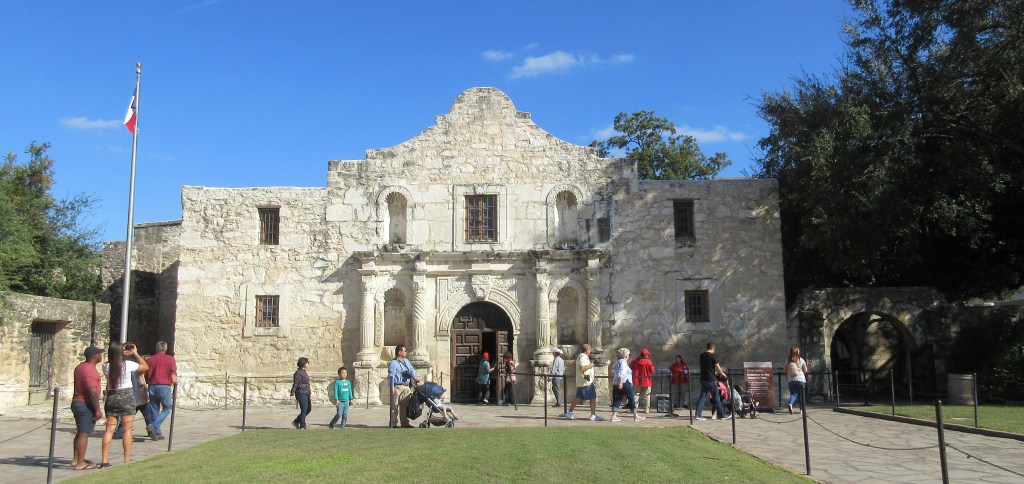
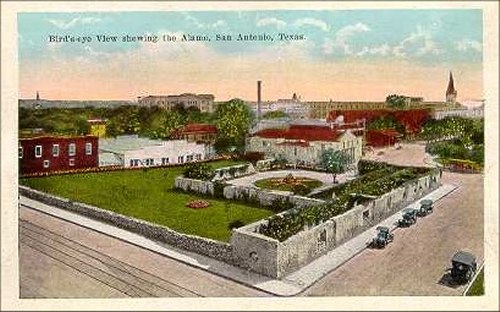
Lena wrote in her travel log that Mr. McElhany had to have his car fixed in San Antonio and they also had to wait for a telegram.  Although it is not known whether the two automobiles drove into the center of San Antonio when they were passing through, my mother and I decided to visit The Alamo before proceeding south.  In the article below about San Antonio, The Alamo is cited as the heart of the city in 1920.1 

(From The Official Automobile Blue Book 1920)
The Alamo, built 1718, San Antonio, Texas (Courtesy of TXGenWeb Project3)
The Alamo, San Antonio, Texas (Photograph by MRW November 4, 2019)

Between San Antonio and Floresville, there were three small towns.  None of them had historic areas that we could identify.

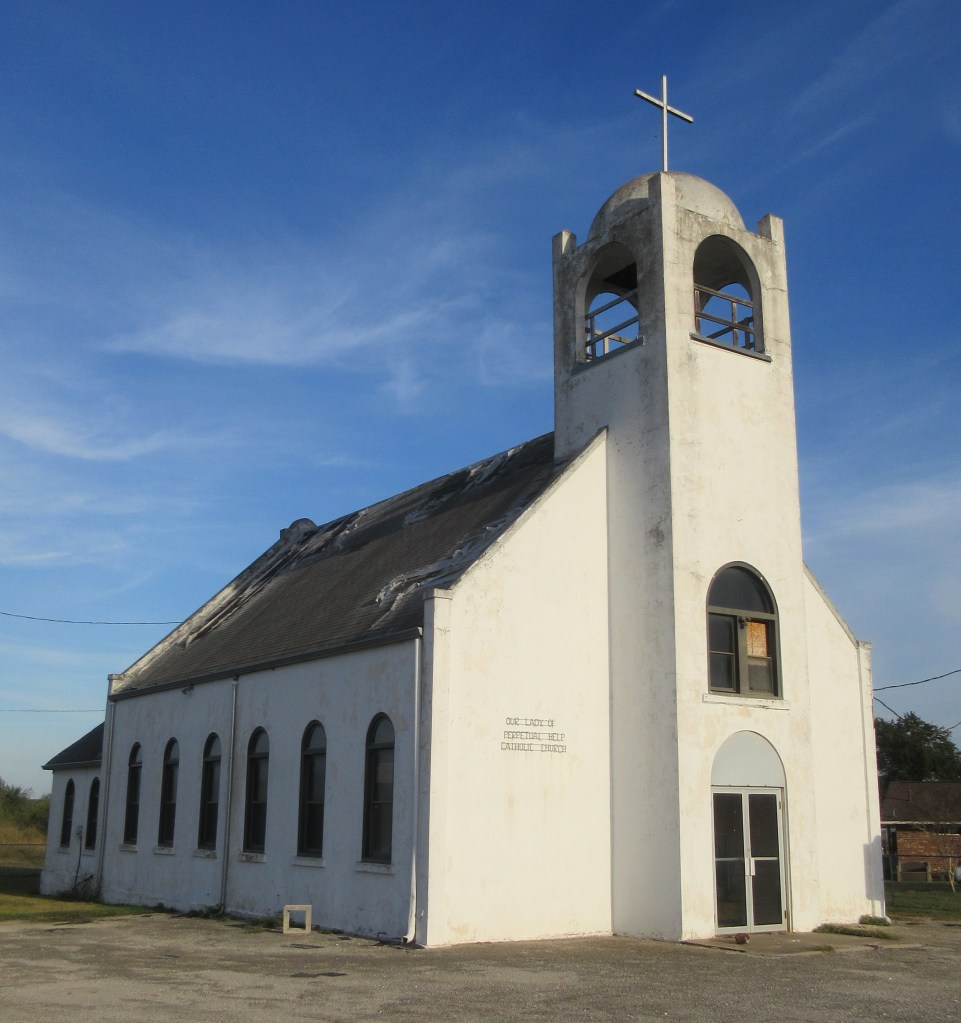
This 1923 church was the oldest building we saw in Saspamco, Texas (Photograph by MRW November 4, 2019)
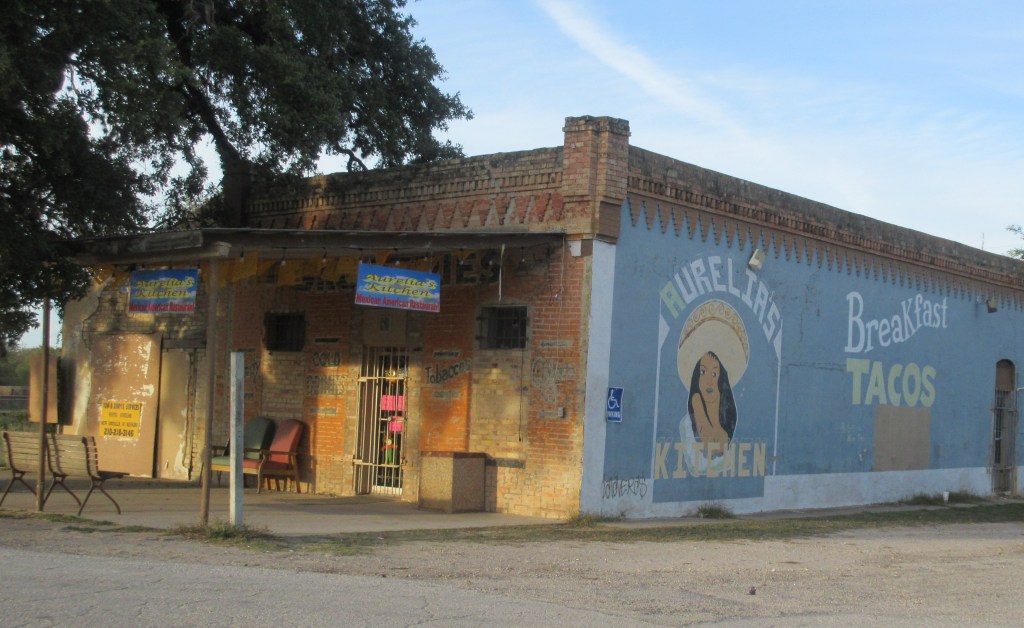
This building was the only one in Calaveras, Texas that looked like it could be a hundred years old. (Photograph by MRW November 4, 2019)

Notes:

  1. Automobile Blue Book Publishing Company, The Official Automobile Blue Book 1920, vol. 7 (New York: Automobile Blue Book Publishing Company, 1920): 690, 692-3, https://ia601208.us.archive.org/26/items/case_gv1024_a92_1920_v_7/case_gv1024_a92_1920_v_7.pdf.
  2. Bird’s-eye view showing the Alamo, San Antonio, Texas (ca. 1920), http://sites.rootsweb.com/~txpstcrd/Towns/SanAntonio/Alamo.jpg.
  3. The Alamo, built 1718, San Antonio, Texas, http://sites.rootsweb.com/~txpstcrd/Towns/SanAntonio/SanAntonioAlamo50.jpg

Day Twenty-Two: Taylor to New Braunfels, Texas

November 3, 2019

Retracing Lena Huppler Bevers’ Travel Log

Mon. Nov. 3.

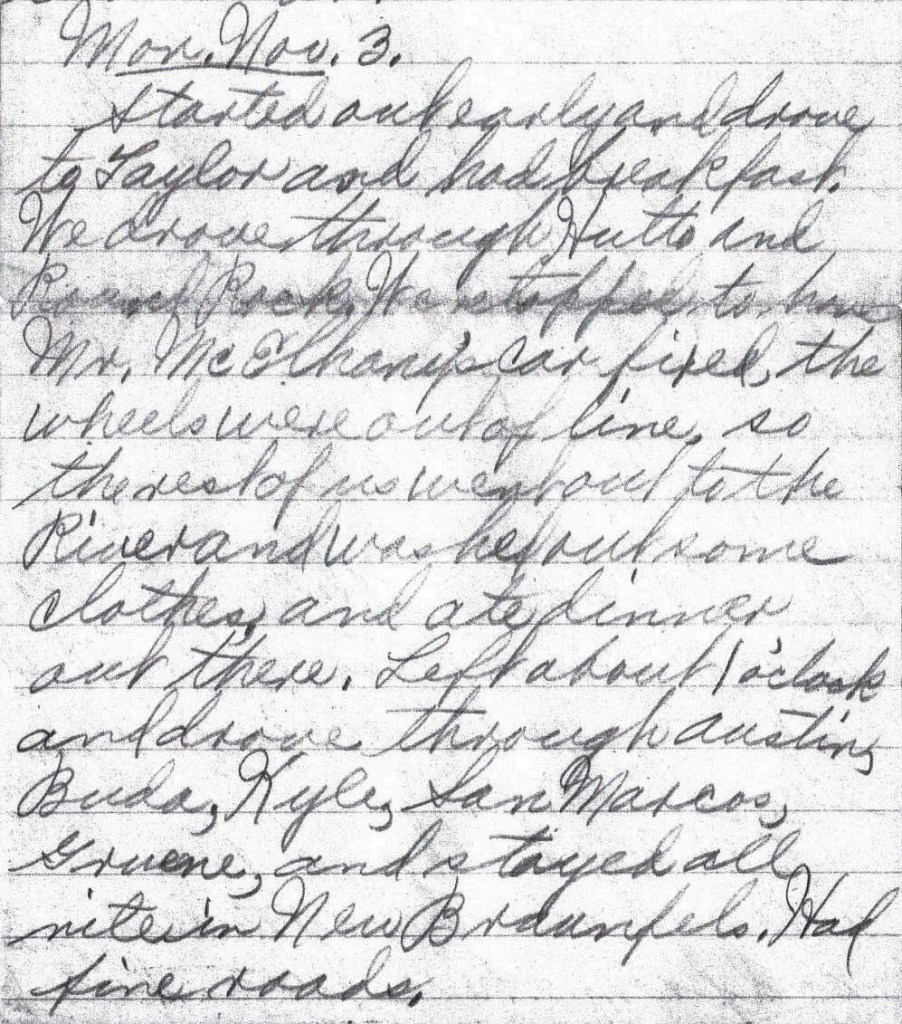
Started out early and drove to Taylor and had breakfast.  We drove through Hutto and Round Rock.  We stopped to have Mr. McElhany’s car fixed, the wheels were out of line, so the rest of us went out to the River and washed out some clothes, and ate dinner out there.  Left about 1 o’clock and drove through Austin, Buda, Kyle, San Marcos, Gruene, and stayed all nite in New Braunfels.  Had fine roads. – Lena Bevers

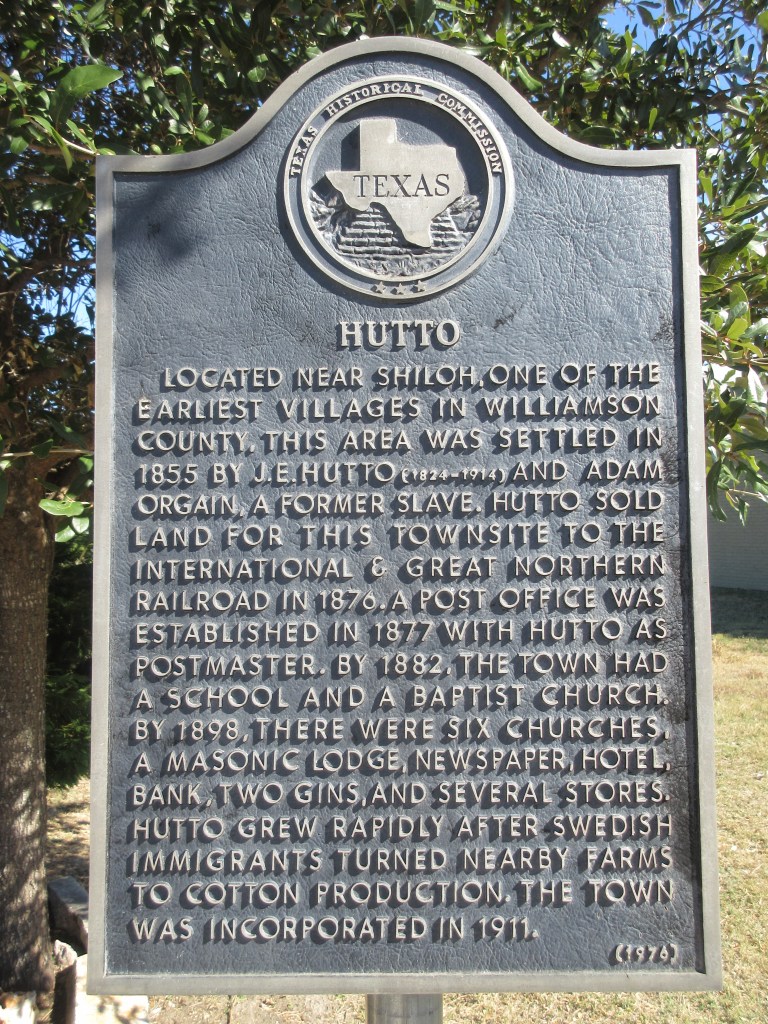
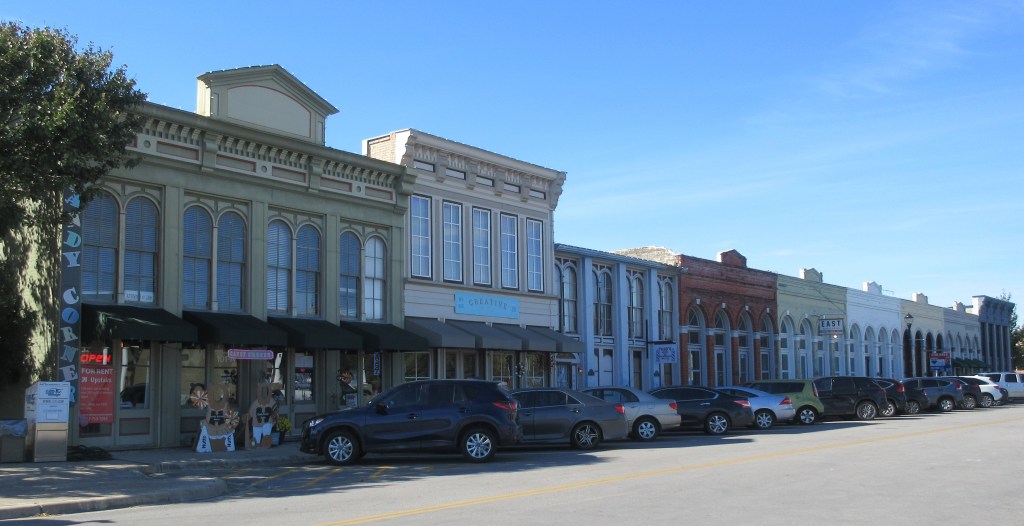
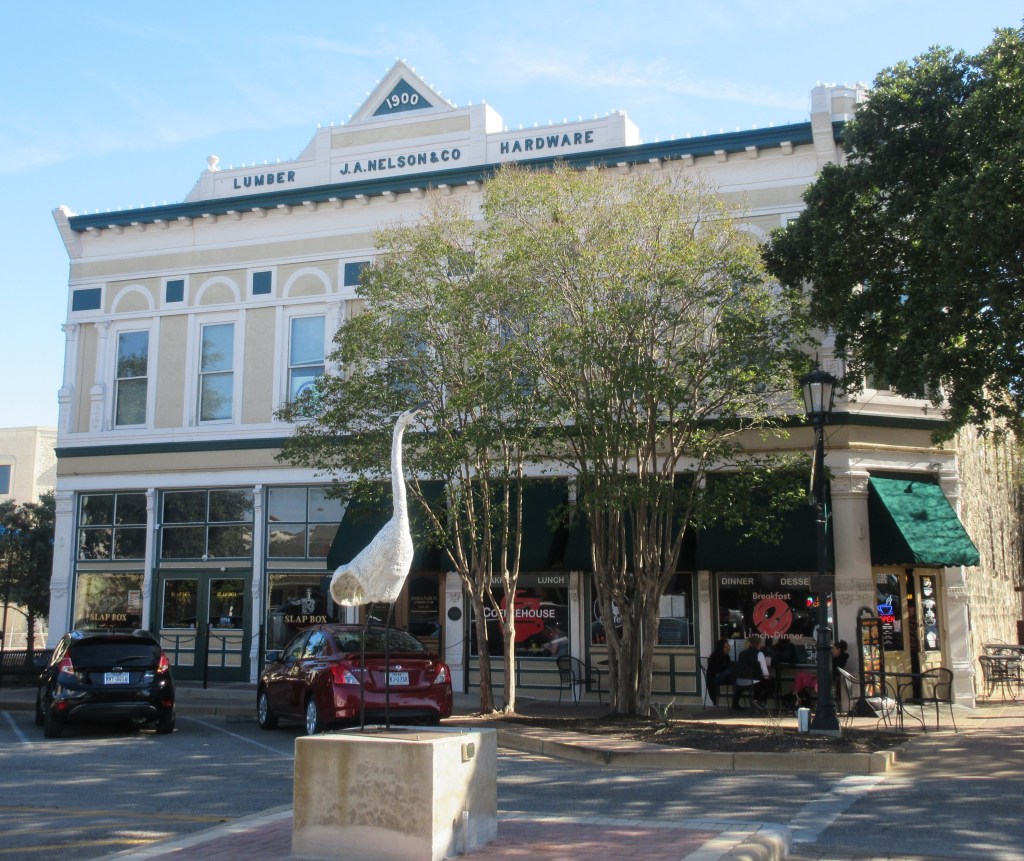
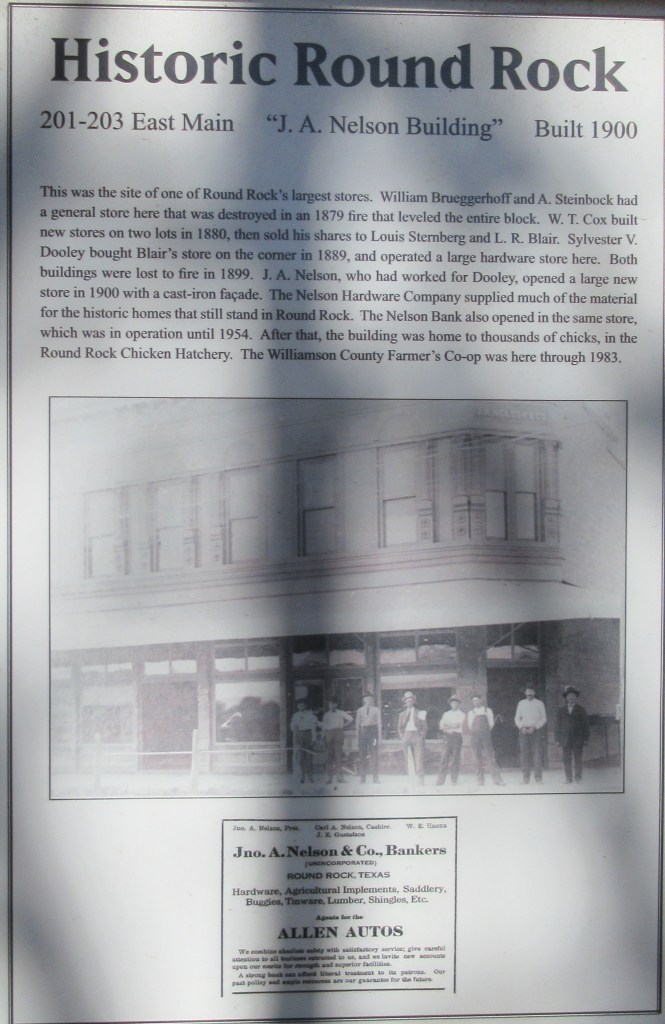
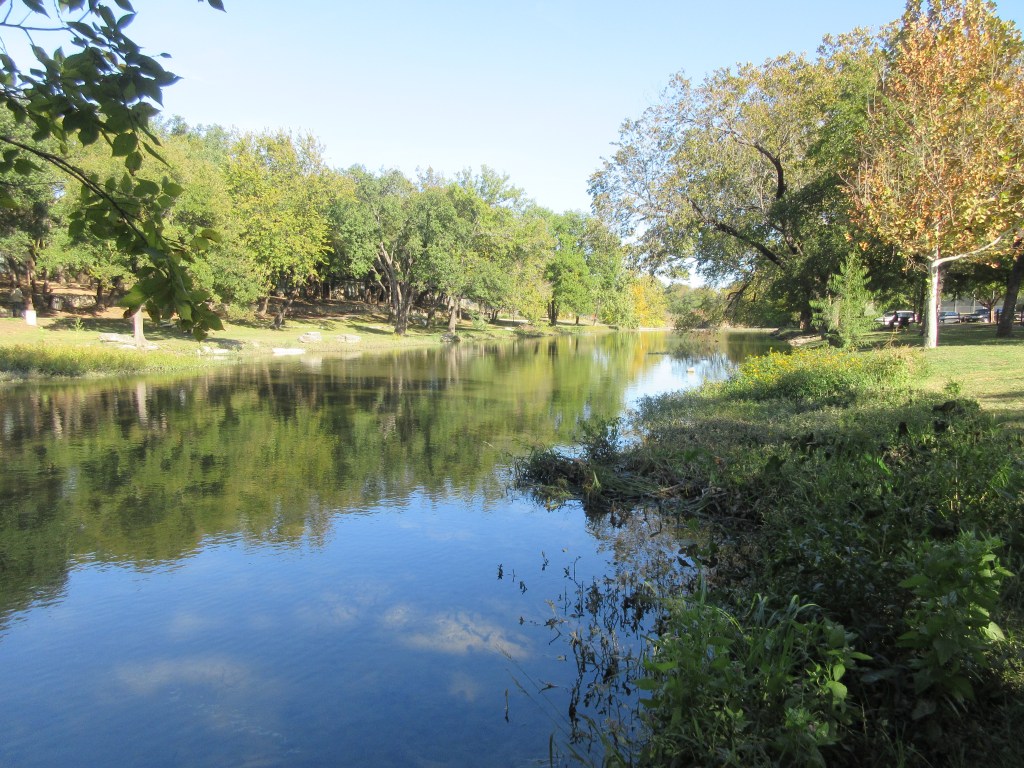
The traveling party had stayed the night in their cars, so on November 3, 1919 they departed early and had breakfast in Taylor, then headed to Hutto and Round Rock.  Mr. McElhany’s wheels needed to be aligned.  While that was being done, the rest of the party went to the river and washed their clothes, and they ate their dinner by the river.  North of the town of Round Rock is a stream called Brushy Creek.  Presently, there is a lovely park along Brushy Creek, named Round Rock Memorial Park.  After seeing the two short blocks of historical buildings in Hutto, my mother and I had a late picnic lunch in the Round Rock park along with many families who were enjoying a warm (but not hot), clear and dry fall day.

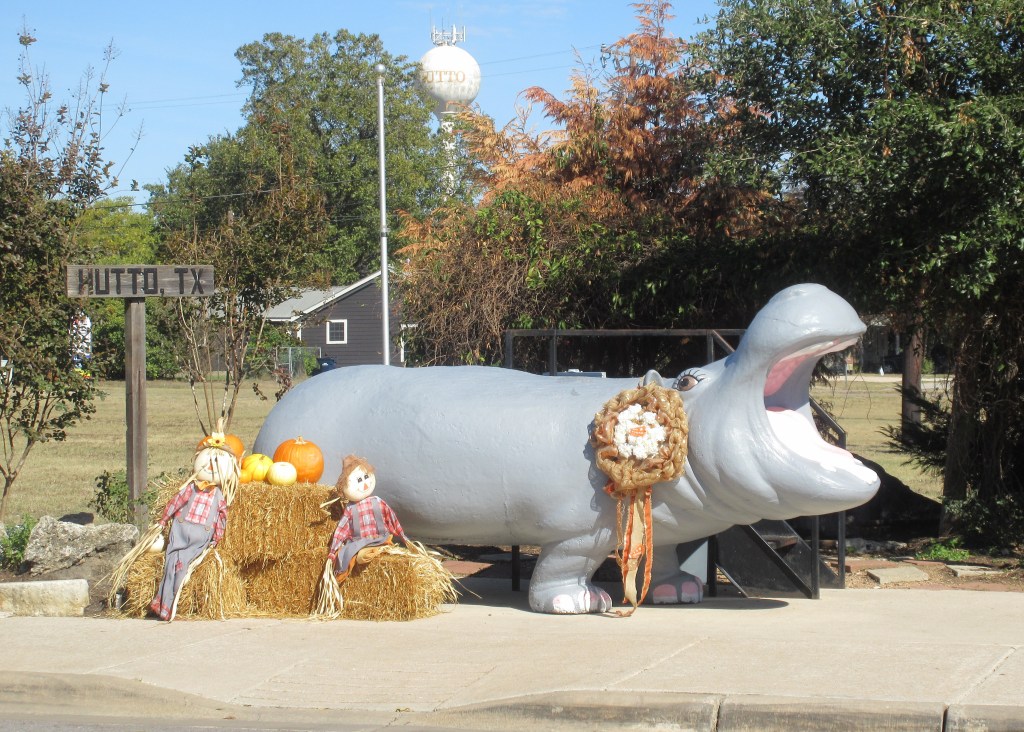
Hutto, Texas (Photograph by MRW November 3, 2019)

“The famous ‘Hutto hippo’ showed up later, in 1915. Local legend has it that a circus train stopped in Hutto to deliver mail, and take on water, as well as care for the animals. During the stop, a hippopotamus escaped its keeper and headed for the muddy waters of Cottonwood Creek. The train depot agent was forced to telegraph local communities to let them know to ‘STOP TRAINS. HIPPO LOOSE IN HUTTO’ ….”1

Round Rock, Texas (Photograph by MRW November 3, 2019)
The Bevers family washed their clothes in the waters of Brushy Creek, Round Rock, Texas (Photograph by MRW November 3, 2019)
This is how we washed and dried our clothes while we were visiting at my daughter’s house on the previous day. (Photograph by EAW November 3, 2019)
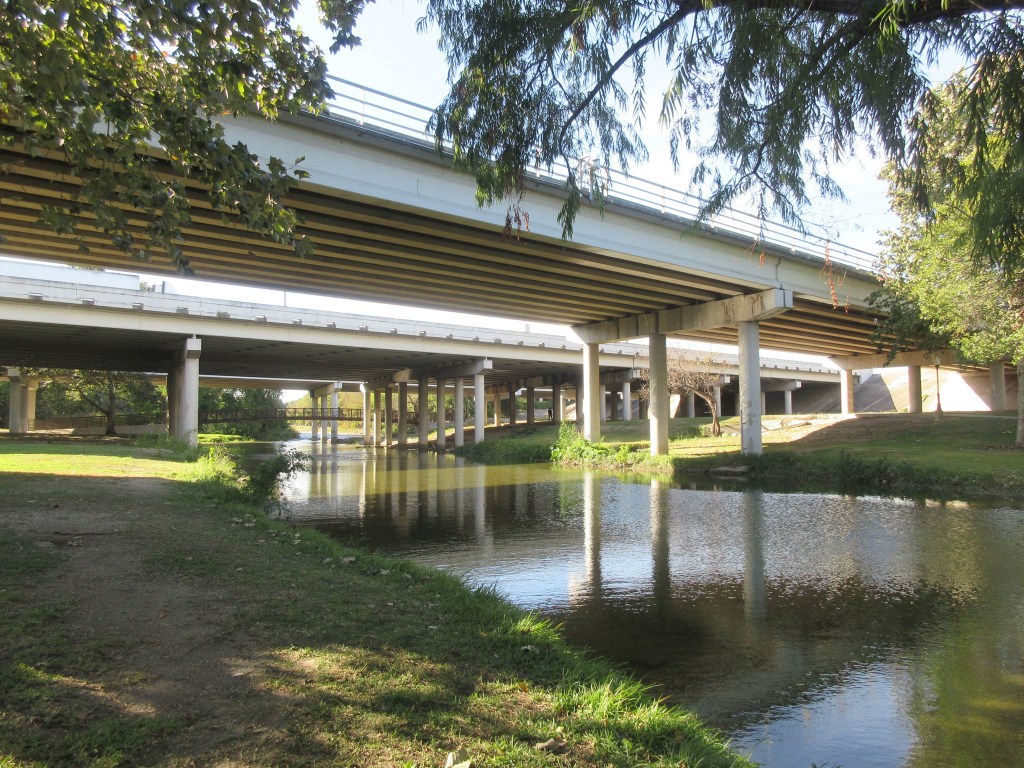
Interstate 35 crosses over Brushy Creek, Round Rock, Texas (Photograph by MRW November 3, 2019)
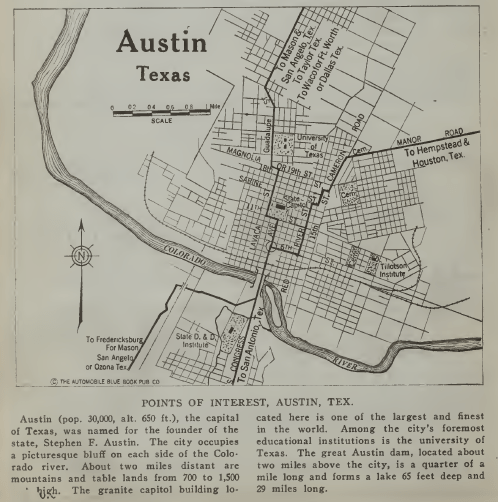
From The Official Automobile Blue Book 19202

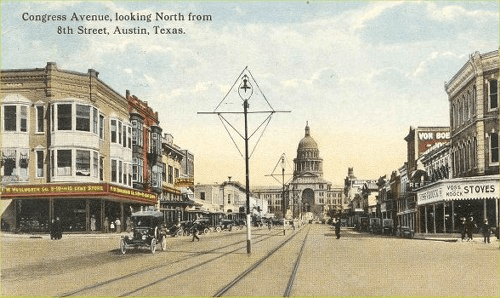
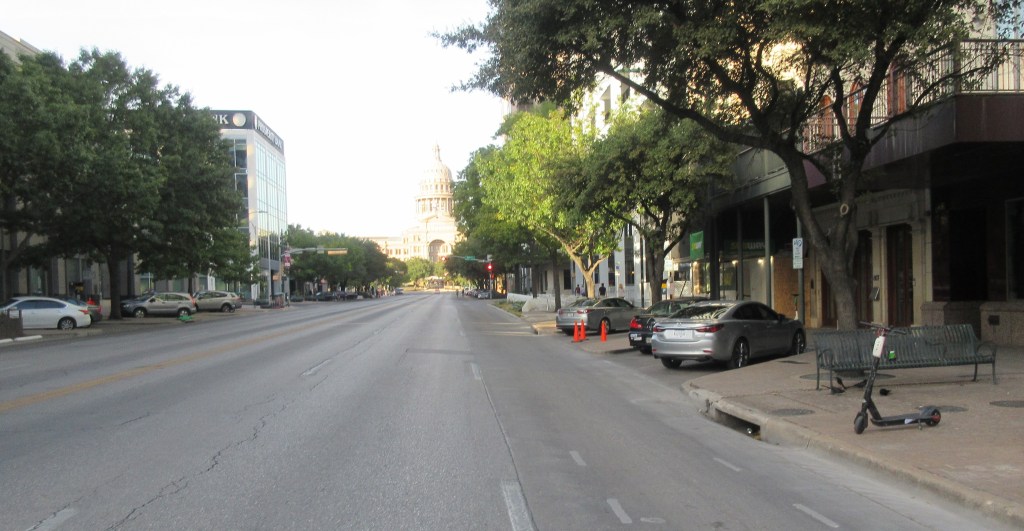
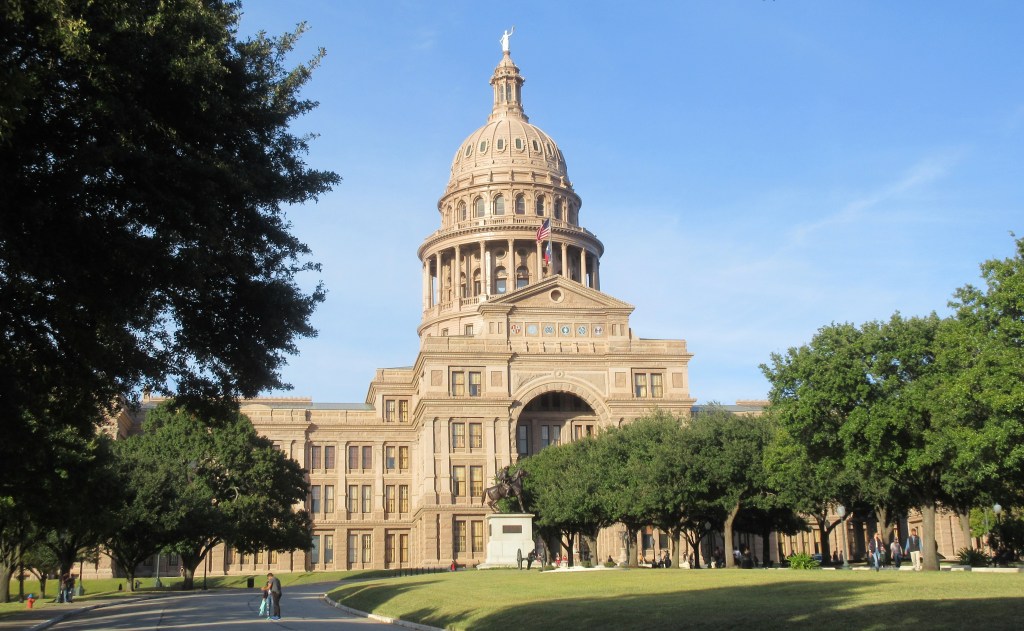
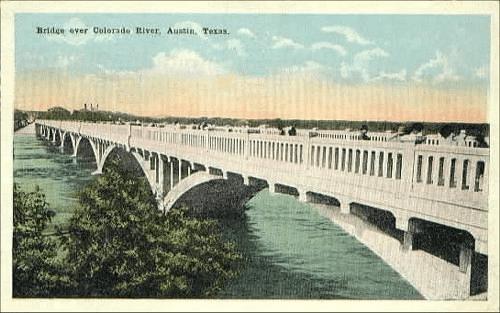
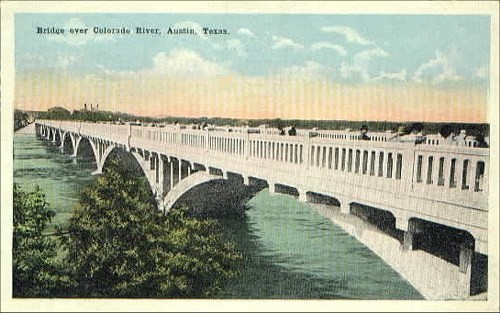
Based on the map of Austin above, which shows the route entering Austin from Taylor on Guadalupe Street, and the location of the bridge that crossed the Colorado River, it is very likely that Herbert Bevers and Mr. McElhany drove past the Texas State Capital.  This is the route my mother and I took to pass through Austin.  We crossed the Colorado River at the same point that is shown on the map above, but I haven’t researched enough to say whether the bridge is the same one that spanned the river one hundred years ago.

Congress Avenue, looking North from 8th Street, Austin, Texas (Courtesy of TXGenWeb Project)3
Congress Avenue, looking North from 8th Street, Austin, Texas (Photograph by MRW November 3, 2019)
Texas State Capital, Austin, Texas (Photograph by MRW November 3, 2019)
Bridge over Colorado River, Austin, Texas, 1921 (Courtesy of TXGenWeb Project)4

By the time we were out of the suburbs of Austin, the sun was low in the sky.  Traveling on the city streets was slow.  Also, daylight savings time had ended the night before, and we had not taken into account that it would get dark an hour earlier.  We took a few pictures in Buda, south of Austin, and then decided that we needed to head to the motel, instead of going to the historical districts of Kyle, San Marcos and Gruene.  For much of the way to New Braunfels we drove on the frontage road of Interstate 35.  Some of the time it was faster driving on the frontage road, because there was too much traffic on Interstate 35 and the vehicles were driving slowly.  When we arrived at our motel at 6:30 PM, it had been dark for at least half an hour.

The building on the left is marked 1898 and the one on the right is marked 1901, Buda, Texas (Photograph by MRW November 3, 2019)
Buda, Texas (Photograph by MRW November 3, 2019)

Even though the caravan had a delay in Round Rock until 1:00 PM, they covered a lot of miles on this day.  From Taylor to New Braunfels, it was about 75 miles. Lena notes that they “had fine roads.”  The introduction to Route 779 in the 1920 Blue Book explains why the roads were so “fine” in this area.  There was Tarvia on the roads from Austin to Buda (15 miles).5  The Merriam-Webster dictionary defines tarvia as “a viscid surfacing and binding material for roads that is made from coal tar – formerly a U.S. registered trademark.”6

Notes:

  1. Community Impact Newspaper, About Hutto, https://www.huttotx.gov/visitors/about_hutto/index.php.
  2. Automobile Blue Book Publishing Company, The Official Automobile Blue Book 1920, vol. 7 (New York: Automobile Blue Book Publishing Company, 1920): 654, https://ia601208.us.archive.org/26/items/case_gv1024_a92_1920_v_7/case_gv1024_a92_1920_v_7.pdf.
  3. Congress Avenue, looking north from 8th Street, Austin, Texas, http://sites.rootsweb.com/~txpstcrd/Towns/Austin/AustinCongressAve8.jpg.
  4. Bridge over Colorado River, Austin, Texas (1921), http://sites.rootsweb.com/~txpstcrd/Towns/Austin/AustinColoradoRiverBridge1921.jpg
  5. Automobile Blue Book Publishing Company, The Official Automobile Blue Book 1920, vol. 7: 655.
  6. Tarvia, Merriam-Webster Dictionary, https://www.merriam-webster.com/dictionary/Tarvia.

Day Twenty-One: Taylor, Texas

November 2, 2019

Retracing Lena Huppler Bevers’ Travel Log

Sun. – Nov. 2.

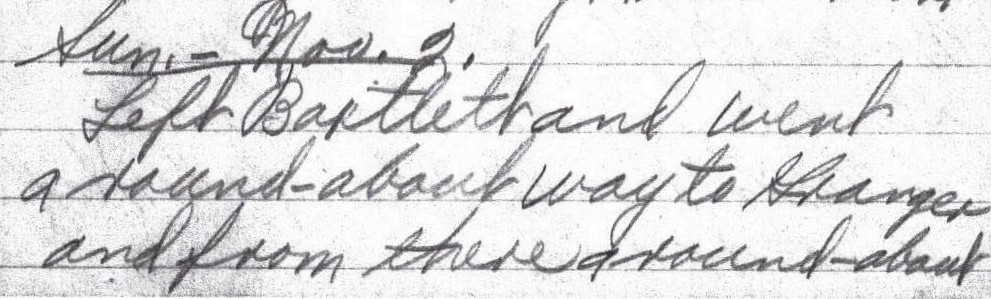
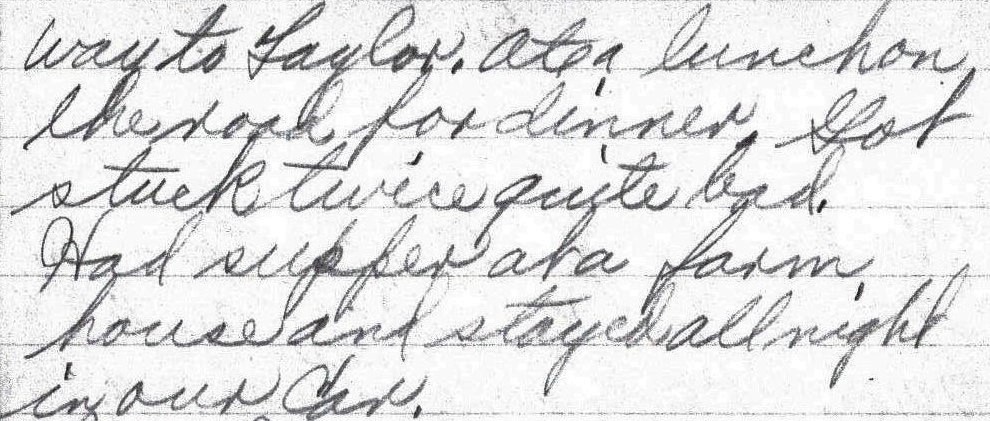
Left Bartlett and went a round-about way to Granger and from there a round-about way to Taylor.  Ate a lunch on the road for dinner.  Got stuck twice quite bad.  Had supper at a farm house and stayed all night in our car. – Lena Bevers

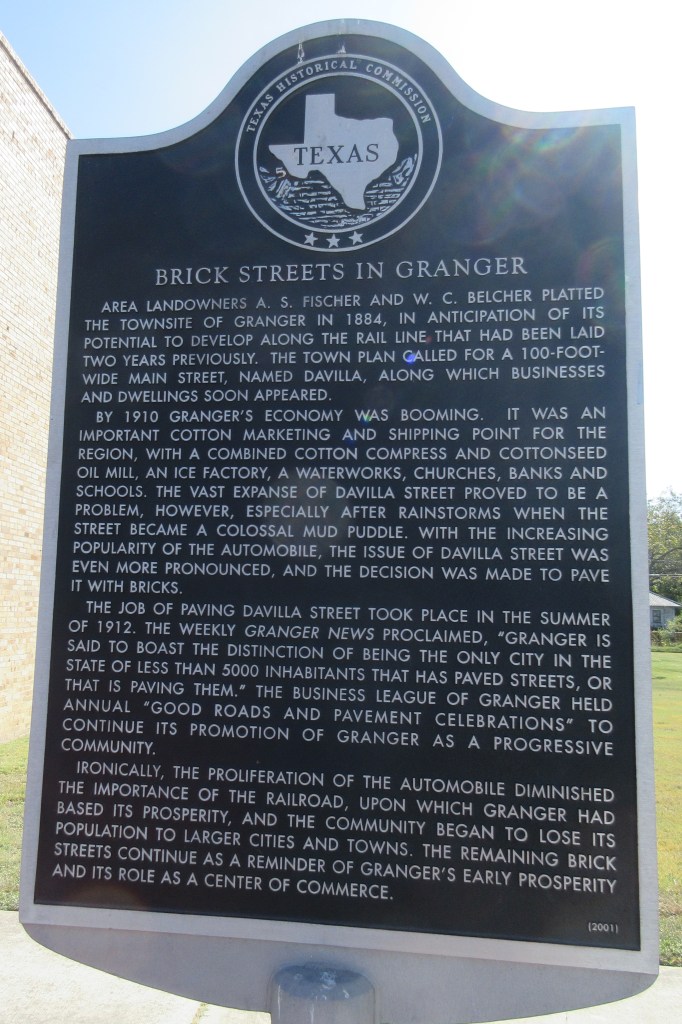
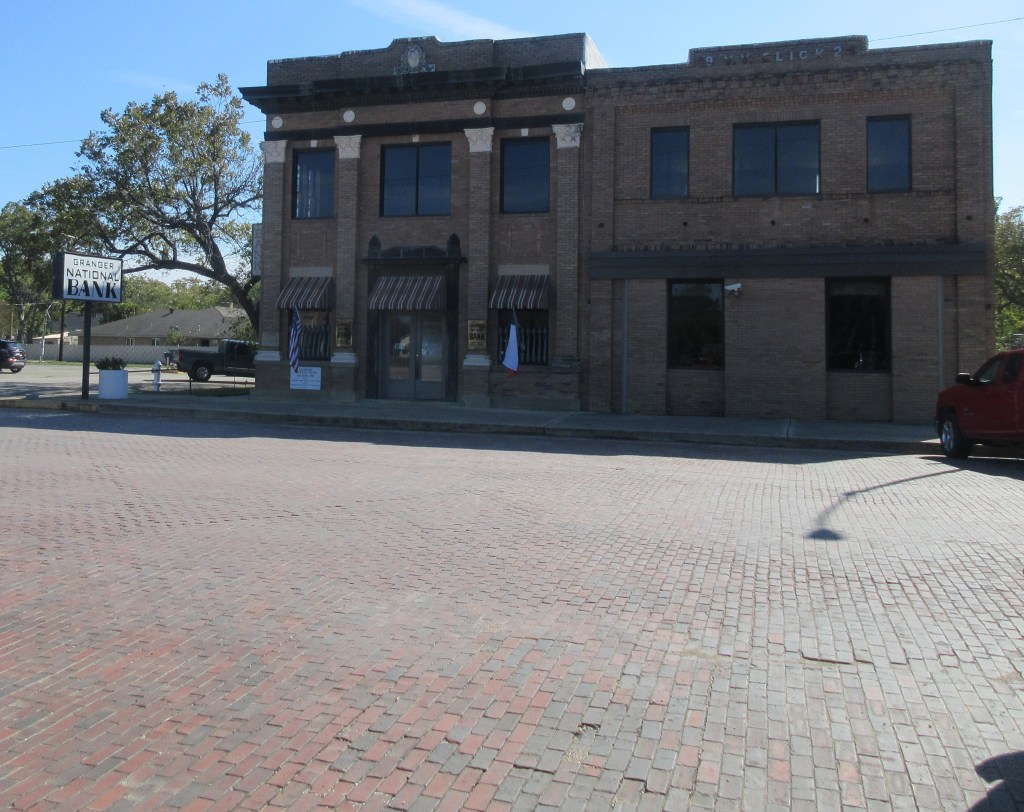
On November 2, 1919 the roads were in no better condition than they were the day before.  Again Herbert Bevers’ car got stuck in the mud, very severely.  Lena recorded that they took round-about ways to Granger and to Taylor, Texas.  According to The Official Automobile Blue Book 1920, the distance between Bartlett and Taylor using Route 778 was about 18 miles.1  This was the shortest number of miles that they traveled in one day.  When they drove through Granger, they had brick paved streets to drive on.  It was unusual for a small town to have paved roads at that time.

The Bevers family ended their day at a farm house near Taylor.  There they had their supper and then stayed in their car for the night.  Since we arrived in Taylor yesterday, my mother and I took a long side trip to visit two of my daughters in Houston, Texas.  We’ll stay overnight and return to the route at Taylor tomorrow.

The 1912 brick paved street in front of Granger National Bank (Photograph by MRW November 1, 2019)
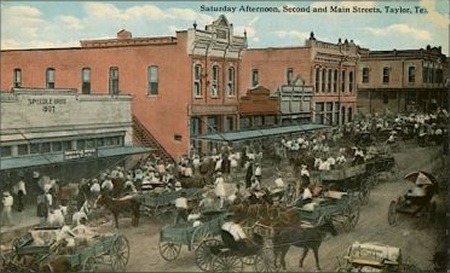
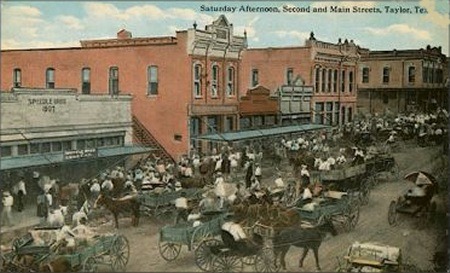
Saturday Afternoon, Second and Main Streets, Taylor, Texas (Courtesy of TXGenWeb Project2)
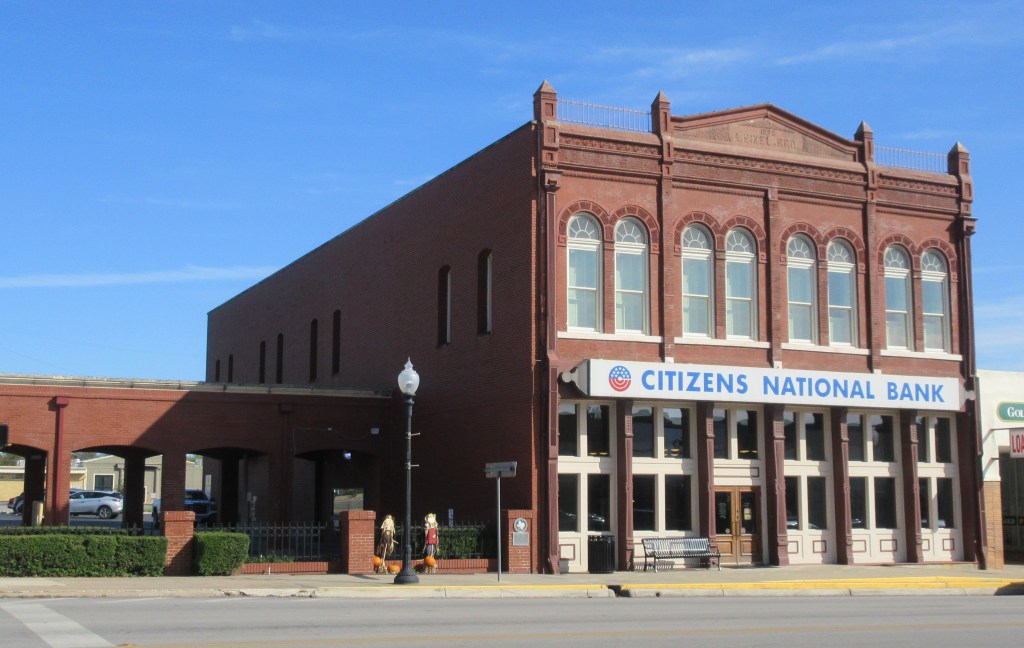
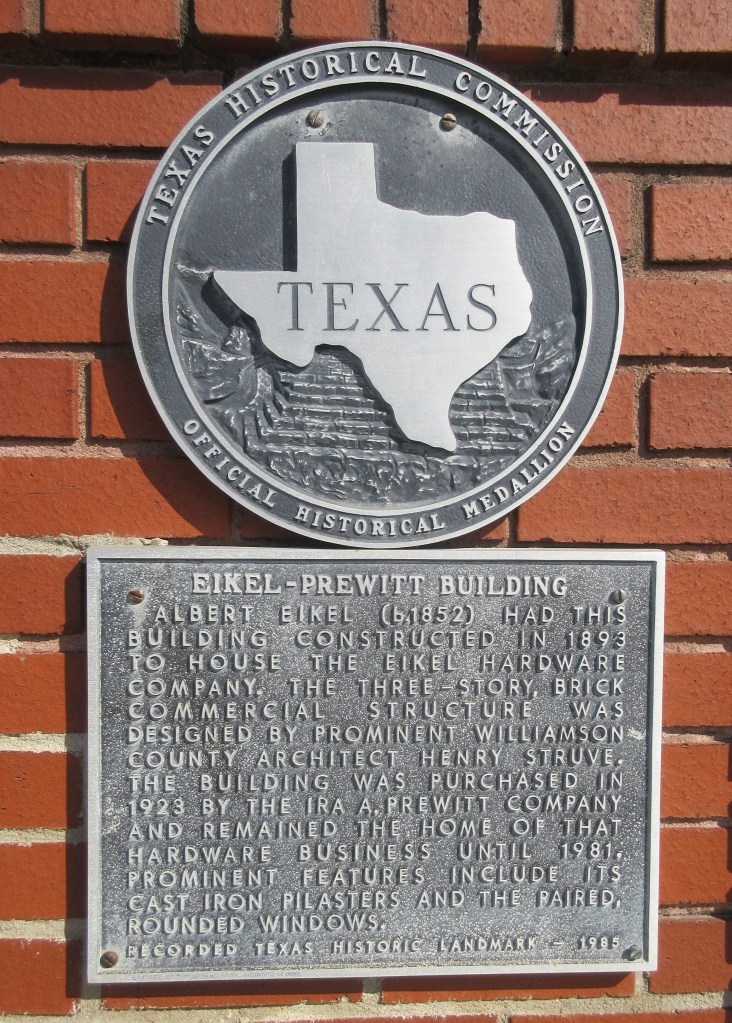
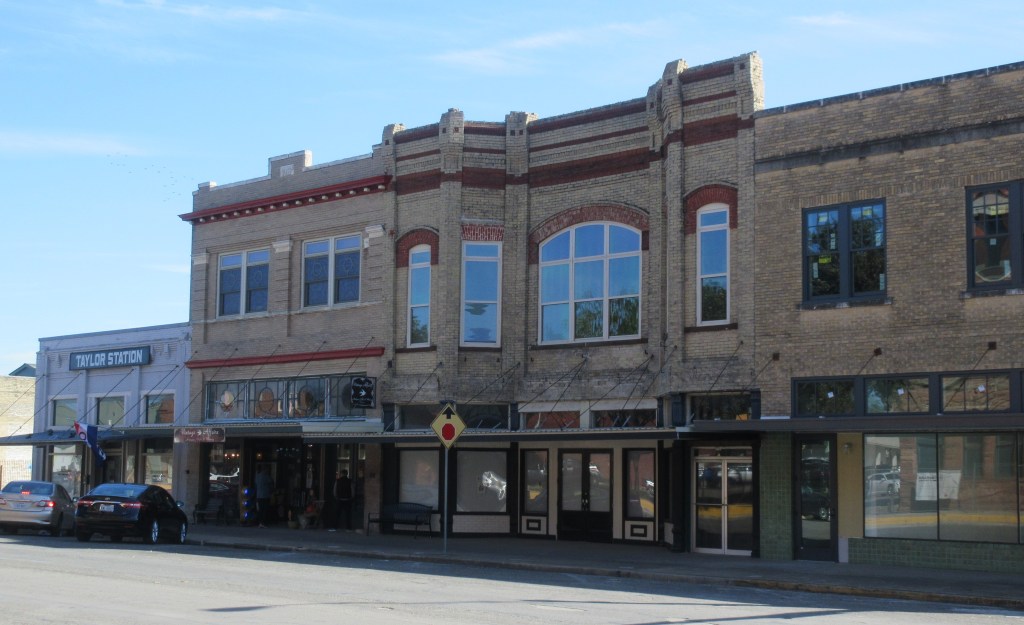
An 1893 building in Taylor, Texas (Photograph by MRW November 1, 2019)
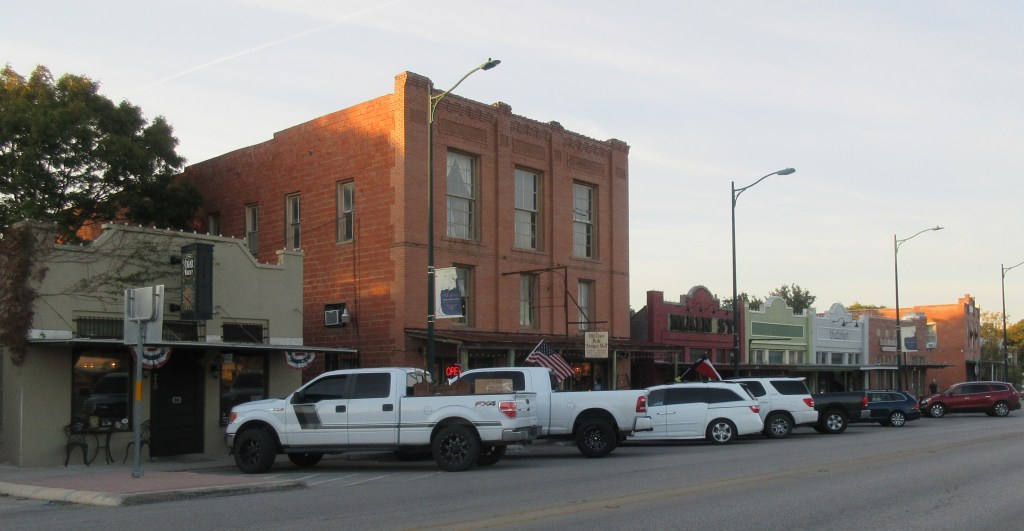
Taylor, Texas (Photograph by MRW November 1, 2019)
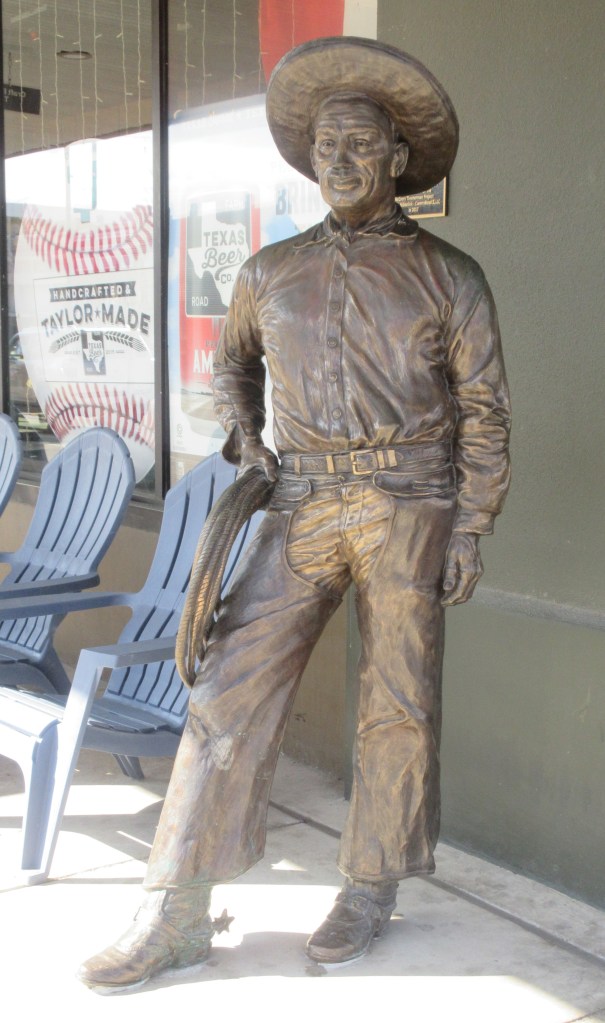
On a sidewalk in Taylor, Texas (Photograph by MRW November 1, 2019)
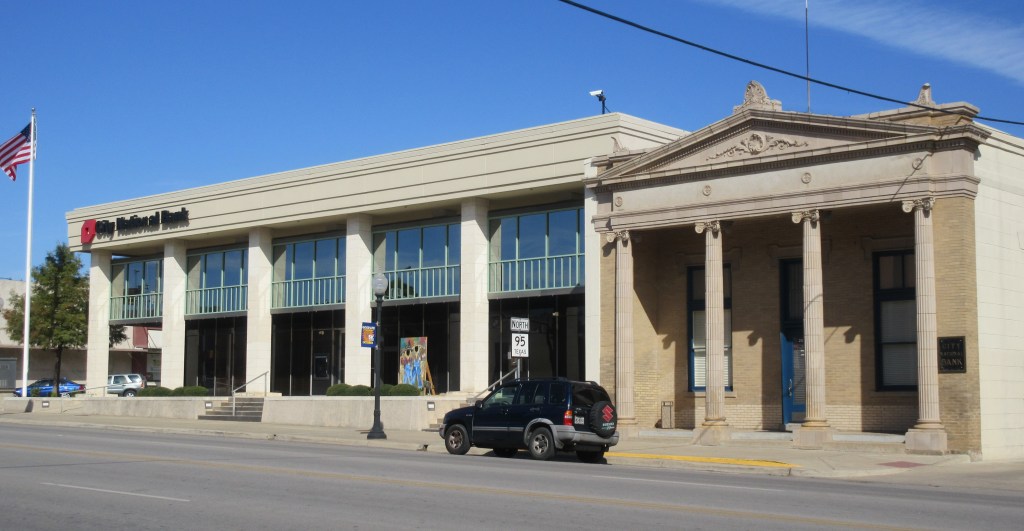
The original City National Bank is on the right, the modern City National Bank is on the left, Taylor, Texas (Photograph by MRW November 1, 2019)

Notes:

  1. Automobile Blue Book Publishing Company, The Official Automobile Blue Book 1920, vol. 7 (New York: Automobile Blue Book Publishing Company, 1920): 653, https://ia601208.us.archive.org/26/items/case_gv1024_a92_1920_v_7/case_gv1024_a92_1920_v_7.pdf.
  2. Saturday afternoon, Second and Main Streets, Taylor, Texas (1916), https://sites.rootsweb.com/~txpstcrd/Towns/Taylor/TaylorMainSt1916.jpg.