Day Two: Madison to Sioux Falls, S. D.

October 14, 2019

Retracing Lena Huppler Bevers’ Travel Log
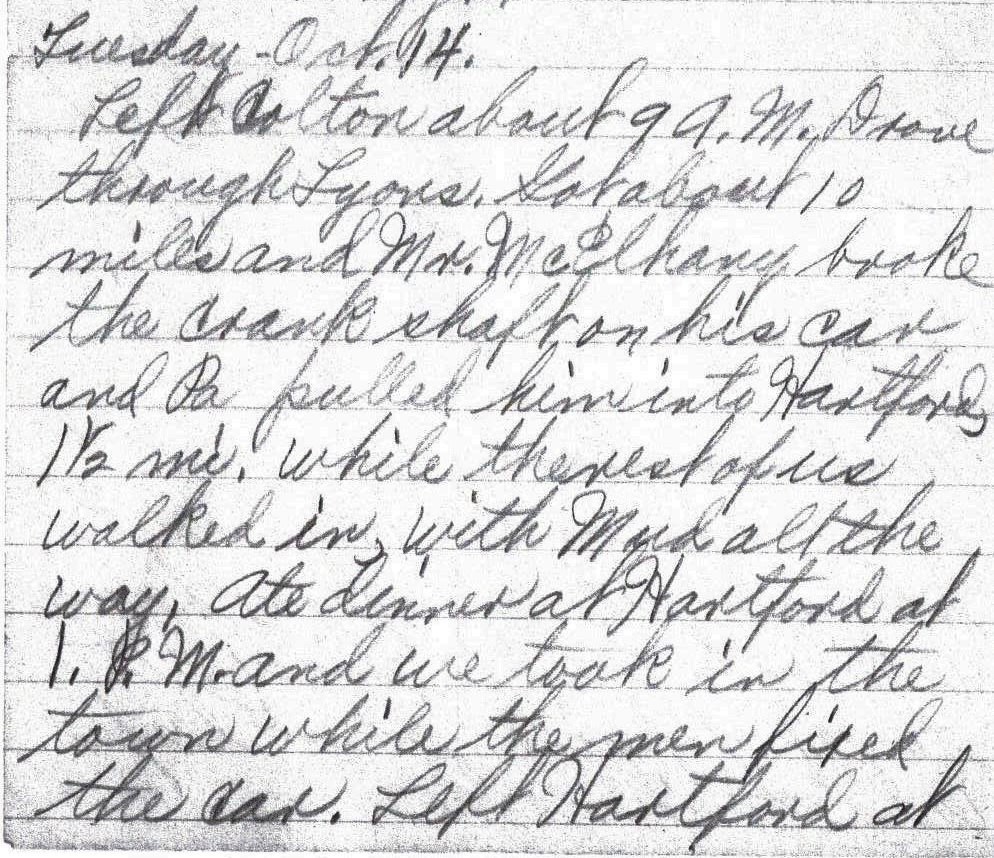
Tuesday – Oct. 14.

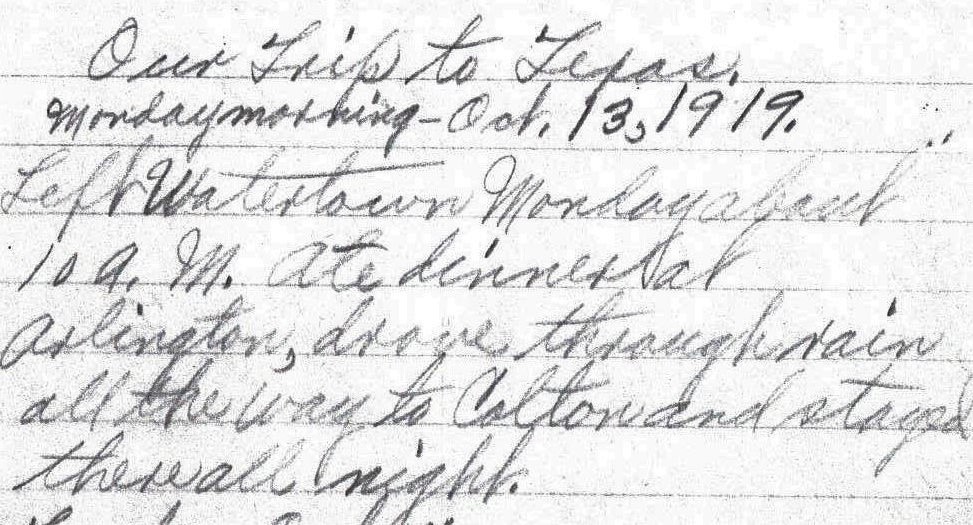
Left Colton about 9 A. M.  Drove through Lyons.  Got about 10 miles and Mr. McElhany broke the crank shaft on his car and Pa pulled him into Hartford, 1 1/2 mi. while the rest of us walked in, with Mud all the way, Ate dinner at Hartford at 1. P. M. and we took in the town while the men fixed the car.  Left Hartford at 4 P. M.  Had 5 miles of mud and the rest was gravel road.  Had supper in Sioux Falls and stayed all nite.  Visited Carl Dellman. – Lena Bevers

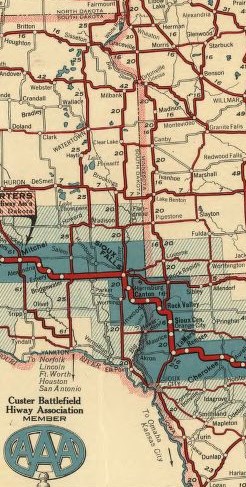
On the 1925 Custer Battlefield map which we began following yesterday, the Meridian Highway turns west at Madison and then south towards Yankton, South Dakota and Lincoln, Nebraska.  Herbert and Lena did not follow that route, instead they headed for Sioux Falls using roads that are not marked on the Custer Battlefield map.  Just two weeks ago, my mother learned that Herbert and Lena’s daughter Florence wrote a travel log also.  It is very similar to Lena’s log, but it does give additional details.  Florence recorded that they went through Wentworth on their way to Colton.1  When we left Madison today at 10:00 AM, we took county roads to Wentworth, Colton, Lyons and Hartford.  All were macadam roads and the snow had melted so the driving was fine.

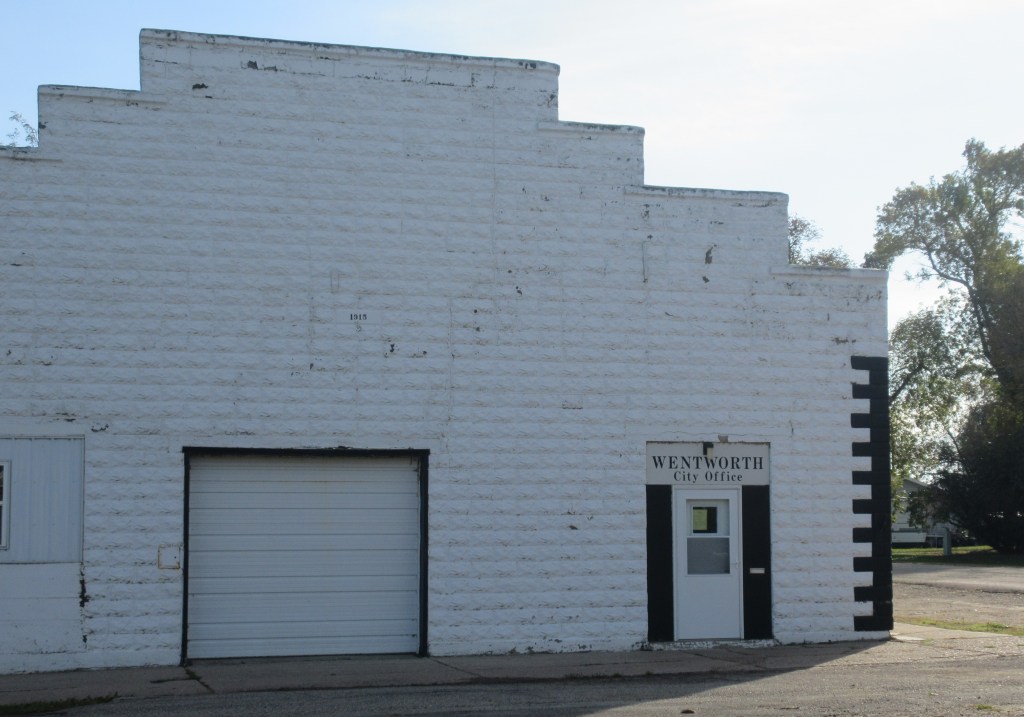
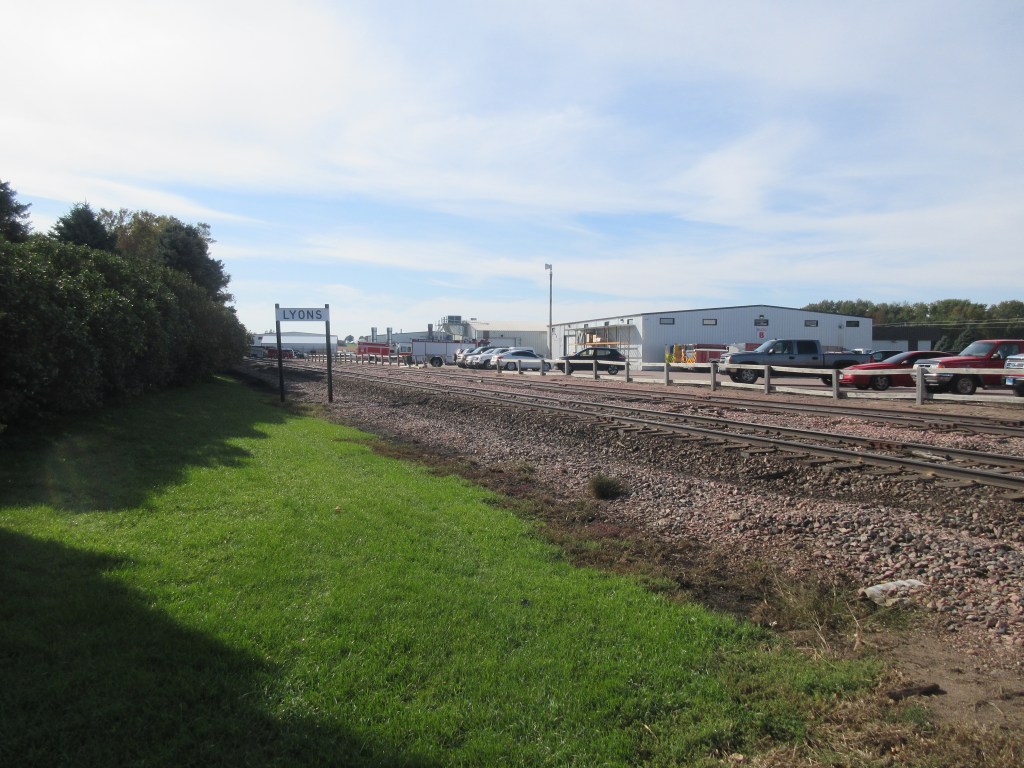
Wentworth is about half the size of Arlington and didn’t take much time to drive around in it.  Colton was larger and seemed to be a center of business for farmers.  Lyons was smaller than Wentworth and just seemed to be a stop for a railroad.  All three of these towns were beside the same railroad track.

The Wentworth City Office (Photograph by MRW October 14, 2019)
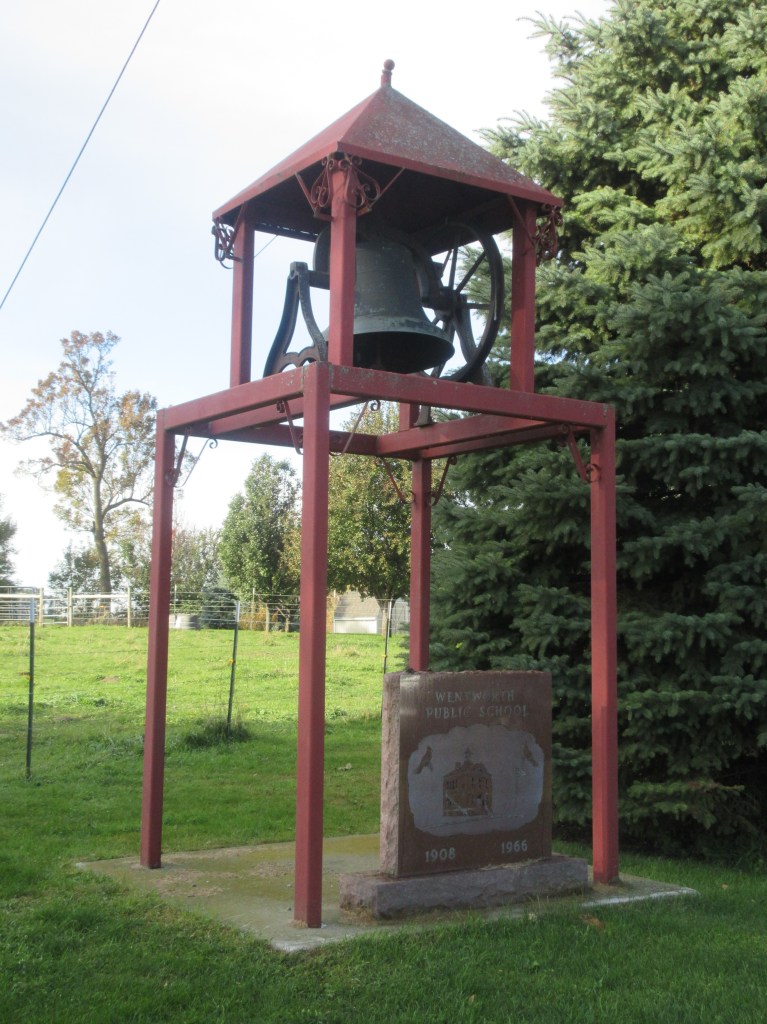
A bell from the Wentworth Public School that was built in 1908 (Photograph by MRW October 14, 2019)
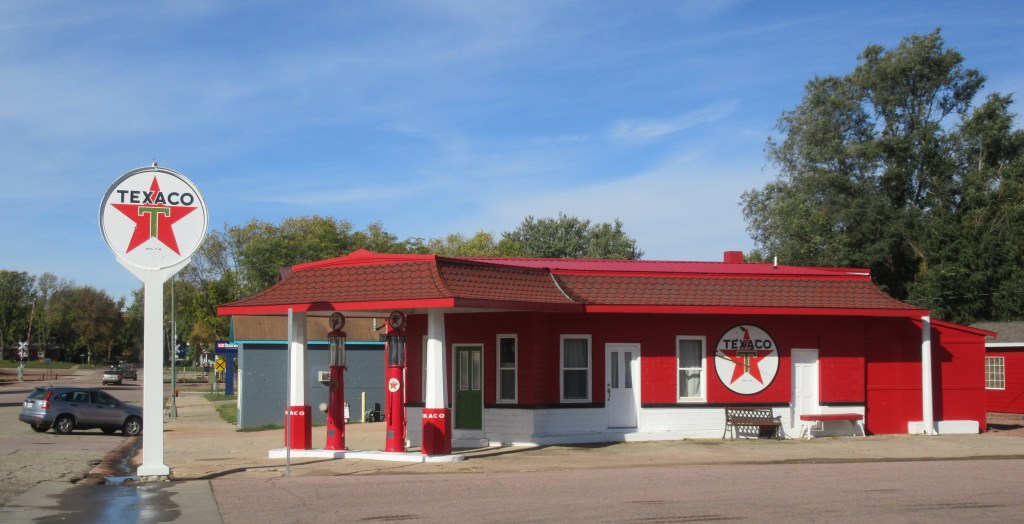
Although this service station may not be 100 years old and therefore may not have been standing in Colton when Herbert and Lena passed through …
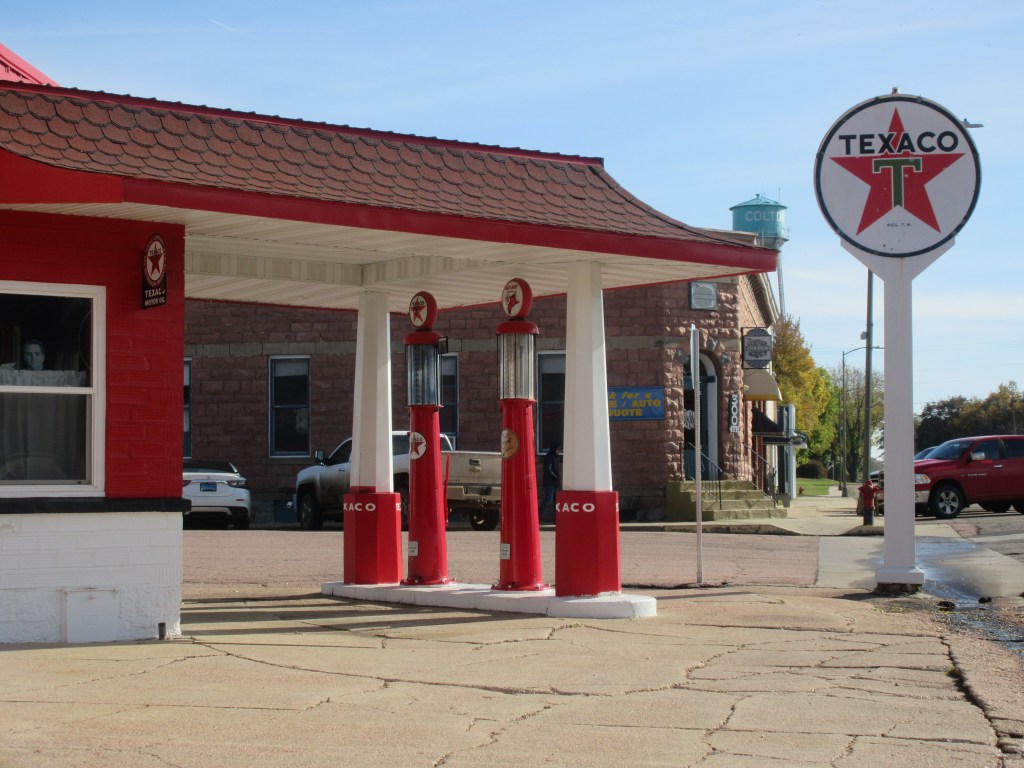
… if these gas pumps are authentic, they are probably between 90 and 110 years old.2

In Lena’s travel log, this is the first of many days on which she mentions Mr. McElhany.  She always uses the name, Mr. McElhany.  So, who is Mr. McElhany?  I have uncovered a couple possibilities.  In The First 100 Years in Codington County, South Dakota, 1879 – 1979 there is a biographical article entitled, “Robert Mc Elhany Family”.  The article says the following about two of Robert McElhany’s sons:

“Robert never married and homesteaded southwest of Florence.  He lived in Watertown some of the time and moved to Texas in 1918.

“Clarence married Myrtle St. Clair.  They had no children.  They lived on a farm near his brothers until he moved to Texas in 1918.”3

Perhaps one of these men is the driver Lena calls Mr. McElhany.  If so, the date of his move to Texas would actually have been 1919 instead of 1918 as recorded in the article.

About 10 miles after passing through Lyons, Mr. McElhany broke the crankshaft of his car and had to be pulled one and a half miles into Hartford by “Pa” (Herbert).  Lena wrote that “the rest of us walked in, with mud all the way” — that would have been herself and six of her ten children: five-year-old Margaret, seven-year-old Harold, 10-year-old Estella, 12-year-old Hazel, 14-year-old Helen and 16-year-old Florence.  According to one of Lena’s grandsons, it did not include Willis who was 18 years-old, because he was traveling to Texas on a train with the family’s cattle and horses.4  And according to another grandson of Lena, it also did not include Arthur because he was also on the train with the livestock.5  (Arthur had married Gladys Daily just four months before his parents’ departure to Texas.)  It also didn’t include Edgar because he was in the military and was not discharged until October 20th, a week after his parents left Watertown.6   Nor did it include Clarence, he had married in 1917 and was listed in the Watertown City Directory for 1919-1920, working as a repairman at Auto Radiator Service Co.7 (It is not known if Mr. McElhany had any passengers with him.)

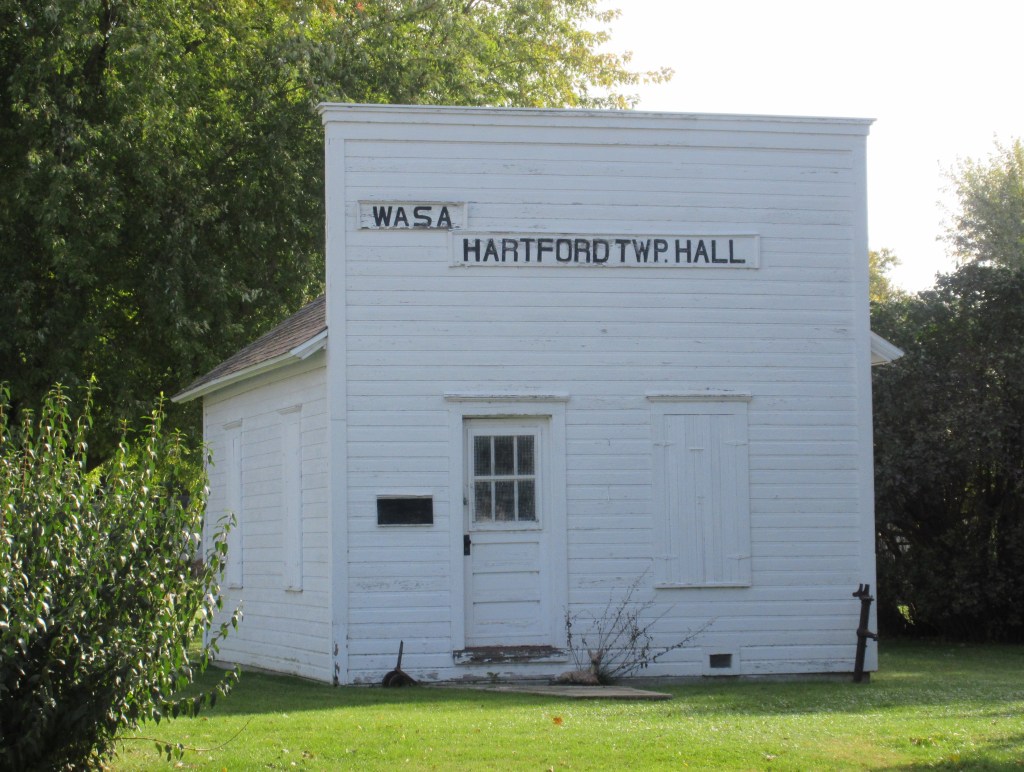
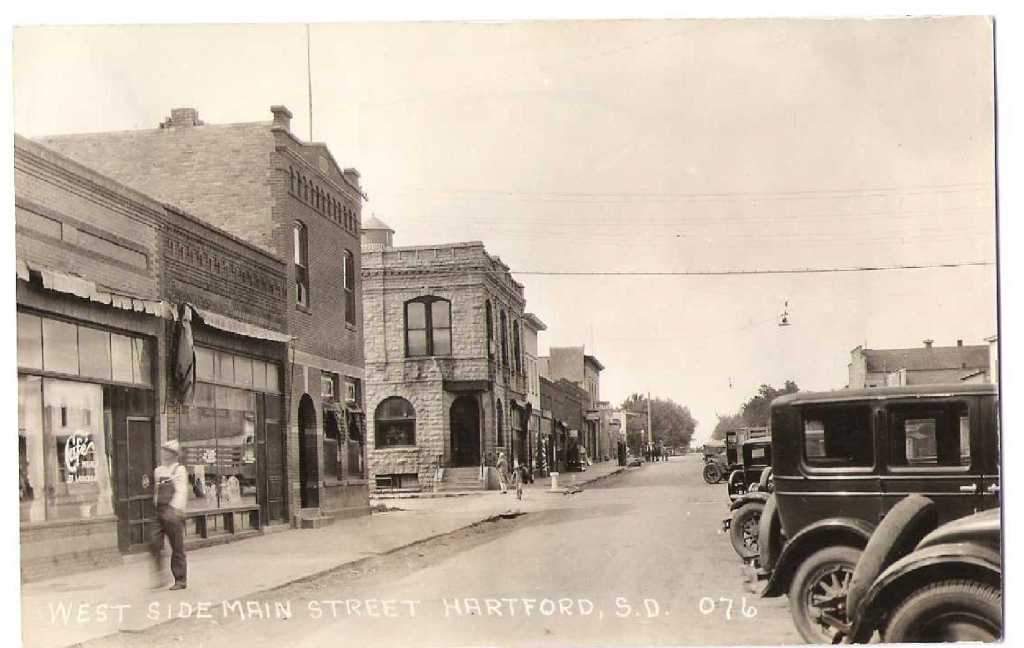
My mother and I traveled to Hartford on asphalt county roads.  Upon arriving there, we found that over the last several decades the residential district has expanded about a mile from the center of town.  The population is now about 2,500.  After driving through the old business district, we found a city park where we ate our picnic lunch.  Then we took Highway 38 toward Sioux Falls.   

West Side Main Street, Hartford, South Dakota (Courtesy of the City of Hartford)8
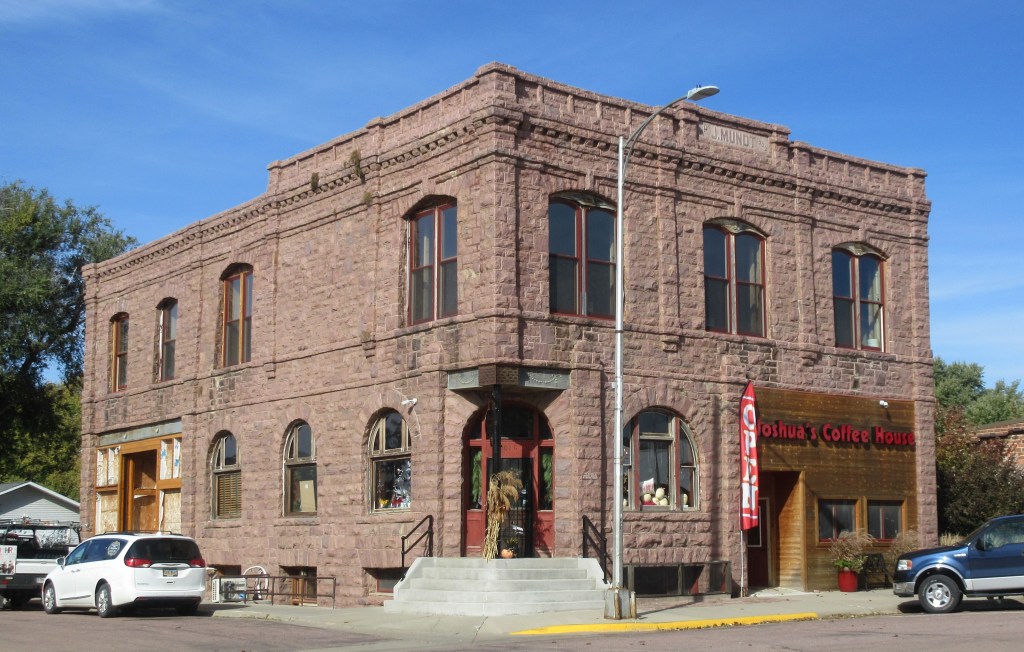
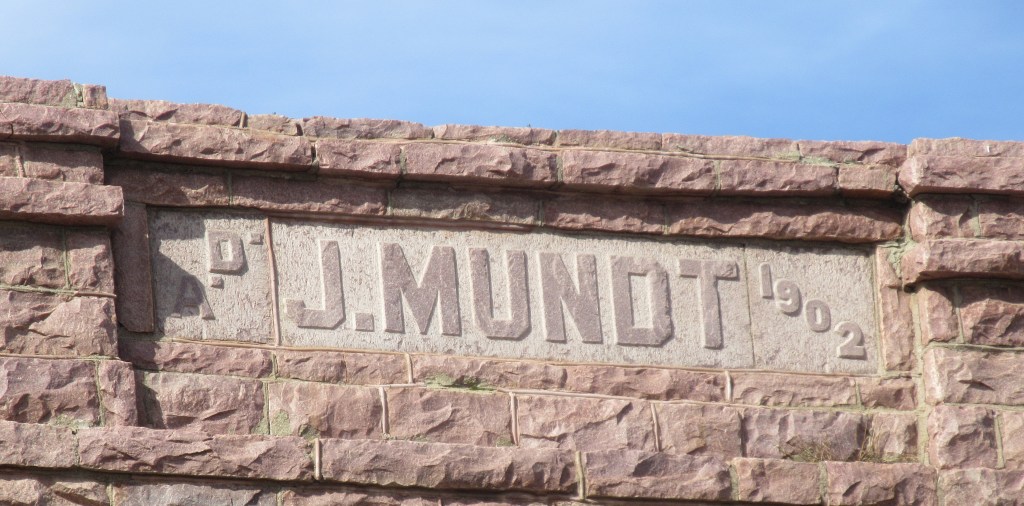
The date on this building is 1902, so it was standing here when Herbert and Lena were here.

After Mr. McElhany’s car was fixed in Hartford, they headed down muddy roads and gravel roads until they reached the city of Sioux Falls.  The last thing Lena notes for this day is that they visited Carl Dellman.  Carl was the son of Lena’s cousin Kate (Katherine Huppler Dellman).  When the 1920 U. S. Census was taken on January 5th (2 1/2 months after Lena’s family visited him), Carl was living at 1428 Main Avenue in Sioux Falls, he was married to Amber L. Best and had three daughters, ages 6, 4 and 2 1/2, and he was the proprietor of a radiator shop.9  He apparently had not been living in Sioux Falls very long, because the 1919 Watertown City Directory has a listing for him, living in Watertown and he was one of three owners of Auto Radiator Service Co.10  This is the same auto repair shop where Lena’s son Clarence was working.

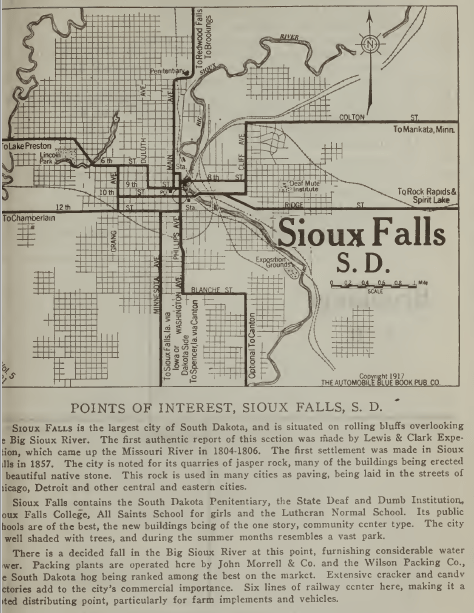
The census taker who visited Carl also visited a neighborhood “N. E. of the penitentiary.”  Referring to a map of Sioux Falls published in 1917 in the Official Automobile Blue Book, I have concluded that his home was on North Main Avenue rather than South Main Avenue.11

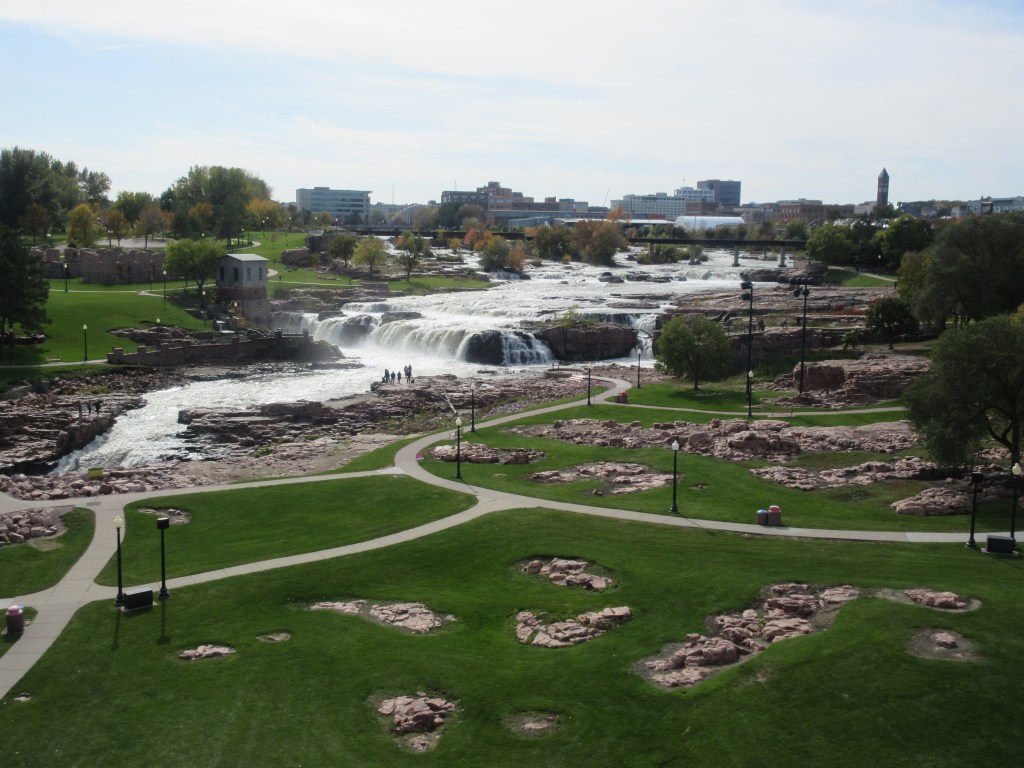
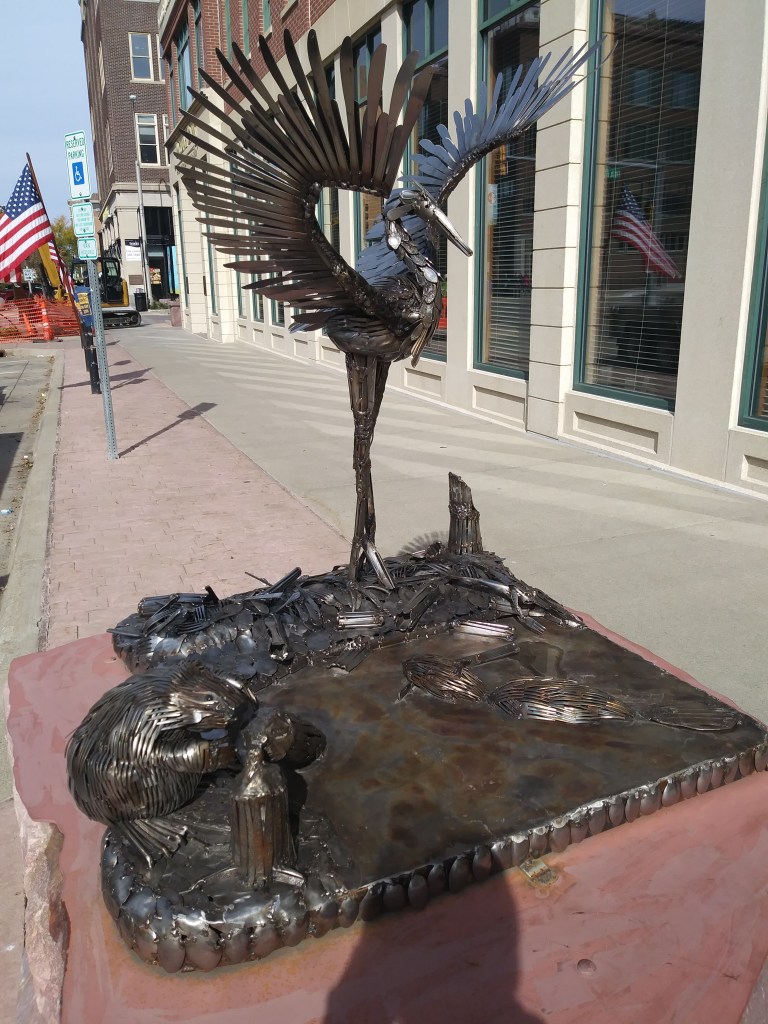
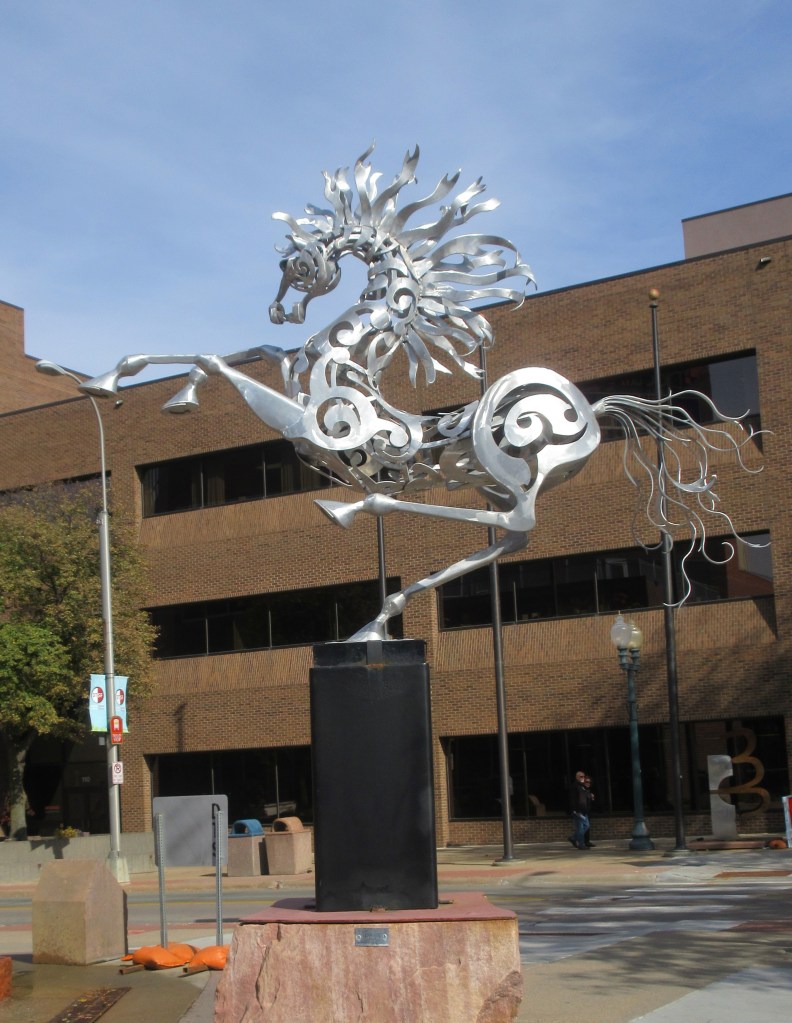
We arrived at the Dellman house about 1:00 PM, so we had all afternoon to take in some sights in Sioux Falls.  Not far from the Dellman home is Falls Park, where we rode in an elevator to the top of a lookout tower to view the falls of the Big Sioux River.  We also went downtown and walked along three blocks between 9th and 12th Streets, viewing numerous sculptures that are displayed on the sidewalks.  After going through a car wash, we arrived at the motel at 3:30 PM.

Falls Park, Sioux Falls, South Dakota (Photographed by MRW October 14, 2019)
My mother’s favorite sculpture, titled “Under Construction”: beavers and heron made of knives, forks and spoons. (Photographed by EJJ October 14, 2019)
My favorite sculpture, titled Silver Belle (Photographed by MRW October 14, 2019)

Notes:

  1. B. Winkelmann, Our Trip to Texas [Transcription of Our Trip to Texas by Florence Bevers, 1919] (unpublished, n. d.): 1.
  2. Visible gas pumps, http://www.heffrons.com/retro/gaspumps/visiblegaspumps.htm.
  3. “Robert Mc Elhany Family,” In The First 100 Years in Codington County, South Dakota, 1879-1979, by Codington County History Book Committee (Watertown, South Dakota: Watertown Public Opinion Print, 1979): 261.
  4. D. L. Bevers, Herbert and Lena Bevers trip to Raymondville Texas [Transcription of Our Trip to Texas by Lena Bevers, 1919] (Unpublished, n.d.): 4.
  5. C. M. Bevers, personal communication with M. R. Wilson (October 9, 2019).
  6. U. S. Veterans Bureau, Military Record of Edgar Alfred Bevers (1918-1919), (https://www.familysearch.org/ark:/61903/3:1:3Q9M-CS1Q-2SM5-2?i=6594&cc=2968245&personaUrl=%2Fark%3A%2F61903%2F1%3A1%3AQP8D-QWCG).
  7. Hill, Harry L., ed. 1919, Watertown City and Codington County Directory 1919-1920 (Watertown, South Dakota: Watertown Printing and Binding Co.): 39.
  8. West Side Main Street, Hartford, S. D., date unknown. Owned by the City of Hartford, South Dakota.  Accessed April 30, 2020. https://www.hartfordsd.us/vertical/sites/%7B0786574D-ED03-4822-A2DF-5DE2E3C986DE%7D/uploads/%7BABEA1962-9306-4185-9A8D-3A5551F68515%7D.JPG.
  9. “United States Census, 1920,” database with images, FamilySearch (https://familysearch.org/ark:/61903/3:1:33SQ-GRNT-5HW?cc=1488411&wc=QZJY-ZXJ%3A1036874501%2C1038620001%2C1038639001%2C1589333177 : 13 September 2019), South Dakota > Minnehaha > Sioux Falls Ward 6 > ED 189 > image 4 of 9; citing NARA microfilm publication T625 (Washington, D.C.: National Archives and Records Administration, n.d.).
  10. Hill, Harry L., ed. 1919, Watertown City and Codington County Directory 1919-1920 (Watertown, South Dakota: Watertown Printing and Binding Co.): 33 & 64.
  11. Automobile Blue Book Publishing Company, The Official Automobile Blue Book 1917, vol. 5 (New York: Automobile Blue Book Publishing Company, 1917): 953, https://ia800405.us.archive.org/15/items/case_gv1024_a92_1917_vol_5/case_gv1024_a92_1917_vol_5.pdf.

Day One: Watertown to Madison, S. D.

October 13, 2019

Retracing Lena Huppler Bevers’ Travel Log
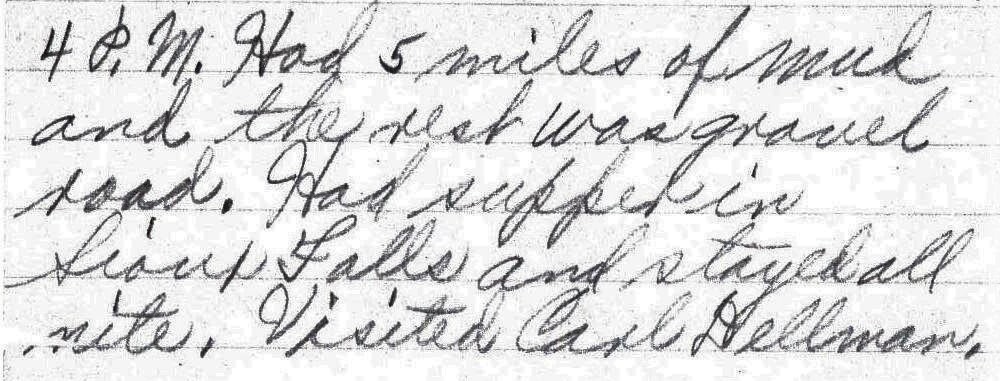
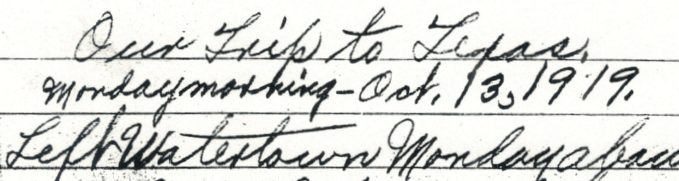
Our Trip to Texas.

Monday morning – Oct.13, 1919.

Left Watertown Monday about 10 A. M.  Ate dinner at Arlington, drove through rain all the way to Colton and stayed there all night. – Lena Bevers

Today is Sunday, but 100 years ago October 13 was on a Monday, and about 10:00 AM that day Herbert and Lena Bevers, along with six of their children, began a trip from Watertown, in northeastern South Dakota to the southern Texas town of Raymondville, near the U. S. border with Mexico.

Lena kept a log of their travels and according to her entry, their first destination that day was Arlington, where they ate their mid-day meal (dinner).  Arlington was about 40 miles south of Watertown, and their final destination for the day was Colton which was approximately 50 miles south of Arlington.  At that time the law regarding driving speed in South Dakota was: “Careful and prudent, having regard to traffic conditions.”1  If we assume that they drove about 6 hours that day, then they were driving about 15 miles per hour.

For the next 27 days, my mother and I will attempt to retrace Herbert and Lena’s route.  For the first few days, we are going to base our route on a map obtained from the Library of Congress website (https://www.loc.gov/resource/g4126p.mf000065/).  It is called the Touring Map of the Custer Battlefield Hiway, dated 1925, and it was published by the National Highways Association, which was incorporated in 1912 in Washington, D. C.  Printed on the map is the following statement, explaining the purpose of the association:

“A membership corporation which exists to favor, foster and further the development of NATIONAL HIGHWAYS and GOOD ROADS EVERYWHERE in the length and breadth of these United States of America, and to secure the benefits — social, moral, commercial, industrial, material, educational and personal — in the progress and uplift of the American people which follow in the train of easy intercommunication and transit between the great centers of population and distribution and the great rural productive areas of the Nation, and so ‘bind the States together in a common brotherhood, and thus perpetuate and preserve the Union.'”2

On this map there is a highway with the number 25 (this is not a highway number; it is simply the number associated with the numbering system of the map legend).  In the legend this highway is named Meridian Highway.  Meridian Highway was a transcontinental highway with starting and ending points of Winnipeg, Manitoba, Canada and Galveston, Texas and Mexico City.  Running along the eastern border of North Dakota, this highway entered South Dakota, veered west a short ways, then headed south.  Thirty miles north of Watertown, it crossed over the Yellowstone Trail, an east-west transcontinental highway which ran from Plymouth Rock, Massachusetts to Puget Sound, Washington.3  Meridian Highway continued south and passed through Watertown.  Currently, from the northern border of North Dakota to Watertown, Interstate Highway 29 and U. S. Highway 81 roughly follow the route that was once called the Meridian Highway.  At Watertown, U. S. Highway 81 breaks off from Interstate Highway 29, continuing to follow more closely the original Meridian Highway.

Section of Touring Map of the Custer Battlefield Hiway (Retrieved from Library of Congress, Geography and Map Division.)

Having had a blustery snow storm on Friday and Saturday, and fearing that we might have to delay our departure for a few hours, my mother checked the weather report on her phone at 6:30 AM this morning.  The forecast said there’d be cloudy skies but no snow. The roads did not look icy as well, so my mother and I set out on schedule at 8:00 AM from Watertown on a macadam road.  Our journey began on U. S. Highway 81, which presently runs straight south from Watertown to Madison, traveling between Lake Albert and Lake Poinsett, but on the 1925 map after starting south the Meridian Highway took several zigzag turns southwest toward Hayti and then resumed its southernly direction, circumventing Lake Albert on the west side.  So, we needed to leave U. S. Highway 81, but we could not determine exactly which roads Herbert drove toward Hayti.  We decided to take Highway 21 which took us through Hayti and Lake Norden.  We ran into difficulty when we exited Lake Norden because the roads were not marked.  A few miles further the road was snow-covered, so we decided to turn back and take a well-traveled route.

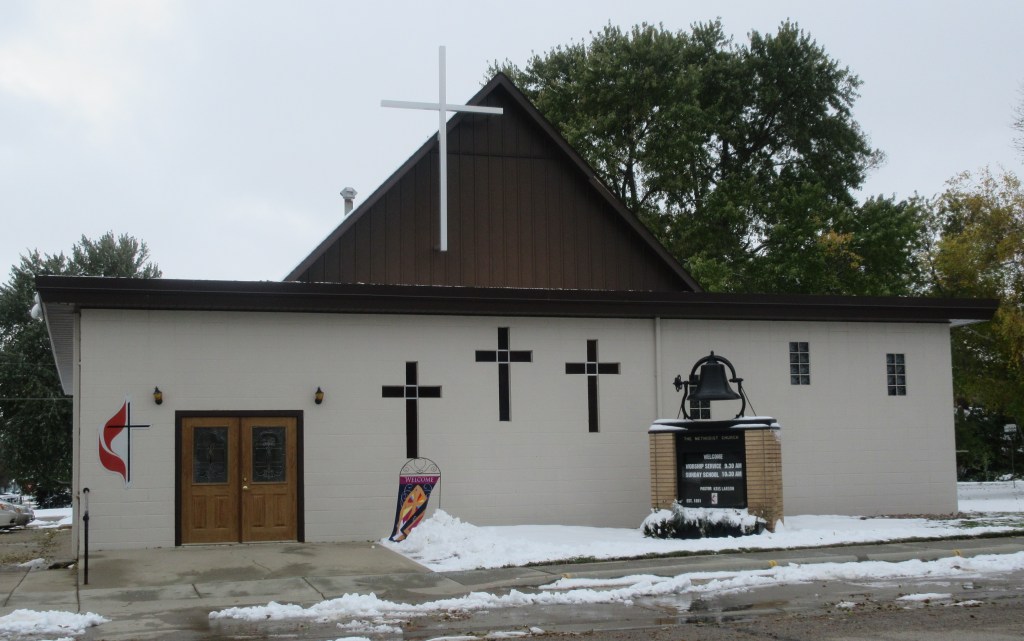
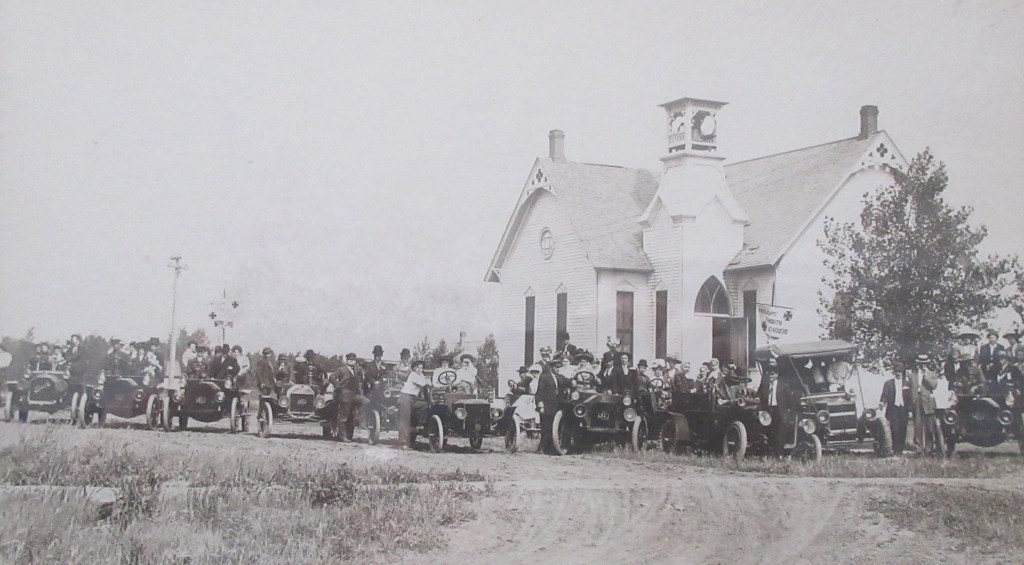
At mid-day Herbert and Lena would have reached a road numbered 7 on the Custer Battlefield map and named the Black and Yellow Trail.  This route ran from Chicago to Yellowstone National Park.  Here they turned east and drove to Arlington.  If they had turned to the west, they would have driven toward De Smet, the town in which Herbert’s father and two sisters lived.  Since we can travel more miles in a day than they could, we took a side trip to De Smet and attended the worship service of De Smet United Methodist Church, arriving 10 minutes late because we had to change our route.

De Smet United Methodist Church (photographed by MRW Oct. 13, 2019)
De Smet Methodist Episcopal Church (photographed about the 1920s)

De Smet is the town made famous by Laura Ingalls Wilder in her book Little Town on the Prairie.  Wilder’s parents homesteaded north of De Smet and came to the town for supplies.  The Ingalls family lived in De Smet from 1889 until at least 19244, which overlaps with the time that Herbert’s father, mother and sisters lived in De Smet.

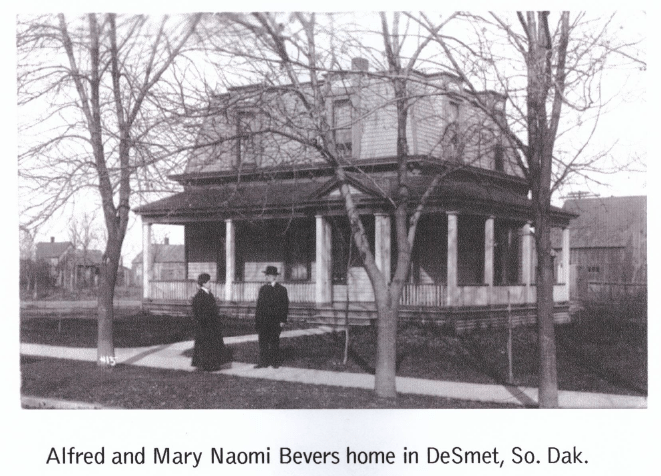
After the church service, the pastor allowed my mother and I to examine four of the church’s early record books.  This research confirmed some facts already known and gave us new information about the lives of these ancestors.  Alfred C. Bevers and his wife Mary lived their final years in De Smet, beginning in 1898, bringing their daughters Gertrude and Maude with them.  An historical article states that Alfred was a retired minister and his family “brought a lot of encouragement to the church.”5 Mary and Gertrude were involved in the Ladies Aid Society. Gertrude and Maude were members of a young adult group called the Epworth League. Maude led the choir for many years. In 1904 Maude married Alfred N. Waters, a real estate agent in De Smet.  Mary passed away in 1910.  In 1920, a few months after Herbert and Lena traveled down Meridian Highway, Alfred at age 82, was renting a house on 2nd Street and his unmarried daughter Gertrude was living with him.6 Maude and her husband also lived on 2nd Street.

When we left the church, we started searching for the houses of the Bevers and Waters families.  The 1920 census records of De Smet list the street name as 2nd street, but there are no street numbers.  Although a couple homes seemed familiar to my mother (she had visited her great-aunts Maude and Gertrude as a child), we could not be positive that any of the homes were the ones in which the Bevers and Waters lived.

Then we headed for the De Smet Cemetery.  When we were about a mile from the cemetery, the road became slushy so we did not travel any further.  At that point we got on Highway 14, heading toward Arlington, the town where Lena and her family had dinner (their mid-day meal.)

Arlington is a town with a population of 915.  Finding a place to eat lunch was a challenge.  We drove down the two blocks of the main street and found only a bar/grill/bowling alley which was not open on Sundays.  Driving about half a mile outside of town, we came to a restaurant that didn’t open until 4:30 PM on Sundays.  Nearby was a gas station that advertised subs and pizza in the window, but it also was closed.  Then we saw a motel that had a diner, which closed at 1:00 PM and we were there at 1:15 PM.  Finally, we were directed to another gas station/convenience store which had a nice selection of sandwiches, burgers, chicken and wieners.

After lunch we took one more side trip to visit my mother’s brother-in-law in Brookings.  When we returned to U. S. Highway 81 to resume following Herbert and Lena’s route, we found that the highway was closed and we would have to follow a detour which took us fifty miles out of our way.

At Madison, Herbert and Lena left the Meridian Highway and headed toward Colton where they ended their day. My mother and I wanted to stay the night in Colton, but when we searched online for a motel there, we couldn’t find one.  So, we ended our day in Madison, arriving at the motel at 5:30 PM.

Notes:

  1. Automobile Blue Book Publishing Company, Official Automobile Blue Book 1917, vol. 5 (New York: Automobile Blue Book Publishing Company, 1917): 1235, https://ia800405.us.archive.org/15/items/case_gv1024_a92_1917_vol_5/case_gv1024_a92_1917_vol_5.pdf.
  2. John C. Mulford and C. C Faunce, Touring map of the Custer Battlefield Hiway: the scenic route to the west, [S.l, 1925] Map. https://www.loc.gov/item/99466708/.
  3. Yellowstone Trail Association, “Introduction to the Yellowstone Trail,” Yellowstone Trail (2019), http://www.yellowstonetrail.org/page141.html.
  4. My Genealogy Hound, www.mygenealogyhound.com/vintage-photographs/south-dakota-photographs/SD-De-Smet-South-Dakota-Charles-and-Caroline-Ingalls-House-210-Third-Street-photo.html.
  5. First Methodist Church, “A History of the Church,” Consecration Service of the Remodeled First Methodist Church (De Smet, South Dakota: First Methodist Church, September 26, 1965)
  6. “United States Census, 1920,” database with images, FamilySearch (https://familysearch.org/ark:/61903/3:1:33S7-9RND-PYY?cc=1488411&wc=QZJT-TLH%3A1036874501%2C1038378501%2C1038387101%2C1589334506 : 13 September 2019), South Dakota > Kingsbury > De Smet > ED 203 > image 8 of 22; citing NARA microfilm publication T625 (Washington, D.C.: National Archives and Records Administration, n.d.).

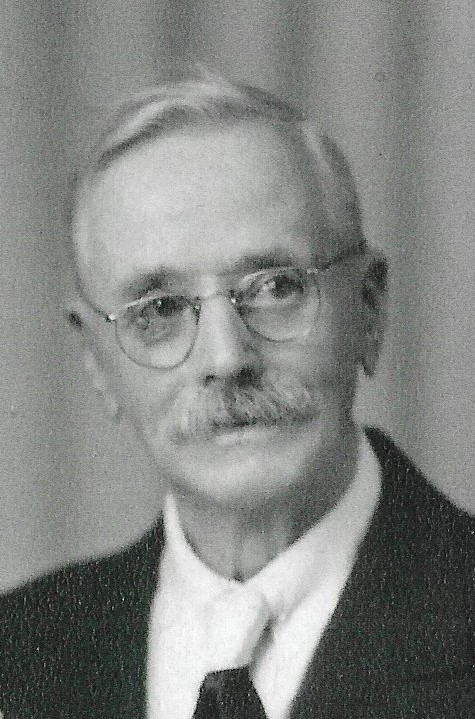
An Introduction to Herbert James Bevers

  • Born March 8, 1869 in Sheepridge, Yorkshire, England
  • Parents: Alfred and Mary Bevers who immigrated to the USA about 1883 and 1884, respectively
  • Immigrated to the USA in August 1888
  • Married Lena Huppler on November 24, 1892 in Watertown, South Dakota
  • Children: Edgar, Clarence, Arthur, Willis, Florence, Helen, Hazel, Estella, Harold, Margaret
  • Rented or owned farms in Roberts, Codington, Hamlin and Deuel Counties in South Dakota and in Cameron County, Texas
  • Drove with his wife Lena and six of his children from Watertown, South Dakota to Raymondville, Texas in the fall of 1919 (to read about the trip, see Lena’s travel log)
  • Died November 26, 1944 and is buried in Mount Hope Cemetery, Watertown, South Dakota
Photograph taken in 1942

Our Trip to Texas

A Travel Log by Lena Huppler Bevers

October 13, 1919 to November 8, 1919

In the fall of 1919 Herbert and Lena Bevers moved their family from Watertown, South Dakota to Raymondville, Texas. It took 27 days to make the trip and each day Lena wrote a few sentences about their travels, such as the road conditions, the towns they traveled through, where they had dinner and where they stayed for the night.

Two years ago I realized that the one hundredth anniversary of Herbert and Lena’s trip was approaching. I began researching for the routes that they would have taken, and as I researched I gradually became aware that 1919 was in the midst of a very significant period of road development in the United States. Long distance travel by automobile was just becoming practical and advantageous for the general population.

Beginning on October 13, 2019, according to my best research efforts, my mother and I will drive the route Lena recorded in her log and each day I will post what I have learned about traveling in 1919 as well as what I learn about a few of the changes that have occurred in the century that has passed since Herbert and Lena made their trip to Texas. I hope that you will find the time period as interesting as I do.

To see Lena’s original travel log, click here: 1919 Lena Huppler Bevers’ Travel Log.

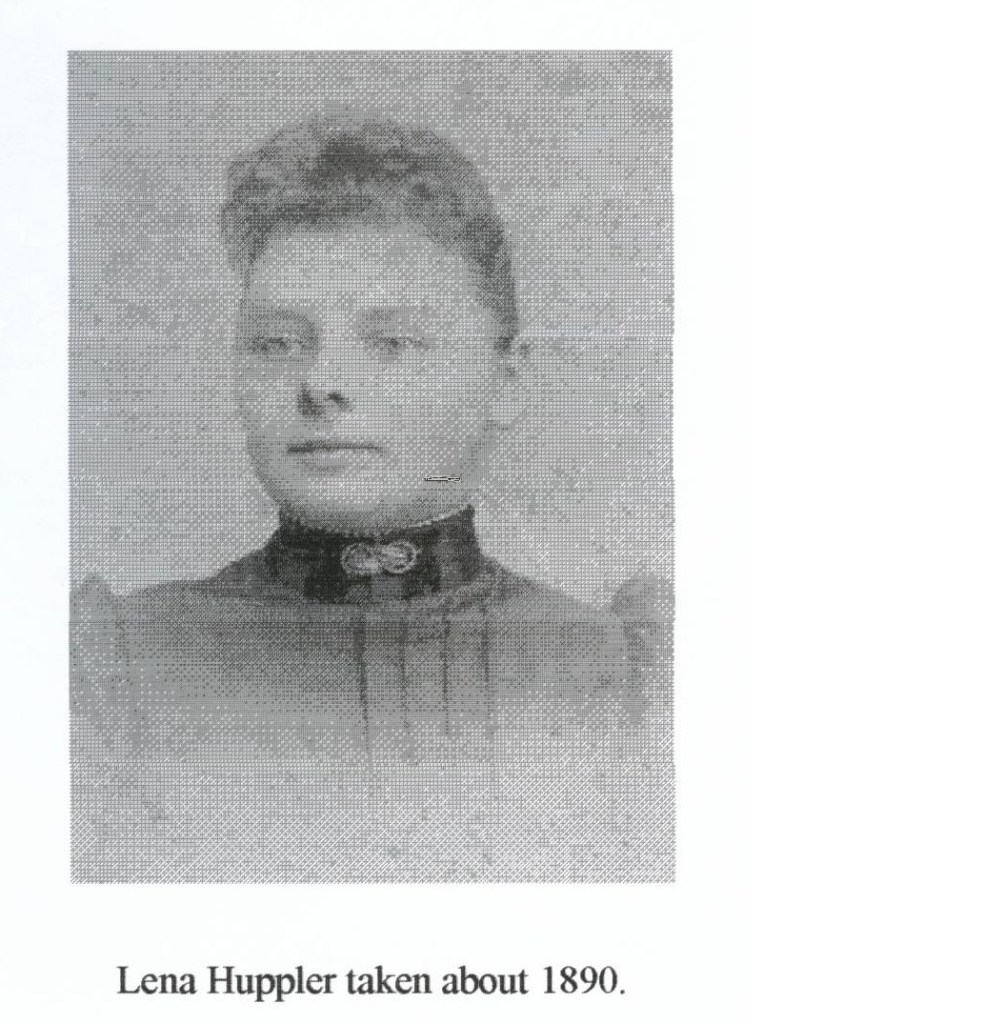
An Introduction to Lena Huppler

  • Born on January 15, 1872 in Switzerland
  • Immigrated with her parents to the USA in 1874
  • Parents: John and Anna Huppeler who died in 1875 in Wisconsin
  • Believed to be raised by a relative or local family near Sparta, Wisconsin
  • Moved to Codington County, South Dakota in 1886, possibly with her brother Christian Huppler or her cousin Kate Huppler Dellman
  • Married Herbert James Bevers on November 24, 1892 in Watertown, South Dakota
  • Children: Edgar, Clarence, Arthur, Willis, Florence, Helen, Hazel, Estella, Harold, Margaret
  • Resided in Roberts, Codington, Hamlin and Deuel Counties in South Dakota and in Cameron County, Texas
  • Wrote a travel log in 1919 when Herbert and Lena moved their family from Codington County, South Dakota to Raymondville, Texas
  • Died on December 9, 1943 and is buried in Mount Hope Cemetery, Watertown, South Dakota